


Deerhound Dog Portrait Canvas Art
The Painting dog Deerhound Portrait celebrates the majesty of the Scottish Deerhound through a refined artistic collection. Each work captures the natural elegance, the deep gaze and the graceful silhouette of this noble breed. Perfect for lovers of dog breed portraits and high-end canine wall decoration, this wall art brings a sophisticated touch to your interior. Ideal for enhancing a living room, office or personal gallery with authenticity and character.
 Grey Dog Portrait Wall Art with Amber Eyes - Contemplative Gaze - Deerhound Edition273,90 €
 Majestic Deerhound Portrait Wall Art with Golden Eyes - Natural Elegance - Deerhound Edition273,90 €
 Dog Profile Canvas Monochrome Black and White - Elegant Portrait - Deerhound Edition273,90 €
 Gray Deerhound Portrait Wall Art with Sepia Tones - Majestic Expression - Deerhound Edition273,90 €
 Dog with Golden Clouds Mystical Portrait - Celestial Reverie - Deerhound Edition273,90 €
 Grey and Beige Deerhound Sitting in Tall Grass - Majestic Portrait - Deerhound Edition273,90 €
 Dog Portrait Painting with Amber Eyes on Beige Background - Intense Gaze - Deerhound Edition228,90 €
Explore further
In Deerhound Dog Portrait Canvas Art
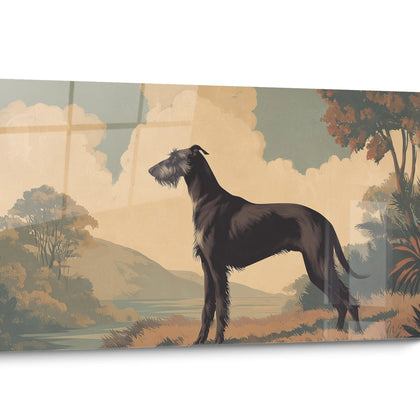


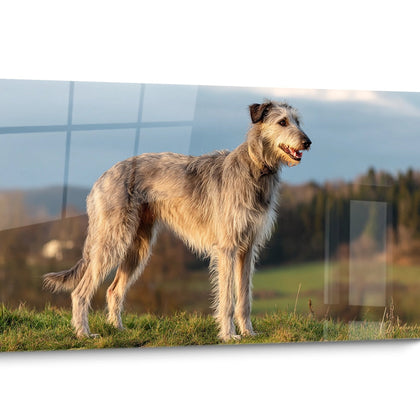
All about Deerhound Dog Portrait Canvas Art
- Deerhound Portrait Presentation
- Elegant Canine Portrait
- Scottish Greyhound Decor
- Noble Breed Visual
The Deerhound Portrait dog painting captures the aristocratic essence of this ancestral Scottish breed. This wall representation showcases the natural nobility of the Scottish greyhound, with its profound gaze and majestic posture. Every detail of the wiry coat, expressive eyes and slender silhouette is magnified to create an imposing presence in your space. The acquisition of a large-format artwork dedicated to this rare breed testifies to a particular attachment to exceptional canine lineages and the hunting heritage of the Highlands.
The Contemplative Expression of the Highland Greyhound
The Deerhound Portrait dog painting distinguishes itself by its ability to immortalize the meditative temperament characteristic of this ancient breed. Unlike dynamic canine representations, this type of visual privileges the capture of the penetrating gaze and reflective attitude inherent to the Deerhound. Scottish deer hunters possess a depth of soul visible in their amber eyes, which only a close-up portrait can convey with authenticity.
Why does the Deerhound lend itself exceptionally well to canine portraiture?
The facial morphology of the Scottish greyhound offers an exceptional graphic structure. Its elongated muzzle, shaggy eyebrows and drooping ears create natural architectural lines that guide the eye. The rough texture of its blue-gray coat generates striking luminous contrasts, particularly valued in large-format compositions. This breed also possesses a rare facial expressiveness among greyhounds, oscillating between contemplative melancholy and ancestral vigilance.
The visual codes of Scottish canine nobility
An authentic Deerhound portrait incorporates historical symbols associated with this Highland clan breed. The background often evokes misty moors, medieval castles or heather earth tones. These contextual elements reinforce the heritage dimension of the work, transforming the simple animal portrait into cultural testimony. Collectors particularly seek representations that honor the historic status of "royal dog of Scotland" granted to this breed.
The capture of ancestral hunter's gaze
The successful Deerhound Portrait dog painting captures the intensity of the runner's gaze, this capacity to scrutinize the horizon with legendary acuity. This visual particularity radically differentiates the Deerhound portrait from representations of other giant breeds. The gaze orientation, slightly averted or facing the observer directly, completely modifies the atmosphere conveyed by the work. Versions showing a Deerhound in a watchful position, head high and distant gaze, create a visual tension particularly prized in interiors with assertive character.
For those appreciating contemporary interpretations of this legendary breed, also discover the creations of Abstract Deerhound Dog Painting that reinvent the iconography of the Scottish greyhound.
Wall Enhancement of the Scottish Giant Breed
The integration of a Deerhound Portrait dog painting into an interior arrangement responds to specific aesthetic considerations related to the slender morphology of this breed. Unlike compact breeds, the Deerhound requires a vertical composition that respects its long and slender proportions. Horizontal panoramic formats suit only full-profile representations, while close-up portraits favor square or slightly vertical orientations to harmoniously frame the noble head and developed chest.
How to stage a portrait of a giant greyhound?
The imposing stature of the adult Deerhound (up to 80 cm at the shoulder) directly influences wall sizing choices. A large-format portrait faithfully restores the real proportions of this majestic breed, creating a physical presence effect in the space. Discerning collectors position these works in generous volumes – entrance halls, double-height libraries, stairwell walls – where the monumental scale of the visual finds its full expression without visually compressing the environment.
Decorative associations with Highland heritage
The Deerhound Portrait dog painting naturally harmonizes with the aesthetic codes of homes inspired by Scottish architecture. Tweed textures, sober tartans and aged wood paneling create a coherent setting for this canine representation. The addition of authentic hunting elements – antique hunting horns, engravings of hunting scenes, old Highland maps – reinforces the narrative dimension of the overall decorative ensemble. This thematic coherence transforms the simple decorative purchase into a genuine domestic museographic project.
The chromatic impact of Deerhound coats
The variations in Scottish greyhound coat – from silvery blue-gray to tawny brindle – determine the overall chromatic atmosphere of the space. A portrait dominated by cool gray tones brings mineral sophistication, particularly valued in contemporary interiors with raw materials. Representations of Deerhound with warmer coats (sand, wheaten) diffuse a welcoming atmosphere that tempers streamlined architectures. This restricted natural palette paradoxically facilitates integration, the neutral Deerhound nuances functioning as a chromatic balance element rather than a colored focal point.
Acquisition of a Heritage Breed Portrait
The choice of a Deerhound Portrait dog painting constitutes a purchasing decision guided by criteria specific to lovers of rare and heritage breeds. Unlike representations of popular breeds, the Deerhound requires precise morphological knowledge on the part of the artist. The distinctive cranial proportions, the exact texture of the hard outer coat and soft undercoat, the characteristic shape of the folded ears – all details that separate a generic greyhound representation from an authentic Deerhound portrait.
The authenticity criteria of racial canine portraiture
Deerhound owners and breeders seek representations scrupulously respecting the breed standard. The specific length of the muzzle, the slight arch of the nasal bridge, the low insertion of the ears, the gentle expression despite the imposing size – these morphological particularities constitute markers of authenticity. A successful portrait also captures the characteristic bone density that gives the Deerhound its silhouette that is both powerful and elegant, avoiding the frail appearance of racing greyhounds or the bulk of mastiffs.
Which posture best enhances the Deerhound's character?
Three-quarter compositions simultaneously reveal facial expressiveness and the nobility of head carriage. This angle allows appreciation of the elegant curve of the muscled neck and the depth of the chest, distinctive elements of the breed. Strict frontal portraits suit representations aiming for direct emotional impact, the Deerhound's gaze establishing constant visual contact with the observer. Complete profiles, although less frequent, emphasize the characteristic slightly arched dorsal line and the typical drooping tail carried low at rest.
Historical contextualization versus graphic modernity
Enthusiasts divide between historicist representations incorporating references to medieval manuscripts and frescoes from Scottish castles, and contemporary interpretations isolating the subject against a neutral background. The former valorize the heritage dimension and the antiquity of the breed (mentioned as early as the 16th century), while the latter privilege formal purity and timelessness. This stylistic dichotomy reflects purchase motivations: celebration of cultural heritage versus aesthetic appreciation of an exceptional canine morphology.
FAQ: Deerhound Portrait Dog Painting
Is a Deerhound Portrait dog painting suitable for rooms with standard ceiling height?
Absolutely, provided you privilege compositions centered on the head and chest rather than the entire body. Moderate vertical formats (120-150 cm in height) integrate perfectly into conventionally-sized rooms, the vertical orientation creating an illusion of height without requiring excessive clearance.
How to differentiate a Deerhound from an Irish Wolfhound in a portrait?
The Deerhound presents slightly finer bone structure, generally darker and less rough coat, as well as a softer facial expression. On a quality portrait, the texture of the hair, the precise shape of the skull and the intensity of the gaze allow certain identification of the breed, crucial elements for demanding collectors.
Why choose a Deerhound Portrait dog painting for a professional office?
This breed embodies appreciated professional values: nobility without ostentation, controlled power, loyalty and discernment. Unlike guard breeds with demonstrative temperament, the Deerhound projects quiet authority and intellectual elegance particularly suited to high-end corporate environments, specialized law firms or management spaces.


