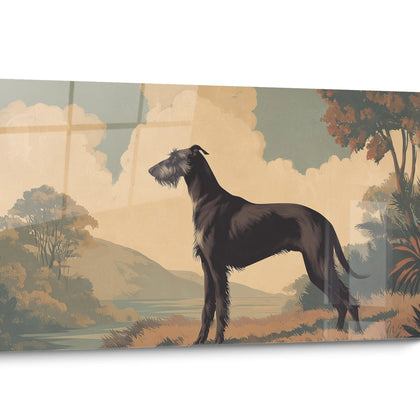
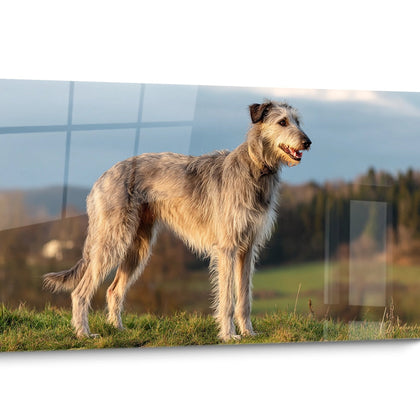
The black and white Deerhound dog canvas sublimes the elongated silhouette and legendary nobility of this emblematic Scottish breed. This monochrome representation captures the very essence of the Scottish greyhound in a contemporary graphic aesthetic, privileging striking contrasts and pure lines that characterize this ancestral deer hunter. The binary chromatic approach reveals every anatomical detail with remarkable precision: athletic musculature, characteristic rough coat, and this unique aristocratic posture that distinguishes the Deerhound from other greyhounds. Collectors of canine representations particularly seek this refined rendering which evokes simultaneously the tradition of the Scottish Highlands and an affirmed graphic modernity, creating a visual bridge between canine heritage and current architectural decoration.
The Monochrome Expression of the Scottish Greyhound
The black and white Deerhound dog canvas masterfully exploits the narrative power of binary contrast to reveal the distinctive bone structure and rough texture of the gray-blue coat characteristic of this breed. This radical chromatic approach transforms each anatomical line into an autonomous graphic element, highlighting the exceptional length of the limbs, the impressive thoracic depth, and that specific dorsal curvature that testifies to centuries of selection for hunting large game in rugged Scottish terrain.
How does black and white reveal the unique morphology of the Deerhound?
The absence of color concentrates attention on the singular proportions of this gentle giant: a characteristic elongated head-body ratio of sight-hunting breeds, a lightweight but robust skeleton capable of sustaining prolonged sprints in mountainous terrain, and that penetrating facial expression where intelligence and independence are evident. Shadow zones naturally accentuate the subcutaneous muscular definition, particularly visible in athletic resting subjects, creating a fascinating anatomical cartography for canine morphology enthusiasts.
The play of shadows in the representation of rough coat
The distinctive hirsute texture of the Deerhound finds in the monochrome treatment an ideal graphic expression. The tonal variations between deep black and pure white visually reconstruct this protective roughness developed to face the humid climates of the Highlands. Each tousled strand, each characteristic fringe on the tail, ears, and belly becomes an independent graphic motif, transforming functional coat into abstract decorative element. This approach moreover joins the universe of the abstract Deerhound dog canvas where hair texture becomes a pretext for formal exploration.
Intensity of the gaze captured in maximum contrast
The dark eyes of the Scottish greyhound, deeply set beneath pronounced eyebrow ridges, acquire a hypnotic depth in binary rendering. The chromatic contrast amplifies this legendary melancholic expression, that distant gaze which seems to contemplate the ancestral mists of the Scottish mountains. This emotional intensity constitutes a magnetic focal point in contemporary architectural spaces, immediately capturing visitors' attention and creating an immediate emotional connection with the large-format wall artwork.
Decorative Power of the Monumental Format
A large-format black and white Deerhound dog canvas radically transforms the spatial perception of an architectural interior. The elongated silhouette of this giant greyhound, when reproduced at significant scale, generates an almost tangible physical presence, as if the animal itself occupied the adjacent space. This monumentality is particularly suited to generous volumes: cathedral entrance halls, contemporary living rooms with high ceilings, professional spaces seeking distinctive visual identity combining natural elegance and graphic affirmation.
Which spaces benefit from large-format Deerhound representation?
Contemporary minimalist architectures find in this subject an ideal organic counterpoint. The imposing format dialogues with the refined lines of Scandinavian furniture, industrial metal surfaces, and polished concrete floors. The natural verticality of the Deerhound in standing position accentuates ceiling height, while its horizontal reclining posture visually widens horizontal spaces. Private galleries specializing in animal art favor these spectacular dimensions to create unforgettable focal points during thematic exhibitions dedicated to heritage breeds.
The dramatic effect of cast shadows in large format
At monumental scale, each shadow zone of the monochrome canvas acquires a material density that structurally organizes the surrounding space. Gradual transitions between deep blacks and luminous whites create visual rhythms that naturally guide the viewer's gaze through the composition. This lighting choreography functions as indirect architectural lighting, subtly modifying perception of adjacent volumes and creating illusory depth in sometimes confined spaces. Informed collectors exploit this effect to redefine the perceived proportions of their interiors without structural intervention.
Correspondences with contemporary vertical architecture
The longilinear morphology of the Deerhound naturally resonates with the aesthetic codes of current vertical architectures. Its atypical proportions – a height-width ratio close to 1:2.5 – harmonize perfectly with curtain walls, sculptural staircases, and double-height spaces characteristic of rehabilitated industrial lofts. This formal consonance between animal subject and built environment creates sophisticated decorative coherence, where the wall artwork becomes organic extension of architecture rather than simple applied decorative element.
Visual Celebration of Scottish Canine Heritage
The black and white Deerhound dog canvas constitutes a contemporary tribute to one of the oldest documented breeds, privileged companion of Scottish clans since the Middle Ages. This refined monochrome representation transcends simple photographic reproduction to touch the symbolic essence of this noble hunter: the freedom of the Highlands, the fierce independence of Celtic peoples, and this particular relationship between man and animal where mutual respect prevails over domination. Scottish culture enthusiasts immediately recognize in it these ancestral values condensed into a timeless graphic silhouette.
Why does the Deerhound embody Scottish visual identity?
Unlike decorative breeds developed for entertainment, this giant greyhound was shaped by functional necessity: felling adult red deer in mountainous terrain inaccessible to horses. This utilitarian function sculpted every aspect of its morphology, creating an animal where each anatomical line tells a story of adaptive survival and extreme specialization. The monochrome rendering amplifies this narrative dimension by eliminating all chromatic distraction, concentrating attention on these fascinating structural adaptations that make the Deerhound a masterpiece of natural and human selection combined.
Symbolism of posture in Scottish canine iconography
Traditionally represented in alert scrutiny of the horizon or aristocratic repose, never in submission, the Deerhound conveys values of autonomy and natural dignity. Current wall compositions perpetuate this statutory iconography, favoring slightly low-angle viewing perspectives that magnify imposing stature without lapsing into caricature. This respectful approach to the subject particularly resonates with current breed owners, a passionate community seeking authentic representations that honor the behavioral as much as physical characteristics of these exceptional companions.
Thematic collection and canine decorative coherence
Interiors devoted to heritage breeds benefit from remarkable visual coherence when multiple monochrome representations of Scottish greyhounds dialogue across different rooms. This thematic continuity creates an architectural narrative thread, transforming the habitat into a private gallery celebrating a specific passion. The available monumental formats allow to visually structure open-plan type spaces by creating distinct functional zones without physical partitioning, the wall artwork serving simultaneously as visual landmark and strong identity element.
Is a black and white Deerhound dog canvas suitable for colorful interiors?
Absolutely. The monochrome treatment functions as a chromatic neutralizer that harmoniously integrates into any existing palette. Black-white contrasts create visual rest points in environments saturated with vivid colors, while bringing graphic sophistication that instantly elevates the quality perception of the overall decorative scheme.
What optimal viewing distance for a large-format Deerhound canvas?
To fully appreciate anatomical and textural details, a distance equivalent to 1.5 times the canvas diagonal is ideal. However, the graphic strength of the subject also allows satisfactory appreciation at reduced distances, where monochrome contrasts create fascinating abstract compositions through visual fragmentation of the overall subject.
Does the black and white Deerhound dog canvas require specific lighting?
Indirect lateral lighting naturally accentuates existing contrasts without creating parasitic reflections. Avoid direct front spotlights that flatten subtle tonal nuances. Diffuse natural light during the day magnificently reveals gradual transitions between light and dark zones, creating an evolving visual experience according to time of day.


 Black and Grey Deerhound Contemplating the Horizon in Misty Field - Canine Majesty - Deerhound Edition233,90 €
 Dog Profile Canvas Monochrome Black and White - Elegant Portrait - Deerhound Edition233,90 €
 Deerhound Black and Grey Shaggy Coat Painting in Mountain Landscape – Ancestral Canine Portrait – Deerhound Edition233,90 €