


Alsace Village Wall Art
The Painting Alsace Village celebrates the picturesque beauty of Alsace and its enchanting villages. Each artwork captures the essence of traditional Alsatian villages with their colorful half-timbered houses, cobbled streets, and verdant vineyards. This artistic collection sublimates the authenticity and regional heritage, offering a visual immersion into the warm and romantic atmosphere of Alsace. Perfect for creating a French regional art elegant and timeless atmosphere.
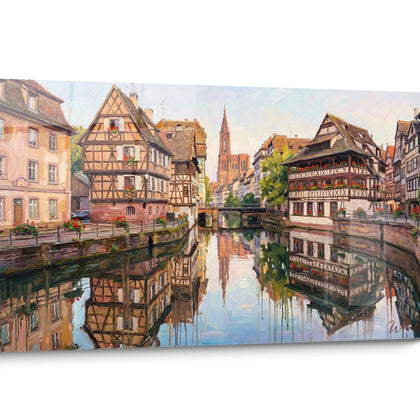
 Traditional Alsatian Village Painting - Medieval Square with Half-Timbered Houses - Alsace Edition273,90 €
 Wine-Making Alsatian Village Painting - Vineyards and Half-Timbered Houses - Alsace Edition273,90 €
 Alsatian Village Painting - Riquewihr at Sunset - Alsace Edition273,90 €
 Alsatian Village Autumn Painting - Golden Vineyards - Alsace Edition273,90 €
 Alsatian Village Vineyards Painting - Rural Autumn Landscape - Alsace Edition273,90 €
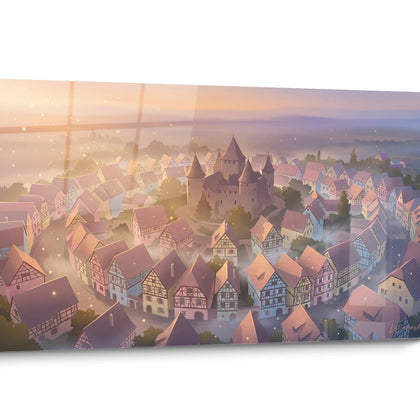
 Medieval Alsatian Village Painting - Golden Light at Twilight - Alsace Edition273,90 €
 Alsatian Village Painting - Golden Vineyard Valley - Alsace Edition273,90 €
 Alsatian Village with Stone Bridge Painting - Vineyard Charm - Alsace Edition273,90 €
 Alsatian Village Painting Crooked Bell Tower - Fantastic Charm of Alsace - Alsace Edition228,90 €
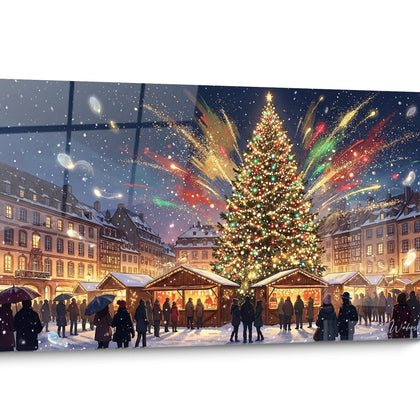
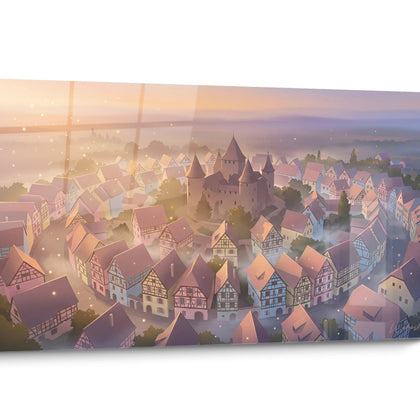
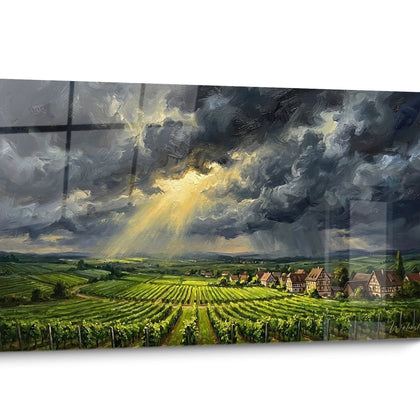
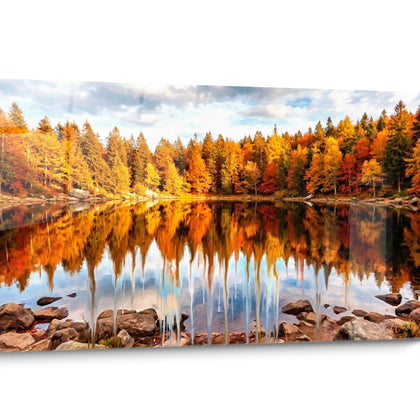
All about Alsace Village Wall Art
- Alsatian Village Wall Art Presentation
- Village Authenticity
- Alsatian Rural Ambiance
- Traditional Architecture
An Alsatian village wall art captures the essence of picturesque hamlets in this emblematic region, with their cobblestone streets, ancient fountains, and timeless atmosphere. These large-format reproductions celebrate the authenticity of small Alsatian communes, far from urban bustle, highlighting architectural harmony and bucolic charm of wine-producing hamlets. Ideal for spacious interiors such as character-filled living rooms or generous entrance halls, these large-scale wall compositions transform your home into an open window onto Alsatian rurality. Each visual reveals the singular details of Alsatian villages: geraniums overflowing from flowered balconies, wrought-iron signage, irregular paving stones testifying to centuries of history. Discover also our complementary collections such as Alsatian wall art for a broader vision of the region, or explore seasonal nuances with an Alsatian autumn wall art that enhances the golden tones of village grape harvests.
The Soul of Alsatian Villages in Your Wall Décor
Flowered streets and Alsatian village identity
An Alsatian village wall art immortalizes these narrow passages bordered by ancestral houses where each facade tells a centuries-old story. Large-format compositions faithfully restore the interweaving of winding alleyways, these paved paths where the hooves of horses and wine grower carts once echoed. The characteristic architectural density of Alsatian hamlets creates captivating visual depth, particularly effective in spacious corridors or voluminous stairwells where perspective fully plays its immersive role.
The brilliant red geraniums that generously overflow from weathered wooden window boxes constitute an instantly recognizable visual code, symbol of village pride transmitted from generation to generation. This multi-century floral tradition transforms each balcony into a living painting, a spectacle that only rural Alsatian communes perpetuate with such remarkable consistency. To complement this rustic atmosphere, consider an Alsatian timber-framing wall art that emphasizes typical half-timbered structures.
How village squares transform a contemporary interior?
The central squares of Alsatian villages, with their Renaissance fountains and communal wells, offer balanced compositions ideal for visually structuring a large living space. These historic gathering points, surrounded by traditionally aligned dwellings, create natural symmetry particularly harmonious above a corner sofa or facing an imposing dining table. The monumental dimension of these reproductions restores the real scale of these places of village conviviality, providing an exceptional sensation of immersion.
The integration of Alsatian village wall art into a modern interior establishes a striking contrast between contemporary simplicity and patrimonial richness. The streamlined lines of current furniture dialogue with the architectural complexity of village buildings, creating stimulating aesthetic tension that avoids decorative monotony. This temporal juxtaposition works particularly well in renovated lofts or glass extensions where village authenticity compensates for the potential coldness of modern materials.
Village signage and ancient sign markers as focal points
The wrought-iron signs characteristic of Alsatian village shops – bakeries, taverns, wine cellars – bring fascinating narrative dimension. These artisanal signage elements, often adorned with medieval corporate symbols, considerably enrich the visual reading of a wall composition. In a professional office or personal library, these historical details stimulate intellectual curiosity and naturally serve as conversation starters. If you appreciate remarkable edifices, an Alsatian castle wall art could equally captivate your attention.
Rural Ambiance and Serenity of Alsatian Hamlets
The peaceful atmosphere of wine-producing villages off-season
An Alsatian village wall art captures this particular quietness of rural communes outside tourist periods, when inhabitants rediscover their deserted streets and ancestral living rhythm. This palpable tranquility transposes remarkably into rest spaces such as spacious master bedrooms or guest suites, where visual calm directly contributes to sleep quality. Compositions devoid of tourist agitation present raw authenticity, without artifice, reflecting the true daily life of Alsatian villagers.
The diffuse light characteristic of misty mornings in Vosgian valleys envelops villages in a hushed atmosphere, almost surreal, which large-format reproductions restore with striking fidelity. This particular luminosity, neither brilliant nor dark, creates a meditative ambiance perfectly suited to reading spaces or arranged relaxation corners. To explore other luminous moments, discover our Alsatian sunset wall art capturing unique golden instants.
Village vegetable gardens and their chromatic richness
Behind traditional dwellings invariably extend these nourishing gardens where vegetables, aromatic herbs, and edible flowers coexist, following a centuries-old tradition of self-sufficiency. This vegetable mosaic, visible from certain elevated village perspectives, offers a naturally varied chromatic palette that easily harmonizes with different decorative ambiances. In a chic country-style kitchen or arranged sunroom, these vegetable garden evocations establish poetic connection with ancestral agricultural know-how.
Seasons deeply rhythm the physiognomy of Alsatian villages, from winter white covering sloped roofs to spring floral explosions transforming every window ledge. This seasonal cyclicity visible in an Alsatian village wall art brings temporal dimension absent from standardized urban reproductions. For lovers of this autumnal transformation, an Alsatian autumn wall art reveals the copper tones of surrounding vineyards.
Why do Alsatian villages inspire universal nostalgia?
These hamlets embody an ideal of community harmony today threatened by rampant urbanization, stirring transgenerational nostalgia even among those who have never visited the region. Village spatial organization, centered around the church and common square, materializes values of proximity and mutual aid that contemporary societies seek to rediscover. In a family interior, this evocation symbolically values the importance of home and roots, creating strong emotional anchoring.
The human scale characteristic of Alsatian villages radically contrasts with the excess of modern metropolises, offering measurable psychological comfort. Accessible architectural proportions, walkable distances, mutual recognition among inhabitants – so many elements perceptible in these wall compositions that answer a profound need for simplicity.
Alsatian Village Architecture and Built Heritage
Sloped roofs and their function in the village landscape
The pronounced slopes of Alsatian village roofs, covered with brown flat tiles or dark slate, constitute a pragmatic architectural response to abundant winter snowfall. This characteristic inclination creates a recognizable serrated silhouette, a miniature urban profile that Alsatian village wall art restores with precision. In an interior with high ceilings, these dynamic diagonal lines visually balance vertical space, avoiding the sometimes heavy effect of generous volumes.
The dormer windows with triangular pediments piercing these roofs add fascinating geometric complexity, creating shadow and light plays that evolve according to the time of day captured in the composition. These mansard openings testify to meticulous optimization of every livable square meter, reflecting peasant ingenuity transmitted from master craftsman to master craftsman. To admire other remarkable buildings, explore our Alsatian castle wall art collection presenting fortified architectures.
Shared interior courtyards and their social organization
Characteristic of Alsatian villages, these semi-private communal spaces accessible through vaulted porches organized collective life around central wells and shared tool shelters. This architecture of proximity, visible in certain village perspectives, materializes cooperative living modes today vanished in modern residential complexes. The evocation of these intermediate spaces between public sphere and domestic intimacy resonates particularly in contemporary dwellings seeking to recreate social connection.
Covered passages connecting these courtyards create architectural transitions managing surprise and progressive discovery, a scenographic principle that certain reproductions capture beautifully. These successive thresholds, from public to semi-public then to private, structure spatial perception much more richly than standardized urban organizations. In a generous entrance hall, an Alsatian village wall art presenting these transitions symbolically invites crossing, exploration beyond immediate appearances.
How do villages integrate into surrounding wine landscape?
The traditional implantation of Alsatian hamlets in the heart of wine-growing hillsides creates organic fusion between buildings and terroir, visible in enlarged compositions encompassing vineyards and dwellings. This harmonious landscape integration responds to secular economic logic – immediate proximity between wine growers and parcels – that transpires in spatial organization. To deepen this viticultural theme, discover our Alsatian vineyard wall art specifically highlighting vine rows.
The natural tones of construction materials – pink Vosgian sandstone, ochre cob, time-grayed wood – dialogue chromatically with changing vineyard colors according to seasons. This restricted yet nuanced palette avoids any visual dissonance, creating aesthetic unity that large-format reproductions allow full appreciation. In a living space open to surrounding nature, this chromatic continuity between interior and exterior fluidifies spatial perception. If you prefer an Alsatian urban atmosphere, consider an Strasbourg Alsatian wall art for a metropolitan approach.
Which Alsatian villages offer the most photogenic perspectives for wall art?
The hamlets of Riquewihr, Eguisheim, and Kaysersberg are among the most prized for their preserved architectural ensembles and medieval circular streets creating naturally harmonious compositions. Their compact historic centers, spared from ungraceful modern extensions, offer intact authenticity particularly sought for high-end decorative reproductions.
Is Alsatian village wall art suitable for contemporary minimalist interiors?
Absolutely, the contrast between the detailed richness of an Alsatian village and the sobriety of a refined interior creates particularly effective aesthetic tension. The village composition then becomes the sole focal point of the space, naturally capturing the gaze without decorative competition, fundamental principle of successful minimalist design.
How to choose between a village panoramic view and a close-up alleyway perspective?
Panoramic views encompassing multiple buildings suit large unobstructed walls where they fully deploy their amplitude, while close-up alleyway perspectives work remarkably in more restricted spaces or corridors where they create depth illusion compensating for the actual narrowness of the place.
Further reading
Our articles on this topic
- Watercolor painting of an Alsatian village: the guide to choosing an original wedding gift
- Alsatian Vineyard Wall Decor in Contemporary Style: The Guide
- Alsatian decor: how to combine half-timbering, storks and vines without overdoing it
- Watercolor Alsace vineyard painting for a modern living room: how to integrate it well
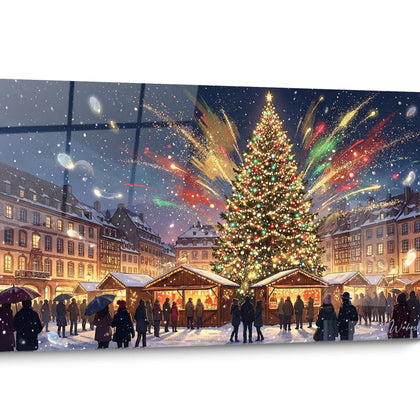
- Alsace village painting winter: recreating the Christmas market atmosphere at home
- Alsace village wall decor for a country house: creating a thread that connects the rooms
L'art qui suscite l'envie
Maison belge d'art mural grand format
14 jourspour changer d'avis*
Protection Walenskyincluse
Fabriquéen Italie
FormatXXL
Kit de fixationtoujours fourni
* Hors tableaux personnalisés et tailles personnalisées


