


Half-Timbered Alsace Wall Art
Our Painting Alsace Timber Framing collection captures the architectural essence of this magnificent French region. Each artwork celebrates the Alsatian half-timbered houses with their colorful facades and unique heritage. These wall decorations bring a touch of authenticity to your interior by enhancing the traditional architectural charm of Alsace. Perfect for lovers of this iconic region, these paintings transform your space into a true tribute to ancestral Alsatian craftsmanship.
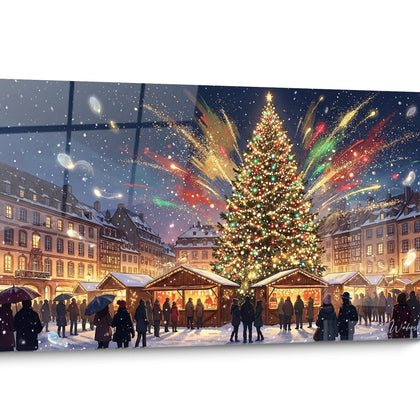
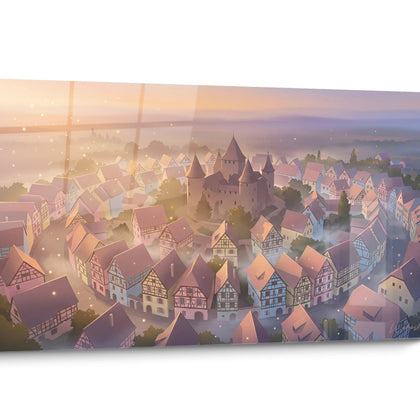
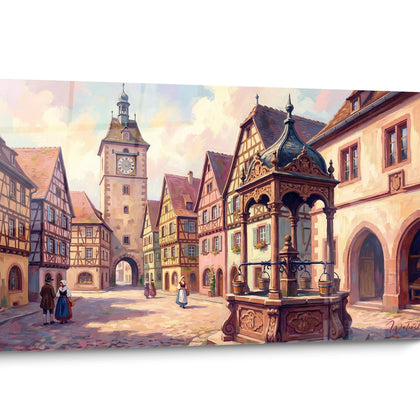
 Traditional Alsatian Village Painting - Medieval Square with Half-Timbered Houses - Alsace Edition273,90 €
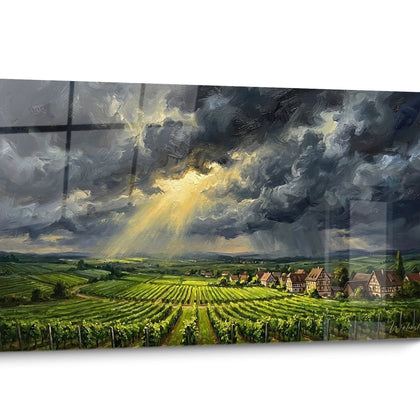
 Wine-Making Alsatian Village Painting - Vineyards and Half-Timbered Houses - Alsace Edition273,90 €
 Geometric Art Panel - Stylized Alsatian Half-Timbering - Alsace Edition273,90 €
 Strasbourg Petite France Painting - Alsace Reflections - Alsace Edition273,90 €
 Alsatian Village Painting Crooked Bell Tower - Fantastic Charm of Alsace - Alsace Edition228,90 €
All about Half-Timbered Alsace Wall Art
- Presentation Alsace Timber-Framed Houses
- Architecture with Timber Framing
- Authenticity of Alsatian Facades
- Regional Decoration
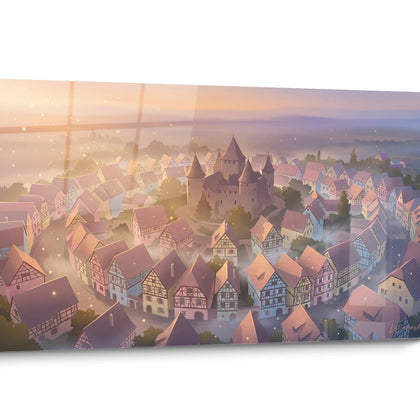
An Alsace timber-framed houses painting captures the very essence of traditional Alsatian architecture with its emblematic timber-frame structures, those geometric facades that tell centuries of artisanal history. These large-format wall representations celebrate medieval houses with Saint-Andrew's cross, wild man or sun motifs, offering a visual immersion into the built heritage of the region. Each faithful reproduction of the timber framing reveals the structural and ornamental complexity of these listed buildings, transforming your interior into a gallery dedicated to ancestral Alsatian craftsmanship.
The Structural Art of Alsatian Timber Framing
An Alsace timber-framed houses painting transcends simple decoration to become a true architectural document exposing medieval carpentry techniques. The dovetail joints, mortise and tenon joints and oak dowels illustrated on these large-scale representations reveal a know-how passed down since the 14th century. These wall works particularly highlight the exposed load-bearing structures, those vertical and diagonal lines that draw complex geometric patterns on the colored facades.
Why do timber framing motifs vary depending on Alsatian neighborhoods?
Representations of timber framing distinguish the construction particularities specific to each Alsatian town: the Strasbourg corbelled eaves, the sculpted sablières of Colmar, or the typical Alsatian crosses of Riquewihr. A monumental format allows you to appreciate the architectural details such as the sculpted corbels, the worked corner posts and the sablières decorated with floral or religious motifs. This architectural reading transforms your space into a study cabinet of regional built heritage.
Reading of traditional structural assemblies
These large-format visual compositions reveal the ancestral constructive logic where each element carries a specific function. The vertical posts support the loads, the horizontal sablières distribute the stresses, while the diagonal braces stiffen the whole. Observing these structures daily exposes you to the principles of medieval engineering that continue to inspire contemporary sustainable architecture. The contrasting tones between the frame and the infill create a vertical rhythm particularly suitable for double-height spaces.
Integrating such a wall element harmoniously complements a collection including an Alsace village painting to compose a complete visual narrative of regional heritage. The grain of the exposed wood captures the light differently depending on the orientation, creating variations of shadows that animate the composition throughout the day.
Chromatic Authenticity of Timber-Framed Facades
The representation of an Alsace timber-framed houses painting captures the distinctive color palette that makes the Alsatian cities famous. The ochres, sienna earth, Venetian reds and pastel blues that color the fillings between the wooden structures create a warm atmosphere immediately recognizable. These natural tones traditionally obtained with mineral pigments offer exceptional visual depth on imposing formats.
How do timber framing create a regional decorative identity?
Traditional Alsatian facades follow precise color codes passed down since the Renaissance: red symbolizes mercantile prosperity, green evokes wine-growing corporations, while yellow distinguishes bourgeois homes. This historical signage brings a narrative dimension to your interior decoration. The contrasts between dark wood and bright facades generate a particularly effective visual dynamic in contemporary spaces requiring a strong cultural anchor.
The balance between linear structure and colored filling
The graphic composition of half-timbered houses rests on a subtle balance between black or brown structural lines and the colored panels of the facades. This natural geometric contrast integrates remarkably well into modern interiors seeking a heritage touch without ornamental overload. Panoramic formats accentuate the medieval street effect, creating an architectural perspective that visually expands the space.
This theme naturally pairs with an Alsace Strasbourg painting or an Alsace castle painting to develop a coherent regional thematic gallery. The typical bluish-gray nuances of Alsatian slate and the warm tones of the facades create a bicolored harmony particularly suitable for minimalist interiors.
Decorative Integration of Alsatian Architectural Motifs
A large-scale Alsace half-timbered painting serves as a cultural anchor in a decorative strategy that values regional authenticity. These detailed architectural representations bring a historical depth that contemporary abstract compositions cannot offer. The natural verticality of the half-timbered facades is particularly well suited to spaces with high ceilings, such as cathedral-like living rooms or imposing entrances.
Which spaces best enhance a representation of Alsatian half-timbered houses ?
Environments with a rustic-chic character, neo-regional interiors, or professional spaces related to Alsatian tourism find in these representations a legitimate and distinctive decorative element. Themed restaurants, wine cellars, tourist offices, or artisan shops reinforce their territorial identity through these authentic architectural evocations. In a residential context, these compositions bring a strong geographical signature without falling into folklore.
The seasonal visual of Alsatian facades
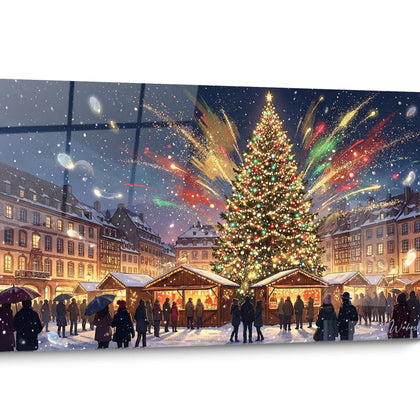
Alsatian half-timbered houses offer a different reading depending on the seasonal variations in light represented. Geraniums overflowing from summer planters, traditional Christmas decorations, or the autumnal hues of the surrounding vineyard enrich the visual narrative. A generous format allows to include these contextual elements that place the scene in the Alsatian calendar, creating a renewed emotional connection throughout the year.
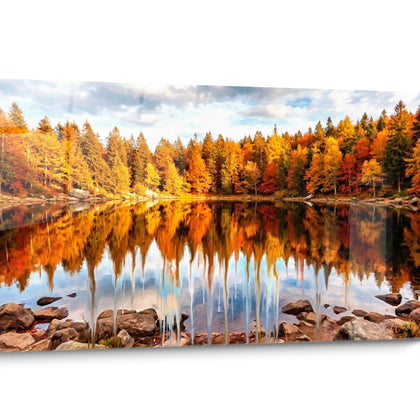
This theme is enriched by association with an Alsace autumn painting or an Alsace vineyard painting, thus developing a coherent collection of regional heritage. The evocation of the setting sun on the facades can be extended by an Alsace sunset painting, while a more global vision is obtained via a Alsace painting .
The psychological impact of reassuring structures
The repetitive vertical lines of the timber framing create a soothing effect through their regular rhythm, while the warmth of the traditional hues generates a welcoming atmosphere. These ancestral geometric structures subconsciously evoke solidity, permanence, and territorial roots, values particularly sought after in contemporary residential environments often perceived as too ephemeral. The monumentality of the proposed formats amplifies this effect of spatial and temporal anchoring.
Where to place an Alsace timber framing painting in a spacious interior?
Preferred locations include the main wall of the living room facing the entrance to create an immediate focal point, the space above a traditional Alsatian buffet to reinforce stylistic consistency, or the backdrop of a family dining room where the evocation of heritage enriches convivial moments. The verticality of the timber framing is particularly suitable for spaces between two openings or narrow but high wall panels.
How do timber framing elements integrate into a contemporary decor?
The assumed contrast between medieval architecture and design furniture creates a sophisticated decorative tension highly sought after. The geometric lines of the timber framing naturally dialogue with modernist purisms, while the traditional natural hues warm contemporary monochromatic palettes. This heritage-modernity fusion approach characterizes the most accomplished interiors that reject stylistic uniformity.
What complementary decorative elements accompany Alsatian timber framing?
Alsatian stoneware objects, traditional wrought iron lighting, textiles with Kelsch motifs, or winemaking barrel elements create coherent thematic echoes. The combination with plants such as dried hops, spruce branches, or vine compositions reinforces regional anchoring without decorative overload. These controlled accumulations build an authentic and personal territorial narrative.


