


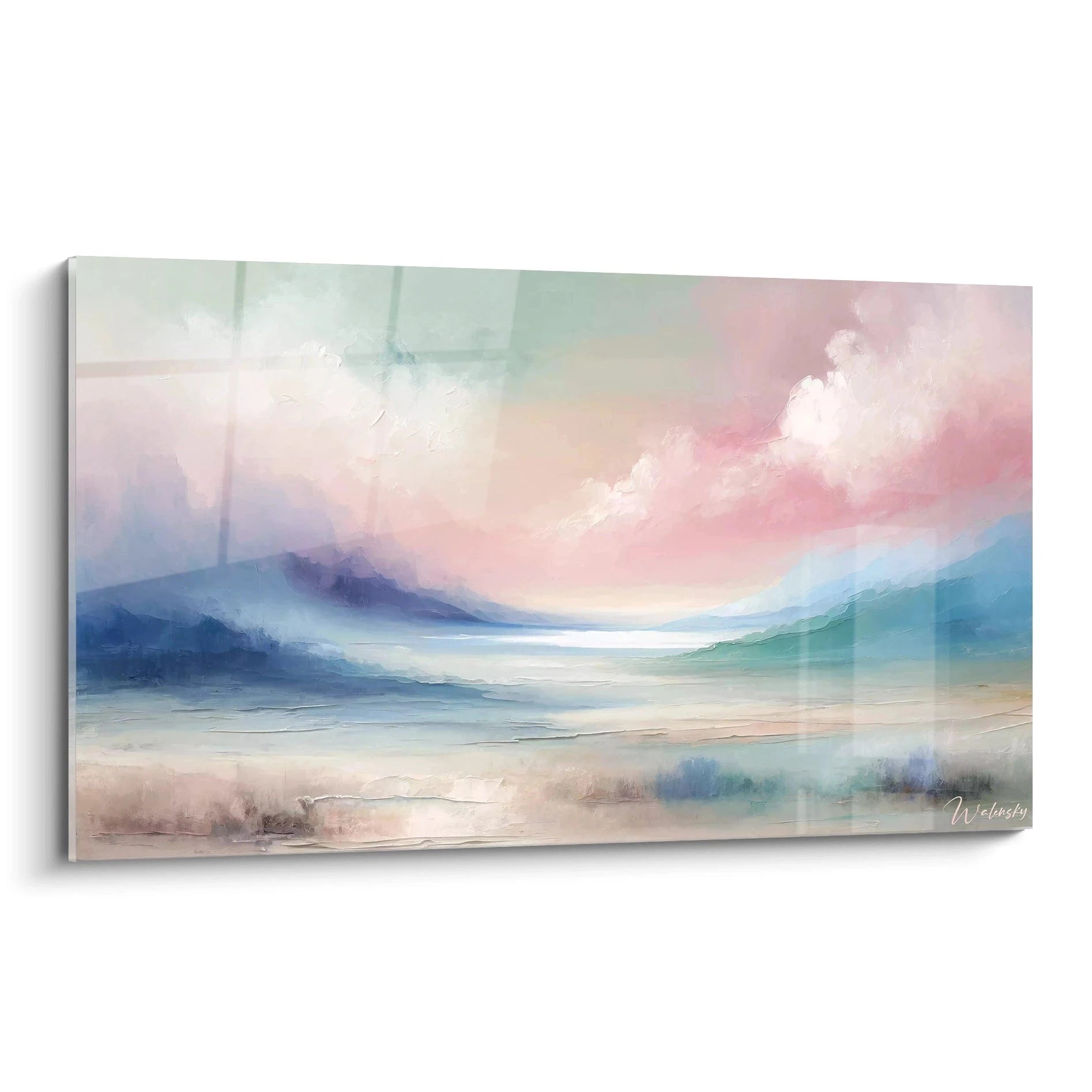

What artwork to choose for a chic dinner at home?
October 11, 2025 · 21 min read · by Walensky
You feel that muted disappointment: your interior, though well-kept, lacks that final touch which transforms a simple meal into a true experience. That little inner voice whispering "something's missing" when you thought you had everything planned.
You may have already tried hanging some frames, chosen candles or changed your cushions. But the result remains impersonal, as if your decor doesn’t truly reflect you. As if it tells no story.
This is perfectly normal and it's certainly not a lack of taste on your part. The real difficulty lies in the fact that choosing an artwork for dinner doesn’t follow the same codes as everyday decor. Art should here create conversation, not just fill a wall.
By the end of this article, you will know exactly what style of artwork to choose according to your type of reception, how to integrate it harmoniously into your decor, and you’ll be able to visualize your guests admiring that artistic touch which reveals your refined personality.
Why the artistic choice for this evening can transform the experience of your guests?
Art in a reception space acts as an emotional catalyst. In 2025, with the return of values such as authenticity and conviviality, a well-chosen artwork can transform an ordinary evening into a memorable moment. If you wait, you risk missing out on these authentic moments of sharing that your loved ones cherish. It’s like tuning a piano before a concert: visual harmony prepares human harmony.
🏠 Lived testimony: Marie, an interior architect from Paris, says: "I had organized a birthday dinner for my husband. Everything was perfect, except that my guests remained frozen in the living room. I then hung an abstract canvas with warm tones that I had received as a gift. The effect was immediate: conversations became animated, people moved closer to the artwork, shared their impressions. This canvas has become the starting point of all our subsequent dinners."
Conversation with a decor expert
The golden rule of reception painting: It should evoke emotion before reflection. Like a good dish that first awakens the senses, your artistic choice must create a positive and lasting first impression. Observable result: your guests naturally linger in the space, conversations arise spontaneously, and the atmosphere warms up in less than 10 minutes.

Understanding what really happens when your guests discover your space
Perhaps you recognize these situations: your guests enter and their eyes quickly scan the walls without stopping anywhere, they settle in but struggle to find conversation topics, or they compliment your decor in general but without particular enthusiasm.
What's really happening is that your space lacks an artistic focal point that captures attention and naturally guides interactions. The problem isn't your decor or your taste, but the absence of a visual element strong enough to create an emotional dynamic.
Imagine your living room as a theater stage: without expressive scenery, even the best actors (your guests) struggle to get into their roles as relaxed and inspired hosts.
The first hidden cause: The illusion of perfect neutrality
Contrary to what one might think, an overly neutral space doesn't reassure your guests; it intimidates them. They don't know what attitude to adopt, what level of intimacy is appropriate. A painting subtly reveals your personality and sets the tone for the evening.
It's like entering a restaurant where all the tables are identical versus a place where each corner tells a story. The second puts you immediately at ease because you intuitively understand the spirit of the place.
This directly impacts the quality of your exchanges: without a visual reference point, conversations remain superficial. With a painting that resembles you, you naturally offer discussion topics and reveal facets of your personality that your guests appreciate discovering.
✅ Instant test: Stand at the entrance to your living room and count to three. If your gaze doesn't stop on any specific artistic element, that’s exactly what your guests experience: a sense of creative emptiness to fill.
Many think you need to choose neutral works that go with all occasions. In reality, a generic painting creates no particular emotion, therefore no memorable souvenir. Your dinners remain in the “nice” category without ever becoming “memorable”.
It’s like wearing a perfume so subtle that no one notices it: technically perfect, but emotionally nonexistent.
As a result, your guests leave with the impression of having had a good time, but without that little something extra that makes them eager to return. Authentic art, even if it sometimes divides opinion, leaves a lasting impression and creates connection with those who appreciate it.
The third hidden cause: Instinctive but ineffective placement
Most people hang their paintings facing the table, thinking that’s logical since that's where their guests spend most of their time. Mistake! This position creates a competition between the art and human interaction.
You can easily spot it: if your guests have to turn their heads to see the painting while they’re eating, or if you yourself feel “watched” by the artwork during the meal, then the placement is hindering conviviality.
This placement error turns your beautiful piece of art into an unconscious source of distraction, creating a less relaxed atmosphere than expected.
🔍 The 3 signs that your artistic choice is working:
- Your guests naturally approach the artwork: This means it awakens their curiosity without intimidating them, like a book whose cover you would spontaneously read
- Questions or comments emerge spontaneously: The art becomes a natural pretext for exchange, revealing that the work creates connection rather than distance
- The atmosphere warms up quickly: The initial moments of awkwardness disappear quickly because the painting gives an indication of the desired atmosphere of the evening
The trigger element: Consistency between your art and your party intention
What really makes the difference is the alignment between the style of your painting and the experience you want to create. It’s a catalytic effect: the right art in the right place naturally amplifies the desired atmosphere. You can identify it by asking yourself if the artwork you are looking at evokes the mood in which you would like to see your guests: relaxed, inspired, complicit, amazed...
The universal practical rule: Your painting should tell the same story as your table setting. If one evokes classic elegance and the other bold modernity, the inconsistency creates a visual tension that prevents your guests from fully relaxing. Immediate test: photograph your entire space and check that the whole conveys a unique and clear emotion.
| ❌ Instinctive approach | ✅ Thoughtful approach | 💡 Why it changes everything | 🎯 Benefit felt |
|---|---|---|---|
| "It has to be beautiful and not too flashy" | "It has to reveal the atmosphere of my dinner" | Art becomes an ally of your intention rather than just decoration | Your guests immediately grasp the spirit of the evening |
| "I choose according to my personal taste" | "I choose according to the emotion I want to create" | You prioritize overall experience over individual preference | The atmosphere becomes more welcoming and engaging|
| "The higher the price, the more impressive it is" | "The more authentic it is, the more touching it is"Emotional value outweighs market valueYour guests feel privileged rather than impressed|||
| "It has to match my furniture" | "It has to dialogue with the lighting and atmosphere"You create an ambiance harmony rather than decorative coordinationThe whole thing looks natural and thoughtful without being rigid

The 3-step method to create the perfect artistic harmony
Rassurez-vous, creating the perfect match between your painting and your dinner requires neither artistic training nor a considerable budget. It's a process as logical as composing a menu: you start with the desired atmosphere, you choose the elements that support it, then you adjust the details. Each step brings you closer to that moment when your guests will naturally exclaim at the harmony of your space.
🎯 Overview of your artistic transformation: Step 1 - Define your "emotional signature" (what you want your guests to feel), Step 2 - Select style and strategic location, Step 3 - Harmonize with lighting and finishes. Progression logic: from intention to emotion, then to concrete visual impact. Result at each step: increasing clarity, confidence in your choices, and anticipation of the final result.
Step 1: Define the soul of your reception
Starting by clarifying the emotional intention of your evening is fundamental because it guides all your subsequent artistic choices. It's like laying the foundations of a house: everything that follows will rest on this base. Once this step is complete, you will feel the satisfaction of knowing exactly what you want to convey, no more doubts or hesitations.
Elements to clarify before any artistic choice
- Your type of reception: Elegant business dinner, casual gathering with friends, warm family meal, or romantic special event. Each calls for a different artistic energy. Quality criterion: your choice should be instinctive, the one that comes to you first generally corresponds to your true intention. Avoid the "mix of everything" alternative which dilutes the impact. The main emotion desired: Serenity, inspiration, conviviality, sophistication, or intimacy. The principle: a strong and clear emotion is better than several lukewarm emotions. Quality index: you must be able to explain your choice in a simple sentence. Impact on the result: it directly guides towards appropriate colors, shapes and subjects. Your personal style of conviviality: Are you more into discreet refinement, warm authenticity, or assumed originality? This element reveals what level of artistic boldness suits you. Visible benefit: your guests immediately feel that the space really resembles you.
Now, let's move on to practical application with your specific situation
How to accurately identify your emotional signature
Visualize your ideal evening: Close your eyes and imagine your guests at the end of the meal: how do you see them? Relaxed and smiling, impressed and respectful, or complicit and enthusiastic? This vision directly guides your artistic choices because art subtly but realistically influences people's moods.
⏱️ Time: 5 minutes of reflection | ✅ Successful when: You can describe the atmosphere in 3 precise adjectives | ⚠️ Attention: Don't strive for perfection, first impressions are often the best because they come from your authentic intuition
Identify your inspiring references: Think about places where you feel particularly good (restaurant, hotel, at friends' homes). What creates this atmosphere? Often, it’s the consistency between art and the overall ambiance that touches you without you being aware of it.
⏱️ Time: 10 minutes | ✅ Successful when: You identify 2-3 recurring visual elements in your favorite places | ⚠️ Attention: Don't copy exactly, draw inspiration from the general spirit to adapt it to your personality
Test your intention with your current space: Look at your living room/dining room as it is now. Does it already tell part of the story you want to create? This analysis reveals what's already working and what deserves to be reinforced by art.
⏱️ Time: 5 minutes | ✅ Successful when: You clearly distinguish what supports your intention from what contradicts it | ⚠️ Attention: Be honest about what's not working, it’s the only way to create a true harmony
✨ Validation of your step 1: You should be able to explain in one sentence the feeling you want to create for your guests, and mentally visualize the type of artwork that would support this intention. If it's blurry, repeat the exercises - this clarity is essential for the following steps to be effective. Encouragement: this reflection will serve you for all your future decor choices!
— Our selection


OUR RECOMMENDED PRODUCTS
Step 2: Selecting and positioning your masterpiece
Now that your intention is clear, you enter the creative phase where your artistic choices take shape. This step is more rewarding because you see concretely how your vision becomes reality. The snowball effect begins: each consistent decision reinforces the previous ones and overall harmony settles naturally.
The real criteria for artistic selection
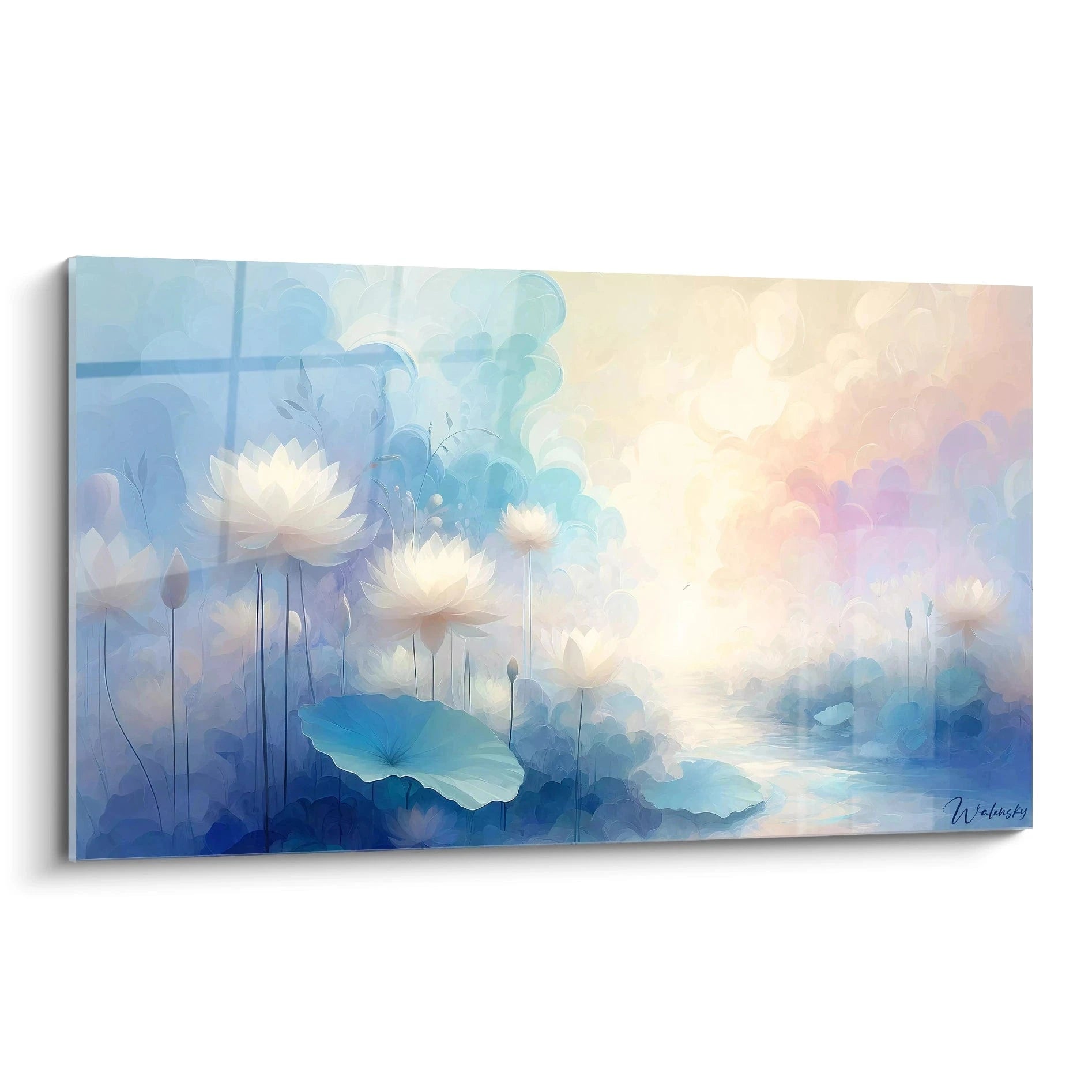
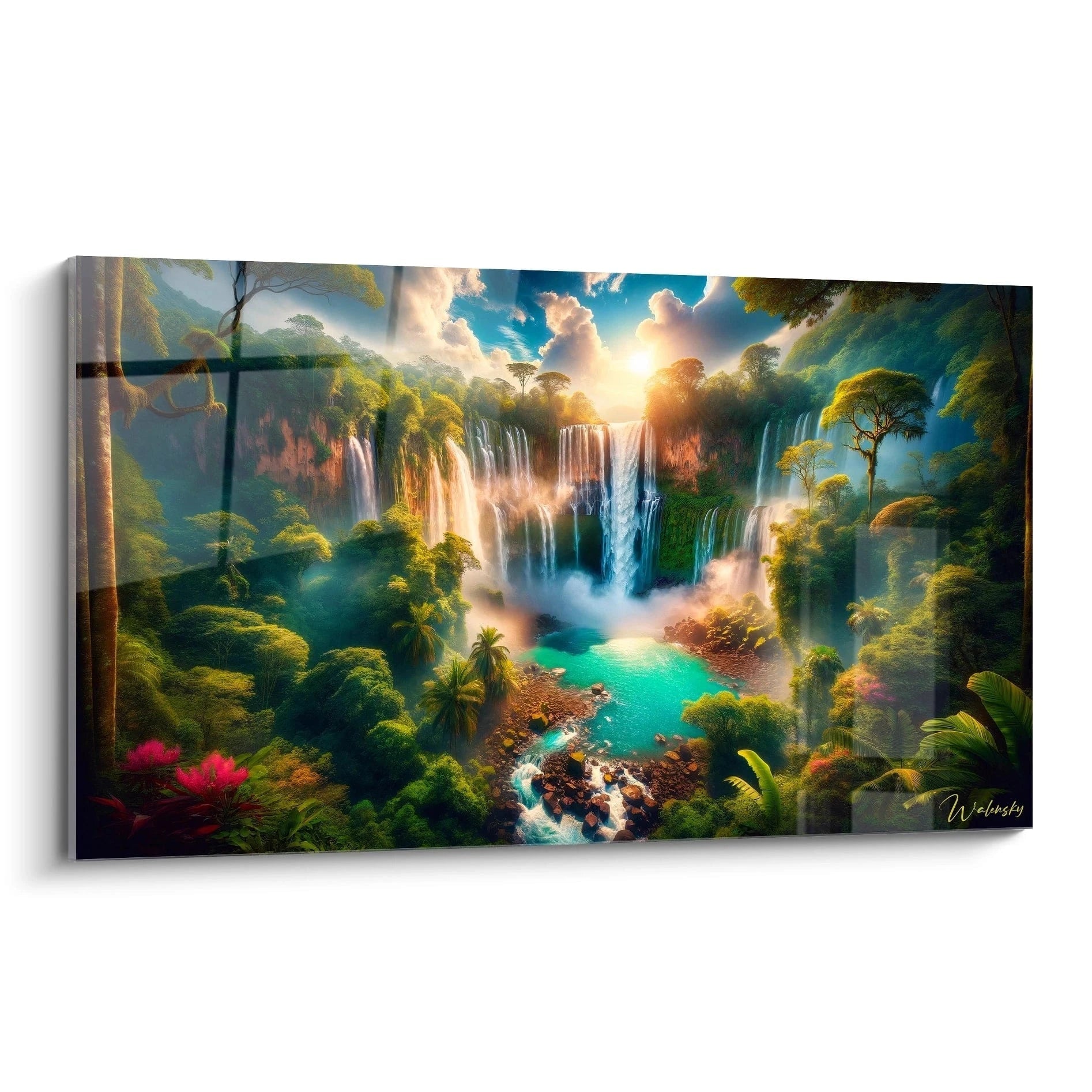
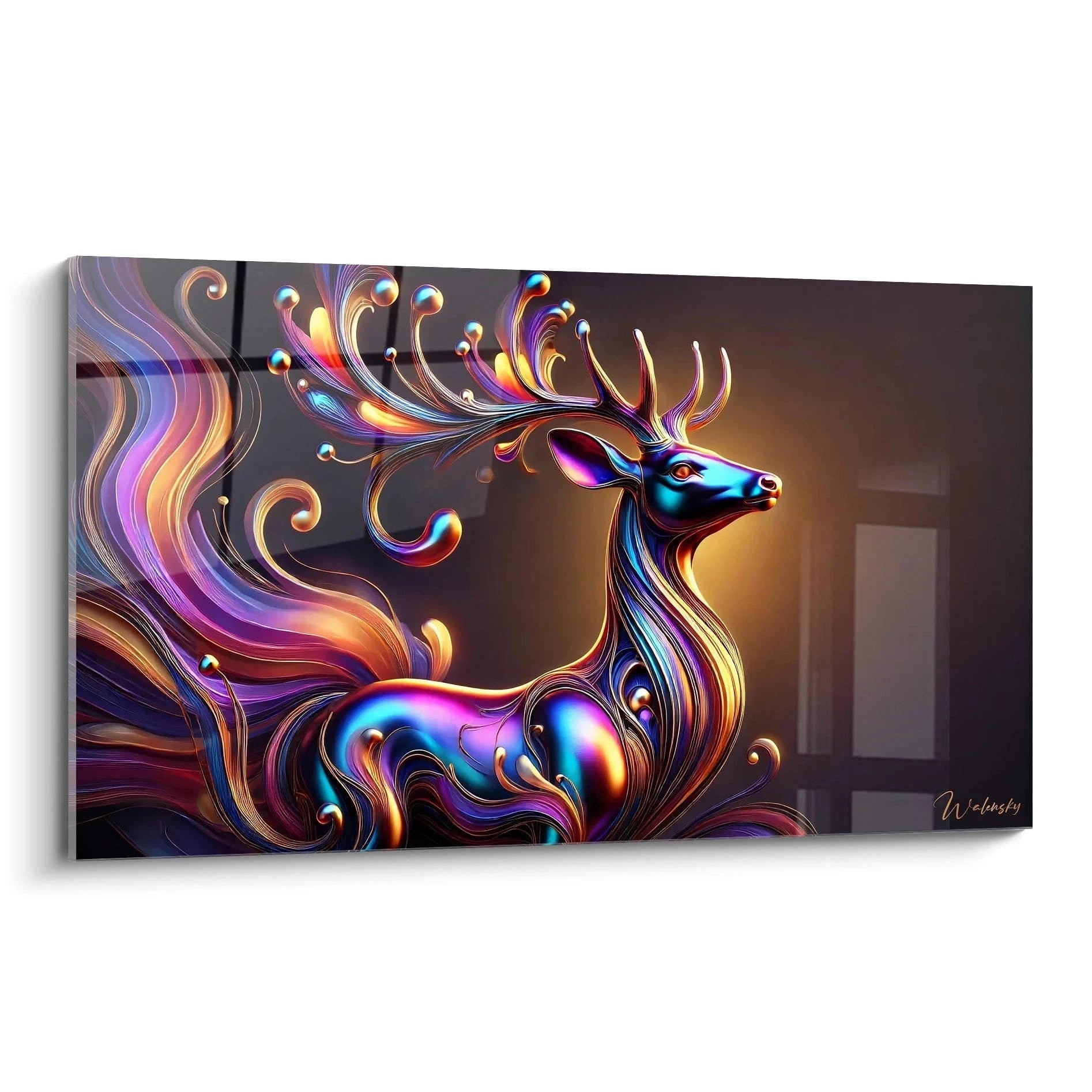
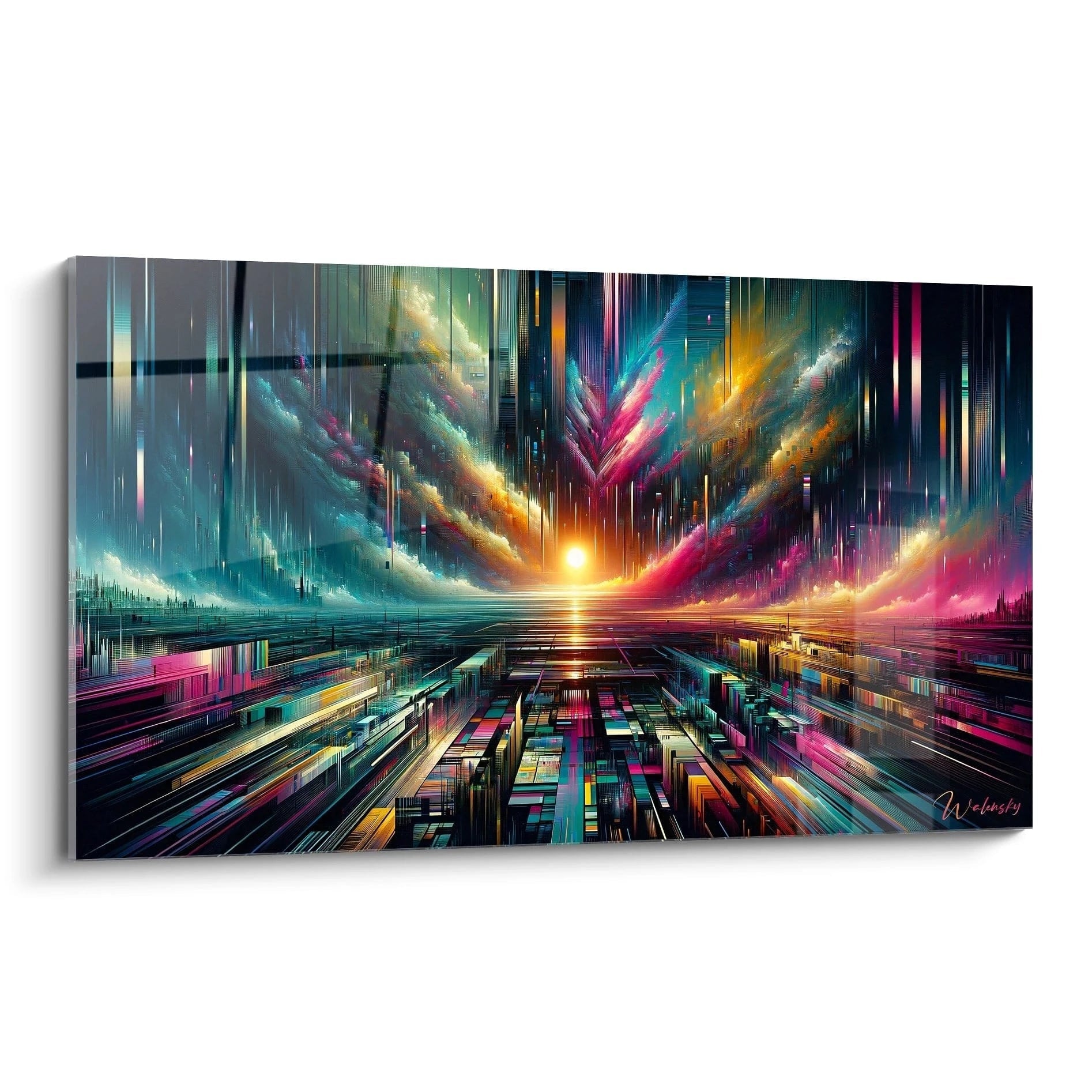
- Style aligned with your intention: Contemporary abstract for sophisticated modernity, serene landscapes for tranquility, expressive portraits for intimacy, or geometric for structured elegance. What it should look like: the artwork must immediately evoke the desired emotion. Where to find: local galleries, artist studios, or specialized online collections. Quality criterion: you feel an immediate emotional connection, not just aesthetic.
- Strategic color palette: Warm tones (ochres, reds, oranges) for conviviality, cool tones (blues, greens) for tranquility, marked contrasts for dynamism. The principle: colors influence mood more than shapes. Recognition tip: your dominant colors should recall those of your evening lighting. Result impact: the whole looks naturally harmonious without visible effort.
- Dimensions proportional to the desired impact: Medium format (60-80cm) for discreet elegance, large format (100cm+) for a wow effect, triptych for narrative sophistication. This element determines the intensity of artistic presence in your space. Benefit: the appropriate size makes the artwork dialogue with the space without overwhelming or disappearing.
Technique de positionnement pour maximiser l'impact
Identify natural viewing zones: Stand successively at the entrance of your space, at the table, and standing in conversation. Note where your eyes naturally look in each position. The optimal zone is visible from the entrance and on the periphery of the table, never directly facing during meals.
⏱️ Time: 15 minutes | ✅ Successful when: You identify 2-3 potential locations with their advantages | ⚠️ Attention: Avoid walkways or windows that create unfavorable backlighting
Test the optimal hanging height: The professional rule: center of the artwork at 1.60m from the floor for comfortable standing and sitting viewing. But adapt according to your furniture and ceiling. The goal is for the artwork to naturally dialogue with eye level, neither too high nor too low.
⏱️ Time: 10 minutes with a meter | ✅ Successful when: The tested location seems natural from all viewing angles | ⚠️ Attention: Mark temporarily with pencil before drilling, and check the level with a spirit level
Check consistency with existing lighting: Observe your space at different times: natural light during the day, artificial lighting in the evening, and candles during dinner. Your painting should be enhanced in all these configurations, especially those of your receptions.
⏱️ Time: Test over an evening | ✅ Successful when: The artwork remains visible and attractive even in low light | ⚠️ Attention: Too direct lighting creates reflections, insufficient lighting makes the artwork disappear into darkness
🎨 Step 2 Validation: Your artistic choice and its location should create a natural focal point that attracts the eye without monopolizing attention. Simple test: invite a friend for coffee and observe their behavior: if they notice and positively comment on the artwork without you mentioning it, you’ve won! Otherwise, adjust the position or lighting before your next dinners.
Step 3: Harmonize the whole for maximum impact
This final step transforms your artistic choice into a true immersive experience. You go from the level "it works" to the level “it’s magical”. The difference between an amateur and a connoisseur lies in this attention to detail that makes everything seem fluid and intentional. The final result: your guests will feel this overall harmony without being able to pinpoint exactly what creates it.
Finishes that make the difference
- Accent lighting coordination: Discreet directional spotlight, wall sconce, or integrated LED lighting to enhance the artwork even in low light. What’s it for: maintaining artistic presence even during a candlelight dinner. Where to find: specialized lighting stores or modern home automation solutions. Quality criterion: the light reveals the work without dazzling or creating annoying shadows. Why not the economical alternative: general lighting does not highlight the nuances and reliefs of your painting.
- Adapted framing and protection: Discreet frame for expressive works, statement frame for subtle works, or no frame for contemporary art. The principle: the frame influences perception as much as the artwork itself. Recognition index: the whole should seem obvious, as if the work had always been destined for this framing. Impact on result: professional finish that reassures your guests about your attention to detail.
- Balance with other decorative elements: Cushions, tableware, or flowers that subtly recall the colors or spirit of the artwork without redundancy. This element creates a subtle overall coherence that sophisticates the whole. Visible benefit: the space appears naturally harmonious, as if composed by a professional.
Orchestrating the final harmony of your space
Create subtle chromatic reminders: Identify 1-2 secondary colors from your artwork and discreetly integrate them into your accessories: towels, candles, or flowers. The goal is not imitation but echo, like musical harmonics that enrich the main chord.
⏱️ Time: 30 minutes of decor shopping | ✅ Successful when: The colors respond naturally without seeming forced | ⚠️ Attention: Less is more: 2-3 discreet reminders are better than a thematic overload that becomes heavy
Optimize lighting for your dinners: Experiment with different intensities and directions so that your artwork remains present even in a cozy atmosphere. The golden rule: your painting must remain visible and attractive even when the general lighting is reduced by 70% for meal intimacy.
⏱️ Time: 1 hour of experimentation | ✅ Successful when: The artwork retains its impact in all lighting conditions | ⚠️ Attention: Avoid lights that create reflections or shadows on the artwork, test from the seating areas
Validate overall impact in a real situation: Organize a test dinner with kind friends. Discreetly observe their spontaneous reactions: do they naturally look at the artwork? Do they talk about it positively? Is the general atmosphere warmer than usual?
⏱️ Time: An evening of observation | ✅ Successful when: Your guests spontaneously mention the harmony of your space | ⚠️ Attention: Don't direct their comments, let them discover it naturally to get authentic feedback
🏆 Validation of your complete transformation: Your space should now exude a strong and welcoming artistic personality, where every element seems in its natural place. Signs of success: you feel proud when entering your space, your guests naturally linger and comment positively on the atmosphere, and you look forward to organizing your next dinner to enjoy it again!
The rule of personalized progression: You can move on to advanced optimization when your guests spontaneously start talking about "your style" or ask for advice for their own decoration. Objective criteria: 3 successful receptions with positive comments on the atmosphere. Balance: be patient so that harmony settles, but remain ambitious to continue refining the details that are important to you.
Congratulations! You now master the art of creating an atmosphere that reveals your personality while fostering authentic exchanges. These expert subtleties give you a considerable advantage: your dinners become memorable moments that your guests associate with your sense of refinement and hospitality.
🎭 Professional decorator tip: Subtly change the lighting of your artwork according to the seasons - warmer in autumn/winter, more neutral in spring/summer. This imperceptible variation renews the emotional impact of your painting without additional investment. Concrete example: a dimmer switch or bulbs of different temperatures depending on the months create a natural evolution of your atmosphere.
Frequent question from our readers
"I'm afraid of getting tired of my artistic choice after a few months. How can I be sure it will please me durably?"
Your concern is very understandable, and it even reveals a beautiful requirement for quality! The key is to choose a work that moves you rather than one that simply pleases you. Emotion resists time, unlike fashion trends. Concrete example: if you still feel a little joy when looking at the artwork after seeing it 20 times, that's a good sign. Authentic art reveals new facets over time rather than wearing out. You will gain confidence by trusting your deep emotions rather than fleeting trends.
🔄 Emotional durability test: Place a reproduction of the artwork you are considering in your space for 2 weeks. If you continue to notice it positively after this period of acclimatization, your choice is likely to be durable and satisfying in the long term.
— You may also like


Pitfalls to avoid to preserve the harmony of your dinners
Now that you know the method that works, let's protect your emotional and financial investment! These mistakes are very common because they seem logical at first glance, but they can turn your beautiful artistic intention into a source of frustration. Keep in mind that even experienced decorators have sometimes gone through this.
- 🚫 Choosing only according to personal tastes: It is tempting to prioritize what we individually like, but a dinner is a moment of sharing. Consequence: your guests may feel excluded from your artistic universe. Alternative: choose a work that moves you AND remains emotionally accessible to others. Rest assured, this is the most common mistake among perfectionists!
- 🚫 Hanging too high for fear of cluttering: The instinct to "free up space" often leads to hanging the artwork too high. Concrete result: it becomes decorative but loses its emotional impact because it is out of natural sight. How else: prioritize eye level (1.50-1.65m from the center) even if it seems "low" at first. This mistake makes all professional installers smile!
- 🚫 Multiplying small works to "look more artistic": The idea of creating a "gallery wall" seems sophisticated, but during dinner, it disperses attention. Practical consequence: your guests don't know where to look, the effect is canceled. Alternative approach: a strong work that imposes its presence with generosity. It’s normal to fall into this trap, abundance seems reassuring when you are starting out!
- 🚫 Neglecting the lighting of the artwork: We often think that general lighting is sufficient, but your painting deserves its own highlighting. Observable impact: the work "disappears" as soon as you dim the lights for the meal's atmosphere. Simple solution: provide dedicated lighting, even discreet. This neglect is frustrating because it wastes a beautiful artistic investment!
- 🚫 Wanting it to "go with everything" in the house: The mistake of a "one-size-fits-all" painting that must harmonize with all your spaces. Disappointing result: it ultimately characterizes no particular moment. Liberating thought: your reception space can have its own artistic identity, different from the rest of your interior. It's even desirable to mark special moments!
🛡️ Your verification checklist before finalizing: Is the artwork visible and attractive from the entrance AND around the perimeter of the table? Does it remain present even in subdued lighting? Does it evoke the desired emotion for your dinners? Are your initial tests with loved ones positive? Warning signs: if you have to "explain" why it's beautiful, if your guests never talk about it spontaneously, or if you yourself quickly forget it, then the impact is not optimal.
— In the same vein


Your questions about art and refined dinners
An authentic impact starts from €150-300 for an original, quality artwork or premium art reproduction. The important thing is not the price but the emotion conveyed. Budget optimization: prioritize local artist studios or emerging young talents rather than big names. Concrete example: a 70x50cm canvas by a regional artist will often have more character than a master reproduction at equivalent price.
If the artwork is well chosen, the impact is immediate from the first dinner. Your regular guests will notice the change positively within the first 10 minutes. Adaptation time: 2-3 receptions for the atmosphere to become your "new signature". Rest assured with this example: like a new perfume that naturally becomes "yours", your artistic choice quickly integrates into your identity as a host.
Absolutely! Modern mounting systems allow for solid fixation with minimal impact on your walls. Technical solutions: Molly anchors for hollow walls, threaded rods for load-bearing walls, or rail systems for future flexibility. Pro tip: invest €20-30 in a stud detector and suitable anchors; it pays off from the first successful hanging.
Excellent question that reveals a budding passion! Artistic rotation can become an asset: create a "wardrobe" of artworks according to the seasons or special occasions. Creative solution: rent works from galleries, exchange with other art lovers, or invest in a modular hanging system that facilitates changes. Art then becomes a renewed pleasure rather than a fixed commitment.
Your new artistic signature transforms your receptions
In a few weeks, when you welcome your guests, you will feel that quiet pride of seeing their eyes light up as they discover your space. Your living room now tells a story, your story, and each dinner becomes an opportunity to share your artistic sensitivity. Your friends begin to associate your receptions with this unique atmosphere that you have created, and some ask you for advice for their own decoration.
Beyond aesthetics, you have developed a true sense of composition and harmony that positively influences other aspects of your life. This confidence in your artistic choices naturally translates into the way you dress, arrange your office, or even present your professional projects. You have learned to trust your aesthetic instinct.
The most beautiful thing about all this? You have just discovered that creating beauty is not reserved for experts, but accessible to anyone who dares to express their sensitivity. Your next concrete step: visualize your next dinner with this new artistic atmosphere, and let this positive anticipation guide you towards your first acquisition. Art is waiting for your boldness to reveal the beauty of your shared moments.
✨ Your moment has arrived: You now have all the keys to transform your dinners into memorable experiences thanks to art. Trust your sensitivity, it will guide you towards the work that will reveal the best of your hospitality. Your guests are waiting for this invitation to share your artistic universe!

Explore our collections


