


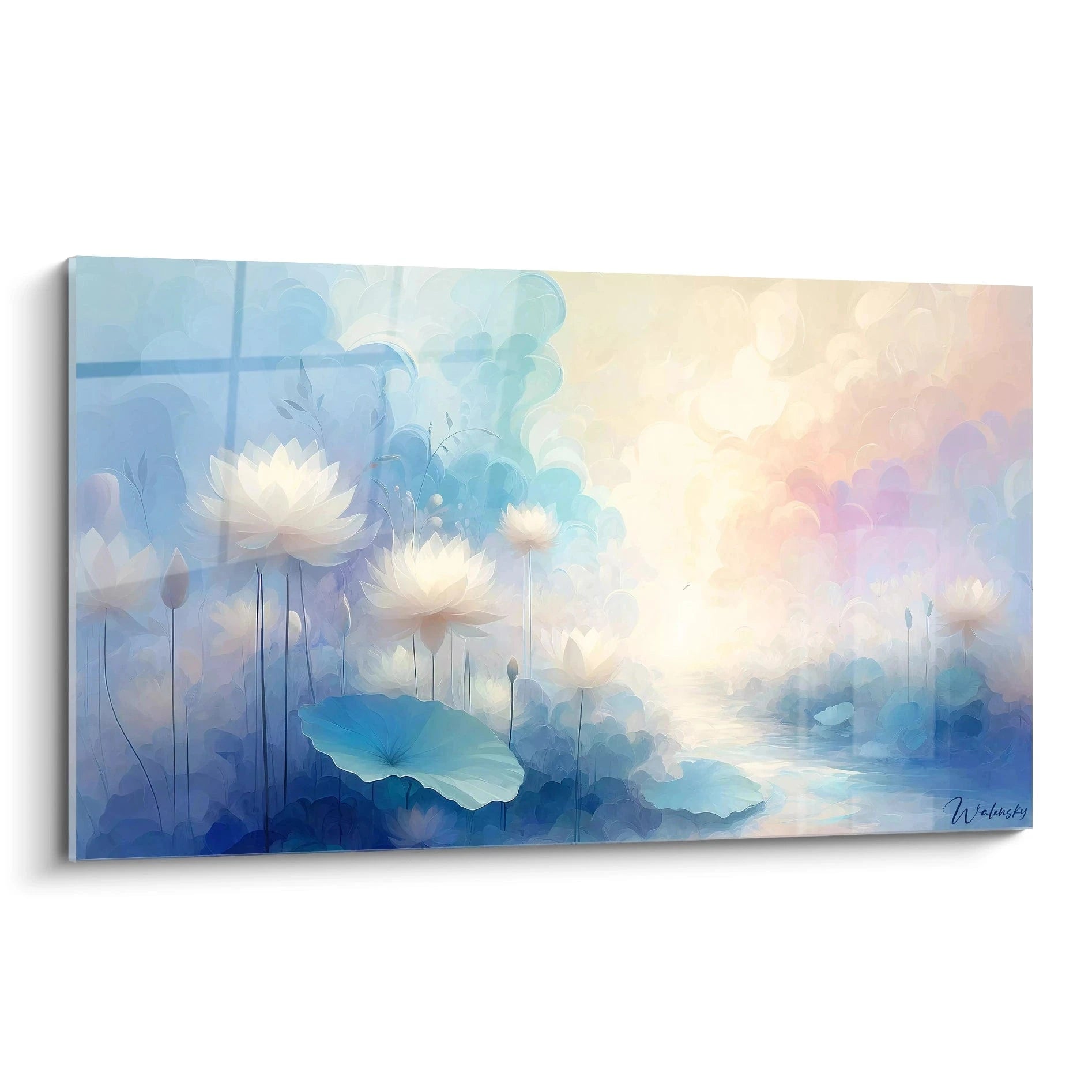
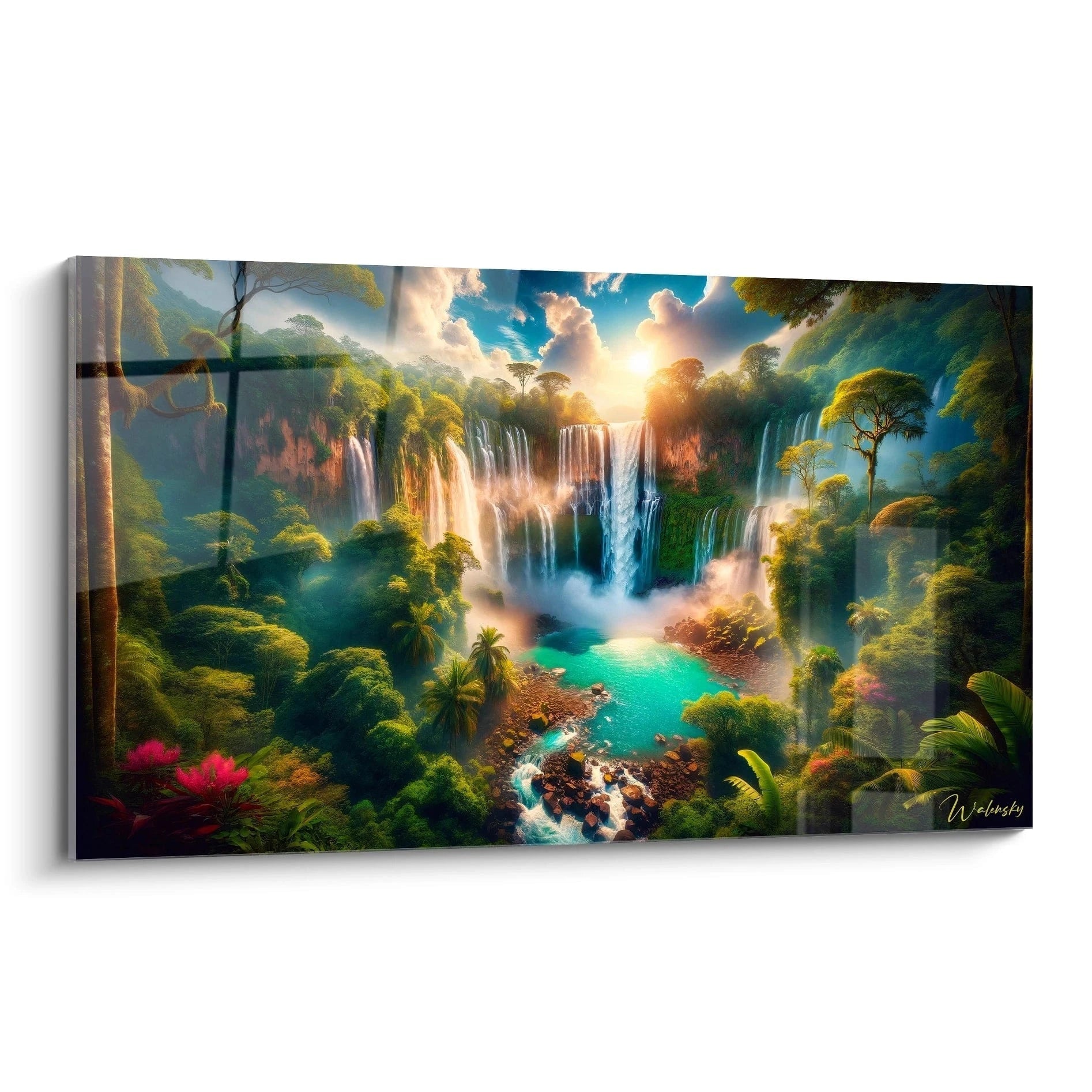
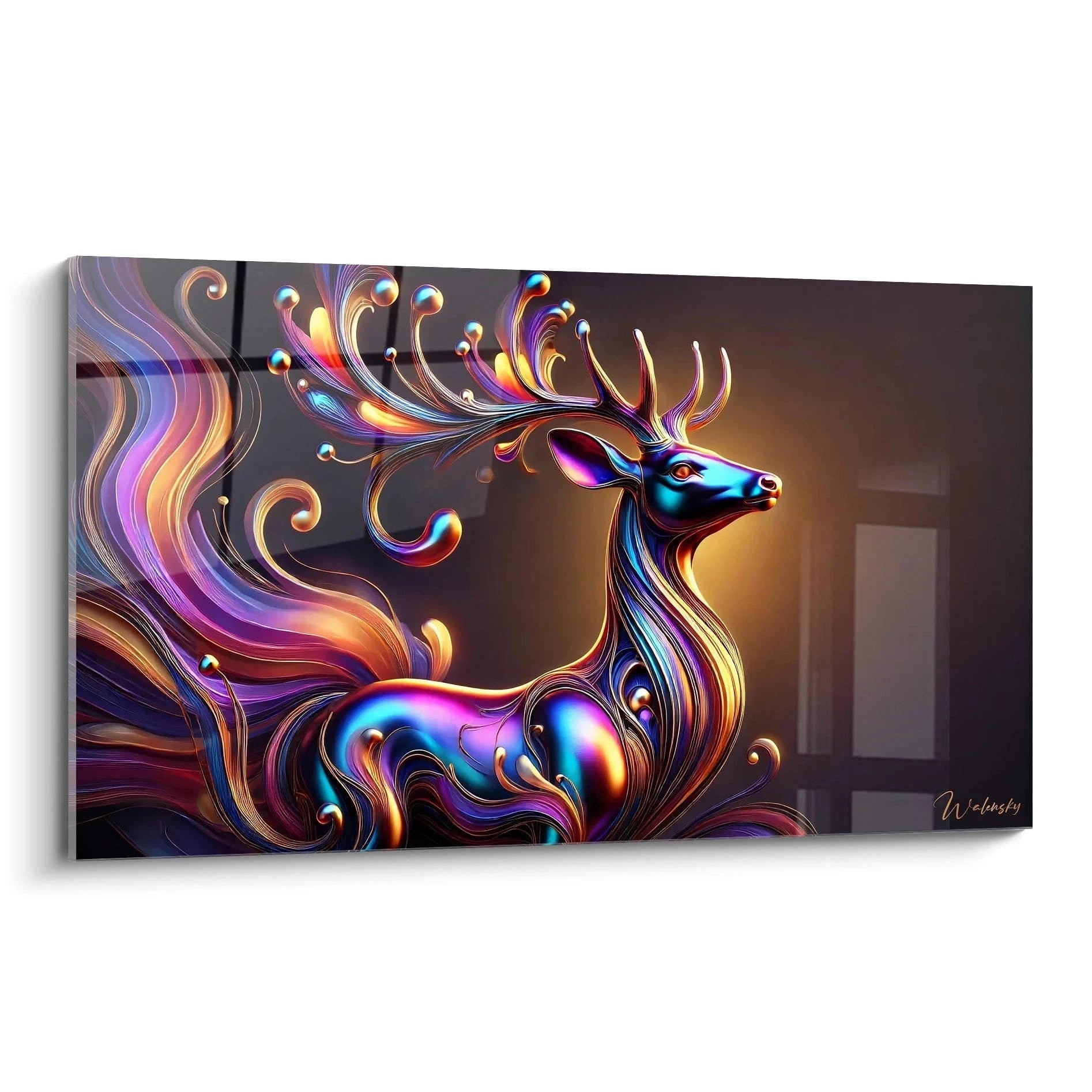
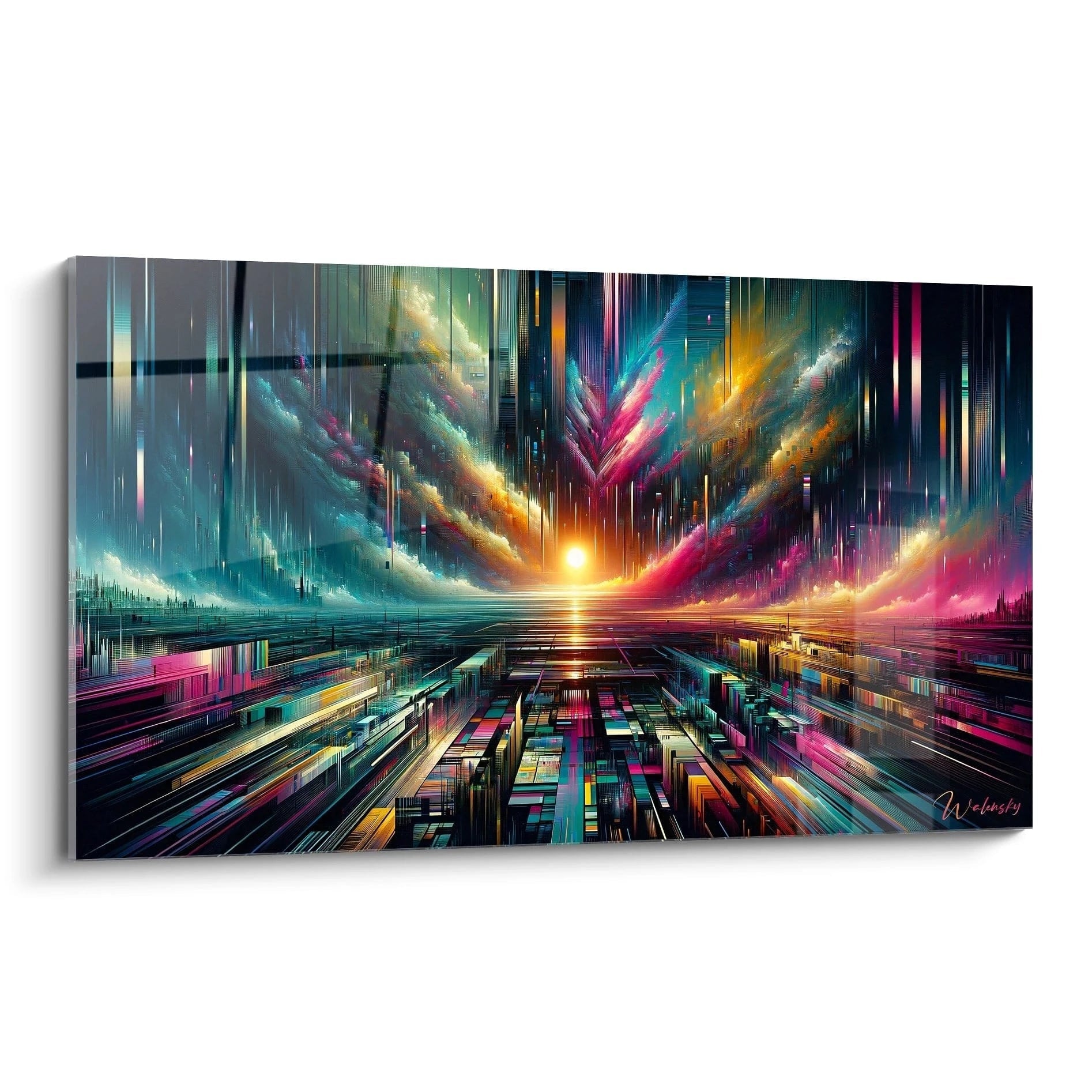
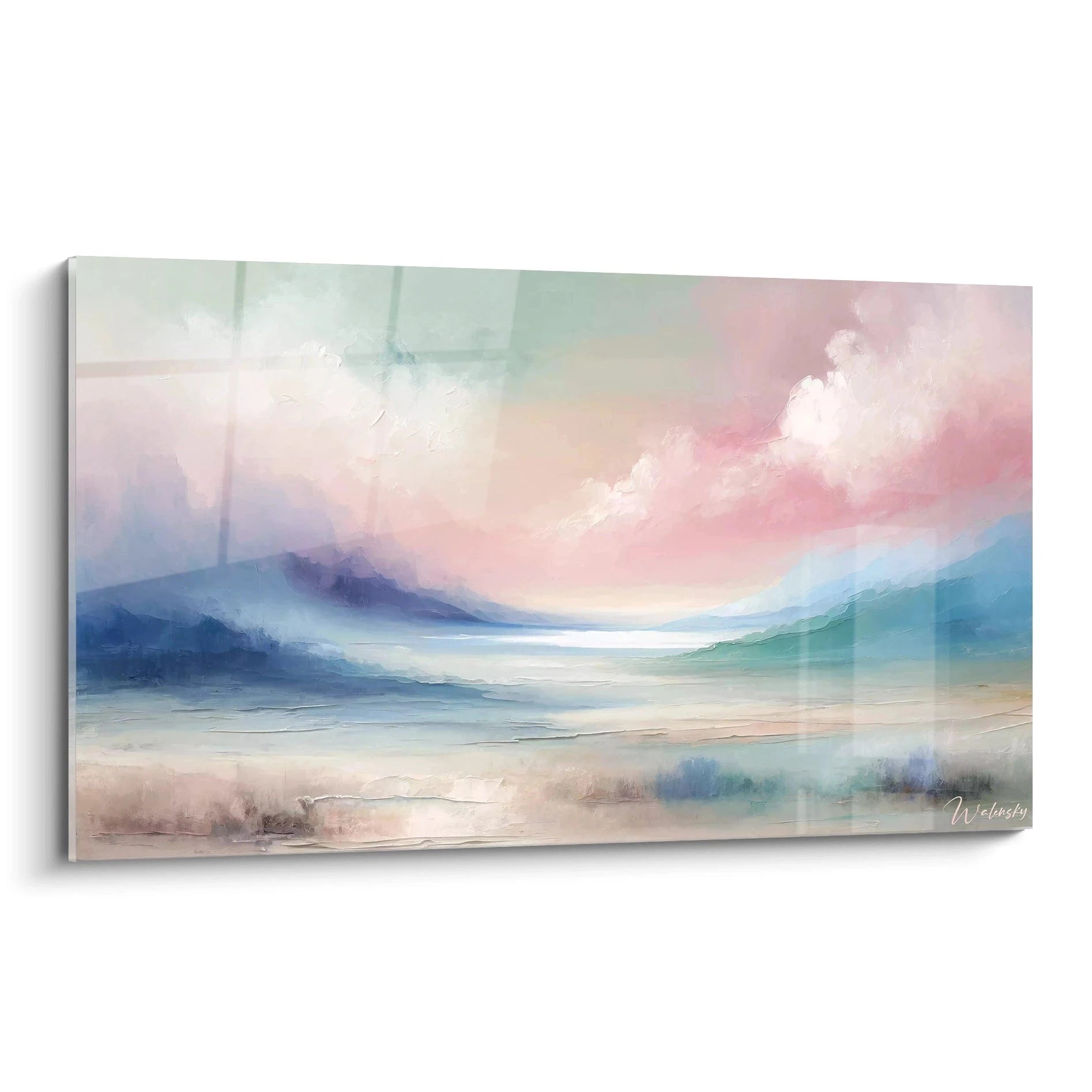

To offer a painting to mark an important life moment
11 October 2025 · 18 min read · by Walensky
You've just learned some great news: your best friend has become a dad, your sister has achieved her long-awaited promotion, or your parents are celebrating their golden anniversary. You want to mark the occasion with a gift painting special moment that will remain etched in their memory, but you find yourself facing a paralyzing dilemma: how to choose something significant enough to honor this unique moment?
Anguish sets in as you realize that traditional gifts – fleeting bouquets of flowers, conventional jewelry, soulless decorative objects – will never do justice to the importance of the event. You can already imagine their polite smile as they unwrap your present, only for it to end up forgotten in a drawer.
You’ve already tried traditional gift shops, spent hours browsing e-commerce sites, and asked your loved ones for advice. The result? Growing frustration with this standardized offering that neither reflects the uniqueness of the moment nor the depth of your feelings.
It’s perfectly normal to feel overwhelmed when searching for the perfect gift. The problem isn’t your lack of inspiration, but the fact that most gifts don’t create a lasting emotional connection with the moment being celebrated. They mark the instant, but don’t bring it back to life.
By the end of this article, you will know exactly how to transform a simple painting into a true memory keeper, capable of reviving the emotion of this precious moment every time it’s looked at, and your loved one will instantly understand that this gift was chosen especially for them.
Why is wall art becoming the secret language of strong emotions?
Unlike traditional gifts that lose their impact over time, offering an emotional work of art creates a permanent anchor in the living space. Imagine: in 10 years, your friend will still be looking at this painting and instantly recalling that moment of happiness you wanted to celebrate. It’s like creating an emotional time machine, activated with every glance.
🎨 Moving testimony: Sarah had chosen a gold-toned abstract painting to celebrate her parents’ 25th wedding anniversary. Three years later, when her father was hospitalized, her mother confided to her: "Every morning, I look at this artwork in our living room and I relive our wedding day, all our children together... It gives me the strength to carry on."
Conversation with a decor expert
Wall art transforms the space into a sanctuary of memory: A well-chosen painting becomes the emotional focal point of a room, creating an atmosphere that tells a personal story. Within 6 months, it becomes an integral part of the place’s identity.

Understanding What Lies Behind Hesitation When Choosing the Perfect Gift
You probably recognize yourself in these situations: you wander aimlessly through stores without finding anything special enough, you order online and then cancel your order, or you constantly postpone your purchase "waiting to find something better." This paralysis of choice hides three deep blocks that you probably haven't identified.
The real difficulty doesn't come from your indecision, but from the fact that our brain seeks absolute perfection for important moments. It's like trying to write the perfect sentence to declare your love: the greater the emotional stake, the more pressure you put on yourself.
Imagine you're looking for a book to give as a gift without knowing the person's reading tastes. It's the same with art: you're afraid of choosing the wrong style, color, or message. But the beauty of art lies precisely in its ability to touch beyond conscious preferences.
The Fear of "Bad Taste" That Paralyzes Your Choices
Contrary to what we think, there is no "bad taste" in art when the emotional intention is sincere. What matters is the resonance between the artwork and the moment being celebrated, not the conformity to supposedly universal aesthetic codes.
It's like the difference between wearing a custom-made suit and wearing a rental tuxedo: one expresses your personality, the other just follows the rules. Your artistic choice should reflect your unique relationship with this person and this moment.
This fear pushes you to seek bland "safe bets" rather than works that have character. As a result: you miss out on paintings that would have created a true emotional connection because they were outside your aesthetic comfort zone.
✨ Quick test: Look at the walls of your own home. What images or objects make you smile every time? They probably don't follow the "decor rules," but they speak to you. That's exactly the emotion you should be looking for in your gift.
The Illusion of a "Lasting Gift" Versus Emotional Impact
Many people think that a valuable gift must be practical or useful to justify its price. This accounting logic totally ignores the symbolic and emotional dimension that makes an object precious.
A painting is not a financial investment, it's an emotional investment. Like a family photo: its value is not measured in euros but in the memories it evokes and the smiles it provokes.
You worry that your loved one will find this gift "too" much: too personal, too expensive, too bulky. In reality, this emotional generosity will be perceived as the most beautiful proof of attention one can receive.
The Trap of Customization at All Costs
The obsession with finding something unique and personalized can lead you to disappointing custom creations or gadgets lacking artistic substance. True art already carries a universal emotional force.
You can easily spot it by asking yourself: "Does this artwork touch me even without knowing its story?" If the answer is yes, it will also touch your loved one. Artistic emotion transcends personal tastes.
This pursuit of personalization makes you miss out on beautiful works that would have perfectly suited, simply because they hadn't been "specially designed" for the occasion.
🔍 The 3 Signs of a Successful Artistic Choice:
- You feel an immediate emotion: If the artwork makes you react at first glance, it will create the same effect in your loved one
- The artwork tells a story: You can imagine a scene, an atmosphere, a sensation when looking at it
- It asserts itself naturally: Instead of trying to fit it into your criteria, it redefines your expectations.
The emotional trigger: when art meets intention
The real secret lies in the synchronization between your emotional intention and the expressive power of the artwork. It's like a tuning fork: when the frequencies align, the resonance is perfect. You will feel it physically: your gaze will remain fixed, your breathing will change slightly, you will want to share this discovery.
The golden rule of artistic gifting: If you feel like telling your loved one about the artwork before even buying it, it's the right choice. Art that deserves to be given always creates a story to share.
| ❌ Rational approach | ✅ Emotional approach | 💡 Why it works | 🎯 Benefit for the recipient |
|---|---|---|---|
| Seeking a "safe" style | Choose what moves you | Sincere emotion is contagious | Feel your authenticity |
| Analyze existing decor | Imagine the atmosphere created | Art transforms the space | Discover new harmonies |
| Calculate value for money | Evaluate the memorable impact | Emotional value takes precedence | Keep an imperishable memory |
| Ask everyone's opinion | Trust your instinct | Your relationship is unique | Feel truly understood |
— Also to discover


The foolproof method to transform your intuition into a memorable gift
Rassurez-vous : choisir le perfect moment-themed artwork gift is not a matter of luck or innate artistic talent. It's a three-step method that transforms your raw emotion into an informed choice. Like a chef following a recipe to create an extraordinary dish, you will learn to decode your feelings to translate them into concrete artistic criteria. At the end, you will have the satisfaction of knowing that this artwork will carry your message of love or friendship with a power that words could not equal.
🎯 Your roadmap: We will first explore the emotion of the moment to define the desired atmosphere, then decode this atmosphere into artistic language (colors, shapes, style), and finally validate your choice with objective criteria. Each step brings you closer to the moment when you will say: "That's exactly it!"
Step 1: Capturing the emotional essence of the moment
Before looking at a single artwork, you must crystallize the emotion you want to celebrate. It's like developing a photo in a darkroom: the image is already there, you just have to reveal it. This emotional clarification becomes your compass to navigate among all possible works without getting lost.
What you need for this introspection
- A moment of calm: 15 minutes without distractions where you can truly connect with your memories. Avoid breaks between activities; choose a moment when your mind can wander freely. The quality of this reflection determines the accuracy of your final choice.
- Noting support: Paper and pen rather than smartphone, because handwriting engages your emotional brain differently. You will capture subtle nuances that would disappear in the speed of the keyboard. These notes become your artistic specification.
- Photos of the celebrated moment: If they exist, look at them to reconnect with the atmosphere. Observe the expressions, the dominant colors, the energy that emanates from them. These visual elements will naturally influence your aesthetic choices.
Let's now move on to practicing this emotional exploration
How to reveal the hidden emotion
Reliving the moment in detail: Close your eyes and immerse yourself in the precise moment you want to celebrate. What struck you the most? The expression of joy on the face of your loved one, the overall atmosphere, your own emotion as a witness? This immersion connects you to the very essence of the moment.
⏱️ Time: 5 minutes | ✅ Successful when: You physically feel the emotion of the memory | ⚠️ Attention: Don't rationalize too quickly - let the sensations surface naturally
Translate into sensory keywords: Note 5 to 8 words that describe the atmosphere: warm, sparkling, serene, bright, enveloping, dynamic... These terms will direct your gaze towards certain types of works. They form your personal artistic vocabulary.
⏱️ Time: 3 minutes | ✅ Successful when: Your words evoke sensations, not concepts | ⚠️ Attention: Avoid overly technical or intellectual adjectives
Identify the dominant emotional color: What hue best corresponds to your feeling? Not necessarily the physical color of the moment, but the color that translates its energy. A wedding can evoke the gold of joy rather than the white of the dress.
⏱️ Time: 2 minutes | ✅ Successful when: The color makes you relive the emotion | ⚠️ Attention: Trust your first colored intuition
✨ Validation step: You've succeeded in this step if you can describe the moment by closing your eyes and your keywords are enough to convey the atmosphere to someone else. If it's blurry, start over by focusing on a specific detail of the memory that makes you smile.
Step 2: Decoding your emotion into artistic language
Now that you have your "emotional fingerprint", you will transform it into concrete visual criteria. This is the transition from the abstract to the tangible, like a translator who conveys a poem from one language to another while preserving its essence. This step gives you the keys to immediately recognize works that carry your message.
Your artistic translation tools
- Your emotional list: The keywords from step 1 become your search filters. Each term will eliminate some styles and highlight others. For example, "sparkling" leads to colorful contemporary art rather than classic still lifes.
- A correspondence grid: Learn to associate your sensations with visual characteristics: warmth = orange tones, serenity = flowing lines, dynamism = angular shapes. These associations become automatic with practice.
- Reference photos: Keep 2-3 images that capture the desired atmosphere: landscapes, scenes of life, even abstractions. They help you stay aligned with your intention when exploring works.
Transforming emotion into visual criteria
Define the emotional palette: Starting from your dominant color, expand to a harmony of 3-4 shades that match your feeling. Use the simple rule: warm colors for positive energy, cool colors for contemplation, contrasts for intensity.
⏱️ Time: 10 minutes | ✅ Succeeded when: Your palette instantly evokes the right feeling | ⚠️ Attention: Don't seek technical perfection, follow your instinct
Choose the energy of shapes: Rounded and curved shapes for softness and harmony, straight lines and angles for strength and determination, organic shapes for spontaneity. This emotional geometry guides your eye to the right compositions.
⏱️ Time: 5 minutes | ✅ Succeeded when: You know whether you prefer fluidity or structure | ⚠️ Attention: A work can mix several energies, the important thing is the dominant one
Determine the emotional intensity: Intimate moment = contemplative work with subtle nuances. Festive celebration = expressive art with marked contrasts. This intensity determines whether you are looking for restrained elegance or overflowing expression.
⏱️ Time: 3 minutes | ✅ Succeeded when: You visualize the desired impact on the wall | ⚠️ Attention: The intensity must correspond to the personality of the recipient
Step 3: Validate your choice with the method of heart and reason
The final step combines your emotional impulse with a few essential practical checks. Like a pilot who checks his instruments before takeoff, you ensure that your artistic choice will truly create the desired impact. This final validation gives you total confidence to offer your framed moment highlight gift with your eyes closed.
The emotional and practical validation test
First glance test: Observe the work for 30 seconds without thinking. What spontaneous emotion comes up? If it corresponds to your initial intention, you've got it. If it deviates, even slightly, continue your search.
⏱️ Time: 30 seconds per work | ✅ Succeeded when: The felt emotion matches your objective | ⚠️ Attention: Take this test when you are relaxed, not tired
Projecting into living space: Imagine concretely the artwork at your loved one's. Which room? On which wall? How does it dialogue with the existing decor? A work can be magnificent in a gallery and unsuitable for a family living room.
⏱️ Time: 2 minutes of viewing | ✅ Successful when: You see the overall harmony | ⚠️ Attention: Consider the lighting and scale of the room
Narrative test: Can you explain in 2 sentences why this artwork honors the moment being celebrated? If you struggle to make the connection, your loved one will have the same difficulty. The connection must be evident, even if it remains subtle.
⏱️ Time: 1 minute | ✅ Successful when: The art-moment link seems clear to you | ⚠️ Attention: Avoid convoluted explanations, prioritize emotional clarity
The infallible progression rule: If after these 3 steps you feel excited about giving this artwork, and you want to explain your choice to the recipient, then you have found the perfect gift. Art that truly resonates always creates this eagerness to share.
Congratulations! You now master the secret codes of emotional art. Here are some expert refinements that will transform your beautiful gift into a legendary gift that will be talked about in 20 years. These subtleties make the difference between "giving a painting" and "creating a magical moment".
🎭 Professional curator's tip: Always choose a work slightly "above" your loved one's usual decorative level. People grow with the art they receive, and this gift will elevate their aesthetic vision. It's like giving a book that makes progress: the challenge is stimulating and rewarding.
"What if my loved one really doesn't like contemporary art?"
"I'm afraid they'll find it too modern or won't understand it..."
I totally understand this apprehension, it's even the number 1 fear of all my clients! But here's a reassuring truth: when a work carries a sincere intention and corresponds to an important moment, it transcends usual aesthetic preferences. I've seen people who "hated modern art" moved to tears in front of an abstract painting given with love for their 60th birthday. The emotion of the gesture transforms the perception of art.
💡 Reassuring action: Start by discreetly observing what your person likes: magazines, decorative objects, even clothing. These choices reveal their true aesthetic attractions, often more open than they think.
— In the same spirit


The traps to avoid absolutely so as not to spoil the magic
Attention! Some mistakes can transform your magnificent intention into an embarrassing misunderstanding. I share these pitfalls not to worry you, but to avoid the regrets I have seen in others. These errors are all the more frustrating because they are easily avoidable.
- 🚫 Choose based on YOUR decor: You unconsciously project your own tastes and your interior. The trap: the artwork that you like at your place can clash completely with your loved one's. Solution: always visualize the painting in THEIR space, with THEIR light, THEIR personality. This mistake is so common that it explains 70% of "missed" artistic gifts.
- 📏 Underestimating or overestimating the size: A painting that is too small disappears and loses its emotional impact. Too large, it overwhelms the space and creates discomfort. Simple rule: for a standard living room, aim for 60-80cm in width. For a bedroom, 40-60cm is sufficient. And remember: we are more often sorry for having taken too small than too large.
- 💸 Sacrificing quality for price: A painting of poor quality (blurry print, dull colors, fragile support) betrays your generous intention. Your loved one will immediately see that "you saved money" on their important moment. It is better to have a smaller but noble work than a large one of poor quality.
- 🎁 Wrapping like an ordinary object: Presentation is part of the emotion. A painting slipped into a plastic bag or wrapped hastily breaks the magic before even unpacking. Invest in careful packaging: elegant kraft paper, quality ribbon, possibly a box. The unpacking should prolong the emotion.
- ⏰ Offering without emotional preparation: Tendering the gift by saying "I hope you like it" totally sabotages the impact. Prepare 2-3 sincere sentences that explain your choice and link it to the moment being celebrated. This contextualization multiplies the emotional reception.
🛡️ Checklist of safety before purchase: Does the artwork immediately make you think of your loved one? Can you explain your choice in 30 seconds? Is the quality up to the importance of the moment? Will the packaging be worthy of the emotion? If one answer is "no", take the time to review your decision.
— Other pieces chosen


Your most frequently asked questions about gift art
Allow 2 to 3 hours of research spread over several days to allow your reflection to mature. In terms of budget, a quality work to mark a special moment starts around 150-200€ for 50x70cm. Optimization: first define your budget range, this prevents you from falling in love with a piece that is out of budget. Concrete example: Sarah found the perfect painting for her mother's birthday in 4 days, budget 180€, result: tears of joy.
Use the "reverse compliment" technique: imagine that this person is giving you exactly this artwork for the same type of occasion. Would you be touched? If so, the emotion is reciprocal. Another infallible clue: you want to tell your friends about your choice before even giving the gift. This premonitory excitement indicates that you have aimed emotionally.
It’s often a false problem! A quality artwork creates its own harmony and can even reveal unexpected decor possibilities. Golden rule: if the artwork corresponds to the deep personality of the person (not necessarily to their furniture), it will naturally find its place. The biggest mistake: choosing a “matching” artwork without soul rather than a strong piece that positively shakes up the space.
Offer your help with hanging from the start, it’s a very appreciated service and allows you to share a complicit moment. Provide the appropriate fixings (molly plug for hollow wall, expansion plug for concrete wall) and a level. Ideal height: center of the artwork at 1m60 from the floor. If you’re not comfortable with DIY, many stores offer this service for 20-30€.
Abstract landscapes and gentle geometric compositions are indeed more consensual, but "safe" doesn't mean "impactful". My advice: start with artworks that use natural colors (ochres, deep blues, forest greens) with balanced compositions. Avoid portraits (too personal) and explicit messages (too directive). Accessible contemporary art remains your best ally to create emotion without taking risks.
Your transformation: from anxious researcher to expert in memorable gifts
In a few weeks, when your loved one tells you that your gift artwork moment of strength reminds them every day of that precious moment you wanted to celebrate, you will realize the power of your choice. You will never be that person who wanders around stores without knowing what to give. You will have acquired that rare confidence of those who know how to transform their emotions into gifts that mark a life.
This skill goes far beyond wall art: you have learned to decode your emotional intentions and translate them into concrete choices. This method applies to all your future gifts, whether it's jewelry, books or experiences. Your entourage will start asking you for advice for their own special occasions.
The most beautiful thing about this story? You have just understood that giving an emotional artwork is not reserved for wealthy connoisseurs. It is within everyone's reach who sincerely feels the importance of a moment and wants to honor it properly. Your first gesture: mentally revisit the moment you want to celebrate and let your emotion surface. The rest will follow naturally.
🎨 Your new power: You now have the method to create lasting memories through art. Whenever one of your loved ones experiences an important moment, you will know exactly how to transform it into a legendary gift. This skill will accompany you throughout your life!
Also read: 🎭 Discovering wall art and emotions
Explore our collections


