

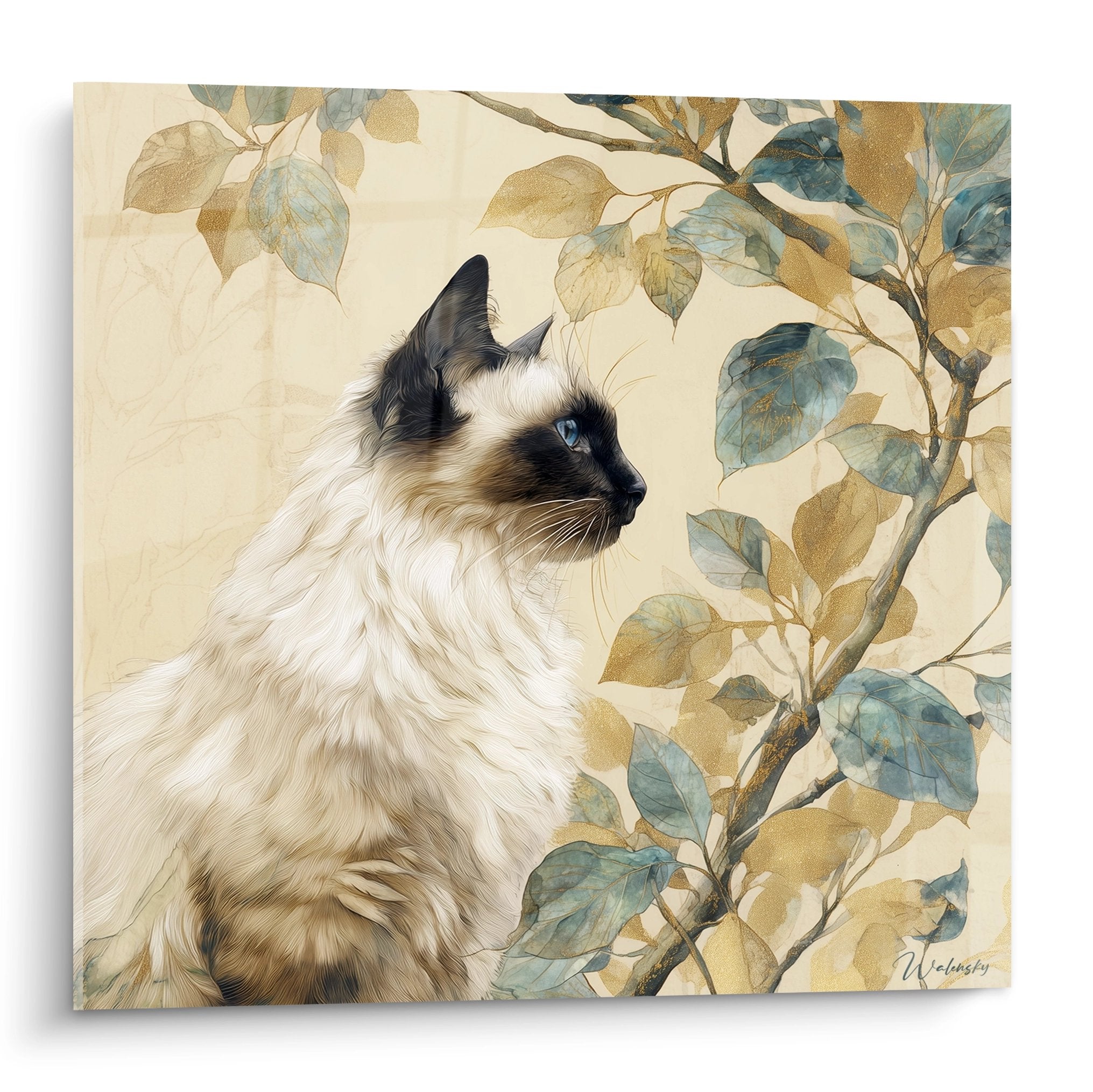






Buying a painting as a gift: how to avoid getting the style wrong?
October 11, 2025 · 19 min read · by Walensky
You stand before the empty wall of your friend's living room, your personalized painting gift under your arm, and suddenly anxiety grips you: "What if it clashes completely with their décor?"
That dizzying feeling as you realize that this stunning abstract painting in vivid tones might clash with their beige walls and minimalist furniture. Your stomach tightens.
Yet you followed all the classic advice: match the colors, choose something "neutral," discreetly ask about their tastes. But nothing worked, and now you're frozen before the vast array of artistic choices.
Reassure yourself: this fear of choosing wrong affects 9 out of 10 people who want to give a tasteful work of art. The problem isn't your lack of artistic taste, but the absence of a clear method to decode your loved one's decorative personality.
In the next few minutes, you'll discover how to turn this anxiety into complete confidence: choosing THE painting that will reveal your thoughtful attention and make the eyes of the recipient light up, regardless of their current decor style.
Why now is the perfect time to give a painting
Unlike other gifts that lose their shine over time, a painting becomes more precious over the years. Like a fine wine that improves with age, it develops a unique emotional story with its owner. But be careful: the longer you wait, the more likely the person is to buy one for themselves and you'll lose this magical opportunity to leave a lasting emotional mark on their memory.
🎨 Testimony from an interior designer: "One of my clients still keeps, 15 years later, the little floral painting her sister-in-law gave her for her housewarming. It wasn't her style at all back then—she was more into clean modern design. Today it's become THE focal point of her cozy living room, and she tells this story to every guest."
A conversation with a decor expert
The golden rule of a successful painting gift: A carefully chosen painting always reveals a hidden facet of the recipient's personality, like a mirror reflecting their secret aspirations. Visible results within 48 hours: spontaneous compliments and Instagram photos of the new decor corner.

What really lies behind your hesitation
Perhaps you recognize yourself in these situations: you wander aimlessly through galleries without knowing what to choose, you frantically browse Pinterest looking for THE perfect style, or you've been postponing this purchase for months "while waiting for inspiration."
What's really happening is that you're trying to guess the other person's tastes instead of understanding how they live. The difference is huge : tastes change, but lifestyle reveals deep personality.
It's like trying to choose a perfume for someone by only looking at their clothes, when you should understand whether they prefer intimate evenings or grand events.
The first mistake: confusing decor style with artistic personality
Here's the trap 8 out of 10 people fall into: they assume that someone with a modern interior necessarily wants contemporary art. It's often exactly the opposite that happens!
Imagine someone living in a minimalist loft because their work is already visually very stimulating. What they unconsciously seek at home might be a soothing painting in natural tones, not one more geometric piece.
This discovery will transform your approach: instead of looking for what "goes with" the existing decor, you'll look for what "completes" the person. Your gift then becomes a revelation rather than an accessory.
🔍 Immediate test: Look at your own living room and ask yourself: which painting would make me happy right here, right now? Not the one that "would look good," but the one that would make you want to smile every morning when you see it. You've just understood the difference!
The second hidden cause: the myth of size and placement
"It has to be the right size for their wall" - this belief kills more gift projects than all the others combined. The reality? A painting you love always finds its place.
It's like giving an exciting book thinking "I hope they have room on their shelf." Someone who receives a work that speaks to them will reorganize their space to showcase it, not store it in a closet!
This realization frees you from a paralyzing constraint and lets you focus on what matters most: the emotion your gift will evoke.
The third invisible mistake: overlooking the "positive surprise" factor
Here's what almost nobody notices: the most memorable gifts are those that reveal something the person didn't know about themselves. Like that very rational woman who discovered her sensitivity to seascapes.
You can spot this opportunity by observing the small details they unconsciously collect: travel photos, green plants, objects with particular textures.
The impact on their daily life? Instead of receiving "a nice painting," they receive "a discovery about themselves" that they will treasure and talk about for years.
4 signs that reveal their secret aspirations:
- They linger for a long time in front of certain shop windows: Note the kind of atmosphere that attracts them; it's like an emotional compass pointing toward their deep desires
- They spontaneously comment on photos online: Their "I love it!" reveals their genuine favorites, far more reliable than their answers to your direct questions
- They have kept "worthless" objects for a long time: This fondness for certain shapes or colors indicates their lasting aesthetic attachments
The trigger: understanding their "visual refuge"
Here's what truly makes the difference: everyone has a "visual refuge," a type of image that instantly soothes them. It's like an emotional reset button you can activate with the right painting. To identify it, observe where their eyes drift when they're tired or stressed: a window overlooking nature, family photos, art books on their coffee table.
The visual refuge rule: The perfect painting is one that recreates the soothing effect of their natural refuge. Check by imagining this painting in their living space: would it make them want to sit down facing it with a cup of tea?
| ❌ Disappointing classic approach | ✅ The visual refuge method | 💡 Why it works | 🎯 Result achieved |
|---|---|---|---|
| "What would go in their living room?" | "What emotionally recharges them?" | We aim for the soul, not the decor | Transformative gift vs decorative gift |
| "What is her decor style?" | "What are her wellness rituals?" | We understand her deep needs | An artwork that accompanies her everyday life |
| "Does it go with her colors?" | "Does it feed her imagination?" | We stimulate her personal creativity | A lasting source of inspiration |
| "Is it the right size?" | "Will it make her want to smile?" | Emotion takes precedence over logic | Joy renewed every day |
— Also worth discovering


The 3-step method so you never get it wrong
Now that you understand the hidden mechanisms, let's move on to practice with a clear method that will turn your fear of choosing into complete confidence. Like a detective following clues, you will decode the artistic personality of your loved one, then translate this discovery into a precisely targeted painting choice. In the end, you'll have that deep satisfaction of holding THE gift that hits the mark.
🎯 Overview of your mission: Step 1 = Decode her visual personality (like an artistic profiler), Step 2 = Identify the style of painting that suits her (translation into decor language), Step 3 = Validate your choice with objective criteria (anti-failure safeguard). Result: you go from "I hope she'll like it" to "I know it will make her melt."
Step 1: Become a detective of aesthetics
This first step is like laying solid foundations for a house: everything else depends on its quality. You will learn to "read" a person through their unconscious aesthetic choices. The reward? Discovering facets of her personality that she sometimes doesn't even know about!
Your artistic investigation tools
- Her phone (with permission!): The photos she keeps reveal her authentic visual favorites. Look for screenshots of decor ideas saved from Pinterest or photos of places that moved her. Avoid "selfie" albums and focus on what she finds beautiful in her surroundings
- Her cherished objects: That little vase she's had for 10 years, that blanket she takes everywhere - they reveal her deep sensory attachments. Look at materials (shiny/matte), shapes (round/angular), colors that recur. It's her unconscious aesthetic signature
- Her contemplative pauses: Discreetly observe what stops her in the street: a shop window, a graffitied wall, a garden? These micro-fascinations reveal her natural visual resources, far more reliable than her "official" tastes
Now, let's move on to collecting concrete clues
Targeted observation phase
Mapping her "visual magic moments": For one week, note when her eyes light up at something beautiful. It could be light reflecting on a wall, a color combination in a window display, a sunset. The goal: identify the pattern of what nourishes her visually, her personal aesthetic "fuel"
⏱️ Time: 7 days of discreet observation | ✅ Success when: You have 5-6 precise examples of what amazes her | ⚠️ Watch out: Don't confuse polite "that's pretty" with genuine wonder - look for the spontaneous pause, the authentic smile
Decoding her wellness rituals: Notice what she does to recharge: looking out the window, flipping through magazines, strolling through certain places. These activities reveal the type of visual environment that restores her emotionally, your future source of inspiration for the painting
⏱️ Time: 3-4 targeted observations | ✅ Success when: You identify her main "visual refuge" | ⚠️ Watch out: Distinguish social habits from true personal needs - look for what she does alone, spontaneously
Analyzing her "survivor" objects: Identify 3-4 objects she has kept for a long time despite moves and decor changes. Examine their common points: colors, textures, styles. These constants reveal her lasting artistic tastes, beyond passing trends
⏱️ Time: 20 minutes of observation at her home | ✅ Success when: You identify 2-3 recurring characteristics | ⚠️ Watch out: Don't rely on gifts received or utilitarian purchases - look for objects chosen purely for pleasure
✓ Validation of your artistic profile: You should be able to describe in 2-3 sentences what kind of atmosphere she seeks (e.g., "she looks for serenity in natural landscapes and soft colors") and what her preferred "visual language" is (shapes, colors, moods). If it's unclear, extend the observation - this solid foundation will spare you every failure to come!
Step 2: Translate her personality into a painting style
Now that you have her "aesthetic DNA", you will learn to translate it into concrete selection criteria. This is the moment when your investigation turns into a precise action plan. Even more rewarding: you start to visualize HER ideal painting before even stepping into a gallery!
Artistic translation phase
Converting her "visual refuges" into artistic themes: If she recharges with nature, explore landscapes, botanicals, organic abstracts. If it's urban architecture, think geometric, industrial, photographic. The principle: reproduce the calming effect of her refuge in an artistic format suited to her interior
⏱️ Time: 15 minutes of focused reflection | ✅ Success when: You have 2-3 precise artistic themes | ⚠️ Watch out: Avoid literal copying - if she loves the sea, it's not necessarily a seascape she needs, but perhaps calming blue tones in an abstract style
Defining her emotional palette: Analyze the colors that recur in her spontaneous choices and translate them into an artistic mood. Warm colors = creative energy, cool = contemplative serenity, neutrals = timeless sophistication. This palette guides your selection without boxing you into a decor match
⏱️ Time: 10 minutes of analysis | ✅ Success when: You know whether she needs energy, calm or balance | ⚠️ Watch out: A very organized person may secretly dream of vivid colors - look for the emotion she wants to feel, not the one she already lives
Choosing the level of artistic intensity: Determines whether she prefers art that unveils slowly (subtle, contemplative) or that strikes immediately (expressive, statement). Observe how she dresses and communicates: discreet = subtle art, expressive = impactful art. This decision influences everything: style, format, placement
⏱️ Time: 5 minutes of synthesis | ✅ Success when: You know whether to aim for "discreet crush" or "centerpiece" | ⚠️ Watch out: A discreet person may appreciate a bold painting as a private outlet - test with indirect questions about her favorite artists
Step 3: Secure your choice with cross-validation
This final step gives you absolute confidence before purchase. Like a pilot checking all instruments before takeoff, you will validate your choice with objective criteria that eliminate the risk of error. The result: you give your gift with the serenity of someone who knows it will make a sensation!
Final validation phase
Emotional projection test: Imagine her discovering the painting for the first time. Her spontaneous reaction should be "Oh! It's exactly..." rather than "It's pretty". Then visualize the painting in her everyday life: does she see it when she gets up, while having her coffee? This projection reveals whether you aimed right emotionally
⏱️ Time: 5 minutes of visualization | ✅ Success when: You feel the emotion she will have | ⚠️ Watch out: If you have to "explain" why it's good, it's not the right one - the right painting speaks instantly
Checking temporal coherence: Ask yourself whether this painting could still please her in 5 years, even if she changes her decor. A good choice transcends trends and grows with the person. Test by imagining the painting in 3 different interior styles - if it works everywhere, you've won
⏱️ Time: 3 minutes of projection | ✅ Success when: The painting remains valid even if she moves | ⚠️ Watch out: A painting too tied to a specific trend ages poorly - favor timeless emotion
The personal story test: Verify that your choice can become "her" painting, not just "a" painting. It must be able to be associated with a memory (your gesture), a period of her life, a personal discovery. This ability to create personal story distinguishes a successful gift from a simple decor object
⏱️ Time: 2 minutes of reflection | ✅ Success when: You imagine the story she will tell about this painting | ⚠️ Watch out: Avoid works that are too "perfect" or impersonal - look for what can develop a unique emotional bond
🏆 Final validation of your choice: Your painting must pass the triple test: immediate emotion (she smiles on seeing it), deep coherence (it truly resembles her), story potential (she'll be able to talk about it with pride). If a single criterion is missing, keep searching - a painting that is 80% successful is still a relational failure!
Rule of progression toward expertise: Move to the next step only when you can explain your choice in 30 seconds at most to a friend, with arguments that talk not about decor but about emotion and personality. The clarity of your explanation reveals the accuracy of your analysis.
Now that you've mastered the fundamentals, let's move on to the subtleties that distinguish a successful gift from a memorable one. These expert details make the difference between someone who gives "a pretty painting" and someone who reveals a hidden facet of the recipient's personality.
⚡ Professional gallerist's tip: The secret of gifts that leave a mark? Choose a painting slightly "above" what she would allow herself to buy. Not necessarily more expensive, but bolder, more expressive, more assertive. It's like giving her a freer version of herself - irresistible!
"And what if I still get it wrong despite this whole method?"
"I'm afraid that even if I follow these steps, she won't really like the painting..."
This concern is completely understandable and even reveals your thoughtful attention to her! Here's the reassuring truth: when someone receives a gift chosen with such care and attention to their personality, the effort and intention often touch them more than the object itself. Even if the style isn't exactly what she would have chosen, she will be moved by the thoughtful approach you took. In fact, the most beautiful testimonials I receive often speak of paintings that have "broadened" a person's taste, leading them toward something they didn't yet know about themselves.
🛡️ Extra reassurance: If you remain worried, accompany your gift with a short note explaining why this painting made you think of her specifically. This gesture reveals your considered approach and turns even a "nearly missed" choice into a touching gift.
— In the same spirit


The 5 mistakes that ruin even the best intentions
Now that you've mastered the method, let's protect your success by avoiding the classic pitfalls. These mistakes are sneaky because they seem logical at first glance, but they can turn your perfectly chosen gift into an unexpected disappointment.
- ⚠️ Choosing based on YOUR personal favorite: It's tempting to think "I love it, so she will too," especially if you get along well. But your personal taste can completely mask her personality. Resist this projection and stay focused on HER aesthetic signals. This is a very common mistake among close friends or family members.
- 📏 Obsessing over exact dimensions and placement: "It has to fit exactly above her sofa" - this technical constraint kills the artistic magic. A painting that moves her will find ITS place, even if it means shifting the current arrangement. The most beautiful interiors evolve around cherished artworks, not the other way around. Trust her instinct for décor.
- 💰 Looking for the "good value" before the emotion: A classic trap: comparing prices per square centimeter or hunting for a "bargain" in the art market. A small painting at €200 that makes her feel something is worth more than a large canvas at €150 that goes unnoticed. Art is not a utilitarian purchase - invest in guaranteed emotion.
- 🎨 Wanting to "educate" her artistic taste: "She doesn't know contemporary art yet, I'll open her eyes" - beware of this cultural-prescriber stance! Your role is to reveal her existing sensitivity, not to transform it. "Educational" gifts create performance pressure instead of spontaneous pleasure.
- ⏰ Buying in last-minute urgency: "I need something for Saturday" - time pressure pushes you toward "safe" and generic choices. Art needs time to mature, to be compared, to earn emotional validation. Plan ahead, or accept postponing the gift rather than sacrificing the quality of the choice.
🔍 Anti-failure checklist: Before any purchase, ask yourself these 4 questions: "Am I choosing for her or for me?", "Can this painting create an immediate emotion?", "Can I imagine the story she will tell about this gift?", "Am I pressed by time or guided by conviction?" One "no" = stop, and keep searching.
— Other selected pieces


Frequently asked questions from future art gift-givers
Expect to spend between €150 and €500 for a quality handcrafted painting that will leave a lasting impression. From €200, you gain access to original works on canvas with professional finishing. To optimize your budget: favor medium formats (40x60 cm), which offer the best visual impact, and focus on artistic originality rather than size. A unique piece at €300 will impress more than a large reproduction at €150.
Excellent practical question! Always choose a painting with a hanging system included (eyelets, tensioned wire). Formats such as 40x60 cm or 50x70 cm are easy to mount with 2 standard hooks. Pro tip: discreetly slip a quality hanging kit (€15) with an illustrated guide into your gift - this shows your attention to detail and spares her the frustration of a "beautiful gift impossible to install."
Don't be fooled: artistic expertise doesn't drive preferences! Some "novices" fall for abstract art because it frees their imagination, while others prefer figurative work because it tells an immediate story. Instead, rely on your read of her personality: an analytical mind is often drawn to geometric abstraction, a dreamy temperament to landscapes or organic abstracts, a narrative character to figurative scenes or expressive portraits.
The perfect timing: during a quiet moment when she can truly look and feel, not in the bustle of a party. Present the painting unwrapped, leaning against a wall in good light - the immediate visual effect matters enormously. Accompany it with a personal note explaining why this painting made you think of her. This staging reveals your care and turns the discovery into a memorable moment.
Here is the secret of lasting gifts: a painting chosen for someone's deeper personality grows with her, unlike purchases that follow decorating trends. Timeless works - artistic quality, authentic emotion, careful execution - endure through decades and moves. In fact, it's often the painting that influences the evolution of her tastes! Many of my clients treasure "the painting that changed everything" they received ten years ago.
Your transformation: from the anxiety of choosing to the confidence of an expert
In a few weeks, picture yourself looking at this painting hung in her home, the spontaneous compliments from her guests, her smile when she tells the story of this gift so "perfectly her." You've moved from "I hope she likes it" to "I know exactly why this painting suits her." This new confidence shows in the way you choose gifts, and your circle will start asking you for advice on their own artistic selections.
This mastery goes well beyond a single gift: you've developed an eye for understanding the deeper tastes of the people around you. This skill transforms your relationships, your appreciation of art, and even your own home decor. You now look at spaces and people with the curiosity of an aesthetic detective.
Understanding was indeed the hardest part - now that you've mastered the method, your first concrete step : discreetly observe your loved one for 3 days using the framework you've learned. You'll be surprised by everything you discover about their hidden artistic personality!
🚀 Your new superpower: You now possess the rare ability to hit the mark with an artistic gift, that unmatched satisfaction of seeing someone discover a little-known side of their own sensitivity thanks to your attention. Go for it - the perfect painting is waiting somewhere, and you now know exactly how to recognize it!
Also read: 📚 Discover all our expert guides on wall art


