


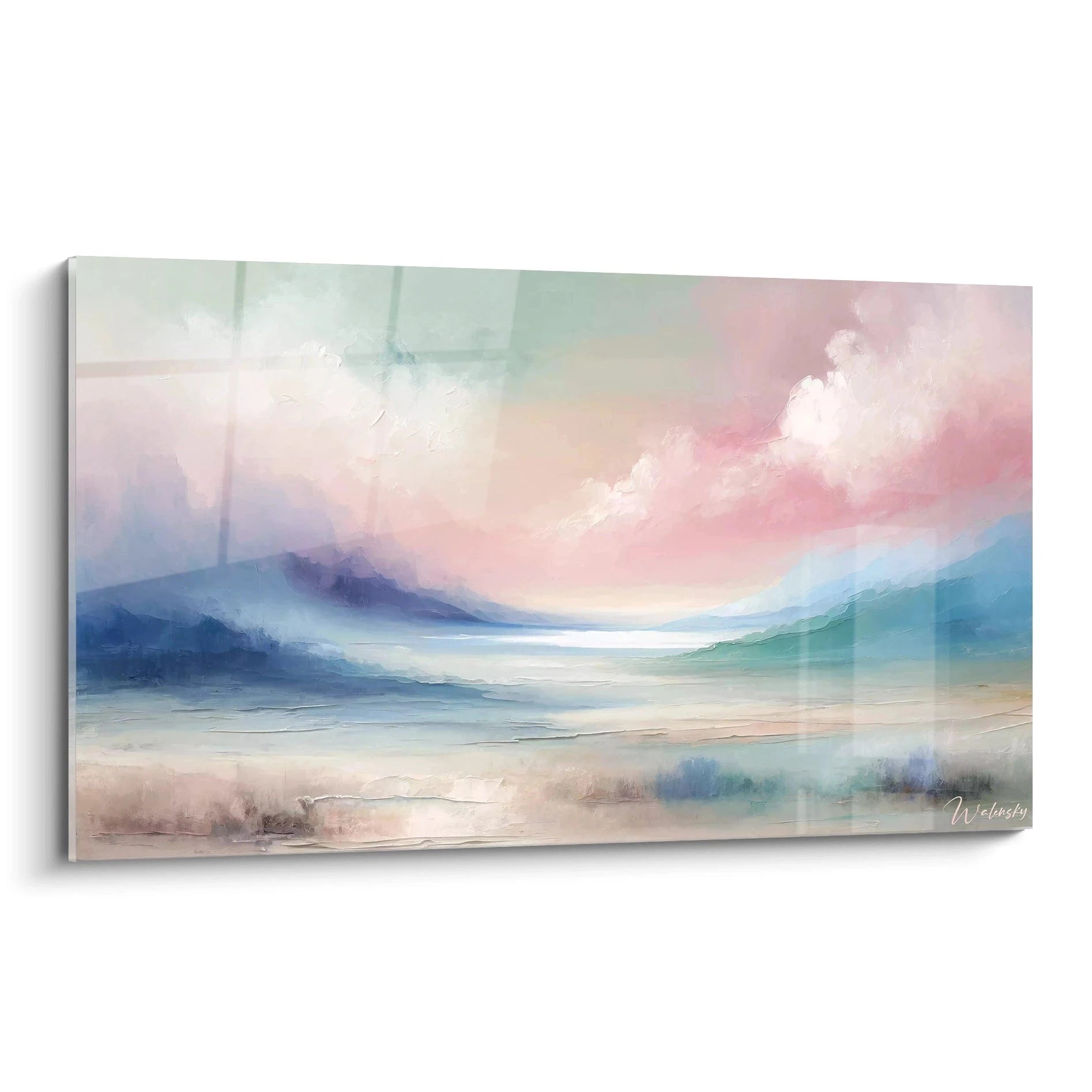

How to Identify an Authentic Handcrafted Work on a Phoenix Wall Art
October 30, 2025 · 9 min read · by Walensky
I have scoured the markets of Asia, the secret workshops of Marrakech, and the confidential galleries of Florence. For twelve years, hunting for rare pieces for my private collection, I developed a sixth sense: the ability to distinguish authenticity from imitation. The Phoenix, this creature of fire and rebirth, fascinates artisans around the world. But not all possess the patience and mastery necessary to capture its immortal essence on a wall mural.
Here's what an authentic handcrafted Phoenix wall mural brings you: a unique piece that gains emotional value over time, a tangible story told by the artisan’s hands, and an incomparable energetic presence in your interior.
The problem? Industrial reproductions flood the market, disguised under misleading marketing terms. 'Handmade', 'artisan inspiration', 'traditional technique': these expressions strip the true craftsmanship of its meaning. You invest in a work to decorate your living room or office, and six months later, you discover that its value lies only in your purchase receipt.
Rest assured: the eye is educated. After examining hundreds of wall murals depicting the Phoenix in all its forms, I have identified the infallible signs that betray the hand of the authentic artisan. In this article, I pass on to you the secrets that will transform your gaze and allow you to acquire pieces that will last through generations.
Texture reveals the soul of the artisan
An authentic Phoenix wall mural is first read with the fingers before the eyes. The true artisan leaves traces of their gesture: variations in paint thickness, imperceptible reliefs where the brush has loaded the material, subtle hollows where the hand has pressed more. Approach the work and observe the feathers of the Phoenix under a raking light. Do you see these micro-variations that create a living topography?
Industrial reproductions display deceptive uniformity. The surface remains desperately flat, even when sophisticated printing techniques imitate relief. The oblique light test never lies: position yourself at a 45-degree angle from your Phoenix wall mural and let natural light caress its surface. The handcrafted work dialogues with the light, creating miniature shadows and changing brilliance depending on your position.
I bought my first authentic Phoenix wall mural in Kyoto, in a workshop where the master took three weeks for a single piece. His fingers danced on the textile, alternating between fine brushes like hair and spatulas that deposited color in geological layers. Each feather of the Phoenix carried at least five successive layers, visible to the naked eye in their imperfect and beautifully human transitions.
Irregularities tell the story
Look for the little imperfections: a drop of dried paint, a slight asymmetry in the Phoenix's flames, an outline that trembles almost imperceptibly. These 'flaws' constitute the signature of the human. An authentic artisan works in movement, breath, and moment. Their hand tires, hesitates, corrects itself. A Phoenix wall art piece perfectly symmetrical, with surgically precise edges, usually betrays a mechanical origin.
The choice of materials speaks of philosophy
A true artisan selects their materials as a chef selects ingredients: with intention and respect. For a Phoenix wall art piece, this creature associated with alchemical transformation, natural pigments bring depth that synthetic colors cannot reproduce. The red ochre obtained from the earth, ground lapis lazuli for the blue nuances of the aura, real gold for the flashes of light in the feathers.
Always ask about the origin of the materials. An authentic artisan knows the history of their tools: where does this linen come from on which they paint their Phoenix? What is the composition of their pigments? How do they prepare their support? These questions are not an intrusion but honor their work. Vague or evasive answers should alert you.
During a visit to a Tuscan workshop, the artisan showed me his pots of pigments labeled with dates and origins: 'Roussillon Ochre, July 2019', 'Afghanistan Ultramarine, Winter 2020'. Their Phoenix wall art piece radiated a chromatic intensity I had never encountered. The colors seemed alive, changing according to the time of day, because they contained particles of different sizes that refracted light organically.
The support reveals the commitment
A handcrafted Phoenix wall art piece rests on a carefully prepared support. Linen, thick cotton, worked wood: these materials require prior treatment that the artisan performs themselves. Turn the artwork over gently if possible. The back of an authentic work shows traces of this preparation: irregular primer layers, visible weave texture, solid but non-industrial fixings.

Our favourite
Golden Octopus Painting - Majestic Creature of the Abyss - Kraken Edition
233,90€
Discover this artworkWhen obsessive detail betrays passion
The authentic artisan loses themselves in the details that no one will notice. On a Phoenix wall art piece, observe the secondary elements: the ashes from which the bird is reborn, the swirls of smoke, the background. A truly artisanal work gives as much attention to these areas as it does to the main subject. Every square centimeter has been thought out, worked on, reconsidered.
I always use the mental zoom technique: I choose a small section of the Phoenix wall art piece, no larger than a coin, and examine it intensely for two minutes. In an authentic work, this tiny area reveals an unsuspected complexity: several shades blend to create what seemed like a single color, multi-directional brushstrokes build the texture, subtle nuances create depth.
Reproductions fall apart under this scrutinizing gaze. The examined section shows technical poverty: uniform flats, absence of tonal variations, mechanical transitions between colors. The Phoenix loses its mystery when you get close, while the artisanal work becomes more fascinating with every centimeter traveled.
— Our selection


The signature beyond the name
A handwritten signature guarantees nothing. I have seen printed reproductions bearing false 'hand-signed' signatures. The true signature of an artisanal Phoenix wall art piece is read in technical details invisible to the novice but glaring to the educated eye.
Examine the edges of the Phoenix: how are the contours treated? An authentic artisan resolves the challenge of transitioning between the subject and background in a personal way. Some leave a blurred halo that suggests movement, others create a sharp but worked border brushstroke by brushstroke. This transition zone constitutes the craftsman's fingerprint.
Also observe the stylistic consistency throughout the work. An authentic Phoenix wall art piece breathes a unity of gesture, even in its technical diversity. The way the feathers at the top are treated corresponds philosophically to the way the flames at the bottom are treated, even if the techniques differ. This unconscious coherence comes from hundreds of hours spent refining a personal style.
The certificate of authenticity that matters
Beware of generic certificates. A real certificate for an artisanal Phoenix wall art piece contains precise information: date of creation, materials used with their origins, exact dimensions, unique number in the series, photograph of the work, handwritten signature of the artisan. Some artisans even document the process with photos of the work. This level of traceability honors the buyer and protects the artwork.

The personal story behind the Phoenix
An authentic artisan has an intimate relationship with the Phoenix as a symbol. It is not a motif chosen for commercial reasons but a deep fascination, often rooted in their personal history. When you talk to the creator of a Phoenix wall art piece, listen to what they have to say: why this creature? What does it represent to them?
Authentic answers overflow with personal references, readings, moments of life. 'I went through a difficult time and the Phoenix symbolized my rebirth' or 'Since childhood, this creature has represented for me the eternal cycle of creation'. These stories imbue the work with a narrative dimension that you will feel each time you contemplate your Phoenix wall art.
In Fez, an artisan explained to me how his grandfather, a renowned calligrapher, integrated the Phoenix into his Quranic illuminations as a metaphor for the immortal soul. His own Phoenix wall art carried this double heritage: the geometric precision of calligraphy and the spiritual symbolism passed down. This depth transformed a beautiful image into a visual meditation.
— You may also like


The price reflects the time invested
Let's be direct: an authentic artisanal Phoenix wall art piece costs a lot for one simple reason - it takes time. If an artisan spends forty hours on a piece and wants to earn a decent wage, the calculation is quickly done. Works sold at prices defying all economic logic cannot be authentically handmade.
This does not mean that craftsmanship remains inaccessible. Emerging artisans offer beautiful works at more affordable rates as they build their reputation. But even in this case, a Phoenix wall art piece requiring fifteen hours of work cannot cost fifty euros. Do the math: quality materials, creation time, artisan experience. A consistent price is paradoxically a guarantee of authenticity.
Invest in a piece that fits your budget but always prioritize quality over quantity. One authentic Phoenix wall art will bring more satisfaction and value than three industrial reproductions. The handcrafted work evolves with you, gains patina, enriches itself with personal stories. It becomes heritage.
Transform your space with a work that tells a true story
Discover our exclusive collection of Myths and Legends wall art that captures the essence of immortal creatures with authentic craftsmanship.

In the same vein
Minotaur Wall Art No. 1 - Myths and Legends Edition
233,90€
Discover this artwork →Your gaze transformed
You now possess the keys to distinguish authenticity from imitation. The next time you contemplate a Phoenix wall art, your eye will travel differently: towards textures, materials, obsessive details, revealing imperfections. You will seek the story behind the image, the hand behind the gesture.
Start by visiting galleries, craft markets, open workshops. Touch the works when allowed. Ask creators questions. Compare an industrial reproduction with a handcrafted piece side by side. Your sensitivity will refine with each encounter, until authenticity becomes evident at first glance.
The Phoenix rises from its ashes. May your space be reborn with a work that carries within it the breath of the artisan, the patience of the gesture, and the eternity of myth. This quest for authenticity is not only about decoration: it honors human labor against standardization, slowness against haste, the unique against the repetitive.
Frequently Asked Questions
How to verify the authenticity of a Phoenix wall art purchased online?
Online purchasing complicates tactile evaluation, but several clues remain accessible. Systematically request high-resolution photographs that allow you to zoom in on details: surface texture, color transitions, secondary areas. A serious seller will provide multiple angles of view, including close-ups and the back of the work. Check for a detailed certificate of authenticity. Look for videos of the creation process if available. Consult customer reviews looking for specific comments about material quality. Prefer platforms that allow returns if the artwork does not match the photographs. Do not hesitate to contact the seller directly with specific technical questions: an authentic artisan will respond with passion and detail, while a reseller will remain vague. Finally, compare prices with the market: too good a deal usually hides a disguised reproduction.
Can a printed Phoenix wall art have value?
Absolutely, but in a different category. A museum-quality print, created with techniques such as giclée on art paper, can be an excellent aesthetic and financial choice. The key is transparency: the print should be presented as such, ideally signed and numbered by the original artist who controls the reproduction of their work. These limited editions have increasing value, especially when the artist gains recognition. Problems arise with undeclared industrial reproductions that imitate handcrafted work. An honest beautiful print is better than a fake handcrafted piece. If your budget limits your options, prefer an authentic and quality art print to a counterfeit handcrafted item. You can always invest in a truly handcrafted piece later, while enjoying an aesthetically pleasing artwork.
How to care for a Phoenix handcrafted wall art to preserve its authenticity?
A Phoenix handcrafted wall art requires delicate attention to last through the decades. Avoid direct sunlight exposure which degrades natural pigments, particularly the reds and yellows of the flames. Prefer a location with indirect light or use anti-UV glass if the artwork is framed. Maintain stable humidity between 40 and 60%: extreme variations can cause paint cracking or textile support deformation. Gently dust with a soft natural silk brush, never with a cloth that could snag the texture. Avoid cleaning products: if a stain occurs, consult a professional restorer. Do not place fingers directly on the painted surface: skin oils gradually degrade pigments. Photograph the artwork every two years to track its evolution. Keep the certificate of authenticity and any correspondence with the artisan preciously: these documents increase patrimonial value. A well-maintained painting is passed down through generations.
Explore our collections


