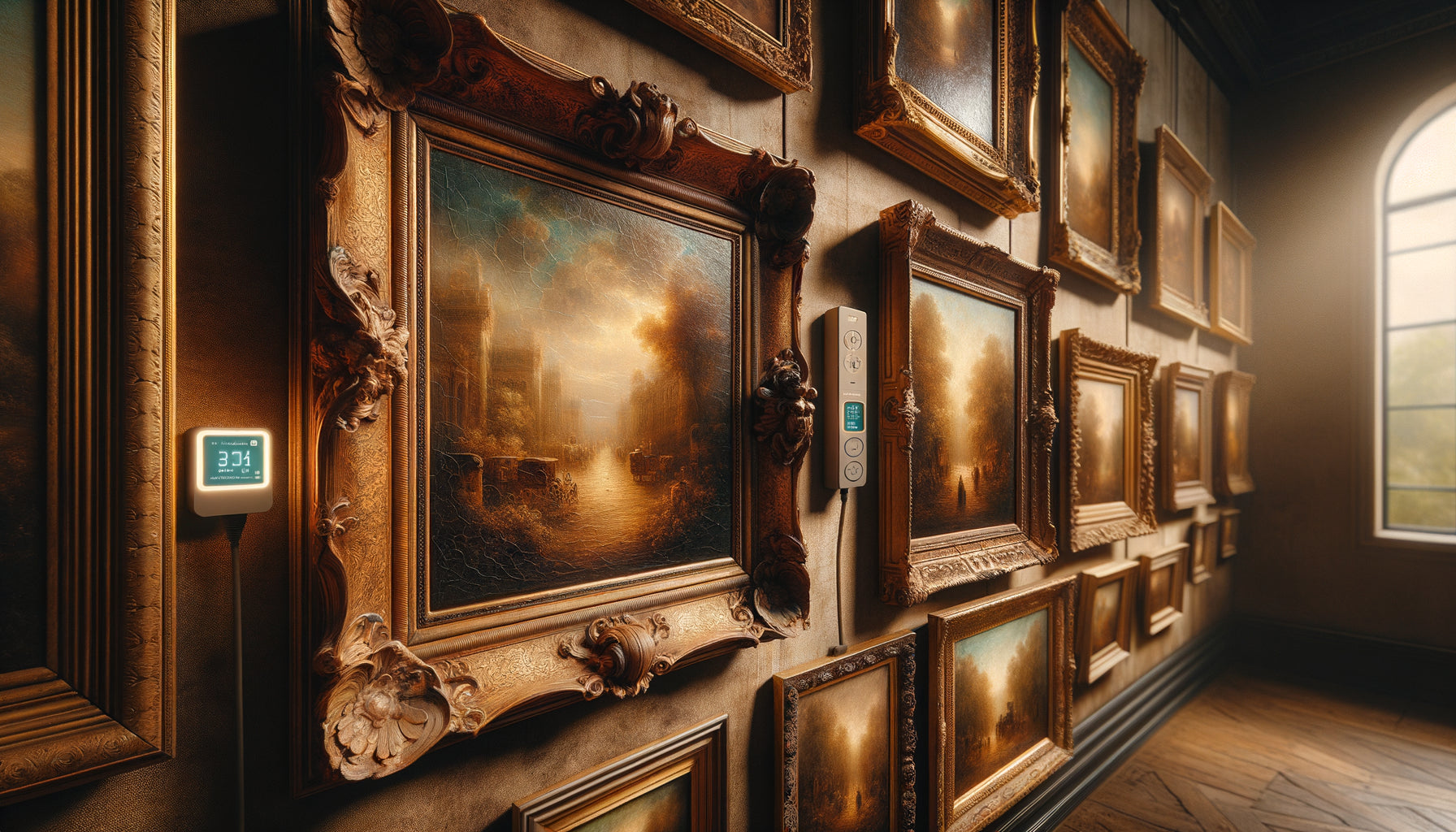
This Sunday morning, at a Provençal flea market, I observed two visitors stopping in front of the same painting: a still life with apples, gilded and patinated frame. One walked on after a distracted glance. The other carefully turned over the canvas, examined the edges, scrutinized the signature. He bought it for 80 euros. Three weeks later, I learned that it was a workshop piece from the 1950s, resold for 650 euros to a Parisian collector.
Here's what identifying authentic vintage paintings brings: the satisfaction of finding unique pieces at their fair value, creating interiors rich in true history, and avoiding reckless spending on soulless industrial reproductions. Many of you feel this frustration in front of a dusty painting: is it a rare gem or a worthless copy? This uncertainty paralyzes you during your treasure hunts. Rest assured: a few simple technical clues can distinguish a workshop piece from mass production, without being an expert. I am going to pass on the observation keys that I have refined over hundreds of evaluations.
The back of the painting tells more than its face
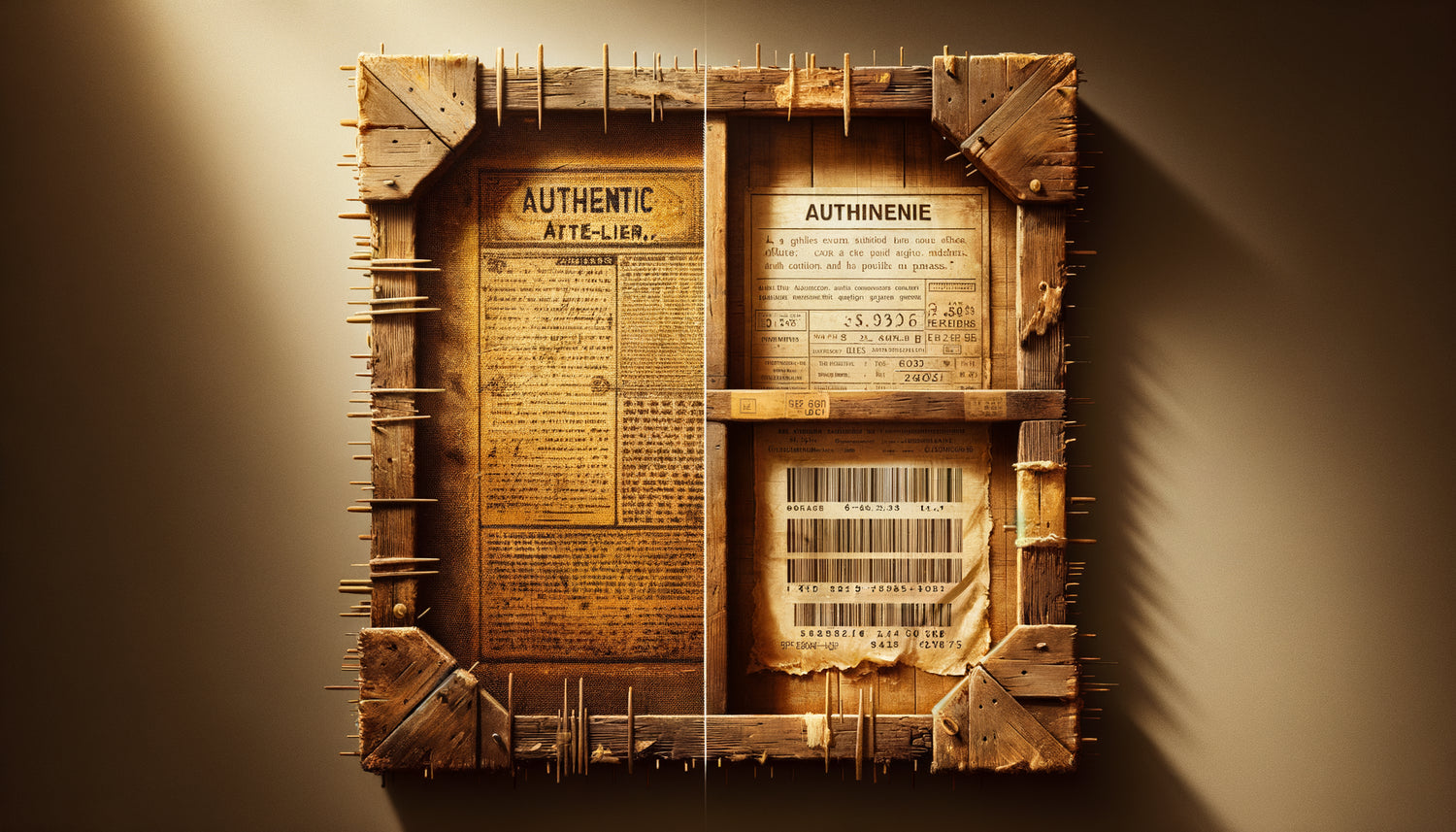
Always begin your examination with the reverse side of the canvas. This is where the most revealing clues are hidden. A vintage workshop painting generally has a raw wood frame, assembled in the traditional way with tenons and mortises, sometimes forged nails. The wood shows irregularities, marks from hand tools, an uneven patina. On modern industrial productions, you will find standardized wood, evenly spaced shiny metal staples, sometimes even barcodes or printed labels.
Observe the canvas itself: turn it over and touch it. A vintage fabric has an irregular texture to the touch, sometimes slightly stiff depending on the artisanal sizing used. The edges often reveal detached threads, natural fraying from time. Industrial reproductions use synthetic fabrics or standardized cotton, with a suspiciously regular appearance, mechanically stretched with perfectly uniform tension.
Hidden inscriptions
Look for annotations on the back: dates scribbled in pencil, exhibition stamps, faded labels from defunct galleries. These marks of authenticity constitute the secret biography of the painting. I have discovered wonders thanks to a simple violet ink stamp from a 1960s salon. Industrial productions obviously have no history to tell: their backs remain blank or bear only recent commercial mentions.
The signature: decipher without being fooled
A signature is never an absolute guarantee of authenticity. Vintage workshop paintings sometimes feature discreet, almost shy, initials integrated naturally into the composition. Others remain unsigned – many regional artists or Beaux-Arts students did not sign their studies. Conversely, be wary of signatures that are too showy, too refined, which seem to have been applied later to enhance a reproduction.
Examine the signature with a magnifying glass if possible: on an authentic oil painting, it integrates into the pictorial material, creating slight variations in relief. On an industrial print, even sophisticated one, the signature remains flat, printed on the surface. Gently run your finger over it: do you feel any roughness? That's a good sign.

The pictorial material reveals everything under raking light
Here's my favorite test to instantly identify a vintage workshop painting : position yourself slightly to the side and observe the surface under raking light (phone lamp, natural light from a window). A real oil or acrylic paint applied by hand has an irregular relief : variable thicknesses depending on the areas, traces of brushstrokes or knife visible, sometimes tiny natural cracks according to age.
Industrial reproductions remain hopelessly flat. Even when manufacturers add a textured varnish to simulate reliefs, they appear repetitive, mechanical, like identical waves. On an authentic workshop painting, every square centimeter tells a unique gesture, a hesitation, a correction. This irregularity is precisely proof of the human hand.
The delicate touch test
With the seller's permission, gently brush a dark area of the painting with the tip of your finger. On a recent industrial production, you will feel only a smooth, almost plastic surface. On an authentic vintage painting, you will perceive the texture of the canvas under the paint, the tiny reliefs of dried matter from decades ago, sometimes slight dust embedded impossible to artificially reproduce.
The frame: accomplice or imposter?
An old frame is never proof that the painting is also old. I have seen countless modern reproductions slipped into authentic gilded frames from the 1930s to deceive buyers. Conversely, some vintage workshop paintings have been recently re-framed by their successive owners. The frame and the canvas lead separate lives.
However, an original frame provides valuable clues. Examine the back: if the painting has never been disassembled, you will see a build-up of old dust, sometimes traces of insects (rest assured, long dead), moisture stains consistent with the supposed age. The fixing nails or staples show natural oxidation. A frame-canvas set that has spent 50 or 70 years together develops a patinated consistency impossible to fake.

The subjects and styles that betray the era
Each decade has its own aesthetic codes. Vintage wall paintings from the 1950s favored still lifes with bright colors, Breton seascapes, portraits in ochre tones. The 1960s-70s saw the explosion of abstract compositions, stylized Mediterranean landscapes, urban life scenes. A trained eye identifies these temporal markers: typical color palette, treatment of shadows, signature style.
Beware of anachronisms. A painting supposedly from the 1950s depicting elements that appeared later (certain car models, contemporary architectures) reveals a recent reproduction. Conversely, current industrial production massively reproduces « generic vintage » styles without historical consistency: a confused mix of elements from different eras that the discerning eye immediately recognizes.
The smell of time
This may seem strange, but old paintings have a characteristic odor: mixture of aged wood, dusty canvas, sometimes oxidized varnish. Discreetly bring your nose to the back: this slightly musty, earthy scent never lies. Industrial reproductions smell new, plastic, sometimes solvents from recent ink printing. Our most primitive senses remain excellent detectives.
The context of purchase: decoding distribution channels
Where you find the painting strongly influences its nature. True vintage workshop paintings circulate in specific circuits: brocantes run by established professionals, family flea markets, regional auction houses, small specialized galleries. Sellers can often tell the provenance: estate sale, dispersed collection, disappeared artist's studio.
Industrial reproductions flood other channels: online marketplaces with shipping from Asia, chain decor stores, sites offering hundreds of identical models available in multiple sizes. If you find the exact same painting sold by ten different vendors online, the answer is obvious. Uniqueness remains the privilege of authentic artworks: each vintage workshop painting is by definition a unique piece or part of a limited artisanal production.
You now see paintings differently
Discover our exclusive collection of authentic Vintage paintings, each selected for its unique story and verifiable workshop quality.
Building your collector's eye
Identifying authentic vintage wall paintings becomes more refined with practice. Regularly visit flea markets and auction houses, even without buying. Handle the paintings (with respect), compare, question passionate antique dealers who are happy to share their knowledge. Photograph details that intrigue you to study them quietly at home.
Create a mental library: note the names of local artists, regional styles, disappeared galleries whose labels reappear regularly. Over time, you will develop this intuition that makes you say in three seconds: this one deserves attention. The boundary between industrial production and workshop artwork then becomes bright, almost obvious.
Don't be afraid to make mistakes at first. I myself have acquired a few instructive disappointments before refining my judgment. Every mistake teaches more than an easy success. The essential thing remains the pleasure of the hunt, the satisfaction of gradually understanding this silent language that old paintings speak to those who know how to listen.
Conclusion: Imagine your next visit to a flea market. You approach a dusty painting that others ignore. You turn it over, observe the artisanal frame, feel the irregular texture of the old canvas, spot the faded label from an exhibition in 1967. Your heart races: you hold an authentic vintage workshop piece, witness to a creative gesture preserved through decades. This weekend, equipped with these observation keys, go in search of your first discovery. The painting that will transform your living room into a personal gallery awaits somewhere, patiently under the dust, simply waiting for your educated eye to finally recognize it.
Frequently Asked Questions
Can a painting without a signature be authentic and valuable?
Absolutely, and it’s quite common! Many vintage workshop paintings remain unsigned for various reasons: Beaux-Arts student studies, preparatory sketches, works by modest regional artists who didn't systematically sign their pieces. The absence of a signature doesn't indicate inauthenticity or lack of value. Focus on other clues: quality of the painting, materials used, natural patina, stylistic consistency with a period. I’ve unearthed magnificent anonymous pieces that now adorn interiors with as much character as signed works. Their history and emotion sometimes count for more than a famous signature. Trust your instincts: if the painting touches you and presents the characteristics of an antique artisanal work, its decorative and emotional value remains intact.
How to differentiate an antique reproduction from an original workshop painting?
A subtle question that requires careful observation! Antique reproductions do exist: chromolithographs from the early 20th century, offset prints from the 1950s-60s. The main distinction is made in the relief of the material. Use raking light: a print, even an old one, remains flat or has a regular pattern (small dots visible with a magnifying glass). A hand-painted painting shows variable thicknesses, impasto, brushstrokes in relief. Gently run your finger over it: do you feel the texture of the applied paint or just the grain of the paper/canvas support? Also examine the edges: a print stops abruptly, a painting slightly overflows the intended frame. Antique reproductions nevertheless have their own charm and decorative value – they simply tell a different story than that of original workshop paintings.
What budget should you expect to acquire a genuine vintage workshop painting?
The ranges vary considerably depending on the size, condition, artist and place of purchase. In flea markets and garage sales, you can find authentic vintage wall paintings by unknown or regional artists between 30 and 150 euros – that's where the best deals are hidden for those who know how to identify quality. In specialized galleries or auction houses, expect 150 to 600 euros for well-crafted workshop pieces with documented provenance. Pieces by listed artists or particularly remarkable ones obviously exceed these amounts. My advice: start modestly to develop your eye without financial risk. A small painting for 50 euros that shows all the signs of authenticity will bring you more satisfaction than an industrial reproduction costing 200 euros. The real wealth lies in the ability to identify, transforming each treasure hunt into a fascinating adventure rather than a simple decorative purchase.