


Toyger Cat Portrait Wall Art
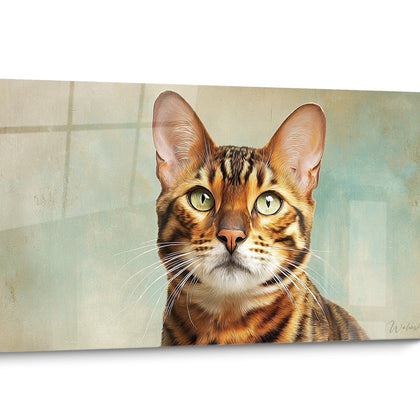
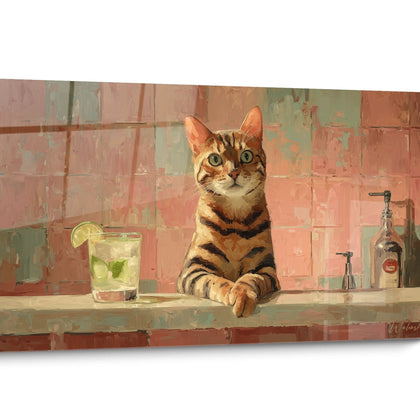
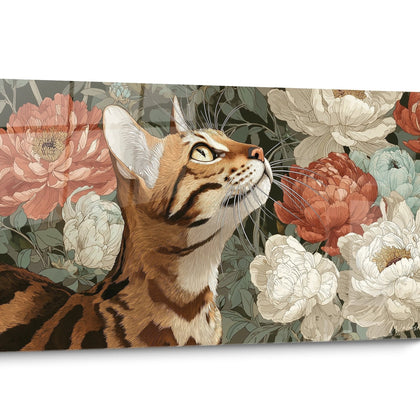
The Painting cat Toyger Portrait captures all the majesty of this exceptional feline breed with stripes worthy of a miniature tiger. This artistic collection celebrates the wild beauty of the Toyger through stunningly realistic cat Toyger portraits . Each work reveals the intensity of the tawny gaze and the characteristic striped patterns that have made this unique breed famous. Perfect for lovers of high-end feline wall decoration, this collection transforms your interior into a gallery dedicated to animal elegance.
 Seated Toyger Cat Painting - Striped Elegance - Toyger Cat Edition273,90 €
 Sitting Toyger Cat Painting - Majestic Portrait - Toyger Cat Edition273,90 €
 Seated Toyger Cat Painting - Feline Elegance in Sunlight - Toyger Cat Edition273,90 €
 Toyger Cat Majestic Portrait Painting - Piercing Gaze - Toyger Cat Edition273,90 €
 Realistic Toyger Cat Portrait Painting - Piercing Gaze - Toyger Cat Edition273,90 €
 Toyger Cat Sitting Painting - Feline Elegance - Toyger Cat Edition228,90 €
 Toyger Cat Portrait Painting - Striped Majesty - Toyger Cat Edition228,90 €
Explore further
In Toyger Cat Portrait Wall Art
All about Toyger Cat Portrait Wall Art
- Presentation Painting Tiger Cat Toyger Portrait
- Realistic rendering of the striped feline
- Intensity of the gaze captured
- Highlighting the distinctive stripes
The Toyger portrait painting celebrates the extraordinary facial expressiveness of this exceptional breed resembling a miniature tiger. Unlike stylized representations, the portrait captures every anatomical detail of the Toyger's face with photographic fidelity: the characteristic shape of its muscular head, the precise spacing of its rounded ears, and above all, these unique feline markings that draw on its facial mask patterns reminiscent of large wild predators. These large-scale wall decorations reveal the psychological depth of the Toyger through its expression, transforming your space into a gallery dedicated to one of the most fascinating domestic cats genetically developed to resemble a tiger. Each work is an intimate window into the affirmed personality of this exceptional feline, whose facial features express a primal nobility.
The authenticity of the Toyger's facial features in large format
The Toyger portrait painting is distinguished by its ability to restore the specific cranial morphology of this extraordinary breed. The elongated and robust shape of its head, its prominent cheekbones and its wide muzzle create a unique facial architecture among domestic felines. Large-format works allow you to appreciate every nuance of this anatomical construction: the smooth transition between the slightly rounded forehead and the powerful nose, the particular implantation of the whiskers on pronounced cushions, the square jaw that immediately evokes its visual kinship with wild tigers.
Why does the bone structure of the Toyger fascinate in a close-up portrait?
Close-up representations reveal the muscle density of the Toyger's face, invisible in full-body compositions. The developed chewing muscles give its cheeks a characteristic volume, while the skin muscles of the forehead create these expressive wrinkles that accentuate its penetrating gaze. This exceptional facial musculature generates natural shadow games that the large-format portraits magnify, offering a three-dimensional reading of each relief. For lovers of Toyger cat painting seeking anatomical excellence, these portrait versions represent the pinnacle of realistic representation.
Rendering of the distinctive facial proportions in a centered composition
The precise spacing of the Toyger's eyes – neither too close nor excessively far apart – creates this remarkable facial balance that only centered portraits can fully enhance. The distance between the nose and the eyes, slightly greater than that of common domestic cats, reinforces the impression of wild power. The medium-sized ears, positioned slightly outward from the head, draw a characteristic triangular silhouette when viewed from the front. These millimeter proportions, the result of years of rigorous genetic selection, transform each Toyger portrait painting into a captivating morphological study for spaces dedicated to enthusiasts of feline genetics or domestic zoology.
The texture of the facial fur under the eye of the intimate portrait
The short, dense fur on the Toyger's face has a particular velvety texture, different from the rest of its body. Around the eyes and on the muzzle, the ultra-short coat allows the skin pigmentation to show through, creating these darker areas that accentuate the intensity of the gaze. Large-format portraits capture these variations in hair length and density: the slightly longer hairs on the cheeks forming discreet sideburns, the crown of stiffer hairs around the ears, the smooth transition to the neck where the fur gradually lengthens. This textile mapping of the face transforms each acquisition into an almost scientific document on the biology of the Toyger.
Capturing the hypnotic expression in the Toyger's eyes
The Toyger's gaze is the central element of every successful Toyger cat portrait painting . Its medium to large-sized eyes, slightly oval and oriented outwards, have this enigmatic depth that evokes wild intelligence. The chromatic nuances of the iris – from golden amber to deep emerald green – create variable light effects depending on the angle of observation, a phenomenon that large-format works masterfully amplify. The vertical pupil, dilated or contracted depending on the moment captured, adds an immediate emotional dimension to the composition.
How does the eye contour reinforce the Toyger's presence in the portrait?
The dark markings that surround the Toyger's eyes – veritable natural eye-liners – constitute its most recognizable visual signature. These pigmented contours, perfectly defined in specimens for exhibition, create a theatrical makeup effect that intensifies each expression. Close-up portraits reveal how these black lines extend towards the temples in fine strokes, sometimes joining the stripes on the forehead. This natural facial ornamentation transforms the simple gaze into a visual event, conferring on wall compositions an incomparable dramatic power. Collectors of vintage Toyger cat paintings particularly appreciate these marked contrasts that recall the animal photographs of the 1970s.
Capturing the instantaneous emotion in the feline's eye
Unlike static representations, the best Toyger cat portrait paintings freeze a micro-emotional moment: sharpened curiosity with dilated pupils, intense concentration during an observation, or that confident serenity typical of dominant felines. The position of the eyelids – slightly drooping to express relaxation or wide open signaling alertness – radically modifies the visual narrative. The Toyger's fine but visible eyelashes, often neglected, add a touch of delicacy that paradoxically humanizes this feline with wild appearances. These behavioral nuances transform each work into a psychological snapshot, particularly valuable in contemporary interiors seeking emotional authenticity.
Luminous reflections as a signature of life in the feline portrait
The points of light captured in the Toyger's eyes – these small, bright spots that indicate the direction of the original lighting – constitute the technical element that differentiates a successful portrait from a simple reproduction. Their positioning and intensity create the illusion of living presence, giving the impression that the feline is actually looking at you from the wall. Professional compositions master these specular reflections to generate an immediate visual connection with the observer. In reception areas or offices, these large-format portraits with direct gazes create powerful psychological anchor points, capturing attention much more effectively than profile or turned-away representations.
Highlighting the distinctive feline markings in facial composition
The circular stripes adorning the Toyger’s face follow a precise topography inherited from its breeding program inspired by the tiger. On the forehead, the markings form a characteristic « M » more pronounced than in the common tabby cat, with broken lines evoking the complex patterns of Asian big cats. The painting cat Toyger portrait thus becomes a detailed map of these genetic embellishments: the parallel lines descending from the outer corners of the eyes, the volutes on the cheeks resembling feline whiskers, the broken collars encircling the upper neck.
What is the significance of facial patterns in Toyger genetics?
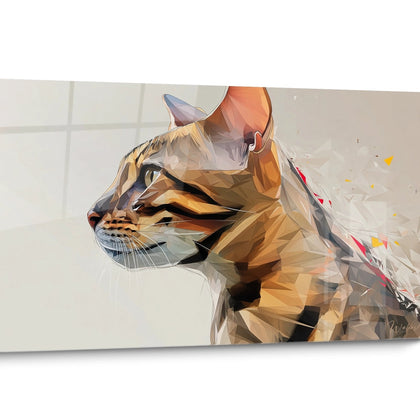
Each line on the Toyger’s face is the result of meticulous genetic selection aimed at reproducing the « modified mackerel tabby » pattern of tigers. Breeders seek circular rather than vertical markings, with breaks and ramifications creating this distinctive visual complexity. Detailed portraits allow one to appreciate the symmetry – rarely perfect – of these patterns, each side of the face presenting subtle variations that reinforce the wild authenticity. For spaces dedicated to feline genetics enthusiasts or the history of selective breeding, these works constitute fascinating visual documents illustrating forty years of genealogical work. Creative variation explorers will also appreciate the painting cat Toyger geometric which reinterpret these natural patterns.
The contrast of light and dark zones structuring the face
The Toyger’s coat presents a chromatic range from light cream to dark brown almost black, creating dramatic contrasts essential to its visual identity. The white or cream areas – around the mouth, on the chin, sometimes around the eyes – illuminate the face and instinctively draw the gaze towards these expressive points. The dark markings, particularly dense on the forehead and temples, create a sculptural depth accentuated by natural shadow play. These chromatic oppositions transform each painting cat Toyger portrait into a study of values of light, particularly impactful in minimalist interiors where contrast becomes the main decorative element.
The often-neglected details that authenticate the realistic portrait
Beyond the obvious markings, the most accomplished portraits capture these micro-details that sign authenticity: the small irregular spots on the lips, the pink-brown pigmentation of the nose often bordered by black, the few isolated white hairs that break the regularity of the stripes. The cushions of the vibrissae, slightly protruding and marked with dark spots from which the whiskers emerge, add a tactile texture to the composition. These calculated imperfections differentiate premium representations from standardized reproductions. Discerning collectors seeking excellence for their private galleries prioritize these ultra-detailed versions that transform the work into a true individualized portrait rather than a generic representation of the breed. For a more decorative approach, the painting cat Toyger pop art offer a colorful alternative while preserving these morphological characteristics.
Is a cat Toyger portrait painting suitable for demanding professional spaces?
Absolutely. The natural nobility of the Toyger and the sophistication of its feline markings lend artistic legitimacy to portraits suitable for law firms, specialized veterinary clinics, or executive offices. The non-domestic character of its appearance avoids the infantilization sometimes associated with traditional feline representations, while its photographic realism integrates into contemporary professional aesthetic codes.
How to maximize the visual impact of a large-format Toyger portrait?
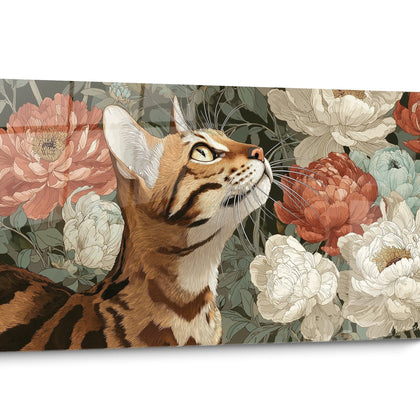
Prioritize positioning at eye level (140-160 cm from the floor to the center of the artwork) to create direct eye contact between the represented feline and observers. In hallways or circulation areas, install the artwork on the terminal wall so that it becomes the natural focal point of the perspective. Association with botanical elements – particularly plants with striped foliage such as certain calatheas – creates visual echoes reinforcing the presence of the artwork. Floral approaches find their expression in the floral Toyger cat painting.
Do Toyger portraits require any special display considerations?
Compositions with brown and gold tones visually resist variations in lighting better than works with a cool palette. However, to preserve the depth of contrasts – a crucial element of the Toyger portrait – avoid prolonged exposure to direct UV rays that could attenuate the subtle nuances between light and dark areas. Indirect lateral lighting (adjustable spotlights at 30-45° from the artwork) accentuates the three-dimensionality of the represented face, creating cast shadows that reinforce the illusion of relief. For a timeless atmosphere, consider the vintage Toyger cat painting with aged tones.
Further reading
Our articles on this topic
- Large Toyger Cat Painting: The Perfect Choice to Elevate Your Entrance
- Toyger cat painting in orange and black: which sofa goes with it?
- Gift idea: tiger painting for a big cat lover
- Decorating Your Office with a Toyger Cat Painting: A Print Quality Guide
- Sabertooth Tiger Black and White Painting: the graphic style that elevates your walls
- Toyger Cat Painting for a Teen's Bedroom: The Stylish Feline That Asserts Personality
L'art qui suscite l'envie
Maison belge d'art mural grand format
14 jourspour changer d'avis*
Protection Walenskyincluse
Fabriquéen Italie
FormatXXL
Kit de fixationtoujours fourni
* Hors tableaux personnalisés et tailles personnalisées


