


Black and White Expressionist Face Wall Art
The Painting black and white Expressionist captures the intensity of human emotions through striking portraits. This collection reveals the dramatic power of monochrome expressionist art, where each face tells a deep and unsettling story. Marked contrasts, accentuated features, and the strength of expressions create a captivating atmosphere. Ideal for lovers of contemporary emotional art, this collection transforms your interior into a gallery of authentic and timeless emotions.
 Expressive Women's Portrait Painting - Melancholy - Black and White Face Edition273,90 €
 Abstract Women's Painting - Silent Melody - Black and White Face Edition273,90 €
 Abstract Woman Face Painting - Fluid Expression - Black and White Face Edition228,90 €
 Female Profile Wall Art - Expressionist Abstract Portrait - Black and White Face Edition228,90 €
Explore further
In Black and White Expressionist Face Wall Art


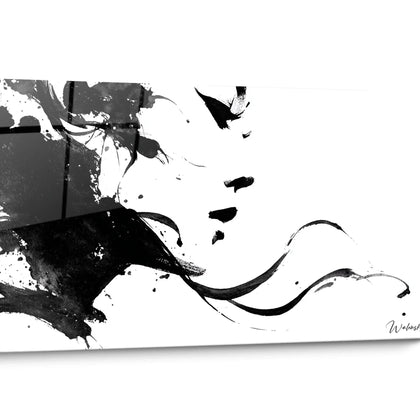
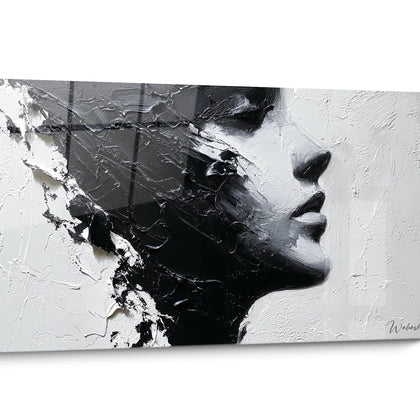
All about Black and White Expressionist Face Wall Art
- Expressionist Black and White Face Wall Art Presentation
- Emotional Intensity and Distortion
- Dramatic Contrast and Graphic Design
- Psychological Impact in Large Format
An expressionist black and white face wall art radically transforms interior atmosphere through its capacity to project raw emotional intensity. This form of wall art prioritizes intentional distortion of features, exaggeration of facial expressions, and exclusive use of monochromatic tones to create visual tension that immediately captures the viewer's attention. Unlike conventional representations, these wall creations exploit anatomical distortion as expressive language, generating silent yet powerful dialogue with the observer. Large formats amplify this emotional charge, establishing quasi-physical presence in space that proves particularly suited to contemporary environments seeking psychological depth rather than mere decoration.
Facial Expressionism: When Distortion Becomes Language
The expressionist black and white face wall art distinguishes itself fundamentally through deliberate refusal of faithful representation. Facial features undergo intentional metamorphosis where eyes may enlarge disproportionately, mouths twist into extreme expressions, and face contours adopt sharp angles defying natural anatomy. This artistic approach privileges transmission of raw emotional states rather than photographic likeness, thus creating wall pieces that communicate directly with the observer's subconscious.
How does expressionist distortion amplify the emotional impact of a portrait mural?
Exaggeration of facial characteristics functions as emotional amplifier transcending realism's limitations. Black and white expressionist wall art exploits this distortion to project anguish, melancholy, ecstasy, or rage with intensity impossible to achieve through naturalistic representation. Large-scale murals transform this approach into immersive experience where each broken line, each emphasized shadow participates in constructing psychological narrative. For collectors seeking monumental wall artworks, this aesthetic offers radical alternative to conventional portraits, particularly adapted to industrial lofts, private galleries, or contemplation spaces where art must provoke rather than soothe.
Expressive gesture in facial composition
Every expressionist black and white face wall art bears trace of energetic gesture where line becomes emotional graphic. Expressionist artists privilege visible brushstrokes, apparent textures, and abrupt contrasts conferring faces almost sculptural materiality. This approach generates wall pieces of remarkable physical presence where one perceives creative movement behind each deformation. Minimalist architectural spaces particularly benefit from this visual tension, monochrome allowing harmonious integration while maintaining maximum expressive force. Associated with an abstract black and white face wall art, this style creates captivating visual dialogues enriching narrative depth of a wall collection.
Why choose expressionist portrait for premium professional environment?
Executive offices, architecture firms and psychological consultation spaces find in these deformed facial representations unique spatial characterization tool. Large-scale black and white expressionist face art simultaneously communicates intellectual sophistication and emotional sensitivity, avoiding conventional decorative clichés. Chromatic restriction guarantees timeless elegance compatible with various interior palettes, while expressive intensity affirms space's singular identity. These works function as visual declarations positioning space in demanding cultural dimension, signaling to visitors thoughtful approach to environmental aesthetics.
The Power of Monochrome Contrast in Facial Expressionism
Exclusive use of black and white in expressionist face art constitutes far more than simple aesthetic choice: it represents deliberate visual strategy intensifying artwork's dramatic charge. By eliminating all chromatic distraction, these wall creations concentrate attention on shadow and light interplay, abrupt transitions between light and dark zones, and graphic construction of face as emotional architecture. This palette restriction transforms each contrast into narrative element, each shadow zone into psychological space.
The visual architecture of expressionist shadows
Black and white expressionist wall pieces exploit shadows not as mere depth effect, but as structural component of facial expression. Dark zones may invade half the face, creating dramatic asymmetries symbolizing inner dualities, psychological conflicts, or emotional transitions. This approach generates wall artworks of remarkable visual complexity progressively revealing themselves according to observation angle and natural light variations in space. For collectors investing in monumental pieces, this evolutionary dimension guarantees constant renewal of visual experience, artwork literally transforming throughout hours and seasons.
Which spaces benefit most from large-scale black and white expressionist face wall art?
Architecturally vertical environments derive exceptional benefit from these monumental facial representations. Contemporary stairwells, cathedral-ceiling living room main walls, and generous entry spaces find in these expressionist works decorative solution responding to spatial amplitude without falling into visual overload. Face's natural vertical format adapts perfectly to elongated wall surfaces difficult to decorate, while black and white restriction maintains visual coherence even in imposing volumes. Private galleries and domestic exhibition spaces frequently use these wall pieces as anchor elements around which entire wall scenography organizes.
Visual texture as additional dimension
Beyond facial composition itself, black and white expressionist face wall pieces create textural richness adding almost palpable tactile dimension. Variations in black density, subtle gradations toward gray, and brutal transitions to white generate visually complex surface capturing and reflecting light differently across zones. This material quality transforms artwork into complete architectural element, capable of influencing space's volumetric perception. Converted industrial interiors with raw surfaces and generous volumes find in these wall creations ideal complement dialoguing with existing architecture's material authenticity while introducing contemporary cultural sophistication.
Monumental Scale and Psychological Presence
The impact of expressionist black and white face wall art multiplies exponentially when dimensions reach monumental scale. Large-format expressionist portrait establishes quasi-physical relationship with observer, creating stylized human presence fundamentally transforming spatial dynamics. This direct visual confrontation with oversized deformed face generates intense emotional experience, particularly sought in cultural, therapeutic, or premium residential spaces where art must provoke authentic reaction rather than serve as simple decorative backdrop.
How does large format modify expressionist perception?
When deformed expressionist face reaches imposing wall dimensions, each distortion becomes monumental, each exaggerated expression transforms into dominant visual event. Details one might overlook in modest format become space-structuring elements: disproportionately enlarged eye becomes architectural focal point, mouth twisted into extreme expression creates directional line organizing entire room visually. This dimensional amplification suits collectors seeking declarative wall pieces capable of defining space's complete aesthetic identity. Lofts, penthouses, and architect residences frequently use these monumental pieces as distinctive visual signature.
Emotional interaction with monumental expressionist portrait
Large black and white expressionist face wall pieces create unique psychological dynamic where artwork seems observing observer, inverting traditional contemplative relationship. This visual reciprocity, amplified by expressionist deformations and dramatic contrasts, transforms space into emotionally charged environment. Psychoanalysis offices, contemporary meditation spaces, and private art galleries exploit this dimension creating environments conducive to introspection and reflection. Monochrome reinforces this meditative quality avoiding chromatic stimulation, permitting exclusive concentration on representation's expressive and psychological dimension.
Collection strategies for expressionist art enthusiasts
Collectors developing wall gallery around facial expressionism benefit from black and white's natural visual coherence, enabling multiple artwork association without chromatic conflict. Effective strategy consists varying expressive intensities: associating extreme distortion piece with subtler representations creates captivating narrative progression. Circulation spaces like corridors or halls gain cultural depth when presenting expressionist portrait sequence accompanying physical movement. For major acquisitions, prioritizing monumental formats as anchor pieces guarantees maximum impact while establishing clear visual hierarchy structuring entire wall collection.
Does expressionist black and white face wall art suit minimalist Scandinavian interiors?
Absolutely, chromatic restriction integrates perfectly into pared-down Nordic palettes, while expressive intensity brings necessary visual tension preventing blandness. Contrast between architectural minimalism and emotional expressionism creates sophisticated aesthetic dialectic particularly appreciated in contemporary Scandinavian design.
What observation distance recommended for fully appreciating large expressionist face wall art?
Monumental formats require viewing distance equivalent to 1.5 to 2 times artwork's diagonal for optimal global perception. However, these creations' interest also lies in close observation revealing textural and gestural details, justifying placement in spaces permitting different approach distances.
Do black and white expressionist face wall pieces lose impact in brightly lit spaces?
On the contrary, generous lighting accentuates dramatic contrasts and reveals intermediate gray zone textural richness. Monochrome expressionism supports direct light remarkably well, unlike colored works risking visual saturation. Naturally illuminated spaces amplify even sculptural dimension of pronounced contrasts.
Further reading


