


Police Artwork
The Collection Police Painting brings together works where the uniform becomes pictorial matter: helmets and caps, flashing lights and car bodies, captured in explosions of navy blue, gold and chromatic flashes. Each Police Painting oscillates between pure speed and moments of silence, between displayed discipline and humanity glimpsed behind the visor. A graphic and powerful way to pay tribute to those who watch over, without ever falling into the conventional cliché.
 Blue and Red Patrol Car Painting with Splashes - White Flocked Door - Police Edition232,90 €
 White Cap Officer Red Turquoise Background Painting - Frozen Authority - Police Edition233,90 €
 Mustachioed Officer with Red and Turquoise Cap - Captain from Another Time - Police Edition233,90 €
 Man with Black and Red Glasses Painting - Instinct of the Bloodhound - Police Edition233,90 €
 Sepia and Black Man in a Hat Crossing the Street - Swirling Street in Ink - Police Edition233,90 €
 Blue and White Police Car Urban Painting - City Chase - Police Edition233,90 €
 Police Officer Helmeted with Aviator Sunglasses - Suspended Moment - Police Edition233,90 €
 Police Officer with Black and Red Hat in Front of a Waving Flag - Silent Gridded Profile - Police Edition233,90 €
 Officer Painting with Red and White Flag - Patriotic Oath - Police Edition233,90 €
 Police Portrait with Inverted Face Blue Gold - Nocturnal Breath - Police Edition233,90 €
 Blue and Gold Officer Painting with Pensive Gaze - Silent Reverie - Police Edition233,90 €
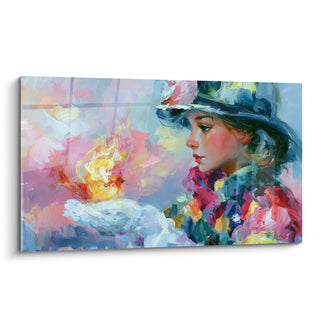
 Tableau Officier hat ochre and burgundy floral - Memory of uniform - Police Edition233,90 €
 Police Officer Painting with Red and Yellow Geometric Hat - Urban Chase - Police Edition233,90 €
 Police Officer with Blue and Yellow Cap - Silent Watch - Police Edition233,90 €
 Vibrant Blue and Red Police Car Painting - Race Against Time - Police Edition233,90 €
 Watercolor Blue and Red Police Car Painting - Flashing Light and Chrome Grille - Police Edition233,90 €
 Police Officer Painting Red and Yellow Cap - Moment of Tension - Police Edition233,90 €
 Motorcycle Racer Green and Turquoise at Full Speed - Luminous Escape - Police Edition233,90 €
 Motorcycle Painting Green and Blue with a Bright Lighthouse - Rays of Speed - Police Edition233,90 €
 Leaning Motorbike Rider in Full Speed - Night Speed - Police Edition233,90 €
 Man in Cap White Piercing Gaze - Judging Look - Police Edition213,90 €
 Cowboy Black and Beige Painting Under the Storm - Walk Towards the Unknown - Police Edition213,90 €
 Sepia and Black Man in Trench Coat - Rain Escape - Police Edition213,90 €
 Detective in Hat and Coat Sepia Painting - Night Chase - Police Edition213,90 €

All about Police Artwork
- Artwork Presentation
- Blue, gold, speed
- Frozen speed, suspended gestures
- Faces under the uniform
The Police Artwork collection doesn't just illustrate a profession: it captures suspended moments, postures, lights that tell a story far beyond a uniform. Motorcyclist leaning in a turn, officer with a closed gaze, car slicing through space in an explosion of colors — each Police artwork chooses a precise moment where the function fades behind emotion or pure speed.
What unites these canvases is an assumed graphic treatment: clean vector lines for racing scenes, thick material and streaks for contemplative portraits, chromatic splashes for vehicles in motion. Navy blue, gold, and turquoise reappear as a common signature, visually anchoring the entire Police Artwork collection without ever repeating in the composition.
This collection is for those who want to hang more than a symbol of authority: a tension, a rhythm, a share of humanity rarely shown. It appeals as much to fans of speed and mechanics as to those sensitive to the quiet solemnity of a salute or a lowered gaze.
In a living room, office, or hallway, these Police artworks bring a strong presence without being talkative: they install an atmosphere of controlled tension, between respect and adrenaline, which immediately distinguishes the space where they are hung.
Why these shades reappear on each Police artwork
Where does this navy blue come from that dominates almost all these canvases?
Navy blue is not an arbitrary aesthetic choice in these works: it directly takes up the historical color of police uniforms, inherited from the 19th century when this dark shade served both as a marker of authority and nocturnal discretion. On the Police artworks in this collection, this deep blue structures the silhouettes, envelops the caps and uniforms, creating an immediately identifiable visual continuity. It installs a quiet gravity, a chromatic base on which golden touches or flashing lights subsequently explode, reinforcing the contrast between the rigor of the background and the intensity of the gesture represented.
What do the golden highlights that traverse some compositions tell?
Gold does not belong to the uniform itself, but to the light that traverses it — that of a spotlight, a sunrise on the asphalt, or a rain illuminated from behind. In these Police artworks, this warm hue comes to pierce the coldness of the blue to suggest a precise moment, almost cinematic, where duty crosses human emotion. It is this thermal contrast, between dominant cold and punctual warm, that gives these works their dramatic depth and prevents any strictly institutional reading of the subject.
Why does red appear only in fragments, never in mass?
In scenes of moving vehicles, red always emerges in a controlled splash — flashing light, grille, burst of speed — never in a dominant block. This economy of red in the Police artworks reproduces the way the human eye actually perceives an emergency intervention: a brief flash in the middle of a blue and dark environment. Hung at home, this dosage avoids any visual aggression while retaining the tension inherent in these scenes, a difficult balance to achieve with a more uniformly vibrant palette.
The visual rhythm specific to the Police artworks in this collection
Why do some canvases seem to fly when they are still?
The horizontal lines that sweep across the background of several compositions are not just a graphic effect: they translate a technique borrowed from motion photography, where the shutter captures luminous trails around a sharp subject. In these Police artworks dedicated to motorcycles and vehicles, this visual strategy creates an illusion of frozen speed, a moment stolen in full action. The result produces a constant tension on the wall, a work that seems to change intensity depending on the angle and ambient light of the room.
What distinguishes a greeting gesture from a speed pose in this collection?
Some canvases deliberately slow down the gaze: a profile with closed eyes, a greeting frozen in the rain, a hand raised to the face. These Police paintings play on complete stillness, in contrast to scenes of pursuit or turning. This alternation between frantic rhythm and total suspension is not a random collection: it reflects the two faces of the profession represented, action and waiting, urgency and recollection, offering those who hang them a choice of atmosphere according to the room concerned.
How can we explain the almost systematic diagonal of the compositions?
Inclined motorcycles, tilted silhouettes, cars framed in three-quarter view: the diagonal dominates the construction of these works more than the classic horizontal or vertical. This inclination is not decorative; it imitates the real physics of movement—a motorcyclist negotiating a turn must literally tilt his machine to avoid losing it. Reproduced in a Police painting, this diagonal infuses a constant dynamism into the wall space, a visual energy that contrasts with the usual stability of rectangular frames hung on the wall.
What do the portraits in this Police painting collection reveal about humanity?
Why do some faces have such worked wrinkles and a mustache?
A portrait of a moustachioed officer, with marked features and a clear gaze, does not seek resemblance to a real individual but evokes an older imagination, that of the maritime guardian or the long-standing captain. In this collection, this type of Police painting draws on visual codes borrowed from the tradition of 19th-century officer portraits—golden epaulettes, striped collar, piercing gaze—to evoke an authority embodied by experience rather than function alone, far from more contemporary and anonymous representations of the police officer in action.
What does this gesture of a hand held near the face mean in some paintings?
This discreet, almost introspective gesture deliberately breaks the image of rigid authority that is spontaneously associated with the uniform. Here, the Police painting chooses to show fatigue, doubt, or silent concentration rather than the official and straight posture. Painted in broad, almost liquid strokes, this moment captures a vulnerability rarely represented in traditional police iconography, and it is precisely this rarity that makes the scene touching for anyone who looks at it longingly from their wall.
Why does the word POLICE remain legible even in the most abstract compositions?
On canvases where the pictorial matter runs wild in streaks and splashes, a word always remains clear and legible: POLICE, inscribed on a door or car body. This choice deliberately anchors abstraction in reality, preventing the composition from tilting into a pure chromatic explosion without an identifiable subject. This tension between precise lettering and unrestrained pictorial environment is a strong signature of this collection, which allows each Police painting to remain recognizable at a glance, even in its freest treatment.
FAQ on Police paintings
Why does this collection mix scenes of speed and such calm portraits?
Because the subject itself carries these two realities: the urgency of interventions and the times of waiting or recollection that surround them. The Police painting collection reflects this contrast by alternating inclined motorcycles, vehicles speeding along, and frozen, silent, almost meditative portraits, to restore the complexity of a daily life rarely shown in its entirety.
What type of room is best suited to a Police painting as graphic as this?
Compositions with vivid tones and marked diagonals, such as motorcycle or car scenes, find their place in a passageway or office where you want to infuse dynamism. Darker, more contemplative portraits are more suitable for a living room or hallway where you seek a more poised and introspective presence.
Are these paintings only for passionate vehicle or law enforcement enthusiasts?
No, the strength of this collection lies precisely in its transcendence of the literal subject. Beyond the uniform or the mechanics, these works speak of tension, light, and contained emotion, which appeals as much to lovers of strong strong graphic composition as those simply touched by the intense silent gaze or a frozen gesture.


