







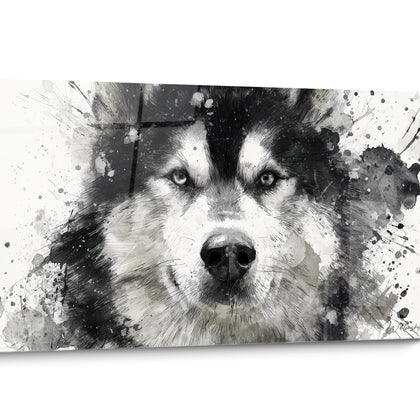
Alaskan Malamute Dog Geometric Wall Art
The Painting husky Malamute Alaska Geometric celebrates the majesty of the Nordic dog through a contemporary artistic style. This unique collection transforms the power and elegance of the Malamute into a modern geometric wall decoration that captivates the eye. Angular shapes and minimalist Scandinavian design enhance this legendary companion from the frozen lands. Perfect for lovers of Nordic dogs and contemporary art, this painting brings character and refinement to your interior.
 Sled Dog Painting Blue Geometric - Nordic Portrait - Alaska Malamute Edition273,90 €
 Reclining Malamute with Golden Eyes on Geometric Patterns Wall Art - Wild Gaze - Alaskan Malamute Edition273,90 €
 Nordic Dog Artwork Blue Geometric Circles - Arctic Vision - Alaskan Malamute Edition228,90 €
Explore further
In Alaskan Malamute Dog Geometric Wall Art


All about Alaskan Malamute Dog Geometric Wall Art
- Geometric Alaskan Malamute Presentation
- Polygonal Geometric Style
- Large Format Visual Impact
- Symbolism & Décoration
The geometric Alaskan Malamute dog wall art embodies a bold fusion between contemporary digital art and the ancestral power of this emblematic northern breed. This polygonal representation transforms the majestic silhouette of the Malamute into a composition of angular facets, where each triangle and diamond captures light differently, creating a striking three-dimensional effect. The low-poly geometric approach magnifies the imposing build and characteristic muscular structure of this legendary sled dog, while chromatic contrasts between shades of gray, white and black reveal the intensity of its piercing gaze. Designed in large format to maximize its decorative impact, this geometric Malamute Alaska wall art establishes itself as a masterpiece capable of redefining the atmosphere of a modern living space, simultaneously bringing urban sophistication and homage to wild nature.
Polygonal Aesthetics in Service of the Northern Breed
Why choose a geometric representation of the Alaskan Malamute?
The geometric Alaskan Malamute dog wall art exploits polygonal rendering technique to simultaneously deconstruct and sublimate the powerful anatomy of this arctic breed. Unlike traditional photographic representations, this fragmented approach in angular facets creates unique visual dynamics where each geometric plane acts as a reflecting prism. The irregular triangles composing the Malamute's dense fur generate particularly striking optical texture in large format, accentuating the natural volumetry of its massive chest and characteristic broad head.
The geometric interpretation transforms the distinctive traits of the Alaskan Malamute into visual architecture: the triangular erect ears become perfect pyramids, the elongated muzzle decomposes into successive prisms, while the two-toned facial mask translates into a contrasted mosaic of light and dark polygons. This angular stylization preserves the wild essence of the animal while adding a resolutely contemporary dimension, perfectly suited to design interiors seeking connection with nature through modern visual language.
The geometric color palette of northern coat
In a geometric Alaskan Malamute wall art, the distribution of shades follows a logic of fragmented gradients where each facet carries a distinct tonal value. The luminous whites of the belly and paws translate into brilliant polygons that capture ambient light, creating variable brightness points depending on viewing angle. The anthracite grays of the back and bushy tail decompose into a multitude of shadowed facets, generating visual depth that evokes the real volume of thick fur adapted to extreme climates.
This geometric color fragmentation also allows faithful reproduction of the characteristic facial mask of the Alaskan Malamute, where symmetrical markings around the eyes and on the forehead transform into recognizable abstract geometric patterns. For those appreciating an even more refined approach, the geometric Alaskan Malamute black and white dog wall art offers a monochrome interpretation where geometric contrasts reach their maximum expression, each facet oscillating between deep shadow and pure light.
The architectural impact of angular forms
The polygonal compositions of the geometric Alaskan Malamute dog wall art create particular visual resonance with contemporary interior architecture. The broken lines and sharp angles of the representation naturally dialogue with the geometric structures of modern spaces: exposed beams, design staircases, furniture with marked edges. This formal harmony transforms the wall art into an architectural element in its own right rather than simple wall decoration.
In large format, the multiplication of facets generates a network of directional lines that guide the eye through the composition, creating multiple visual paths. The eye can follow the salient edges of the muzzle, descend along the facets of the powerful neck, explore the complex geometry of the fur before rising toward the magnetic intensity of the gaze. This fragmented visual reading maintains attention and constantly reveals new details depending on viewing distance.
Maximize Wall Presence in Imposing Format
Monumental dimensions for a majestic breed
A geometric Alaskan Malamute dog wall art in large format exponentially amplifies the visual impact of this already physically imposing breed. Generous dimensions allow each polygonal facet to reach a size sufficient to be individually perceptible, transforming the wall surface into genuine optical relief. From 120 centimeters width, the geometric contours acquire quasi-sculptural presence, each triangle capturing light differently throughout the day.
The monumentality of the format particularly valorizes the distinctive physical characteristics of the Alaskan Malamute: its robust build weighing up to 45 kilograms translates visually into a balanced and massive geometric composition, its proudly carried tail unfolds into a spectacular polygonal fan, while its harmonious proportions find their ideal expression in horizontal rectangular formats that respect the natural appearance of this arctic working breed.
How does geometric format transform inhabited space?
Installing a large-dimension geometric Alaskan Malamute wall art instantly reconfigures the spatial perception of a room. The dense network of angular lines creates directed visual energy that can visually lengthen a narrow wall or structure overly open space. In a contemporary living room with generous volumes, this wall art becomes the absolute focal point, immediately capturing attention upon entering the room thanks to the contrast between geometric sophistication and evoked animal power.
The polygonal facets also generate complex light interactions with ambient lighting. Unlike uniform representations, each geometric plane reflects indirect light sources differently, creating a visually living surface that evolves according to time of day. Sharp angles capture and concentrate light while perpendicular facets create contrasted shadow zones, producing subtle visual animation without any electronic device.
Strategic placement zones to maximize effect
The large-format geometric Alaskan Malamute dog wall art finds full expression on main walls benefiting from sufficient visual distance. Minimum viewing distance of three meters allows simultaneous appreciation of overall composition and fineness of polygonal work. Walls located across natural circulation zones – opposite main entrance, visible from open kitchen, facing the sofa – guarantee maximum visibility and repeated visual encounters that enrich daily experience.
In contemporary professional spaces seeking strong visual identity, this type of geometric wall art conveys values of determination, endurance and natural leadership associated with the Alaskan Malamute. Reception halls, executive meeting rooms and director's offices particularly benefit from this imposing presence that combines artistic sophistication and powerful symbolism. Rigorous geometry reassures through its structured organization while the northern animal reference evokes resilience and adaptation to demanding environments.
Cultural Symbolism and Decorative Integration
The values embodied by the geometric Alaskan Malamute
Beyond its contemporary aesthetics, the geometric Alaskan Malamute dog wall art conveys a set of cultural symbols deeply rooted in the history of this millenary breed. Ancestral companion of the Mahlemiut people in arctic regions, this dog embodies human-animal collaboration facing extreme conditions, unwavering loyalty and quiet strength. Geometric stylization amplifies these qualities by conferring timeless and universal dimension, transforming an animal portrait into a graphic icon bearing meaning.
Polygonal fragmentation itself adds an additional semantic layer: it evokes complexity beneath apparent simplicity, the multitude of facets composing personality, analytical deconstruction followed by harmonious reconstruction. For enthusiasts of northern breeds, this wall art represents a modern celebration of a lineage preserved for centuries, while for contemporary art lovers, it illustrates the capacity of digital design to capture the essence of living through geometric abstraction.
Which complementary decorative elements harmonize with this wall art?
Successful integration of a geometric Alaskan Malamute wall art rests on creating coherent visual dialogue with decorative environment. Raw and textured materials – natural stone, polished concrete, driftwood, brushed metal – create enriching tactile contrast against the flat surface of the wall art, evoking rocky and icy environments of the Far North. Textiles with irregular weaves, rugs with long pile evoking dense fur, or natural wool cushions strengthen thematic reference without falling into visual redundancy.
Decorative objects with pure geometric lines – angular metal sculptures, prismatic vases, architectural luminaires – amplify stylistic coherence in echo to the polygonal aesthetics of the wall art. Avoid however geometric saturation that would create visual competition: the wall art must remain the masterpiece while surrounding elements play a harmonious support role. Plants with structured foliage such as sansevieria or agaves introduce organic geometric touch that bridges between nature and abstraction.
Compatible chromatic atmospheres
The limited palette of a geometric Alaskan Malamute dog wall art – dominated by grays, whites and blacks with possible icy blue accents for the eyes – naturally integrates into refined chromatic schemes of nordic and minimalist interiors. Immaculate white or pale gray walls create optimal neutral background that makes each polygonal facet stand out with maximum sharpness. Monochrome environments particularly benefit from this injection of visual complexity that enriches without disturbing chromatic balance.
For interiors daring more color, deep earthy tones – anthracite, taupe, chocolate brown – create sophisticated setting that valorizes the wall art's luminous zones while visually absorbing dark facets, thus generating spectacular emergence effect. Accented touches of deep blue, forest green or burgundy can be introduced sparingly in textiles or accessories to create subtle chromatic resonances without competing with the mastered sobriety of the geometric wall art.
Why does a geometric Alaskan Malamute dog wall art suit modern spaces?
The geometric Alaskan Malamute dog wall art perfectly merges contemporary digital aesthetics with timeless subject. Its polygonal composition naturally dialogues with refined architecture, sharp lines of design furniture and discrete technologies of connected spaces, while bringing organic and living reference that humanizes potentially cold environments.
Does this type of geometric wall art require particular lighting?
While functioning perfectly in natural light, a geometric Alaskan Malamute wall art fully reveals its volumetric richness under lateral directional lighting that accentuates transitions between facets. An orientable track lighting or architectural lamp positioned at 30-45 degrees creates shadow and reflection games that animate the polygonal surface.
What is the optimal viewing distance to appreciate geometric details?
Reading a geometric Alaskan Malamute dog wall art enriches depending on distance: from less than one meter, you perceive the individual structure of each facet and precision of edges; at medium distance (2-3 meters), overall composition reveals itself with balance of its masses and contrasts; in distant vision (4-5 meters), the three-dimensional volume illusion reaches maximum effectiveness.


