


Khao Manee Cat Painting Heterochromatic Eyes
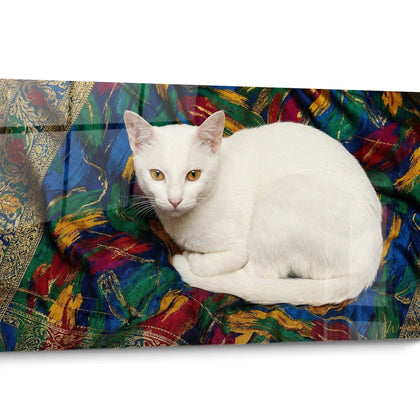
The Painting cat Khao Manee Odd-Eyed celebrates the mystical elegance of this Thai feline with a mesmerizing gaze. This collection captures the enchanting beauty of the white cat with odd-eyes, a symbol of good luck and refinement. Each artwork reveals the intensity of its unique two-color gaze, between azure blue and amber gold. Ideal for lovers of white cats, this series transforms your interior into a sophisticated feline gallery, celebrating the incomparable grace of the Khao Manee.
 Cat with Heterochromatic Eyes Painting - Cosmic Explosion - Khao Manee Cat Edition242,90 €
 Heterochromatic Cat Eyes Futuristic Painting - Cosmic Vision - Khao Manee Cat Edition273,90 €
 Cosmic Cat Painting with Stellar Eyes - Galactic Vision - Khao Manee Cat Edition273,90 €
 White Cat Painting with Multicolor Eyes - Opalescent Gaze - Khao Manee Cat Edition273,90 €
 Khao Manee Cat Painting with Heterochromatic Eyes and Golden Lotus - Thai Splendor - Khao Manee Cat Edition228,90 €
Explore further
In Khao Manee Cat Painting Heterochromatic Eyes
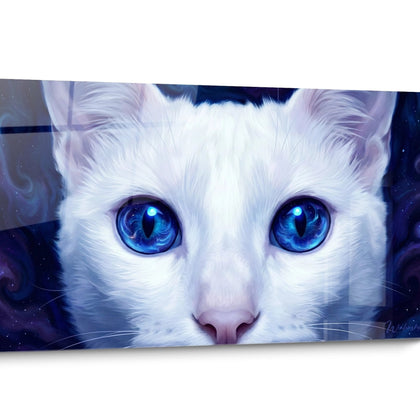
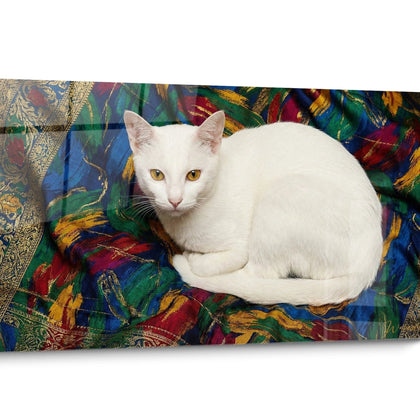
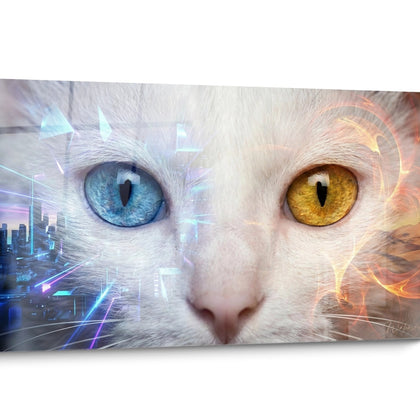
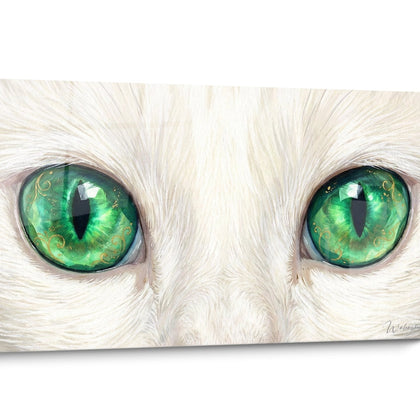
All about Khao Manee Cat Painting Heterochromatic Eyes
- Presentation Khao Manee Eyes Vairons
- Distinctiveness of Vairons Eyes
- Symbolism and Decoration
- Choice and Placement
The painting of a Khao Manee cat with Vairons Eyes captures an exceptional characteristic of this Thai feline breed: complete heterochromia. This fascinating genetic peculiarity, where one eye exhibits an azure blue hue while the other reveals a golden yellow or emerald green, lends these artistic representations a quasi-mystical dimension. These monumental works celebrate the singularity of the vairons gaze, transforming this rare genetic anomaly into a true visual signature. The chromatic intensity of the bicolor contrast becomes the central element of the composition, magnifying this distinctive trait that affects only 10% of Khao Manee cats. For collectors of paintings of a Khao Manee cat, this variation represents the ultimate expression of feline rarity.
The Heterochromia of the Khao Manee: A Hypnotic Gaze in Wall Decoration
Why do vairons eyes fascinate so much in contemporary feline art?
The painting of a Khao Manee cat with Vairons Eyes exploits this ocular asymmetry as a central aesthetic foundation. Complete iridian heterochromia creates a double focal point that immediately captures the viewer's attention. This chromatic duality generates a dynamic visual tension, where the glacial blue of one iris dialogues with the golden warmth of the other. Artists amplify this natural contrast by using differentiated saturation techniques, making each eye almost luminescent.
This genetic peculiarity, historically associated with the sacred cats of Siam, confers on artistic representations a deep symbolic dimension. The asymmetrical gaze evokes the cosmic duality present in Eastern philosophies: day and night, earth and sky, material and spiritual. Monumental formats allow to grasp each iridescent nuance, each shimmering reflection in the vairons pupils.
Artistic interpretations of feline ocular asymmetry
Contemporary creations explore various approaches to sublimate this unique characteristic. Some compositions adopt a close-up framing focused exclusively on the bicolor gaze, transforming the eyes into true hypnotic windows. Others integrate this heterochromia into full-length portraits, where the immaculate coat of the Khao Manee amplifies the power of the ocular contrast.
The chromatic variations between the blue eye and the amber eye create complex harmonies when associated with specific backgrounds. A dark background intensifies the apparent luminosity of the irises, while a light environment generates a reversed contrast effect. This visual dialectic allows to adapt the painting of a Khao Manee Cosmic cat to different decorative atmospheres while preserving the impact of the vairons gaze.
The genetics of the bicolor gaze as visual narrative
Beyond pure aesthetics, the painting of a Khao Manee cat with Vairons Eyes tells the story of a fascinating genetic mutation. The gene responsible for this heterochromia is intimately linked to the breed's integral white coat. This genetic correlation explains why artistic representations systematically associate the immaculate whiteness of the coat with the ocular duality, creating an immediately recognizable visual signature.
Discerning collectors seek out these works for their ability to simultaneously evoke scientific rarity and aesthetic beauty. Each painting becomes a testament to this genetic peculiarity that primarily affects white-coated breeds. The authenticity of the vairons gaze constitutes a major distinguishing criterion for lovers of anatomically faithful feline representations.
Transcultural Symbolism of Asymmetrical Feline Gaze
How does the vairons gaze transform the energy of a space?
The Khao Manee cat painting with odd-eyed gaze acts as an energy catalyst in contemporary residential environments. The chromatic duality of the irises generates a magnetic presence that visually restructures the surrounding space. This ocular asymmetry creates a perpetual movement of the gaze between the two pupils, establishing a contemplative dynamic that breaks with the static nature of traditional symmetrical compositions.
In Asian traditions, odd-eyed cats were considered spiritual guardians with transcendent vision. One eye contemplated the material world while the other perceived the invisible dimensions. This ancestral belief confers on the wall representations a symbolic protective dimension, particularly sought after for meditation spaces or creative studios requiring inspiration and mental clarity.
Decorative associations valuing chromatic duality
Integrating a Khao Manee cat painting with odd-eyed gaze requires careful consideration of the surrounding color harmonies. The most successful arrangements create visual echoes with the two iridescent tones: blue decorative elements responding to the azure eye, golden or copper accents dialoguing with the amber iris. This diptych approach to interior design unifies the space while celebrating the uniqueness of the two-color gaze.
Noble materials amplify the luxurious dimension of these compositions. Associating a Khao Manee representation with odd eyes with silk textiles, lacquered surfaces or brushed metals creates a sensory coherence. The imposing format of these works justifies their positioning as master pieces, around which the entire decorative composition revolves. Collectors particularly appreciate the Khao Manee cat Portrait painting for their ability to establish this visual hierarchy.
Rarity as a distinctive decorative value
Choosing a Khao Manee cat painting with odd-eyed gaze is an act of distinction in the world of feline decoration. Unlike representations of common breeds, this work signals a thorough knowledge of rare genetic particularities. The heterochromia of the Khao Manee represents a statistically exceptional anomaly, conferring on artistic representations an exclusivity comparable to limited editions.
This biological rarity translates into an increased symbolic value in high-end residential spaces. The odd-eyed gaze becomes a metaphor for individual uniqueness, the celebration of difference as a source of beauty. For creative professional environments, these compositions subtly communicate values of originality and distinctive vision, while maintaining a refined and sophisticated aesthetic.
Selection and Strategic Positioning of Odd-Eyed Representations
What criteria define an authentic representation of the two-color gaze?
Acquiring a Khao Manee cat painting with odd-eyed gaze requires particular attention to the anatomical accuracy of the eye rendering. The most sought-after compositions capture the difference in texture between the two irises: the blue eye often presents a crystalline translucent depth, while the golden or green eye displays a denser pigment density. This variation in optical density must be apparent in the artistic treatment to guarantee the authenticity of the representation.
The positioning of the pupils is another determining factor. A high-quality painting will feature perfectly aligned pupils despite chromatic asymmetry, avoiding any strabismus that would compromise the magnetism of the gaze. The direction of the gaze also orients the interaction with the space: a frontal gaze establishes a direct connection with the observer, while a slightly shifted gaze generates a more subtle contemplative dynamic.
Optimizing visual impact according to lighting conditions
Odd-eyed cats react differently to lighting conditions, creating variations in perceptual intensity throughout the day. Blue eyes capture and reflect more cold natural light, intensifying particularly during the morning hours. The golden or green iris reveals its depth under the warm evening lighting. This characteristic allows for the creation of evolving compositions whose perception transforms according to daily light cycles.
To maximize this dynamic effect, positioning the Khao Manee Cat with Odd-Eyes painting perpendicularly to the main light sources generates a play of shadows and reflections that animates the bicolored gaze. Spaces benefiting from adjustable lighting allow for choreographing the relative intensity of each iris, creating differentiated atmospheres depending on the time of day. Lovers of stylistic variations also appreciate the Khao Manee Golden Cat painting for their ability to dialogue with the amber iris.
Preferred spaces to enhance the ocular duality
Some environments particularly amplify the impact of odd-eyed representations. Libraries and reading spaces benefit from the contemplative dimension of the bicolored gaze, which encourages introspection without imposing a too dynamic presence. Executive offices exploit the symbolism of dual vision as a metaphor for strategic insight, combining rational analysis and creative intuition.
Monumental entrance halls are privileged locations for these imposing formats. The odd-eyed gaze immediately captures the attention of visitors, establishing a memorable visual signature from the moment they cross the threshold. This first impression marks the minds with its originality, while subtly communicating the refinement of the owner. Collectors seeking compositions integrating oriental decorative elements appreciate the Khao Manee Oriental Cat painting for their thematic coherence.
Is a Khao Manee Cat with Odd-Eyes painting suitable for all decorative styles?
This representation particularly integrates into contemporary minimalist universes, where the purity of the white coat and the intensity of the bicolored gaze create a powerful focal point without visual overload. Eclectic interiors exploit the chromatic duality to create visual bridges between different color palettes coexisting in the space.
How does the dimension of the painting influence the perception of the odd-eyed gaze?
Monumental formats allow you to grasp the subtle nuances of each iris, revealing the tonal variations and iridescent reflections invisible in reduced dimensions. A large-scale painting transforms the odd-eyed gaze into an immersive experience, where the observer can literally lose themselves in the contrasted depth of the bicolored pupils.
Can multiple Khao Manee with odd-eyes representations be combined?
A multi-panel composition presenting different expressions of the same odd-eyed cat creates a captivating visual narrative. This sequential approach explores the expressive variations of the bicolored gaze according to emotional states, generating a unique cinematic dimension in the universe of feline wall representations.
Further reading
Our articles on this topic
- Khao Manee cat painting, large format above the sofa: guide to proportions and hanging
- Where to hang a Khao Manee cat painting to attract luck and prosperity
- Korat cat lucky charm from Thailand: meaning and decorative painting
- Square Khao Manee cat painting for a cosy adult bedroom
- Korat Cat Watercolor Painting: The Zen Symbolism for an Adult Bedroom
- Siamese Cat Blue Eyes Large Canvas: Create a Striking Focal Point
L'art qui suscite l'envie
Maison belge d'art mural grand format
14 jourspour changer d'avis*
Protection Walenskyincluse
Fabriquéen Italie
FormatXXL
Kit de fixationtoujours fourni
* Hors tableaux personnalisés et tailles personnalisées


