


Expressionist Love Artwork
The Love Expressionist painting celebrates passion in all its forms with a rare emotional intensity. This collection captures the essence of deep feelings through bold compositions where vibrant colors and spontaneous gestures translate the torment and intoxicating nature of love. Each expressionist love artwork reveals a personal vision of romance, between vulnerability and emotional strength. Energetic lines and powerful contrasts create a dramatic atmosphere perfect for enhancing your interior. Explore our collection of love art expressionist and be transported by the power of the feelings expressed on the canvas.
 Echoes of Light Painting - Romantic Love Edition273,90 €
 An Eternal Sigh Canvas - Romantic Love Edition273,90 €
 Suspended Moment Wall Art - Romantic Love Edition273,90 €
Explore further
In Expressionist Love Artwork

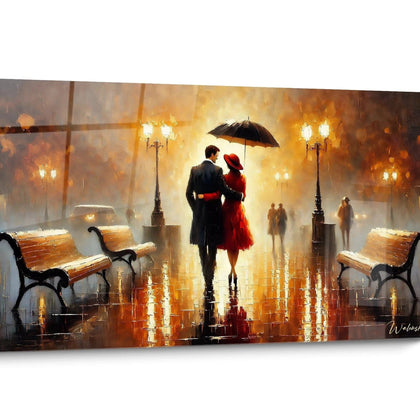

All about Expressionist Love Artwork
- Painting Presentation Love Expressionism
- Emotions and Chromatic Intensity
- Symbolism and Passionate Gesture
- Integration and Visual Impact
The painting love expressionism transcends the conventional representation of feelings to reveal the very essence of passion through a striking visual explosion. This wall art form favors raw emotional intensity over figurative accuracy, transforming each space into a sanctuary dedicated to the torments and ecstasies of the human heart. Unlike classic romantic works or minimalist creations, loving expressionism captures the visceral urgency of intimate relationships through tormented brushstrokes and bold chromatic contrasts that instantly disrupt the atmosphere of a room.
Emotional Intensity Translated by Expressionist Color
A painting love expressionism is immediately distinguished by its unleashed color palette that refuses any academic restraint. Incandescent reds converse with deep purples and tormented oranges, creating an optical vibration that physically materializes love tension. This pigment explosion responds to no naturalist logic: it directly translates palpitations, existential anxieties, and the fusion intoxication that passionate relationships provoke onto the surface.
How do violent contrasts magnify love drama?
The brutal juxtaposition of opposing hues in these monumental creations generates a visual electricity impossible to ignore. Dark, almost black areas symbolically absorb relational doubts and fears, while luminous splashes embody moments of fusion ecstasy. This chromatic dialectic transforms every gaze cast upon the work into an immersive emotional experience, constantly reminding one of the inherent ambivalence of intense feelings.
Pigment Saturation as an Emotional Manifesto
Unlike the soft nuances of a vintage love painting which evokes tender nostalgia, loving expressionism deliberately saturates its colors to the limit of optical tolerability. This maximum saturation communicates the impossibility of containing emotions, their permanent overflow that refuses any social domestication. XXL formats amplify this oppressive and magnetic presence simultaneously, creating a magnetic focal point in contemporary living spaces.
Why prioritize chromatic dissonances to express passion?
Harmonious color chords would suit serene representations of affection, but loving expressionism seeks precisely dissonance to authenticate its approach. Acid greens coexist with strident magentas, glaring yellows clash with Prussian blues, generating this impression of permanent instability that characterizes passionate relationships. This approach is particularly suitable for collectors seeking an uncompromising visual statement, refusing soothing decoration in favor of constant emotional stimulation.
The Passionate Gesture and the Symbolism of Tormented Forms
Beyond chromatic power, the painting love expressionism is recognized by its violent pictorial gesture that physically inscribes emotional agitation into the very substance. Rageful palette knife strokes, uncontrolled runs, and tormented impasto create a sensitive topography where each relief tells a chapter of the emotional storm. This tormented texture radically distinguishes these works from the smooth and controlled surfaces of other artistic movements.
Deformed figures as a mirror of the loving soul
Expressionism categorically rejects realistic anatomy to prioritize expressive distortion: silhouettes stretched to abstraction, faces dislocated by ecstasy or despair, bodies intertwined becoming inseparable organic forms. These distortions visually translate how passion transforms the perception of self and others, dissolving individual boundaries into a sometimes painful fusion. For bold contemporary interiors, these unconventional representations create a striking counterpoint to the clean lines of modern furniture.
What symbolism do centrifugal compositions carry in matters of love?
Unlike centered and balanced compositions, these monumental creations often privilege centrifugal dynamics where elements seem to want to escape the frame. This compositional tension materializes the impossibility of containing romantic emotion within reasonable limits, its irrepressible expansion to all aspects of existence. Large-scale formats spectacularly amplify this effect of controlled explosion, particularly impactful in reception areas where the artwork immediately becomes a conversation starter.
The expressionist treatment of universal love archetypes
Rather than illustrating particular sentimental anecdotes, these works evoke universal emotional archetypes: the fusion embrace, the heartbreaking separation, the frustrated desire, the cathartic reconciliation. This mythological dimension allows each observer to project their own relational experiences onto the composition, creating a powerful personal resonance. This quality notably distinguishes these creations from more literal narrative approaches like those of the painting love to more universally accessible representations.
Architectural Integration and Psychological Impact of Monumental Formats
Installing a expressionist painting love of large dimension radically transforms the energy of an interior space by imposing an emotional presence that dominates and redefines the ambient atmosphere. These works do not merely passively decorate a wall: they radiate an intensity that conditions the moods of occupants and visitors, creating a psychologically charged environment where superficial conversations naturally give way to authentic exchanges.
How to strategically position these passionate visual statements?
Intimate spaces like master bedrooms particularly benefit from this expressionist presence that openly celebrates the passionate dimension of existence. The main wall facing the bed becomes a sanctuary dedicated to relational intensity, daily reminding of the primacy of authentic emotions over social conventions. In contemporary living rooms, prioritizing the wall visible from the entrance creates a memorable impact that immediately establishes the occupants' bold character, radically distinguishing the space from conventional interiors.
Why do these works transform the emotional acoustics of a room?
Beyond their purely visual impact, these monumental compositions subtly but profoundly alter the psychological resonance of spaces. Their presence mentally prohibits emotional banality, implicitly encouraging occupants to live more intensely, to feel more deeply. This quality makes them particularly suitable for homes of creatives, artists and intellectuals who reject lukewarm existence and constantly seek existential authenticity, contrasting with the serenity sought by lovers of abstract painting love.
The decorative balance with an emotionally dominant focal point
When a large-scale expressionist artwork dominates a wall, all surrounding furniture should respect this visual hierarchy by adopting a complementary sobriety. The clean lines of Scandinavian design or the elegant minimalism of contemporary furniture create the necessary contrast, allowing the emotional charge of the artwork to radiate without competition. Neutral textiles and matte surfaces in the rest of the room amplify, by contrast, the chromatic and textural vibration of the wall composition.
FAQ: Frequently Asked Questions about the Love Expressionist Painting
Is a love expressionist painting suitable for contemporary minimalist interiors?
Absolutely, this combination creates precisely the dramatic contrast sought by daring decorators. Minimalist architectural sobriety amplifies the emotional impact of the expressionist artwork by eliminating any competing visual distractions, transforming the composition into a focal spatial event that completely redefines the atmosphere.
How to maintain the visual intensity of a love expressionist painting over time?
The pigment saturation and energetic gesture of these works retain their power of fascination precisely because they communicate timeless emotional truths rather than fleeting aesthetic trends. Their compositional complexity continually reveals new details during repeated observations, maintaining visual engagement in the long term, unlike superficial decorative works.
Can several love paintings expressionist be combined in the same space?
This approach risks creating a counterproductive emotional saturation where no artwork can breathe adequately. Loving expressionism typically requires the status of a dominant unique piece, its intensity requiring surrounding visual resting areas. For collectors owning multiple works, prioritizing seasonal rotation maintains perceptual freshness while respecting the individual power of each creation.
Further reading
Our articles on this topic
- What’s the difference between Baroque and Romantic 19th-century passionate love paintings?
- Do Minimalist Paintings Suit to Express Love?
- Which Couple Paintings Are the Most Moving?
- How Do Water Reflection Paintings Symbolize the Mirror of the Amorous Soul?
- How to Choose an Expressionist Painting for a Chic and Inspiring Office?


