


Space Art Diverse Solar System Wall Art
The Painting Space Diverse Solar System invites you on an artistic journey to the heart of the cosmos. This collection explores the majesty of our universe through striking representations of planets, stars, and galaxies. Each creation reveals the infinite beauty of space and the solar system, capturing the mysterious essence of celestial bodies. Perfect for astronomy enthusiasts and lovers of cosmic and planetary art, this selection transforms your interior into a true artistic observatory.
 Planets Solar System Wall Art - Mysterious Cosmos - Diverse Space Edition273,90 €
 Artistic Solar System Wall Art - Colorful Planets with Rings - Diverse Space Edition273,90 €
 Solar System Wall Art - Interplanetary Journey - Diverse Space Edition242,90 €
Explore further
In Space Art Diverse Solar System Wall Art
-
 Diverse Space Wall Art44
artworks
Diverse Space Wall Art44
artworks
-
 Diverse Space Wall Art Black and White3
artworks
Diverse Space Wall Art Black and White3
artworks
-
 Golden Space Diverse Wall Art13
artworks
Golden Space Diverse Wall Art13
artworks
-
 Space Art Diverse Astronaut Canvas3
artworks
Space Art Diverse Astronaut Canvas3
artworks
-
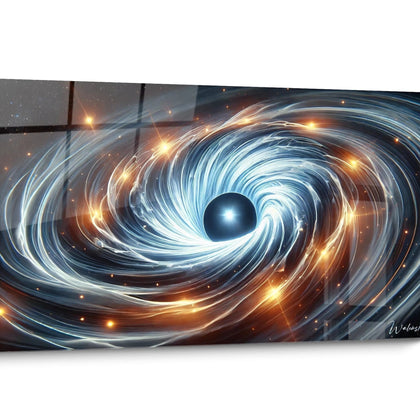 Black Hole Space Diverse Wall Art5
artworks
Black Hole Space Diverse Wall Art5
artworks
-
 Saturn Space Wall Art Diverse7
artworks
Saturn Space Wall Art Diverse7
artworks
-
 Space Art Diverse Nebula10
artworks
Space Art Diverse Nebula10
artworks
-
 Blue Space Diverse Wall Art24
artworks
Blue Space Diverse Wall Art24
artworks
-
 Space Diverse Science Fiction Wall Art19
artworks
Space Diverse Science Fiction Wall Art19
artworks
-
 Minimalist Space Diverse Wall Art3
artworks
Minimalist Space Diverse Wall Art3
artworks


All about Space Art Diverse Solar System Wall Art
- Solar System Presentation
- Astronomical Decoration
- Planetary Immersion
- Acquisition Guide
Transform your interior into a true celestial observatory with our collection of various space solar system wall art. These XXL mural creations capture the majesty of our cosmic neighborhood by revealing each planet in spectacular detail. From scorching Mercury to icy Neptune, discover large-format representations that transcend mere decoration to become genuine windows onto the universe.
The Visual Impact of Various Space Solar System Wall Art in Your Environment
A Celestial Map for Astronomy Enthusiasts
A various space solar system wall art is far more than a simple decorative element: it represents a genuine stellar map that immortalizes the eight planets in their authentic orbital configuration. The imposing dimensions of these works allow you to distinguish Saturn's rings, Jupiter's Great Red Spot, and even Mars's polar ice caps with remarkable precision. This enlarged-scale representation transforms any room into a private planetarium where elliptical orbits and relative distances between celestial bodies become palpable.
Horizontal panoramic versions perfectly complement the large walls of contemporary living rooms or professional offices, creating a visual continuity that guides the eye across the entire planetary procession. The spatial orientation generally respects the classical heliocentric sequence, from the incandescent Sun to the frozen edges of the outer system, offering an immersive educational experience.
How to Choose the Ideal Orbital Orientation?
The arrangement of planets on your wall art determines the narrative impact of the whole composition. Horizontally aligned compositions evoke the temporal progression of a space voyage from the system's center toward its distant peripheries. This linear configuration is particularly suited to elongated spaces like panoramic hallways or walls behind directional desks. Conversely, circular arrangements centered on the Sun create a rotative dynamic that draws the eye toward the stellar nucleus, ideal for square spaces or areas of contemplation.
Variants including the asteroid belt between Mars and Jupiter add an additional scientific dimension, particularly appreciated in educational environments or spaces dedicated to scientific outreach. For precision enthusiasts, certain models integrate dwarf planets like Pluto or Ceres, offering an exhaustive vision of our planetary family.
Coordination with Other Spatial Representations
Installing a solar system wall art coordinates harmoniously with other cosmic works to create a cohesive thematic gallery. A various space astronaut wall art placed on an adjacent wall establishes a narrative dialogue between the explorer and the worlds he discovers, reinforcing the human dimension of space exploration. This combination works particularly well in spaces dedicated to inspiration and intellectual exploration.
Vertical formats representing distant nebulae or galaxies complement the cosmic scale by broadening perspective beyond our sole stellar system. This visual stratification creates conceptual depth that transforms a simple wall into a genuine miniature cosmos. The dominant hues – deep Neptunian blues, Martian reds, Saturnian golds – serve as a unifying color palette for your entire astronomical decoration.
The Distinctive Visual Characteristics of Planetary Representations
What Level of Detail Should You Expect on Each Planet?
The large-format solar system wall art distinguish themselves by their ability to reveal the topographic specifics of each world. On Jupiter, equatorial cloud bands and anticyclonic storms appear with an almost tangible texture, while Saturn unveils the complex structure of its rings with their Cassini divisions. Mars exposes its desiccated valleys and titanic volcanoes like Olympus Mons, transforming the reddish surface into genuine cartographic relief.
The icy giants Uranus and Neptune present their methane atmospheres in sophisticated cyan and cobalt hues, sometimes including representation of their lesser-known ring systems. Mercury and Venus, though visually more uniform, benefit from treatments making visible their cratered surface or thick cloud cover. This iconographic precision transforms each planet into a permanent visual study subject.
The Importance of the Central Sun Representation
The Sun generally occupies a strategic position in the composition of various space solar system wall art, either as a lateral light source projecting its radiation onto the planets, or as a central sphere dominating the scene. Visual treatments vary from an incandescent disk to spectacular solar prominences extending into interplanetary space. This energetic representation creates a natural focal point that visually anchors the entire composition.
Certain artistic versions accentuate the contrast between the solar furnace and the surrounding spatial darkness, generating a luminous dynamic that literally illuminates your space. The relative dimensions often respect a logarithmic rather than linear scale, allowing simultaneous display of the solar colossus and more modest planets without sacrificing the visibility of the latter.
Why Do Starry Backgrounds Enhance Immersion?
The cosmic background of a solar system wall art largely conditions its emotional impact. Densely starred backgrounds evoke the infinite depth of the cosmos and situate our system within its larger galactic context. The zodiacal constellations sometimes visible in the background create familiar reference points that connect the work to actual night-sky observation. This visual stratification – planets in the foreground, nearby stars in the intermediate plane, diffuse Milky Way in the background – generates captivating depth of field.
Minimalist versions instead favor pure spatial black that concentrates all attention on the planets themselves, creating an aesthetic compatible with modern interiors with geometric lines. This sobriety also allows better showcasing of planetary details without visual distraction. The choice between stellar abundance and spatial minimalism depends on the atmosphere sought: meditative contemplation or amazement at cosmic complexity.
Chromatic Variations According to Artistic Approaches
While some wall art prioritizes photographic realism based on space probe data – true colors captured by Voyager, Cassini, or New Horizons – others adopt sublimated artistic palettes. Warm-toned versions accentuate Martian oranges and Saturnian golds to create an energizing ambiance, while cool interpretations amplify Neptunian blues and Mercurian grays for a contemplative atmosphere. These chromatic choices directly influence harmony with your existing furnishings.
Selection Criteria for Acquiring Your Ideal Solar System Wall Art
Adapt Dimensions to Your Spatial Architecture
Acquiring a various space solar system wall art in large format requires precise evaluation of your available wall surface. For a complete representation of the eight planets with proportional spacing, prioritize panoramic formats exceeding 150 cm in width that allow optimal legibility of each celestial body. Residential spaces with high ceilings ideally accommodate vertical compositions showing planetary alignment in columns, creating spectacular visual elevation.
In professional environments like meeting rooms or reception halls, monumental formats of 200 cm and more transform the space into a genuine visual statement affirming an identity oriented toward innovation and exploration. Individual offices benefit more from concentrated versions focusing on a specific section of the system – rocky inner planets or external gas giants – allowing powerful visual impact on more restricted surfaces.
Which Technical Criteria Guarantee Durability?
The visual longevity of your investment depends on the quality of printing processes and support materials. High-definition inkjet printing technologies on rigid supports preserve the chromatic intensity of the planets for decades without UV degradation. This resistance proves crucial for installations receiving significant natural lighting, particularly in sunrooms or spaces bathed in indirect light.
Integrated mounting systems facilitate secure installation of these imposing formats, particularly important for large dimensions requiring optimal weight distribution across multiple anchor points. The surface finish – matte to minimize disruptive reflections or satin to accentuate cosmic depth – directly influences legibility according to your room's ambient lighting.
How to Evaluate Value for Money?
Investment in a large-format solar system wall art is justified by its dual decorative and educational function. Models integrating discreet scientific annotations – planetary diameters, distances from the Sun, orbital periods – add valuable pedagogical dimension without compromising aesthetics, particularly appreciated in family or educational environments. This added informative value transforms the work into a permanent resource stimulating spatial curiosity.
Exclusive editions based on official NASA visualizations or data from recent missions generally justify a higher price through their scientific authenticity and uniqueness. The rarity of certain representations – systems including recent planetary discoveries beyond Neptune or actual orbital configurations at a given date – constitutes a valuation factor for discerning collectors.
FAQ: Frequently Asked Questions About Solar System Wall Art
Is various space solar system wall art suitable for humid spaces?
Rigid supports with protective finishes resist moderate humidity variations, but direct installation in a bathroom remains inadvisable. Prioritize rooms with stable climate to preserve the integrity of planetary colors over time.
Can you install solar system wall art in a child's bedroom?
Absolutely, these cosmic representations stimulate imagination and scientific interest from an early age. Opt for reinforced fixings suited to large formats and position the work out of reach of handling to guarantee its longevity.
How to clean various space solar system wall art without altering the details?
Gentle dusting with a dry microfiber cloth is generally sufficient. For satin surfaces, occasional cleaning with a slightly damp cloth (pure water only) preserves the luster of the planets without risking damage to the pigments.


