


Realistic Snow Leopard Wall Art
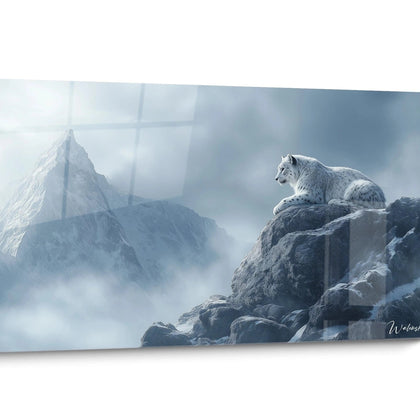
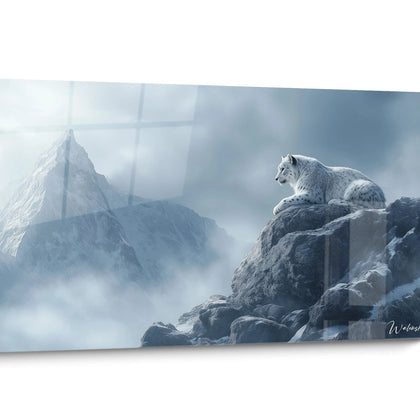
The Snow Leopard Painting Realistic captures all the majesty of this rare and elusive feline. Our collection celebrates the wild elegance of this mountain predator through works of striking realism snow leopard. Each creation reveals the graceful power, piercing gaze, and iconic spotted coat of this mythical animal. Perfect for lovers of wild animal art, this collection transforms your interior into a sophisticated natural gallery.
 Snow Leopard Wall Art - Snow Leopard Edition228,90 €
 Snow Leopard Altitude Gaze Painting - snow leopard edition228,90 €
 Snow Leopard Jade Gaze Wall Art - Snow Leopard Edition228,90 €
 Snow Panther Painting Huntress of the Snow - Snow Panther Edition228,90 €
 Snow Leopard Wall Art N°3 - Animals Edition273,90 €
 Snow Leopard Wall Art No.2 - Animals Edition273,90 €
 Snow Leopard Wall Art No.1 - Animals Edition273,90 €
Explore further
In Realistic Snow Leopard Wall Art

All about Realistic Snow Leopard Wall Art
- Description Painting snow leopard of the snows Realistic
- Authenticity of naturalistic rendering
- Symbolic feline power
- Immersive decorative integration
The painting snow leopard realistic stands as a captivating work that celebrates the majesty of a mythical predator of high altitudes. This photographic representation captures the intensity of the gaze, the delicate texture of the spotted fur, and the natural elegance of this rare feline. Designed for contemporary living spaces, this large-format wall decor instantly transforms the atmosphere of a living room, a executive office, or a reception area by creating a striking focal point. The ultra-realistic approach reproduces each anatomical detail with documentary precision that fascinates wildlife enthusiasts and animal art collectors. This monumental decorative piece is perfectly suited to Nordic minimalist interiors, urban industrial decors, or nature-inspired organic atmospheres from the Himalayas.
Hyperrealistic animal art in service of wild emotion
Why choose a realistic representation rather than a stylized artistic interpretation?
The realistic snow leopard painting differs radically from graphic, watercolor, or minimalist versions by its ability to faithfully reproduce the exceptional morphology of the snow leopard. Each rosette on the pearl gray fur, each vibration of the dense coat adapted to extreme temperatures, each subtle nuance between the creamy white of the belly and the anthracite gray of the back finds its place in this naturalistic representation. This photographic fidelity creates an immediate emotional connection, as if the animal were looking directly at the observer from its mountain habitat.
Anatomical accuracy reveals little-known details: the massive paws with widened cushions for snow walking, the disproportionately long tail serving as a balancer in vertiginous rocky passages, the small rounded ears minimizing heat loss. These morphological specifics transform the visual into a veritable educational document for enthusiasts of mountain biodiversity. Discerning collectors specifically seek this zoological authenticity absent from conventional decorative interpretations.
Capturing the decisive moment in contemporary animal art
A realistic snow leopard painting for a large living room freezes a specific behavioral moment: silent stalking preceding the hunt, meditative rest on a rocky promontory, or vigilant observation of the territory. This narrative dimension, absent from abstract compositions, psychologically engages the viewer who projects their own interpretations onto the facial expression and body posture. The intensity of the amber or pale green gaze establishes a disturbing eye contact that literally animates the wall space.
Variations in photographic depth of field create a strategic visual hierarchy: a sharp foreground highlighting the texture of the fur and a slightly blurred background evoking the snowy peaks of the Hindu Kush or the Altai Mountains. This professional compositional technique generates an illusory three-dimensionality that multiplies the spatial presence of the decor. For high-end residential environments, this technical sophistication justifies the investment in a format from 120 to 180 centimeters.
Natural chromatic variations between different geographic subpopulations
The realistic approach allows to explore subtle phenotypic nuances between specimens: some Himalayan individuals present particularly sought-after bluish-gray tones, while Mongolian populations sometimes display more ochre hues. A snow leopard gray blue painting specifically highlights this exclusive cold color palette that naturally harmonizes with Scandinavian interiors, coastal decors, or minimalist zen spaces. This colorimetric specificity becomes a determining criterion for interior designers orchestrating sophisticated monochromatic palettes.
The faithful reproduction of natural light contrasts—deep shadow areas in the ventral fur, silvery reflections on the dorsal guard hairs—creates a visual richness that evolves according to the ambient lighting. Under zenithal light, anatomical details emerge with surgical sharpness; under ambient lateral lighting, the modeling sculpts an almost three-dimensional presence. This perceptual versatility justifies the strategic positioning facing multidirectional light sources in large architectural volumes.
The powerful symbolism of the solitary predator of the summits
How does a realistic snow leopard painting influence spatial psychology?
Beyond animal aesthetics, the realistic snow leopard painting conveys a considerable symbolic charge strategically exploited in professional leadership spaces, consulting firms, or main residences. This feline simultaneously embodies resilience in the face of extreme conditions, strategic patience of a high-altitude hunter, territorial independence, and exclusive rarity—only 4,000 to 6,500 individuals survive in the wild. These psychological attributes particularly resonate with entrepreneurs, visionary leaders, and personalities valuing discreet excellence.
The conservation dimension reinforces the owner's commitment to preserving threatened ecosystems. Displaying this living symbol of vulnerable mountain biodiversity subtly communicates ecological values without ostentatious activism. For corporate spaces adopting ambitious CSR charters, this natural iconography aligned with sustainable development goals becomes a coherent identity marker. Visitors subconsciously capture these cultural signals that enrich the overall perception of the organization.
The archetype of the ghost of the mountains in the collective imagination
Unlike African big cats that are heavily mediatized, the snow leopard retains a quasi-mythical status reinforced by its extreme behavioral discretion and inaccessible habitat. A realistic XXL painting for a reception area capitalizes on this mysterious aura that spontaneously fascinates observers. Cultural references—particularly Tibetan and Mongolian—enrich the spiritual dimension: guardian of sacred mountain passages, incarnation of Himalayan purity, messenger between the terrestrial and celestial worlds.
This narrative depth transcends simple wall decoration to establish a protective totemic presence. In residential entrance halls, this iconography immediately establishes a sophisticated tone that psychologically prepares for the discovery of interior spaces. Interior architects exploit this ability to create striking emotional spatial transitions, particularly effective in double-height volumes where the monumental format of the visual dialogues with the architectural scale.
Visual rarity as an exclusive decorative differentiator
While lions, tigers, and leopards saturate the market for mass-market animal art, the realistic snow leopard painting offers a refined alternative that instantly distinguishes the space. This exclusive iconography is particularly interesting to collectors tired of conventional motifs seeking a distinctive decorative singularity. The naturally subdued color palette—gray, white, beige, with subtle touches of russet—harmoniously integrates into neutral contemporary schemes without creating aggressive visual conflicts.
Professionals in boutique hospitality and gourmet restaurants exploit this differentiating iconography to build memorable spatial identities. An establishment positioned on discreet excellence, understated luxury, or refined adventure finds in this imagery a coherent narrative vector. Photographic realism guarantees immediate readability—unlike abstractions requiring aesthetic education—while maintaining a sophistication that avoids the banality of standardized commercial visuals.
Integration strategies in contemporary architectures
Which decorative environments maximize the impact of a realistic snow leopard painting?
The optimal installation of the realistic snow leopard painting requires a contextualized analysis of the existing architecture and visual circulation. In open-plan residential spaces such as lofts, positioning on the main wall facing the entrance creates an effect of progressive discovery amplifying the monumental presence. Wall bookshelves flanking the visual establish a cultural dialogue between bookish knowledge and wild natural beauty. This staging simultaneously values the artwork and the architectural environment.
For executive offices, the strategic placement behind the work position generates a powerful symbolic backdrop during video conferences or physical meetings. Interlocutors subconsciously associate the qualities of the predator—focus, strategic patience, adaptive excellence—with the professional framed in front of this iconography. In negotiation spaces, this natural backdrop paradoxically calms tensions while maintaining a determined energy, a psychological balance rarely achieved by other decorative typologies.
Material associations amplifying overall aesthetic coherence
A realistic snow leopard painting in a large format naturally dialogues with raw organic materials: gray natural stone evoking rocky scree in the Himalayas, aged wood reminiscent of high-altitude coniferous forests, thick woolen textiles in neutral tones reproducing the texture of winter fur. This material synergy creates a consistent sensory immersion, transforming the space into an urban mountain refuge. Designers exploit these correspondences to construct subtle thematic atmospheres without falling into literal kitsch reproduction.
Architectural lighting becomes a decisive parameter: directional spotlights with a neutral color temperature (4000K) revealing the microstructural details of the fur, perimeter indirect lighting creating a highlighting halo that visually detaches the work from the wall support. Variable systems allowing adjustment of intensity according to the time of day or space usage maximize perceptual versatility. For high-end installations, the integration of electrified rails facilitating occasional repositioning preserves long-term decorative flexibility.
Perceptual evolution according to seasons and natural light transformations
Unlike static abstract works, a realistic snow leopard mural painting interacts dynamically with cyclical natural light. Winter mornings bathed in cold light reinforce the glacial dimension and extreme adaptation; summer afternoons bathed in golden light paradoxically create an intriguing thermal contrast between a warm interior atmosphere and an evocation of frigid habitats. This seasonal perceptual variation constantly renews the visual experience, justifying the durable investment in a monumental format.
Owners frequently report an evolving emotional connection: initial fascination with technical realism, then progressive development of a quasi-meditative contemplative relationship with the feline's gaze. This depth of psychological engagement radically differentiates the acquisition of a superficial temporary decorative element. For main residential spaces intended for a decade-long occupancy, this ability to generate renewed interest constitutes a major rational investment criterion.
Is a realistic snow leopard painting suitable for small spaces?
Although monumental, these visuals work remarkably well in compact volumes by creating an illusory window onto infinite wilderness expanses. The perceptual expansion effect compensates for physical spatial constraints. A minimum format of 100 centimeters is still recommended to preserve emotional impact and readability of characteristic anatomical details.
How to maintain the chromatic vibrancy of a realistic snow leopard painting?
Avoiding prolonged exposure to direct sunlight preserves the pigment stability of professional prints. Monthly dusting with an antistatic microfiber maintains visual clarity. Contemporary UV printing technologies nevertheless guarantee chromatic resistance for several decades under standard indoor exposure conditions, making these precautions largely preventive.
Can multiple realistic animal paintings be combined in the same space?
Accumulation requires strict ecological or geographical consistency to avoid narrative cacophony. Combining different Himalayan species—yak, bharal, Himalayan vulture—with the snow leopard creates an educational thematic gallery. Arbitrarily mixing predators from incompatible biomes dilutes the symbolic impact and reveals a lack of curatorial rigor generally perceived negatively by informed visitors.
L'art qui suscite l'envie
Maison belge d'art mural grand format
14 jourspour changer d'avis*
Protection Walenskyincluse
Fabriquéen Italie
FormatXXL
Kit de fixationtoujours fourni
* Hors tableaux personnalisés et tailles personnalisées


