


Realistic Persian Cat Wall Art
Our Painting Persian Cat Realistic collection captures the nobility and elegance of the most majestic felines. Each artwork reveals with precision the incomparable beauty of the Persian cat: its deep gaze, its silky fur and its aristocratic bearing. These artistic Persian cat portraits bring a touch of sophistication to your interior decoration. Perfect for cat lovers, these creations in realistic animal art transform your living room, bedroom or office into a refined gallery.
 Persian Cat Golden Eyes Painting - Intense Gaze - Persian Cat Edition242,90 €
 Persian Cat Painting Cream - Golden Gaze - Persian Cat Edition273,90 €
 Persian Cat Grooming Painting - Feline Elegance - Persian Cat Edition273,90 €
 Persian Cat Painting with Amber Eyes - Captivating Gaze - Persian Cat Edition273,90 €
 Sleeping Persian Cat Painting - Golden Softness - Persian Cat Edition273,90 €
 White Persian Cat with Golden Eyes Painting - Aristocratic Portrait - Persian Cat Edition273,90 €
 Majestic White Persian Cat Painting - Feline Elegance - Persian Cat Edition273,90 €
 Black Persian Cat Painting with Copper Eyes - Mysterious Gaze - Persian Cat Edition228,90 €
 White Persian Cat Painting with Blue Eyes - Captivating Gaze - Persian Cat Edition228,90 €

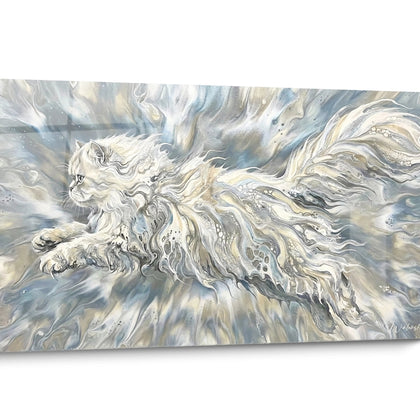
All about Realistic Persian Cat Wall Art
- Realistic Persian Cat Wall Art Presentation
- Capturing the Essence of the Persian
- Visual Impact and Presence
- Artistic Investment
A realistic Persian cat wall art transcends simple decorative representation to become a genuine window into the fascinating universe of this emblematic breed. These large-format artistic creations capture with photographic precision the distinctive anatomical details of the Persian: the exceptional density of its silky coat, the expressiveness of its large copper or emerald eyes, and that flattened facial morphology which grants each subject unique personality. Hyperrealism applied to feline representations demands remarkable technical mastery, where each texture, each light reflection on the fur, each chromatic nuance contributes to creating the illusion of tangible presence in your living space.
The Art of Hyperrealistic Rendering of Persian Characteristics
The creation of a realistic Persian cat wall art relies on meticulous observation of the anatomical particularities that distinguish this ancestral breed. Artists specialized in this pictorial register dedicate hours to studying the brachycephalic facial structure, characterized by this instantly recognizable concave profile. This unique morphology creates complex interplays of shadows and light that only realistic rendering can authentically restore.
How does coat texture influence realistic composition?
The Persian's fur presents exceptional density reaching up to 120,000 hairs per square centimeter, creating this characteristic vaporous texture. In a large-format realistic representation, each hair-bearing zone demands a differentiated approach: the volumetric collar zones around the neck contrast with the fineness of facial hairs, while transition zones reveal subtle chromatic variations. Representations of white Persians particularly illustrate this complexity, where ivory, cream, and pure white nuances coexist in an imperceptible gradient.
The depth of gaze in realistic feline imagery
The Persian's eyes constitute the focal element of any successful realistic composition. Their generous size, lateral positioning, and intense pigmentation – ranging from deep copper to emerald green according to coat color – demand particular attention in rendering corneal reflections and pupil depth. A realistic large-scale wall art captures these micro-details: iris variations, precise delimitation between sclera and eyelid, and especially that contemplative expression characterizing the placid temperament of the breed.
Why do anatomical details reinforce visual authenticity?
Beyond coat and gaze, realistic Persian representations incorporate the morphological particularities that define the breed standard: the short, wide nose with its marked stop, small rounded ears positioned low on the skull, the massive facial bone structure. These anatomical elements, when rendered with photographic accuracy in an imposing format, create an almost tangible presence. Variations between golden Persians with warm nuances and their congeners with cooler coats demonstrate how anatomical fidelity articulates with chromatic palette to produce works of striking authenticity.
Monumental Presence and Spatial Dynamics of Feline Realism
The integration of a large-scale realistic Persian cat wall art radically transforms the spatial perception of an environment. Unlike stylized or abstract approaches, photographic realism establishes direct visual dialogue with the observer, creating the illusion of a window open onto a living scene. This perceptual immediacy generates immediate emotional connection, particularly effective in contemporary living spaces where nature often falls short.
Monumental scale in service of visual immersion
The generous dimensions of realistic representations – frequently exceeding 120 centimeters in width – enable detail appreciation impossible in reduced formats. At this scale, each strand of fur becomes perceptible, each chromatic variation assumes its full expressive dimension. This monumentality creates a dominant focal point that structures the entire decorative arrangement, particularly in reception areas where immediate visual impact determines the general atmosphere.
How does photographic realism influence interior ambiance?
Unlike expressionist interpretations that energize space through color and movement, or fantastical compositions introducing dreamlike dimension, feline realism brings soothing and contemplative presence. This meditative quality perfectly corresponds to spaces dedicated to relaxation: master bedrooms, libraries, intimate living rooms where the quiet sophistication of the Persian resonates with the sought atmosphere.
Visual polarization and decorative hierarchy
A large-scale realistic wall art functions as a visual magnet that reorganizes perception of surrounding space. Adjacent decorative elements should be selected to complement rather than compete with this dominant presence. Minimalist environments – walls in neutral tones, furniture with clean lines – particularly value these hyperrealistic works by creating striking contrast between architectural simplicity and textural richness of the feline subject. This approach differs radically from street art aesthetics that integrate into more eclectic and urban environments.
Heritage Appreciation and Selection of Realistic Feline Works
The acquisition of a realistic Persian cat wall art constitutes a long-term decorative investment whose value transcends fleeting trends. The aesthetic permanence of photographic realism, unlike ephemeral artistic currents, guarantees lasting relevance. These works inscribe themselves in a centuries-old pictorial tradition of faithful animal representation, while benefiting from contemporary techniques ensuring optimal conservation.
Evaluation criteria for hyperrealistic representations
Assessment of a realistic work demands examination of multiple technical parameters: consistency of directional lighting across the composition, chromatic gradation in transition zones, anatomical precision conforming to the breed's morphological standard. The most accomplished representations reveal profound understanding of skeletal structure underlying the coat, visible in volumetric modeling of the skull and correct articulation of facial muscle masses. This expertise differentiates exceptional creations from superficial reproductions.
Why prioritize monumental formats for feline realism?
The work's dimension directly conditions its emotional impact and capacity to reveal subtleties of artistic labor. A format exceeding one meter in width enables appreciation of micro-details constituting realism's signature: luminance variations in each eye, textural differentiations between long and short hair zones, thermal nuances of the coat. These elements, invisible in reduced formats, fully justify investment in generous dimensions that transform observation into genuine contemplative experience.
Complementarity with thematic collections
Persian representation enthusiasts can enrich their collection by exploring different stylistic approaches while maintaining thematic feline coherence. A realistic composition can harmoniously dialogue with varied interpretations of the Persian, creating a visual narrative celebrating artistic diversity around a common subject. This curatorial strategy enables appreciation of how different plastic languages – from photographic realism to abstraction – reveal complementary facets of Persian aesthetics.
Conservation and longevity of large-format realistic works
Contemporary reproduction technologies guarantee exceptional chromatic stability, preserving tone fidelity over decades. Archival-quality pigments resist photodegradation caused by ambient light exposure, while rigid large-format supports maintain surface flatness essential to realistic illusion. These technical characteristics, combined with realism's aesthetic timelessness, make these acquisitions durable heritage elements whose decorative value never becomes outdated.
Is a realistic Persian cat wall art suitable for minimalist contemporary interiors?
Absolutely. Photographic realism integrates perfectly into pared-down environments where it creates striking contrast between architectural sobriety and organic textural richness. This juxtaposition reinforces the work's visual impact while humanizing minimalist spaces sometimes perceived as cold.
How to evaluate the technical quality of a realistic Persian cat wall art before purchase?
Examine consistency of directional lighting, precision of eye details (corneal reflections, pupil depth), and textural differentiation between coat zones. Superior quality works also present facial anatomy conforming to the breed's morphological standard, with credible volumetric rendering of underlying skeletal structure.
What minimum dimension to prioritize for a realistic Persian cat wall art intended for a living room?
For a reception space, prioritize formats of at least 100-120 centimeters in width enabling appreciation of fine details constituting realism's essence. This scale also guarantees sufficient visual presence to structure the decorative arrangement without being overwhelmed by surrounding furniture.


