


Realistic Burmese Cat Wall Art
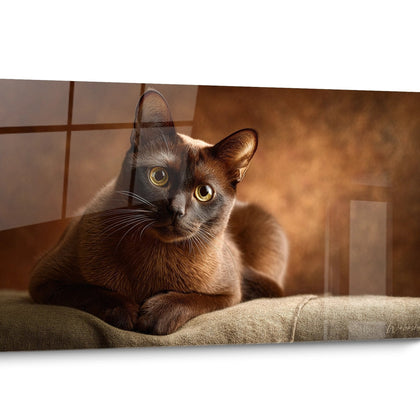
Our Realistic Burmese Cat Painting Realist captures the incomparable elegance of this iconic feline breed. Each artwork reveals the sophisticated beauty of the Burmese, with its piercing gaze and silky coat in warm tones. These authentic Burmese cat portraits bring a touch of refinement to your interior decoration. Perfect for cat lovers, these artistic creations celebrate the natural grace and unique character of the Burmese cat. Explore our collection of realistic feline animal art and find the artwork that will capture your heart.
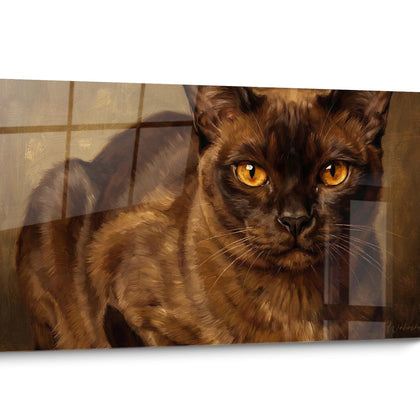
 Burmese Cat at Rest Painting - Golden Serenity - Burmese Cat Edition273,90 €
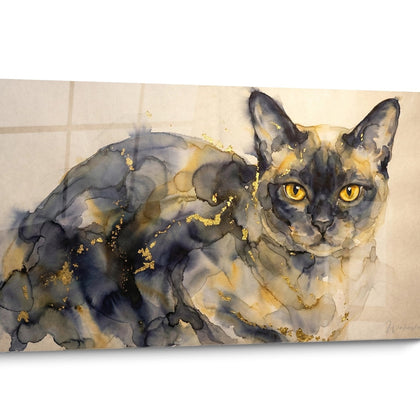
 Elegant Siamese Cat Painting - Luminous Serenity - Burmese Cat Edition273,90 €
 Burmese Cat Painting with Green Eyes - Hypnotic Gaze - Burmese Cat Edition273,90 €
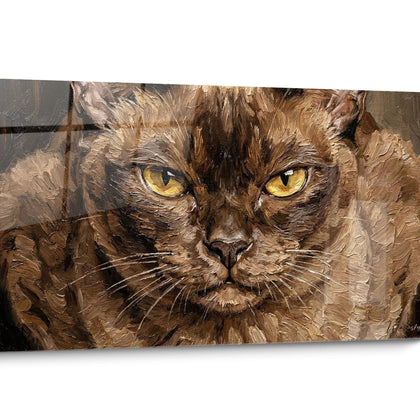
 Burmese Cat Painting with Golden Eyes - Intense Gaze - Burmese Cat Edition273,90 €
 Burmese Cat Painting Piercing Gaze - Antique Mystery - Burmese Cat Edition273,90 €
 Burmese Cat Painting Golden Gaze - Feline Intensity - Burmese Cat Edition273,90 €
 Burmese Cat Painting in Golden Light - Serenity at Sunset - Burmese Cat Edition273,90 €
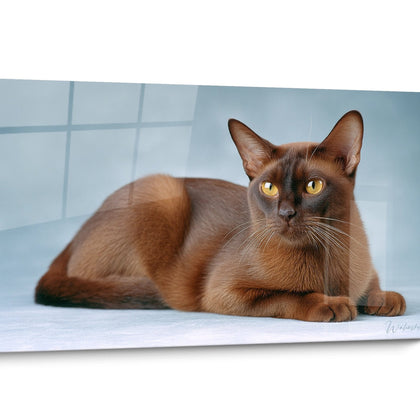
 Burmese Cat Painting with Blue Eyes - Feline Elegance - Burmese Cat Edition273,90 €
 Burmese Cat Painting at the Window - Urban Contemplation - Burmese Cat Edition273,90 €
 Burmese Cat Painting Green Eyes - Captivating Portrait - Burmese Cat Edition273,90 €
 Burmese Cat Painting Artistic Portrait - Golden Gaze - Burmese Cat Edition228,90 €
 Burmese Cat Golden Gaze Painting - Contemplative Portrait - Burmese Cat Edition228,90 €
 Burmese Cat Painting Blue Eyes - Piercing Gaze - Burmese Cat Edition228,90 €
 Burmese Cat Painting Wrapped - Mysterious Golden Gaze - Burmese Cat Edition228,90 €
Explore further
In Realistic Burmese Cat Wall Art
All about Realistic Burmese Cat Wall Art
- Realistic Burmese Cat Painting Presentation
- Photographic aesthetics for Burmese felines
- Hyperrealistic visual impact in large format
- Feline authenticity and expressiveness
The realistic Burmese cat painting captures with photographic fidelity the timeless elegance of this Burmese breed with its silky coat and hypnotizing golden eyes. Unlike stylized artistic interpretations such as watercolor creations, this pictorial approach prioritizes meticulous reproduction of textures, light, and anatomical details that make the Burmese an exceptional subject. Each delicately rendered whisker, every shade of chocolate brown or champagne on the coat, each reflection in the amber iris testifies to technical rigor that transforms the work into a true trompe-l'œil.
Photographic fidelity in service of the Burmese breed
Exact reproduction of Burmese morphological characteristics
The realistic Burmese cat painting distinguishes itself through its ability to restore with scientific accuracy the anatomical particularities that define this compact Oriental breed. The characteristic toned musculature of the American Burmese, its rounded profile without excessive angularity, its round expressive eyes slightly inclined toward the temples constitute elements that only a realistic approach can authentically capture. The subtle color variations between the darker mask and the slightly lighter body, typical of the natural sepia pattern, demand mastery of tonal transitions that hyperrealism makes possible to achieve.
How is the texture of the satin coat rendered visually?
The Burmese signature lies in this short fur with a silky feel that reflects light in a unique way. A realistic large-scale painting amplifies this characteristic by reproducing each variation in brightness according to hair orientation. The areas of light concentration on the rounded shoulders, along the dorsal spine or on the domed skull create plays of shadows and reflections that give the impression of a living presence. This natural luminosity of the coat, neither matte nor too shiny, constitutes a technical challenge that only artists specialized in animal realism manage to master consistently.
The intensity of the amber gaze as focal point
The eyes of the Burmese, oscillating between yellow gold and deep copper, represent the central element in any realistic composition. The precise reproduction of the multiple concentric nuances of the iris, the microvariations of color around the pupil, the specular reflections that animate the gaze require meticulous observation. In an imposing mural format, these ocular details become large enough to reveal the psychological depth associated with this breed renowned for its intelligence and attachment. The photographic rendering transforms these eyeballs into emotional windows that establish immediate connection with the observer, creating a particularly effective visual anchor point in high-end residential spaces.
Which backgrounds magnify the realistic feline subject?
Unlike modern compositions that exploit abstract backgrounds, the realistic Burmese painting generally favors neutral or subtly evocative contexts that never eclipse the main subject. A background graduated from pearl gray to anthracite charcoal emphasizes the warm tones of the coat, while a background evoking velvet or padded leather reinforces the association with feline luxury. These scenographic choices participate in realistic immersion by situating the animal in a coherent environment without creating competitive visual distraction.
The monumental decorative impact of animal realism
Why choose XXL format for hyperrealistic representation?
The monumental scale amplifies every technical detail of the realistic Burmese cat painting to create an unmatched immersive experience. When the feline's head reaches dimensions comparable to or even exceeding those of a living subject, individual whiskers, taste buds on the pink nose, colored streaks in the iris become sculptural elements appreciable even from medium distance. This monumentality transforms the work into an architectural presence capable of structuring the visual landscape of a spacious living room, a generous entrance hall or a private library. Buyers seeking a conversation-starting masterpiece find in these exceptional dimensions the visual impact necessary to dominate the space without resorting to decorative accumulation.
Compatibility with contemporary minimalist interiors
Paradoxically, photographic realism integrates remarkably into minimalist environments and contemporary architectures. Where gilded versions bring an ornamental dimension, the realistic Burmese painting functions as an organic element that humanizes sparse spaces without compromising their aesthetic coherence. In a loft with polished concrete surfaces, brushed steel and glass, the warm presence of a meticulously rendered feline gaze creates a welcome emotional counterpoint. Interior designers exploit this dialectic between modern material coldness and the living warmth of the animal subject to create sophisticated ambiances avoiding dryness.
The three-dimensional effect in large formats
A generous-dimensioned realistic Burmese painting generates spatial depth illusion absent from modest formats. Subtle variations in sharpness between the gaze plane – always perfectly focused – and slightly softened peripheral zones mimic photographic depth of field. This visual hierarchy naturally guides the eye toward priority expressive elements while maintaining rich detail throughout the composition. In a room benefiting from indirect lighting that enhances the work, these sharpness plays create a volumetric presence that appears to emerge from the mural plane, particularly effective in professional reception spaces seeking a memorable visual signature.
What viewing distance optimizes the realistic effect?
The particular strength of large-scale realism lies in its ability to function visually at multiple distances. From afar, the overall composition establishes immediate and recognizable presence. At intermediate distance – where one naturally moves through a room – the expressiveness of the subject and color harmony dominate. Upon close approach, technical details reveal their virtuosity: individual hair texture, microscopic color variations, fineness of tonal transitions. This perceptual versatility, specific to hyperrealistic large-scale works, justifies their positioning in circulation spaces where observation angles and distances naturally vary.
Emotional authenticity and connection with the Burmese enthusiast
Capturing the distinctive personality of the Burmese
Beyond technical prowess, the successful realistic Burmese cat painting captures the behavioral essence that distinguishes this breed: that confident direct gaze typical of Burmese extroverted temperament, that relaxed yet attentive posture characteristic of a sociable feline, that impression of interactive presence absent in more distant breeds. Burmese owners instantly recognize these behavioral markers visually transcribed – ears oriented toward the observer, body slightly inclined forward suggesting friendly approach, relaxed facial muscles evoking imminent purring. This behavioral fidelity transcends simple anatomical reproduction to reach a psychological dimension that particularly resonates with breed enthusiasts.
Why does realism surpass stylized interpretations for collectors?
For discerning Burmese enthusiasts, a realistic portrait possesses documentary and emotional value unreachable by abstract approaches. Unlike ephemeral decorative trends, animal hyperrealism maintains timeless relevance anchored in academic pictorial tradition since Flemish masters. This historical artistic legitimacy reassures buyers investing in large-scale mural pieces of substantial value intended to span decades without aesthetic obsolescence. The Burmese cat painting collection offers various interpretations, but only realism guarantees immediate recognition of precise racial specificities, a determining criterion for professional breeders or feline exhibitors designing their spaces.
A permanent visual tribute to the feline companion
Many buyers of realistic Burmese paintings seek a lasting celebration of a specific animal or their passion for this Burmese breed. The level of hyperrealistic detail permits recognition of subtle individual particularities distinguishing each Burmese: the characteristic ear inclination, the precise shadow pattern on the muzzle, the unique expression of the gaze. In the monumental dimensions offered, these specificities become pronounced enough to transform the work into a genuine commemorative portrait rather than generic representation. This memorial function explains why large-scale realistic formats dominate personalized commissions from owners wishing to immortalize their companion with dignity.
Frequently asked questions about realistic Burmese cat paintings
Does a realistic Burmese cat painting suit professional environments?
Absolutely, particularly in feline-specialized veterinary offices, upscale pet boutiques, feline exhibition halls or reception spaces of recognized breeding facilities. The professional and documentary dimension of realism reinforces expertise credibility while creating a warm atmosphere.
Does the realistic Burmese cat painting require specific lighting?
Soft directional lighting exceptionally highlights textural details and subtle color nuances. Side lighting accentuates the three-dimensional effect while a spot directed from above mimics natural flattering conditions for the Burmese coat.
How does a large-format realistic Burmese cat painting influence a room's ambiance?
It immediately establishes a sophisticated and warm atmosphere, combining the aesthetic rigor of academic realism with the emotional accessibility of the feline subject. Cold or impersonal spaces instantly gain in warmth while already warm interiors see their character reinforced without decorative overload.


