


Realistic Basset Hound Dog Canvas
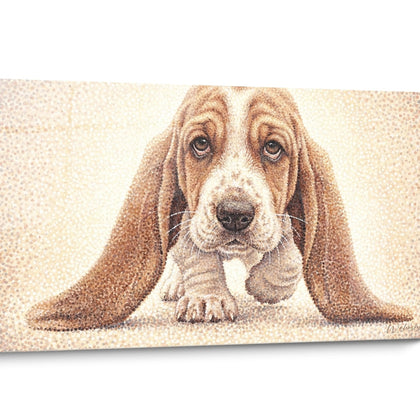
The Painting dog Basset Hound Realistic celebrates the endearing elegance of this breed with drooping ears. Each artwork accurately captures the characteristic traits of the Basset: its deep and expressive gaze, its delicate wrinkles, and its noble posture. This collection of realistic dog portraits enhances the endearing personality of this faithful companion. Perfect for lovers of dog breed wall decoration, it brings a touch of tenderness and authenticity to your interior while paying homage to this hunting dog with a gentle temperament.
 Basset Hound Lying Under Furniture - Melancholic Gaze - Basset Hound Edition242,90 €
 Sleeping Basset Hound on Tiled Floor - Peaceful Rest - Basset Hound Edition273,90 €
 Sleeping Basset Hound Wall Art with Ochre Tones - Peaceful Rest - Basset Hound Edition273,90 €
 Tricolour Basset Hound Painting at Its Bowl - Greedy Moment - Basset Hound Edition273,90 €
 Sleeping Basset Hound Painting - Ochre and White Tones - Peaceful Rest - Basset Hound Edition273,90 €
 Basset Hound Lying Under the Table - Endearing Look - Basset Hound Edition273,90 €
 Basset Hound Lying on Couch by a Window - Contemplative Rest - Basset Hound Edition273,90 €
 Group of Basset Hounds Resting on Parquet - Canine Gathering - Basset Hound Edition273,90 €
 Basset Hound Canvas with Melancholic Eyes - Contemplative Portrait - Basset Hound Edition273,90 €
 Dog Painting with Long Ears on Persian Rug - Melancholic Gaze - Basset Hound Edition228,90 €
 Dog Portrait Painting with Golden and Blue Tones - Contemplative Gaze - Basset Hound Edition228,90 €
 Basset Hound Portrait Painting in Sepia Tones - Melancholic Gaze - Basset Hound Edition228,90 €
 Basset Hound in Decorated Military Uniform Painting - Noble Portrait - Basset Hound Edition228,90 €
 Dog Portrait Painting with Golden Eyes and Russet Coat - Touching Gaze - Basset Hound Edition228,90 €
Explore further
In Realistic Basset Hound Dog Canvas
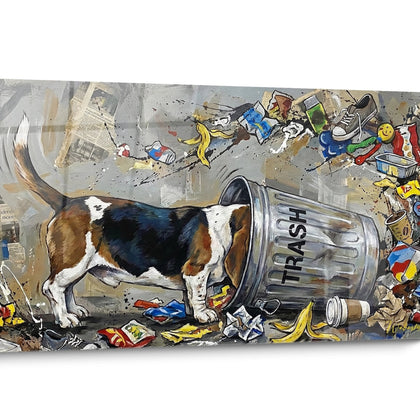
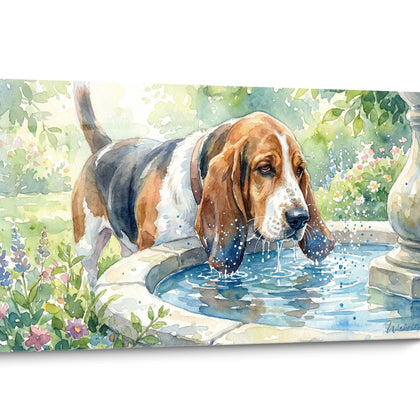
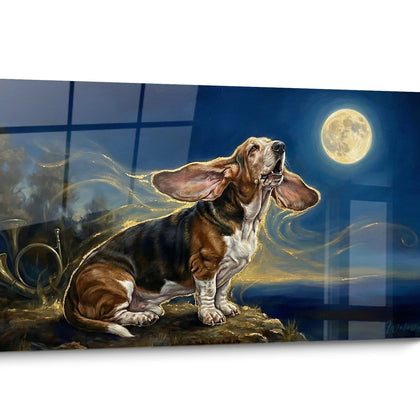
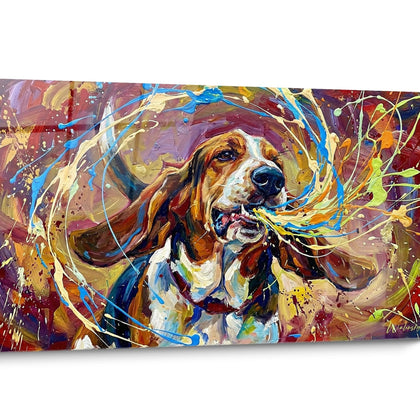
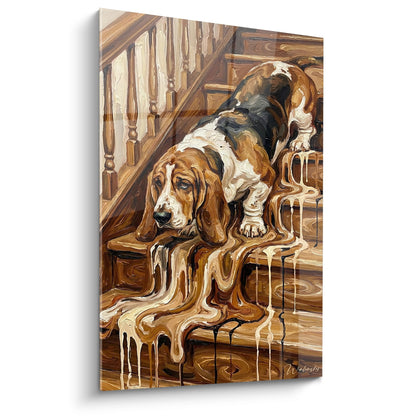
All about Realistic Basset Hound Dog Canvas
- Realistic Basset Hound Painting Presentation
- Canine Hyperrealism
- Morphology & Expression
- Faithful Reproduction
The realistic Basset Hound dog painting captures with photographic precision the unique morphology of this emblematic breed. Every anatomical detail, from the characteristic skin wrinkles to the velvety drooping ears, undergoes meticulous reproduction that captivates enthusiasts of authentic representations. These large-format artworks transform your space into a genuine gallery dedicated to the natural elegance of the Basset Hound, offering striking visual presence that resonates with your attachment to this distinctive breed.
The Art of Hyperrealism in Basset Hound Representation
The realistic Basset Hound dog painting distinguishes itself through its ability to faithfully reproduce the anatomical subtleties specific to this breed. Unlike stylized interpretations such as the Basset Hound watercolor dog painting, the realistic approach privileges millimetric precision in rendering skin textures, facial folds, and the characteristic melancholic expression. This photographic fidelity demands exceptional technical mastery to capture the intensity of the downward gaze and the softness of the tricolor coat.
Why choose a realistic representation for a Basset Hound?
Owners seeking a large-format realistic Basset Hound painting typically wish to immortalize the distinctive traits of their companion or pay tribute to the breed in its anatomical truth. This documentary approach suits professional breeders, canine enthusiasts, and animal art collectors who prioritize visual authenticity perfectly. The realistic representation also allows emphasizing the morphological standards of the breed, from chest depth to the disproportionate length of the ears.
Techniques for rendering textures specific to the Basset
The complexity of the Basset Hound lies in its multiple overlapping textures: wrinkled skin on the head, short and dense coat, variable hair density across different body regions. A quality realistic Basset Hound painting visually distinguishes these different surfaces, creating almost palpable tactile depth. The shadowed areas beneath the pendant ears and around the drooping flews require subtle gradation to avoid visual flattening, particularly important in formats exceeding 120 centimeters in width.
Capturing the characteristic expression
The Basset Hound's expression constitutes the soul of a successful realistic representation. The sad and profound gaze, almost meditative, demands special attention to eye reflections and mucous membrane pigmentation. For enthusiasts of more contemporary representations, the modern Basset Hound dog painting offers alternatives, but only realism faithfully transcribes this melancholic softness that defines the breed's temperament. The drooping lip commissures and frontal wrinkling contribute to this unique physiognomy that appeals to discerning collectors.
Distinctive Morphology and Precise Anatomical Rendering
Realistic representation of a Basset Hound requires scrupulous respect for the atypical body proportions of this breed: short limbs supporting an elongated body, prominent thoracic cage, and massive bone structure. A large-format realistic Basset Hound dog painting reveals these anatomical particularities with precision that allows appreciating every structural detail. This morphological fidelity radically distinguishes these works from freer approaches such as the vintage Basset Hound dog painting where proportions may be stylized.
How do artists capture the characteristic skin folds?
Skin wrinkles constitute the visual signature of the Basset Hound, particularly concentrated in the cervical and facial areas. In a large-format realistic Basset Hound artwork, these folds create complex shadow and light plays that demand meticulous observation of tonal gradations. The elastic skin forming dewlaps beneath the throat and frontal wrinkles requires a technique of chromatic layering to suggest depth without overloading the composition. This anatomical complexity explains why collectors favor imposing formats where every detail remains perceptible.
Faithful reproduction of the tricolor pattern
The classic tricolor Basset Hound coat (black, tan, and white) presents sharp demarcations that must be rendered with accuracy in a realistic approach. Transition zones between colors, notably at the muzzle and limbs, require documentary precision absent from decorative interpretations. A high-definition realistic Basset Hound painting respects the specific distribution of tan markings above the eyes, on the cheeks and at the extremity of the paws, distinctive elements sought by breed connoisseurs.
Body proportions and visual balance
The contrast between the Basset's massive body and short limbs creates a compositional challenge for large-format representations. Lovers of more stylized aesthetics may turn to the golden Basset Hound dog painting, but the realistic approach requires maintaining these unusual proportions without distortion. The excessive back length, chest depth, and front limb curvature must respect morphological standards to guarantee the visual authenticity sought by demanding collectors of collection-quality realistic Basset Hound paintings.
Visual Authenticity and Photographic Details of the Basset Hound
The excellence of a realistic Basset Hound dog painting is measured by its ability to reproduce the micro-details that escape simplified artistic approaches. Pigmentation variations at the nose level, irregularities of the plantar pads, or the differentiated texture between back hair and ear hair constitute elements that only a hyperrealistic approach can restore. For collectors seeking more classical representations, the Basset Hound portrait dog painting offers an alternative, but without achieving the documentary fidelity level of photographic realism.
What details distinguish a superior quality realistic painting?
Excellence criteria include faithful representation of vibrissae (whiskers) with their natural implantation, translucency of the ears when light passes through them, and the specific shine of the wet nose. A premium large-format realistic Basset Hound painting also reveals variations in hair density according to body zones, invisible in reduced formats. The definition of claws, texture of drooping lips, and even visible veining in thin-skinned areas testify to the level of technical mastery invested in the artwork.
Rendering of sensory and expressive zones
The Basset Hound's eyes, with their slightly drooping lower eyelid revealing the pink conjunctiva, constitute the emotional focal point of a realistic representation. The depth of the melancholic gaze requires precise reproduction of light reflections, ocular moisture, and iris color nuances. The disproportionately long ears, sometimes reaching the ground, present a unique velvety texture that contrasts with the body coat, a tactile difference that a large-format realistic Basset Hound painting must visually suggest to seduce enthusiasts of documentary animal art.
Naturalistic contextualization and environment
Unlike minimalist approaches, certain realistic Basset Hound paintings integrate environmental elements that strengthen authenticity: ground texture, natural background elements, or subtle atmospheric effects. These contextual details amplify the physical presence of the subject without diverting attention from canine morphology. Collectors wishing to explore the full range of stylistic possibilities may consult the complete Basset Hound dog painting collection, but photographic realism remains the preferred approach for valorizing the morphological singularity of this emblematic breed in imposing wall dimensions.
What justifies the investment in a large-format realistic Basset Hound painting?
Beyond the decorative dimension, these artworks constitute valuable visual documents for professional breeders wishing to illustrate breed standards. Anatomical precision allows pedagogical use during canine exhibitions or in spaces dedicated to cynophilia. Monumental formats transform the artwork into a structuring architectural element, particularly suited to professional spaces linked to the canine world or to interiors of enthusiasts openly embracing their attachment to this distinctive breed.
Is a realistic Basset Hound painting suitable for all decorative styles?
The photographic realistic approach integrates naturally into pared-down contemporary interiors where the artwork becomes the visual focal point, as well as in classical settings valorizing traditional figurative art. Minimalist spaces benefit particularly from the strong presence of a large-format realistic painting that alone suffices to characterize a room. For environments requiring more subtle aesthetics, the artwork can be counterbalanced by neutral elements.
How to identify the execution quality of a realistic Basset Hound painting?
Quality indicators include the consistency of light source throughout the entire composition, the absence of unintentional blurred zones, and the natural gradation of tonal transitions. A collection-quality realistic Basset Hound painting presents homogeneous definition allowing close observation without detail loss, an essential criterion for large formats intended for installation at eye level in circulation spaces.
Which dimensions should be prioritized to maximize realistic visual impact?
Formats exceeding 100 centimeters in width allow full appreciation of the characteristic micro-details of a realistic approach, while smaller dimensions risk compressing visual information. For generous spaces, monumental formats approaching 150-200 centimeters create quasi-photographic presence that exceptionally valorizes the Basset Hound's distinctive morphology, transforming the artwork into a genuine naturalistic window onto this emblematic breed.


