


Panoramic Geometric Wall Art
The Painting Panoramic format Geometric enhances your spaces with captivating visual compositions. This collection explores the harmony of clean shapes and structured lines to create a modern geometric wall decoration. Each creation plays with perspectives and abstract patterns, bringing depth and character to your interior. Perfect for lovers of contemporary panoramic geometric art , this artistic universe transforms living room, office or bedroom into a sophisticated gallery.
 Abstract Geometric Art Painting - Modern African Mosaic - African Culture Edition232,90 €
 Running Cat Artwork - Geometric Sprint - American Bobtail Edition232,90 €
 Abstract Architecture Painting - Golden Convergence - Architecture Edition232,90 €
 Geometric Urban Waterfall Painting - Modern Niagara - Waterfall Edition232,90 €
 Dynamic abstract composition wall art - Geometric explosion - geometric abstract edition232,90 €
 Geometric Composition Painting - Mondrian Harmony - geometric abstract edition232,90 €
 Overlapping Colored Circles Painting - Geometric Harmony - geometric abstract edition232,90 €
 Dynamic Abstract Geometric Painting - Explosion of Colors - geometric abstract edition232,90 €
 Overlapping Colored Circles Painting - Chromatic Harmony - geometric abstract edition232,90 €
 Red and black abstract composition painting - Dynamic fusion - abstract geometric edition232,90 €
 Abstract dynamic composition painting - Geometric symphony - abstract geometric edition232,90 €
 Abstract Geometric Wall Art - Mondrian Jackson Pollock Fusion - Abstract Geometric Edition232,90 €
 Abstract Geometric Composition Wall Art - Constructivist Harmony - Abstract Geometric Edition232,90 €
 Abstract musical composition painting - Geometric harmony - Abstract geometric edition232,90 €
 Luminous Convergence Amber Canvas - abstract geometric edition232,90 €
 Convergence Purple Painting - street art edition232,90 €
Explore further
In Panoramic Geometric Wall Art
-
 Panoramic format wall art3151
artworks
Panoramic format wall art3151
artworks
-
 Panoramic Abstract Wall Art24
artworks
Panoramic Abstract Wall Art24
artworks
-
 Panoramic Format Cat Wall Art24
artworks
Panoramic Format Cat Wall Art24
artworks
-
 Panoramic Dog Wall Art24
artworks
Panoramic Dog Wall Art24
artworks
-
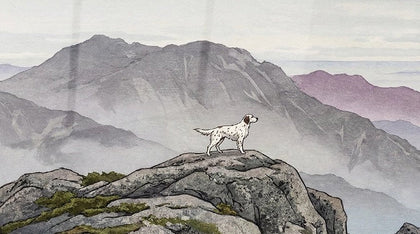 Panoramic Mountain Wall Art12
artworks
Panoramic Mountain Wall Art12
artworks
-
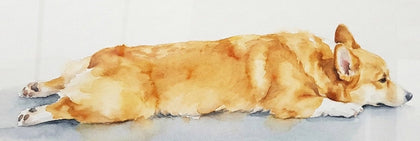 Panoramic Watercolor Wall Art10
artworks
Panoramic Watercolor Wall Art10
artworks
-
 Panoramic Poppy Wall Art11
artworks
Panoramic Poppy Wall Art11
artworks
-
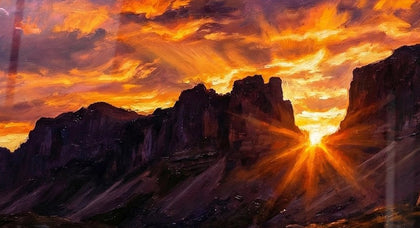 Panoramic Sunset Wall Art Canvas8
artworks
Panoramic Sunset Wall Art Canvas8
artworks
-
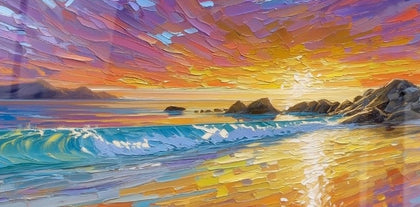 Panoramic Beach Wall Art6
artworks
Panoramic Beach Wall Art6
artworks
-
 Panoramic Calligraphy Wall Art6
artworks
Panoramic Calligraphy Wall Art6
artworks
-
 Panoramic Tree of Life Wall Art9
artworks
Panoramic Tree of Life Wall Art9
artworks
-
 Panoramic Ocean Wall Art10
artworks
Panoramic Ocean Wall Art10
artworks

All about Panoramic Geometric Wall Art
- Panoramic Geometric Artwork Presentation
- Panoramic Geometric Composition
- Large-Format Visual Architecture
- Modernity and Decorative Impact
Discover the captivating universe of the panoramic geometric artwork, a true visual symphony where pure lines meet spectacular horizontal extension. These wall creations combine the mathematical rigor of abstract forms with the cinematic amplitude of a stretched format, creating a unique decorative experience capable of radically transforming the spatial perception of your contemporary environments.
The Balance of Geometric Forms in Extended Format
The panoramic geometric artwork represents a bold fusion between mathematical structure and horizontal expansion. Hexagonal, triangular, and polygonal compositions are arranged according to a visual rhythm specifically calibrated to match the elongated proportions, creating repetitive or evolving sequences that naturally guide the eye over several meters of wall extension.
How do geometric patterns optimize panoramic space?
Panoramic geometric creations exploit modular progression to structure the horizontal space. An arrangement of lozenges, concentric circles, or parallelograms deployed over three to four meters in length establishes a hypnotic cadence, visually amplifying the width of contemporary architectural spaces. This panoramic geometric rhythm is particularly suitable for open spaces where it emphasizes the natural horizontality without fragmenting the volume.
The chromatic dynamics of extended compositions
In a panoramic artwork with a geometric dominance, the color palette often evolves according to a gradual progression: subtle gradations between warm and cool tones, tonal transitions that accompany the eye from one end to the other. Monochromatic blocks alternate with saturated areas, creating visual attraction poles strategically distributed to maintain interest throughout the length of the work.
Repetitive sequences and modular variations
Panoramic geometric patterns frequently adopt modular structures: a primary form is repeated with variations in scale, orientation, or density. These controlled variations avoid monotony while preserving the essential compositional coherence for extended formats. Abstract creations play on the variable spacing between elements, alternating dense areas and visual breaths to effectively rhythm the three to five meters of horizontal development.
Wall Architecture and Monumental Horizontal Geometry
Integrating a panoramic geometric artwork into contemporary professional or residential spaces responds to specific architectural requirements. These monumental pieces function as visual bridges connecting different functional zones, establishing a decorative continuity that unifies compartmentalized or open spaces according to a coherent geometric logic.
Which spaces particularly enhance panoramic geometric compositions?
Institutional corridors, corporate receptions, and conference rooms particularly benefit from extended geometric compositions. A four-meter panoramic geometric artwork deployed in an administrative corridor transforms a transit space into an experiential gallery, where abstract forms create visual landmarks facilitating spatial orientation while enhancing contemporary architectural identity.
Wall proportions and architectural balance
Installing a panoramic geometric artwork requires careful consideration of architectural proportions. On an eight-meter wall, a three-meter fifty artwork occupies an ideal central position, leaving balanced side margins that respect the wall's breathing space. Modular repeating geometric compositions naturally adapt to available dimensions, with some creations even allowing for custom extensions to perfectly match specific dimensional constraints.
Dialogue with minimalist architecture
Purified environments with clean lines find in the panoramic geometric artwork a perfect aesthetic complement. The angular structures of abstract compositions echo contemporary architectural volumes: exposed beams, geometric screens, cubic furniture. This formal resonance creates a sophisticated visual harmony, where wall decoration and architecture dialogue according to a common plastic language based on pure geometry and structured abstraction.
Visual impact in open spaces
Industrial lofts and open-plan spaces use panoramic geometric artworks as visual zoning elements. Without creating a physical separation, a large-scale horizontal composition subtly defines functions: living area, workspace, dining area. Directional lines and geometric axes naturally orient circulation and perceptually structure otherwise undifferentiated volumes.
Geometric Modernity and Current Decorative Trends
The panoramic geometric artwork perfectly embodies contemporary decorative trends that prioritize mathematical abstraction, formal radicalism, and spatial amplitude. These creations respond to the expectations of an urban clientele seeking intellectually stimulating, visually impactful, and dimensionally adaptable decorative pieces for generous modern architectures.
What geometric trends dominate current panoramic formats?
Neo-constructivist compositions revisit the Bauhaus heritage with fragmented orthogonal grids, superimposed colored planes, and suggested transparency effects. Isometric motifs inspired by parametric design create fascinating three-dimensional illusions over several meters in length. Complex tessellations, inherited from mathematical pavings, offer a hypnotic visual density particularly suited to extended formats that allow simultaneous appreciation of the overall complexity and modular details.
Organic geometry and panoramic fluid forms
Paradoxically, some panoramic geometric artworks integrate organic curves into their compositions: intertwined ellipses, logarithmic spirals, sinusoidal undulations. This soft geometry contrasts with traditional angular rigidity, creating hybrid compositions where curved forms and linear segments coexist according to sophisticated visual balances, particularly effective on extended lengths allowing the progressive development of these complex rhythms.
Depth and stratification in the panoramic space
Panoramic geometric compositions frequently play on the suggestion of depth: superimposed geometric planes creating isometric perspective effects, chromatic gradients suggesting distance, virtual shadows generating a three-dimensional illusion. These visual strategies transform the two-dimensional surface into a complex perceptual space, particularly striking when deployed over three to five horizontal meters.
FAQ - Panoramic Geometric Artwork
What is the minimum length to enhance a panoramic geometric artwork?
Panoramic geometric compositions fully reveal their decorative potential from two meters fifty in length, dimensions allowing for the development of a complete rhythmic sequence. Formats exceeding three meters offer the amplitude necessary for complex modular progressions and the gradual tonal variations characteristic of extended geometric creations.
How does a panoramic geometric format painting influence spatial perception?
The directional horizontal lines of panoramic geometric compositions visually amplify the width of spaces, creating an impression of lateral extension. Repetitive patterns establish a visual rhythm that accompanies the movement of the gaze, structuring the temporal perception of the space traversed. Layered compositions generate virtual depth compensating for the flatness of the wall.
What criteria determine the optimal placement of a panoramic geometric painting?
The ideal location features a continuous wall length greater than fifty centimeters than the dimension of the work, ensuring balanced side margins. The installation height positions the central axis of the composition between one hundred forty and one hundred sixty centimeters from the floor, optimizing the readability of geometric patterns from seated and standing positions. Walls perpendicular to the main traffic flows maximize the visual impact.
Further reading


