








Hairdo Painting
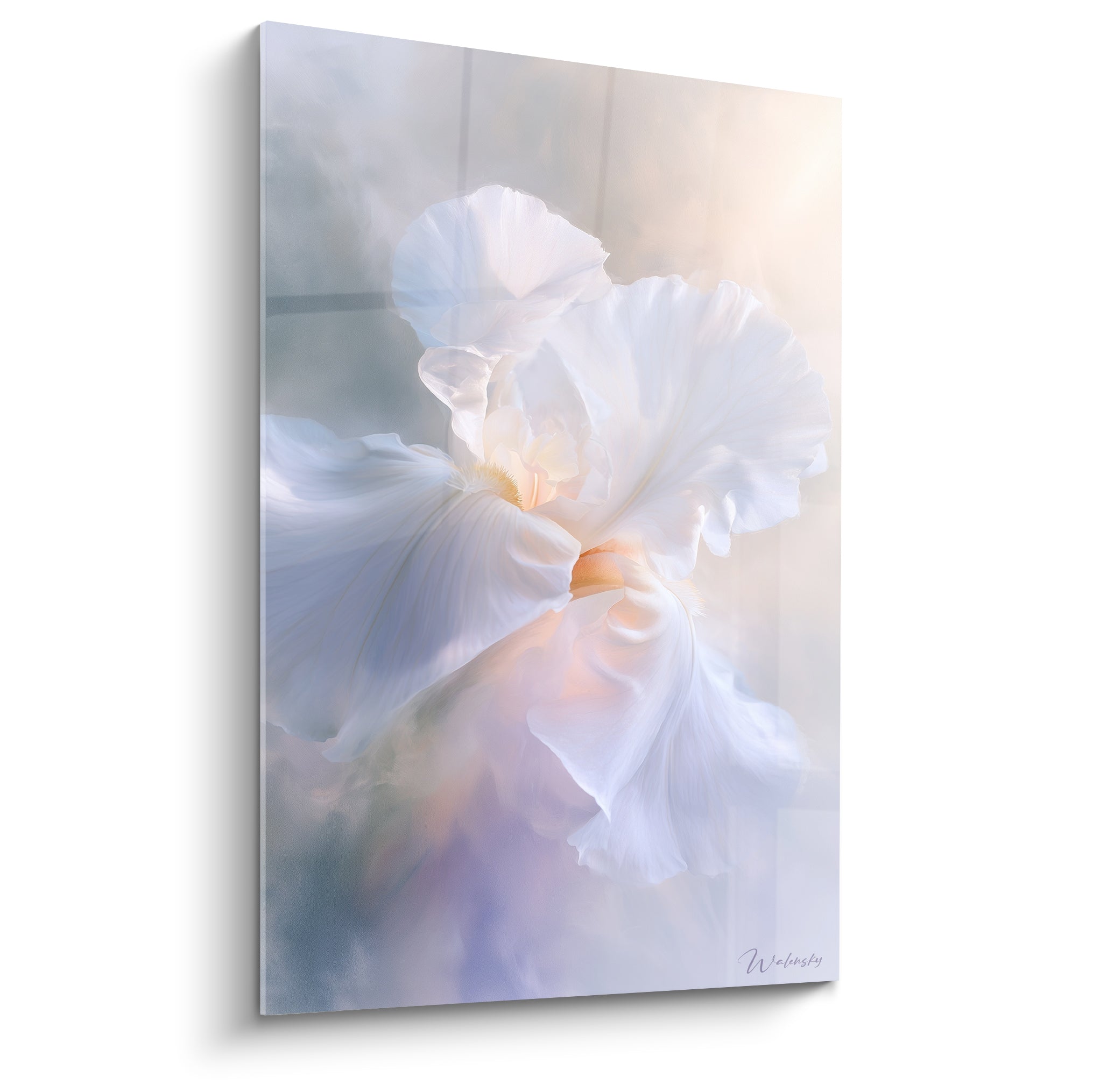
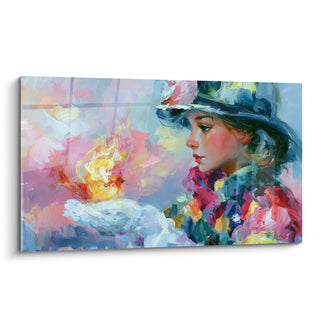
Here, hair becomes pictorial matter: copper curls, rainbow braids, blonde strands crossed with light. The Hairdo Painting collection brings together portraits where the hairstyle tells an emotion, a moment, an entire identity. Each canvas transforms a daily gesture into an almost sculptural composition, between golden reflections and chiaroscuro. A wall that welcomes these works gains a human, sensitive presence, where the gaze lingers on each strand as on a fragment of a story.
 Tableau Portrait féminin ocre et bleu mosaïque - Pensée fragmentée - Edition Coiffure273,90 €
 Tableau Femme rousse aux boucles cuivrées et turquoise - Éveil sylvestre - Edition Coiffure273,90 €
 Tableau Mère tressant les cheveux roux dorés - Tendresse filiale - Edition Coiffure273,90 €
 Tableau Portrait féminin cheveux noirs et fenêtre grise - Silence nocturne - Edition Coiffure273,90 €
 Tableau Femme courant plage sable bleu - Liberté sur le rivage - Edition Coiffure273,90 €
 Tableau Femme au carré noir mèches nettes - Regard qui transperce - Edition Coiffure273,90 €
 Tableau Portrait féminin bleu et doré à la fenêtre - Rêverie face au vent - Edition Coiffure273,90 €
 Tableau Femme au profil et boucles rousses volumineuses - Lueur de crépuscule - Edition Coiffure273,90 €
 Tableau Femme au chignon bleu et blanc morcelé - Regard sous la brume - Edition Coiffure273,90 €
 Tableau Femme aux cheveux verts et gouttes d'eau - Éclaboussure de joie - Edition Coiffure273,90 €
 Tableau Femme tressant ses cheveux noirs et dorés - Rituel du matin - Edition Coiffure273,90 €
 Tableau Femme aux longs cheveux bleu et blanc - Souffle éthéré - Edition Coiffure273,90 €
 Tableau Femme dorée aux mèches craquelées d'or - Veillée dorée - Edition Coiffure273,90 €
 Tableau Portrait brune aux mèches noires ébouriffées - Défi face au vent - Edition Coiffure228,90 €
 Tableau Chevelure brune bouclée en forêt - Éclat de rire - Edition Coiffure228,90 €
In the same family
Also explore the theme Professions


All about Hairdo Painting
- Painting Presentation
- The Matter Before the Face
- Interior Colors and Climates
- Gestures and Silhouettes
The Painting Collection celebrates hairstyles where the hair takes center stage: curls, braids, straight or voluminous strands, each treated as a motif in its own right rather than a simple detail of the face. These are not classic portraits, but celebrations of hair texture, its texture, its way of capturing or absorbing light.
What unites these paintings is this attention to grain, reflection, and the movement of a strand that escapes. Some works play with backlighting to make a color blaze, while others prefer shadow and chiaroscuro to reveal a silhouette. In all cases, the hairstyle becomes the main subject, almost a landscape in itself.
This collection is for those seeking a living, embodied portrait, far from the frozen and smooth faces found elsewhere. It appeals to those who love interiors where a human presence warms the space without ever becoming overwhelming, and where the color of a hairstyle can dialogue with the palette of an entire room.
Hanging a Painting celebrates the gaze through detail rather than the grandeur of the gesture: a golden thread, a rebellious curl, a grazing light are enough to create a unique atmosphere, different every hour of the day.
What the Hair Texture Tells in a Painting
Why does the texture of the hair dominate the composition?
On these canvases, the hair is never a simple frame for the face: it occupies the space, unfolds, captures the light even before the eye reaches the eyes. This primacy is not a random framing but an assumed pictorial choice, inherited from a tradition where portraitists sought to translate movement and life through matter rather than frozen expression. A Painting plays precisely on this shift: the hairstyle becomes the subject, the face becomes a pretext. Hanging such a work at home attracts the eye with texture before anecdote, which profoundly changes the way one inhabits a room.
Where does this fascination with reflections and moving strands come from?
The golden, copper or silver reflections that run through these hairstyles borrow directly from the work of painters of light, who sought to capture on canvas the fleeting moment when a strand catches a ray of setting sun. This backlighting technique, popularized by photography and then taken up in painting, transforms a simple gesture—a strand that moves—into a luminescent event. In a Painting, this effect creates a tactile depth: one can guess the softness or roughness of the material simply by observing how the light clings to it, without ever needing to touch the canvas.
Can a hairstyle really carry an emotion on its own?
A strand that falls on the face, a curl that escapes from a bun, a braid that dances: these hair details often carry more emotion than an entire facial expression. It is this economy of means that distinguishes a Painting from a classic portrait—the emotion is read in the disorder or order of the hair, in its way of following or resisting the wind, the light, the gesture of the hand. Hanging such a work is inviting a presence at home that tells without ever needing words or emphasized traits.
The Palette of Paintings and the Atmosphere It Creates
Why do these hairstyles often turn golden or copper?
The warm tone that runs through so many of these portraits is not simply an aesthetic choice: it corresponds to the light at the end of the day, that golden hour that photographers and painters seek for its ability to sublimate skin and hair without ever hardening the contours. A Painting bathed in this light instantly evokes a palpable warmth, a gentle season, a moment suspended between day and evening. Placed in a living room or entrance hall, such a work diffuses this visual warmth all year round, regardless of the actual weather behind the window.
What happens when hair turns midnight blue or silvery?
Unlike warm tones, some of these artworks choose a cold palette, almost nocturnal, where white or silver hair contrasts against a deep blue background. This range recalls clear nights, silhouettes standing out against a starry sky or a frosty window, and creates a more contemplative, almost meditative atmosphere. A Hair Painting suited to rooms where you seek calm rather than energy: a bedroom, an office, a hallway that gains depth thanks to the contrast between the hair's lightness and the surrounding darkness.
Do bright colors change the nature of the portrait?
When hair is adorned with bold hues—purple, turquoise, pink—the portrait changes register: it no longer seeks silent contemplation but vitality, fantasy, almost celebration. This chromatic explosion is due to pictorial techniques applied in thickness, with a palette knife, which gives relief to each strand like sculpted material. A Hair Painting with bright colors brings a joyful and bold note to a wall, particularly suitable for living spaces where you want to instill movement and immediate visual energy.
The composition of a Hair Painting, between framing and posture
Why are so many of these portraits framed in a very close-up?
The choice of a tight close-up is not arbitrary: it forces the gaze to focus on the hair texture rather than the subject's surroundings, erasing all superfluous decor in favor of an almost tactile immersion in the strand or lock. This proximity, borrowed from the codes of contemporary photographic portraiture, transforms a Hair Painting into an almost intimate experience, as if you could feel the texture under your fingertips. Hung at eye level, such a composition immediately captures attention, without leaving room for distraction.
What does a silhouette seen from behind rather than from the front say?
When the portrait chooses the back rather than the face, the hair becomes the sole carrier of narrative: it alone must express the subject's mystery, serenity, or melancholy. This choice, inherited from a pictorial tradition that liked to play on anonymity and mystery, transforms a Hair Painting into a silent enigma, where the viewer's imagination completes what the image does not show. This type of composition is particularly suitable for spaces where you want a discreet but inhabited work, which invites reverie rather than immediate identification.
Does the contrast between shadow and light change the reading of the portrait?
The chiaroscuro that sculpts some of these hairstyles creates an almost sculptural relief, where the grazing light isolates each strand from the surrounding dark background. This technique, inherited from photographic work in backlight, gives the hairstyle an almost architectural dimension, like a material built rather than simply combed. A Hair Painting playing on this marked contrast structures a wall with force, attracting the eye by the tension between darkness and light rather than by an extended palette, which makes it a particularly assertive choice for a room with character.
FAQ about hair paintings
Why do some hairstyles in these paintings seem almost unreal or stylized?
Some works transform hair into almost mineral fragments or thick pictorial textures, going beyond simple realistic representation. This artistic treatment accentuates the sculptural aspect of the hairstyle and transforms it into a motif in its own right, capable of capturing attention even from a distance, without ever seeking to faithfully imitate a real hair.
Does a dark hairstyle and a light hairstyle create the same atmosphere in a room?
No: a dark hairstyle absorbs light and installs a discreet presence, conducive to calm, while a light or golden hairstyle reflects ambient light and energizes the space. The choice therefore depends as much on the natural lighting of the room as on the atmosphere sought, warm or soothing.
Are these hair portraits suitable for a room that is already colorful?
It depends on the palette of the chosen hairstyle: a hairstyle with neutral or dark tones brings a soothing anchor point in a colorful room, while a multicolored hairstyle is likely to compete visually. Favoring contrast over an accumulation of colors guarantees a more harmonious balance.
L'art qui suscite l'envie
Maison belge d'art mural grand format
14 jourspour changer d'avis*
Protection Walenskyincluse
Fabriquéen Italie
FormatXXL
Kit de fixationtoujours fourni
* Hors tableaux personnalisés et tailles personnalisées


