


Newfoundland Dog Pop Art Canvas
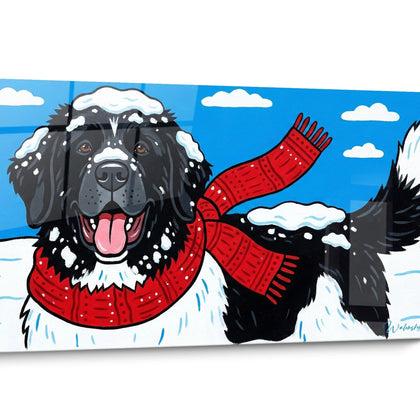
The Tableau chien Terre Neuve Pop Art celebrates the majesty of this iconic breed through vibrant and colorful creations. This collection transforms the Terre-Neuve into an artistic icon thanks to bold compositions that capture its legendary nobility and gentleness. Perfect for lovers of décoration canine Pop Art, it brings a modern and energetic touch to your interior. Explore these unique works that sublimate the portrait artistique du chien Terre-Neuve with style and originality.
 Duo of Dogs with Vibrant Colors - Pop Art Portrait - Newfoundland Edition233,90 €
 Multicolor Expressionist Newfoundland Artwork - Futuristic Brilliance - Newfoundland Edition233,90 €
 Black Dog with Violet Reflections in a Field of Multicolored Flowers Painting - Floral Explosion - Newfoundland Edition233,90 €
Explore further
In Newfoundland Dog Pop Art Canvas



All about Newfoundland Dog Pop Art Canvas
- Newfoundland Pop Art Painting Presentation
- Canine Pop Art Decoration
- Ambiances & Spaces
- Artistic Characteristics
The Newfoundland dog Pop Art painting celebrates the majesty of this dark-coated giant through explosive chromatic aesthetics. This artistic representation transforms the imposing silhouette and legendary good-nature of the Newfoundland into an audacious visual composition, where visual codes inherited from Andy Warhol meet contemporary canine iconography. Unlike traditional aquatic representations, this pop interpretation emphasizes saturated color contrasts and graphic overlays that magnify each characteristic trait of the breed: the generous snout, the deep and benevolent gaze, the noble build. Each chromatic variation underscores a different facet of the legendary temperament of these natural rescuers, creating a visual gallery where electric cyan versions, vibrant magenta and luminous yellow of this emblematic companion coexist.
Pop Art Aesthetics in Service of the Canadian Giant
The Newfoundland dog Pop Art painting reinvents classical canine imagery by applying the founding principles of the 1960s artistic movement to the distinctive morphology of this monumental breed. Flat areas of saturated colors - fuchsia, turquoise, lemon yellow - replace the natural palette of black, brown or Landseer coat to create a graphic celebration of the quiet power embodied by these dogs.
Why does the Newfoundland particularly inspire Pop Art?
The imposing stature and generous proportions of the Newfoundland offer an ideal visual surface for monumental pop art compositions. Unlike small-sized breeds, each anatomical detail - the pronounced lips, massive head, drooping ears - becomes a complete graphic element in a screen-printed composition. This breed possesses immediate visual recognition which, stylized according to Warhollian codes, creates instantaneous decorative impact comparable to cultural icons traditionally represented in this artistic current.
Chromatic variations as emotional language
Each color variation of a Newfoundland pop art painting expresses a different dimension of the legendary character of the breed. Versions with warm tones - orange, vermillion red, candy pink - evoke the affective warmth and unconditional devotion characteristic of these companions. Interpretations with cool hues - electric blue, deep purple, emerald green - emphasize their olympian calm and natural assurance when facing emergency situations. This polychrome transforms a canine portrait into an affirmed aesthetic statement that reinforces the unique identity of your residential space.
From aquatic realism to colored abstraction
While a Newfoundland aquatic dog painting captures the natural element associated with the breed, the pop art approach privileges cultural iconization rather than environmental representation. This artistic approach extracts the visual essence of the Newfoundland from its functional context to make it an autonomous decorative symbol, a strong graphic presence capable of dialoguing with contemporary interiors far removed from traditional nautical or rural themes.
Integrating a Newfoundland Pop Art Painting into Your Living Space
Which spaces particularly enhance these canine pop creations?
Large-format Newfoundland dog Pop Art paintings find their optimal expression in generous volumes requiring an affirmed visual presence. Contemporary living rooms with white walls benefit from the chromatic injection provided by a multicolor composition of this type, transforming a neutral surface into a conversational focal point. Professional spaces welcoming the public - veterinary practices specializing in giant breeds, high-end pet boutiques, professional breeder offices - use these representations to simultaneously assert their canine expertise and contemporary aesthetic sensitivity.
The dialogue between painting scale and breed size
The imposing real stature of the Newfoundland fully justifies the adoption of monumental wall formats for its pop art representation. A painting of substantial dimensions respects the authentic proportions of this breed that can reach 28 inches at the shoulder, creating visual coherence between subject and support. This dimensional correspondence radically distinguishes these works from representations of miniature breeds, where excessive enlargement can create perceptual distortion. Here, pictorial monumentality responds to the physical reality of the model.
Mural compositions and multiple installations
The serialized aesthetic inherent to pop art encourages diptych or triptych installations presenting different chromatic variations of the same Newfoundland portrait. This gallery approach transforms a wall section into an artistic manifesto, recalling the famous series of Marilyn or Campbell's boxes. Three juxtaposed panels - cyan, magenta and yellow versions for example - create dynamic visual rhythm while celebrating the singularity of this breed through the prism of differentiated repetition characteristic of the movement.
Harmonization with existing decorative elements
Successful integration of a Newfoundland pop art painting into an eclectic interior rests on extracting the dominant tones of the composition to subtly repeat them in surrounding accessories. A cushion taking up the fuchsia pink of the portrait, a vase in the turquoise tones of the background create visual echoes that unify the space without falling into thematic redundancy. This chromatic methodology allows you to solidly anchor an audacious work in a coherent environment without requiring a complete decorative overhaul.
Artistic and Technical Specifics of the Canine Pop Portrait
Translation of morphological characteristics into graphic language
The creative process of a Newfoundland dog Pop Art painting involves deliberate simplification of anatomical details to privilege directional lines and volumetric masses. The dense, textured coat characteristic of the breed becomes a uniform overlay where only a few contour lines suggesting the fleece remain. This graphic reduction concentrates attention on essential expressive elements: the amplitude of the muzzle, the depth of the gaze, the characteristic implantation of drooping ears. The screen-printing approach thus transforms realistic complexity into an immediately decipherable icon.
How do contrasts enhance the subject's presence?
The audacious chromatic choices inherent to pop art generate simultaneous contrasts that amplify the visual perception of the Newfoundland represented. A portrait on bright yellow background with purple shadows creates optical vibration absent from natural palettes, literally propelling the image off the wall plane. This perceptual intensification compensates for the absence of classical three-dimensional modeling through maximized chromatic presence, a particularly effective strategy for large formats intended to visually structure a vast space.
The legacy of pop masters applied to canine iconography
The transposition of Warhollian and Lichtenstein techniques to the representation of the Newfoundland inscribes these creations in a recognized artistic lineage while applying it to a noble animal subject. The Ben-Day dots characteristic of Roy Lichtenstein can subtly texture certain areas, while the chromatic multiplication dear to Warhol finds in the variations of the breed's coat (black, brown, black and white) legitimate thematic anchoring. This artistic affiliation grants Newfoundland enthusiasts access to contemporary wall aesthetics without renouncing their canine passion.
Durability and resistance for shared domestic environments
Newfoundland owners know the kinetic energy these giants deploy despite their apparent placidity. A quality painting intended for a household actually harboring dogs of this breed requires processes guaranteeing resistance to accidental splashes and easy maintenance. Prints on rigid and treated supports protect the chromatic intensity of pop compositions from the hazards of daily canine life, ensuring the visual durability of the decorative investment even in the liveliest domestic environments.
Where to place a Newfoundland Pop Art painting to maximize its visual impact?
Favor walls perpendicular to main natural light sources to avoid reflections while benefiting from lateral lighting that accentuates chromatic contrasts. Circulation spaces - spacious entry halls, hallways - offer the visual distance necessary to appreciate large formats.
Is Pop Art painting suitable for classical or rustic interiors?
The stylistic contrast between traditional furniture and pop art generates precisely the visual tension sought by contemporary decorators. A Newfoundland portrait in bright colors brings the touch of modernity that prevents a classical interior from becoming museumlike, creating an enriching temporal dialogue between aesthetic periods.
Do these representations appeal to Newfoundlands themselves?
Although dogs perceive colors differently, many owners report interest reactions facing representations of their breed, particularly when proportions and general silhouette are respected. The strong visual presence of a large format naturally attracts canine gaze, sometimes creating amusing moments of interaction between the animal and its artistic double.


