


Mountain Bike Panoramic Wall Art
Our Mountain Bike Painting Panoramic collection celebrates the passion for cycling in the alpine environment. Each creation captures the intensity of mountain bike descents with spectacular perspectives on the summits. These works embody the adrenaline and freedom of extreme sports at altitude, offering a visual immersion into the world of mountain biking. Ideal for cycling and adventure enthusiasts, this collection transforms your space into a vibrant tribute to panoramic trails and the thrills of the mountain.
 Mountain Bike Wall Art Snowy Peaks Clouds - Adventure Above the Clouds - MTB Edition242,90 €
 Mountain Bike Wall Art Snowy Peaks Clouds - Above the Summits - MTB Edition242,90 €
 Mountain Bike Summit Artwork - Conquest at Sunset - Mountain Bike Edition273,90 €
Explore further
In Mountain Bike Panoramic Wall Art
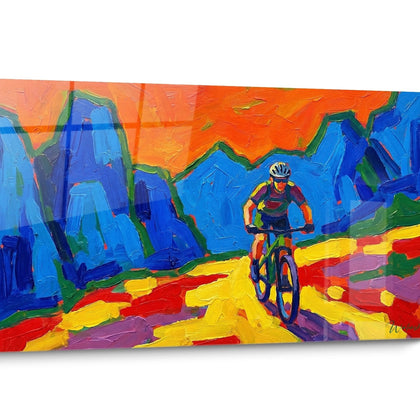
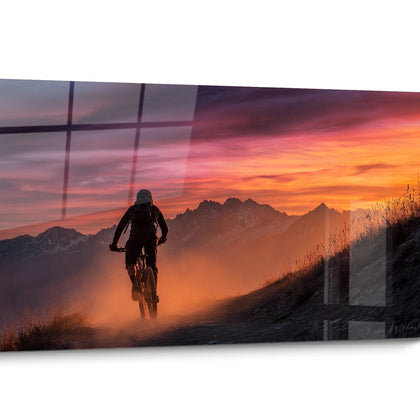

All about Mountain Bike Panoramic Wall Art
- Painting Presentation Mountain Bike Panoramic Mountain
- Immersion and Visual Escape
- Dynamism and Sensations
- Architectural Impact of Large Format
A painting mountain bike panoramic instantly transforms your interior into a window open onto summits and steep trails. This large-format visual representation captures the very essence of a mountain biker in full action, evolving in the heart of spectacular alpine landscapes. Designed for mountain biking and outdoor adventure enthusiasts, this type of large-format wall decoration combines sporting intensity with the majesty of mountain reliefs. Each visual element - from the single track to the jagged ridges in the background - contributes to creating an immersive experience that evokes the adrenaline, freedom, and self-improvement inherent in mountain biking.
Visual Immersion in the World of Mountain Biking
The panoramic format of a mountain bike painting faithfully reproduces the rider's visual perception during his technical descents. This elongated configuration naturally recreates the amplitude of the field of vision experienced on high-altitude trails, where the gaze simultaneously embraces the immediate track and the distant peaks. The generous dimensions of the large-format models amplify this feeling of total immersion, transforming a simple wall into a true portal to the Alps, the Pyrenees or the North American mountain ranges.
How does the panoramic format amplify the rider's visual experience?
The extended horizontal composition allows you to capture multiple action planes simultaneously: the mountain biker in the foreground negotiating a rocky passage, the switchbacks of the trail winding upwards, and the mountain horizon that structures the depth of field. This visual stratification exactly reproduces what the pilot perceives when he stops to contemplate the path traveled and the one that remains to be descended. Our collection of mountain bike paintings explores these compositions that magnify space and recreate the amplitude of alpine panoramas.
The emotional connection with high-mountain environments
A mountain bike panoramic painting conveys visual codes specific to high-altitude areas: crystalline atmosphere, sparse alpine vegetation, the presence of residual snowfields, the characteristic grazing light of high reliefs. These environmental markers instantly trigger mental associations in practitioners: the smell of conifers, the freshness of the rarefied air, the crunch of tires on schisty gravel. This sensory resonance goes far beyond simple decoration to become a daily reminder of the values of effort, commitment and communion with nature sought by mountain biking enthusiasts.
The visual balance between sporting action and natural grandeur
In these panoramic compositions, the mountain biker generally occupies a strategic position that dialogues with the immensity of the mountain landscape. This comparative scale emphasizes both the epic dimension of the activity and the humility in the face of geological forces. The guideline lines of the relief - rocky ridges, contour lines, trajectories of trails - naturally guide the eye through the image, creating a visual movement that mimics the fluidity sought in technical piloting. This dynamic composition generates a permanent visual energy that animates the exhibition space.
Capturing Adrenaline and Movement in Extended Format
The visual codes of speed and technical engagement
A painting of a mountain bike downhill panorama uses specific visual techniques to transcribe the sensation of speed: motion blur suggesting rapid movement, projection of earth and gravel, aerodynamic position of the rider leaning over his bike, compressed suspension absorbing the irregularities of the terrain. The panoramic format particularly accentuates the horizontal lines of movement, creating an effect of trajectory that literally projects the action forward. This dynamic representation resonates deeply with those who have experienced these committed descents where the slightest piloting error is costly.
Why does a panoramic painting better suit downhill mountain bike scenes?
Technical descents in the mountains rarely take place in a straight vertical line but rather follow winding paths that follow the contour lines. The panoramic format allows to represent several successive turns, showing the continuity of the track and the succession of technical sections - rocky areas, root passages, hairpin turns, aerial portions. This sequential vision of the course exactly corresponds to the way the mountain biker mentally analyzes his route, anticipating upcoming obstacles while negotiating those under his wheels.
The chromatic intensity of high-altitude environments
The color palettes of panoramic mountain bike paintings reflect the pronounced contrasts of alpine areas: deep blue of high-altitude skies, intense greens of summer alpine meadows, ochres and reds of mineral terrain, bright white of persistent snowfields. These high chromatic saturations create an immediate visual impact, particularly suited to the large wall spaces of lofts, home gyms, or open living spaces. The characteristic light intensity of high reliefs is translated into marked contrast games that visually structure the hanging space.
The representation of different types of terrain and mountain bike disciplines
The panoramic format allows to illustrate the diversity of mountain bike practices: enduro on technical trails, all-mountain combining ascents and descents, pure downhill on groomed slopes, trail cross-country through alpine meadows. Each discipline has its own visual codes - rider's equipment, type of bike, nature of the terrain, suggested speed - that the extended format can deploy with sufficient narrative space. This thematic specificity allows enthusiasts to choose a representation that exactly corresponds to their personal practice or their aspirations.
The Architectural Impact of Large Format Panoramic Paintings
The transformation of interior volumes by horizontality
A large-format mountain bike panorama painting radically alters the spatial perception of a room. Its pronounced horizontal development visually widens the space, creating an impression of openness comparable to that of a window cut into the wall. This architectural property is particularly valuable in spaces with marked vertical proportions - urban apartments with high ceilings - where the panoramic artwork rebalances volumes by accentuating the lateral dimension. Environments dedicated to physical activity - personal gyms, indoor training areas, recovery spaces - particularly benefit from this visual opening onto mountain horizons.
Where to position a mountain bike panorama painting to maximize its impact?
Prime locations leverage the exceptional length of these creations: above a sofa in a living room, along a hallway transformed into a visual gallery, facing an indoor cycling space with a home trainer, in an office to maintain a mental connection with outdoor practice. The optimal placement height should allow for a comfortable view of the entire panorama without excessive head movement, generally with the lower third of the image at eye level when seated or standing, depending on the function of the space.
The aesthetic consistency with contemporary interiors
The panoramic mountain biking paintings naturally integrate with contemporary aesthetic codes: clean lines, raw materials reminiscent of the outdoor world, natural palettes dominated by mineral and plant tones. This stylistic affinity allows for a harmonious insertion into modern interiors without requiring major decorative reconfigurations. Association with authentic elements - aged wood, raw steel, polished concrete - reinforces the thematic consistency and creates an environment that celebrates the authenticity and performance characteristic of mountain biking culture.
Strategic hanging zones according to lifestyles
For regular practitioners, placing the painting in the equipment preparation area - a fitted garage, a bike workshop, an equipment storage space - reinforces motivation before each outing. In social spaces, the painting naturally becomes a conversation starter that reveals the owner's passions and creates connections with other enthusiasts. Outdoor-related professional environments - specialty shops, cycling clubs, welcome structures in mountain areas - use these panoramic visuals to visually embody their identity and values.
Is a panoramic mountain biking painting suitable for small spaces?
Contrary to popular belief, a panoramic format can perfectly equip a compact space by creating this illusion of openness and depth that visually compensates for the reduced dimensions. The key is to respect the available wall proportions and avoid peripheral clutter that would negate the desired spatial expansion effect.
How to maintain a large-size panoramic mountain biking painting?
Large surfaces simply require regular dusting with a dry or slightly damp microfiber cloth, avoiding harsh chemicals that could alter the pigments. Prolonged direct exposure to sunlight remains the main factor of degradation to prevent through thoughtful positioning or the use of UV protections on windows.
Can multiple panoramic mountain biking paintings be combined in the same space?
This multi-panel approach works remarkably well by creating a sequential visual narrative - different stages of a descent, seasonal variations of the same spot, diversity of mountain ranges - provided that chromatic and stylistic consistency is maintained between the different pieces to avoid visual cacophony.
L'art qui suscite l'envie
Maison belge d'art mural grand format
14 jourspour changer d'avis*
Protection Walenskyincluse
Fabriquéen Italie
FormatXXL
Kit de fixationtoujours fourni
* Hors tableaux personnalisés et tailles personnalisées


