


Modern Samoyed Dog Wall Art
The Painting Dog Samoyed Modern celebrates the incomparable elegance of this Nordic breed with a legendary smile. Our collection captures the beauty of the Samoyed through contemporary artistic creations that illuminate your spaces. Each work highlights the Samoyed's white fur and its characteristic joyful expression. Perfect for lovers of Nordic dogs in decoration, this collection brings softness and refinement to your interior while celebrating the nobility of this endearing companion.
 White Dog with Golden Eyes in the Light - Luminous Portrait - Samoyed Edition273,90 €
 White Dog Painting With Blue Reflections in the Waves - Aquatic Fusion - Samoyed Edition273,90 €
 White Festive Dog Wall Art with Colorful Ribbons - Explosion of Joy - Samoyed Edition273,90 €
 White Dog Painting with Multicolored Brilliance - Chromatic Explosion - Samoyed Edition273,90 €
 White Dog Portrait with Piercing Eyes - Geometric Portrait - Samoyed Edition228,90 €
 White Dog Portrait with Open Mouth - Expressive Power - Samoyed Edition228,90 €
Explore further
In Modern Samoyed Dog Wall Art
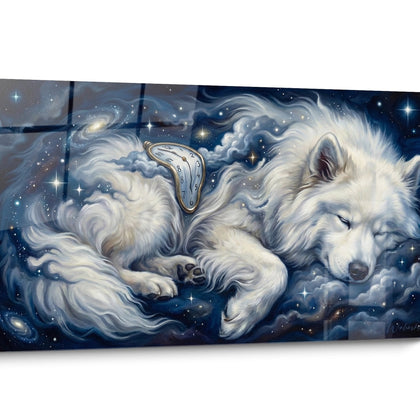

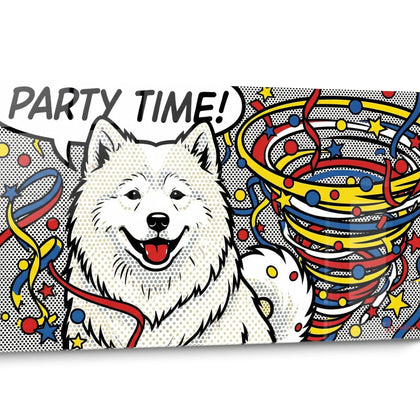


All about Modern Samoyed Dog Wall Art
- Modern Samoyed Dog Wall Art Presentation
- Nordic Decor & Minimalist Design
- Contemporary Ambiances & Canine Elegance
- Integration & Visual Enhancement
The modern Samoyed dog wall art establishes itself as a masterpiece for contemporary interiors seeking the perfect alliance between Nordic purity and minimalist aesthetics. This artistic representation of the most emblematic of Arctic dogs brings a sophisticated dimension to modern living spaces, creating a visual bridge between wild nature and urban refinement. The generous formats offered magnify the natural presence of this breed with its immaculate coat, transforming every wall into an open window onto animal elegance. These graphic creations exploit the visual codes of Scandinavian design to enhance the unique charisma of the Samoyed, while harmoniously integrating into streamlined architectures and layouts with sober lines.
Nordic Aesthetics Reinvented for Minimalist Interiors
The modern Samoyed dog wall art perfectly embodies the Scandinavian philosophy of "less is more" by capturing the very essence of this Arctic breed through streamlined graphic compositions. The large dimensions available allow creating a striking focal point in open-plan spaces like lofts or generously-sized living rooms, where the simplicity of lines meets the emotional intensity of the canine gaze.
How does the Samoyed enhance contemporary design codes?
The dazzling whiteness of the Samoyed coat finds particular resonance in contemporary color palettes dominated by neutral tones and raw materials. This canine representation functions as a visual amplifier in monochromatic interiors, where subtle contrast between different shades of white creates unexpected depth. The monumental formats transform this animal presence into a genuine wall sculpture, dialoguing with noble materials such as polished concrete, brushed steel, or light wood finishes.
Harmony with natural materials and streamlined furniture
Integrating a contemporary Samoyed wall art into a minimalist environment follows a precise visual balance logic. Facing low sofas with geometric lines or suspended shelving, this canine presence brings an organic touch without compromising architectural rigor. Modern graphic variations exploit digital processing techniques that isolate the dog's majestic silhouette, creating compositions where negative space plays as important a role as the subject itself.
Luminous brilliance and reflection in glazed spaces
In contemporary apartments benefiting from large bay windows, the modern Samoyed dog wall art captures and diffuses natural light in a unique way. The representation of dense, luminous fur generates plays of reflection that evolve according to the time of day, transforming the work into a dynamic element rather than simple static decoration. This characteristic proves particularly valuable in Scandinavian spaces where light management constitutes a major decorative challenge. For a softer, more poetic approach, the Samoyed dog watercolor wall art offers an artistic alternative with delicate tonalities.
Coherence with hygge and lagom trends
Beyond pure aesthetics, this canine representation fits within Nordic currents of domestic well-being. The Samoyed, with its characteristic expression evoking a permanent smile, diffuses positive energy that reinforces the warm atmosphere sought in hygge and lagom philosophies. Large dimensions allow anchoring this comfort sensation visually without clutter, respecting the balance principle essential to these decorative approaches.
Enhancing Contemporary Spaces Through Canine Nobility
Acquiring a modern Samoyed dog wall art responds to growing demand for decorative elements that combine animal refinement and graphic sophistication. In upscale residential spaces, this representation functions as a taste marker that transcends passing trends, anchoring the interior in a temporality that is both timeless and resolutely current.
What presence for entrance halls and reception areas?
The entrance constitutes the ideal space to deploy large-scale wall art showcasing the majesty of the Samoyed. Unlike more common breeds, this Arctic dog conveys connotations of exclusivity and natural elegance that immediately establish a high aesthetic standard. Modern compositions play with tight framings that isolate the expressive gaze or the exceptional coat texture, creating visual intimacy despite the imposing dimensions.
Association with trendy monochromatic palettes
Modern Samoyed wall art excels in environments built around restricted palettes: off-white, pearl gray, sand beige, and touches of deep black. This chromatic restriction, far from impoverishing the composition, allows concentrating attention on textural subtleties and luminous variations. In a living room entirely decorated in neutral tones, the canine presence generates a point of interest that avoids blandness without creating stylistic rupture.
Dialogue with contemporary art collections
Integrating a Samoyed dog wall art into a modern artwork collection requires a thoughtful approach to placement and overall composition. The generous formats allow establishing equal dialogue with abstract or photographic pieces, the canine figuration providing a narrative anchor in sometimes hermetic ensembles. This cohabitation works particularly well when other works share similar formal characteristics: compositional simplicity, restricted chromatic range, affirmed graphic presence.
Optimization for modern professional spaces
Beyond residential interiors, modern Samoyed wall art finds its place in design offices, premium coworking spaces, or professional practices seeking to project an image of reliability and excellence. The Samoyed, historically an Arctic working dog, conveys values of resilience and loyalty that resonate in corporate environments, while maintaining a visual approach sufficiently refined to avoid any clichéd aspect.
Integration Strategies to Maximize Visual Impact
Installing a large-scale modern Samoyed dog wall art requires precise spatial planning to fully exploit its decorative potential. Unlike small artworks that blend into the environment, these imposing formats restructure the space visually and dictate a new arrangement logic around their magnetic presence.
Breathing space and negative space principle
For large-scale wall art to deploy its full impact, it requires sufficient breathing space around it. In the case of a Samoyed representation, whose dense white coat already constitutes a visually powerful element, providing a clear zone of at least 40 to 60 centimeters on the sides prevents visual saturation. This approach aligns with Japanese principles of ma (間), where emptiness structures composition as much as full elements.
What furniture to choose to complement without competing?
The choice of surrounding furniture directly influences wall art perception. Low seating with horizontal lines (sofas, modular benches) creates dynamic contrast with the potential verticality of the canine composition. Furniture with thin metal legs or light wood maintains visual transparency that avoids weighing down the ensemble. Conversely, massive cabinets or loaded shelving compete with the artwork rather than enhancing it.
Volume management and architectural proportions
In spaces with high ceilings (exceeding 3 meters), vertical-format modern Samoyed dog wall art maximizes the room's height and draws the gaze upward, amplifying volume sensation. Conversely, in rooms with standard proportions, horizontal or square format avoids visually compressing the space. The empirical rule is to occupy between 50 and 70% of the main wall width to create impact without crushing effect.
Decorative complementarities and strategic accents
Adding secondary decorative elements must reinforce rather than dilute the wall art's presence. Cushions with textures evoking fur (without falling into thematics), throws in natural wool, or long-pile rugs create tactile echoes to the Samoyed coat's visual representation. A few silver metallic touches or white ceramic vases complete harmoniously without overload.
Is modern Samoyed dog wall art suitable for contemporary master bedrooms?
Absolutely, provided you prioritize calming rather than dynamic compositions. The Samoyed, with its naturally benevolent expression, generates an atmosphere of serenity conducive to rest, while the clear color palette promotes luminous ambiance without excessive stimulation. Medium to large formats (100-150 cm) create a comforting presence facing the bed, transforming the space into an elegant personal sanctuary.
How to maintain visual coherence with Samoyed wall art in an eclectic interior?
In interiors mixing several styles, modern Samoyed dog wall art functions as a federating element through its chromatic neutrality. The trick is repeating the white, gray, or black tones of the wall art in at least three other elements scattered throughout the room (lighting, textile, accessory), creating a visual thread that unifies apparent heterogeneity.
What viewing distance to provide for fully appreciating a large Samoyed wall art?
For formats exceeding 120 cm, a minimum viewing distance equivalent to 1.5 times the artwork's diagonal allows comfortable overall vision. In restricted spaces, prioritize placement facing main circulation rather than in a dead corner guarantees multiple appreciation opportunities from different angles throughout daily movements, transforming each passage into a renewed micro-aesthetic experience.


