


Modern Rooster Wall Art
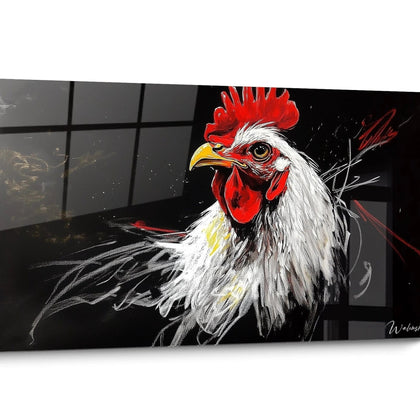
The Modern Rooster Painting embodies elegance and pride through striking contemporary art. This collection celebrates the iconic symbol of the rooster with creations featuring abstract and colorful designs for living rooms, perfect for personalizing your interior. Each wall decoration artistic rooster transforms your spaces into modern galleries, combining bold graphics and refinement. Ideal for art lovers seeking a touch of originality and character.
 Rooster Painting No. 8 - Animals Edition273,90 €
 Rooster Painting No. 9 - Animals Edition273,90 €
 Rooster Wall Art No. 7 - Animals Edition273,90 €
 Rooster Wall Art N°6 - Animals Edition273,90 €
 Rooster Painting No. 5 - Animals Edition273,90 €
 Rooster Painting No. 4 - Animals Edition273,90 €
 Rooster Painting No.1 - Animals Edition273,90 €
Explore further
In Modern Rooster Wall Art

All about Modern Rooster Wall Art
- Presentation Artwork Rooster Modern
- Contemporary Rural Décor
- Large Format Visual Impact
- Modern Interior Architecture
The rooster artwork modern stands as a centerpiece in the world of contemporary wall décor. This stylized representation of the emblematic fowl transcends traditional codes to embody a refined, geometric, and resolutely modern aesthetic. Designed in a large format, this type of wall ornament instantly transforms the atmosphere of a living space, creating a striking focal point that immediately captures attention. The combination of the rural iconography of the bird and contemporary graphic techniques generates a fascinating visual tension, perfect for interiors that seek authenticity without abandoning modernity. This decorative support is distinguished by its ability to dialogue with different architectural styles, from industrial lofts to minimalist residences, while asserting a strong and memorable identity.
Reinvented Countryside Aesthetics in a Contemporary Graphic Language
The modern rooster artwork achieves a bold translation between ancestral agricultural imagery and the visual codes of contemporary design. This fusion creates a hybrid object that responds to the aspirations of urban dwellers seeking a connection with their terrestrial roots while refusing nostalgic pastiche. The silhouette of the bird undergoes a radical transformation: feathers become geometric blocks, the comb adopts angular lines, and the entire composition is inscribed in a minimalist visual grammar.
How does the graphic treatment modernize the traditional iconography of the fowl?
The visual modernization revolves around formal simplification and controlled abstraction. Contemporary artists deconstruct the anatomy of the bird to retain only its essential attributes: proud posture, characteristic silhouette, expressiveness of the gaze. This formal purification is often accompanied by a bold color palette, exploring multicolored variations that transcend natural hues. Monochromatic gradations coexist with polychromatic explosions, creating works that function as powerful visual signatures.
Integration into Neo-Rustic and Renovated Farm Spaces
For owners of transformed rural buildings into contemporary residences, the modern rooster artwork resolves a delicate decorative equation: how to honor architectural heritage without falling into outdated folklore. These stylized representations integrate perfectly into spaces where exposed beams and polished concrete coexist, where ancestral fireplaces dialogue with Scandinavian furniture. The imposing format of these wall creations allows them to generously occupy the vast walls of converted barns, filling the monumental scale of these volumes while bringing a welcome visual warmth.
Revisited Symbolism for the Contemporary Resident
Beyond its purely ornamental dimension, the modern rooster conveys an updated symbolism: entrepreneurial vigilance, pride of territorial belonging, measured identity affirmation. For buyers of second homes in the countryside, this motif constitutes a marker of rootedness that avoids overly emphasized regional clichés. The modernized representation allows one to display their attachment to rurality without abandoning their urban aesthetic sensitivity, creating a visual bridge between two worlds of life.
Monumentality in the Service of Architectural Presence
A painting of a large-scale modern rooster exerts an architectural influence that far exceeds its initial decorative function. By its size, it redefines the perceived proportions of a room, creates visual axes, and structures the space according to a scenographic logic. This ability to modify the spatial reading of an interior is its major asset for contemporary environments with generous volumes but often lacking visual anchors.
What is the optimal wall surface to maximize the impact of the rooster motif?
The visual impact of the modern rooster wall art is maximized when the support occupies between 40% and 60% of the width of the wall. This proportion allows the artwork to assert itself as a dominant element without overwhelming the other decorative components. In open-plan living spaces such as lofts, a format exceeding two meters in width is not excessive – it corresponds to the scale needed to establish a balanced dialogue with ceiling heights often exceeding three meters. The stylized rooster particularly benefits from this size, which allows the subtlety of the graphic work to be appreciated from a distance.
The Role of Visual Separator in Open Spaces
In decluttered architectural configurations, the painting of a large-scale modern rooster functions as a psychological spatial delimiter. Positioned strategically on the wall separating the dining area from the living room, it creates a perceptual boundary that structures the space without obstructing visual fluidity. This function as a territorial marker is particularly relevant in open-plan country chic kitchens, where the bird motif naturally establishes the identity of the culinary area while maintaining aesthetic continuity with the adjacent spaces.
Chromatic Balance with Contemporary Raw Materials
Modern interiors often favor neutral palettes – concrete, stone, raw wood, steel. The modern rooster wall art introduces a calculated chromatic intensity into these environments, breaking the monotony without creating dissonance. Versions in metallic tones – oxidized copper, aged silver, patinated bronze – establish a material continuity with industrial architectural elements. Interpretations with saturated pigments, conversely, generate a vibrant contrast that energizes overly restrained spaces, functioning as a visual manifesto in minimalist decors.
Strategic Insertion in Residential Architectural Pathways
The placement of a painting of a modern rooster obeys a spatial logic that transcends simple wall occupancy. It is about designing its positioning as an architectural punctuation, a visual event that punctuates movement within the home. This scenographic approach transforms wall ornamentation into an experiential device that enriches the daily perception of domestic spaces.
What location to prioritize in an open architecture house?
The wall perpendicular to the main entrance constitutes the strategic location par excellence. This location ensures that the artwork becomes the first strong visual impression upon entering the home, immediately establishing the character of the residence. In houses with double height, positioning on the stairwell wall creates a striking vertical landmark, visible simultaneously from the ground floor and the first floor. For long-plan living spaces, placement at the terminal position, on the back wall, generates a perspective effect that visually amplifies the depth of the room.
The Composition of Coherent Thematic Environments
The modern rooster painting serves as a core element around which a complete decorative ecosystem is organized. Contemporary rural accessories – sleek wrought iron lighting, solid oak furniture with straight lines, natural linen textiles – find their visual coherence in relation to this focal point. This orchestration avoids the disparate accumulation of rustic objects in favor of a thoughtful composition where each element dialogues with the centerpiece mural. The whole creates a sophisticated farmhouse ambiance that celebrates rural heritage without excessive nostalgia.
The Seasonal Evolution of the Decorative Environment
Unlike strictly seasonal motifs, the modern rooster offers an iconic permanence that transcends annual cycles. This visual stability makes it a lasting decorative investment, around which temporary complementary elements can gravitate. In spring, wildflower arrangements resonate with the vitality of the bird. In autumn, compositions of pumpkins and branches establish a dialogue with the agricultural theme. This ability to absorb periodic decorative variations without losing relevance constitutes an economic and practical advantage for the acquirer.
Why choose a modern rooster painting rather than a traditional representation?
The modern representation transcends folk codes to embrace a timeless aesthetic that resists fleeting decorative trends. It allows you to affirm an attachment to rural values without being trapped in dated nostalgia, creating a balance between heritage and contemporary that is particularly sought after in current interiors.
Is a modern rooster painting suitable for urban spaces or only for countryside residences?
Paradoxically, the modernized graphic treatment makes this motif perfectly adaptable to urban lofts and city apartments. The contrast between rural iconography and the metropolitan environment generates a stimulating creative tension, bringing a touch of organic authenticity to contexts often dominated by industrial materials and clean lines.
How to combine a modern rooster painting with other decorative elements without visual overload?
The key lies in quantitative moderation and stylistic consistency. Limit other animal motifs to avoid thematic redundancy, favor natural textures rather than additional prints, and maintain a restricted color palette that echoes the dominant tones of the painting. The goal is to create an environment where the rooster reigns as an undisputed master, supported but never competed with by the peripheral elements.
L'art qui suscite l'envie
Maison belge d'art mural grand format
14 jourspour changer d'avis*
Protection Walenskyincluse
Fabriquéen Italie
FormatXXL
Kit de fixationtoujours fourni
* Hors tableaux personnalisés et tailles personnalisées


