


Misty Pyrenees Wall Art
The Painting Pyrénées Mist captures the mystical essence of mountains enveloped in vaporous veils. This collection celebrates the beauty of misty Pyrenean landscapes, where summits are outlined in ghostly silhouettes. Each work reveals the contemplative atmosphere of the mountains in the morning mist, creating a soothing and poetic ambiance. Ideal for bringing serenity and character to your interior, this collection transforms your space into a window open onto the majesty of the misty Pyrenees.
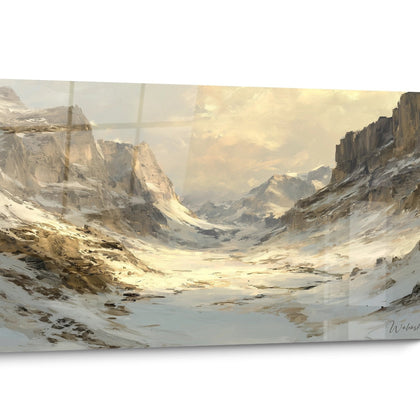
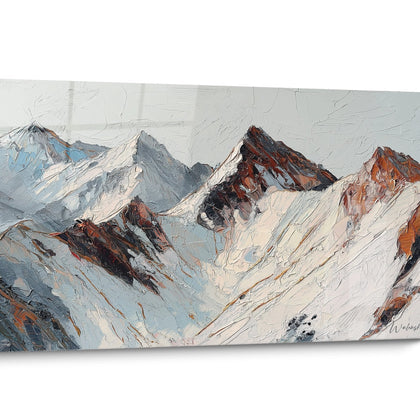
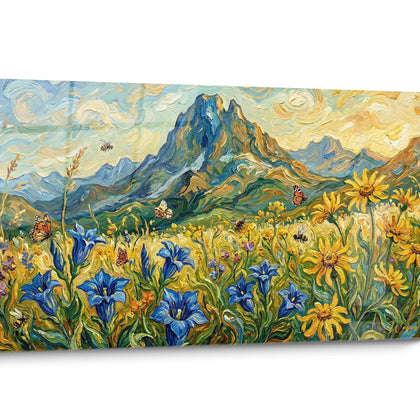
 Pyrenean Mountains Painting - Morning Mist - Pyrenees Edition242,90 €
 Cloud Sea Pyrenees Painting - Mystic Dawn - Pyrenees Edition242,90 €
 Mountain Landscape Painting - Morning Mist - Pyrenees Edition273,90 €
Explore further
In Misty Pyrenees Wall Art

All about Misty Pyrenees Wall Art
- Misty Pyrenees Wall Art Presentation
- Misty Atmosphere
- Calming Decor
- Expert Guide
A misty Pyrenees wall painting captures the mysterious essence of mountain peaks enveloped in a vaporous and dreamlike atmosphere. These large-scale mural representations immortalize those ephemeral moments when misty layers completely transform the perception of mountainous relief. Unlike classical mountain views, these artistic creations favor subtle nuances, vaporous gradients, and the contemplative ambiance that characterizes Pyrenean mornings when morning humidity suspends time.
The vaporous aesthetic of misty Pyrenees in wall decor
Why choose a misty representation rather than a clear panorama?
The appeal of a misty Pyrenees wall painting lies in its ability to radically transform the energy of an interior space. Unlike clear panoramas that display every rocky detail with sharpness, misty scenes create progressive depth through layers of pearl gray, milky white, and ashen tones. This vaporous aesthetic softens contemporary environments with clean lines, bringing that organic dimension sought by large-format wall art buyers.
Misty compositions excel particularly in rest spaces where the objective is to slow down visual pace. A panoramic misty Pyrenees wall painting in horizontal format with imposing dimensions functions as a soothing horizon, guiding the eye toward this progressive dissolution of mountain forms into milky atmosphere. This dissolution naturally creates a sensation of meditative escape without the intense visual stimulation of bright alpine views.
Specific chromatic variations in misty Pyrenean scenes
The palette of a morning misty Pyrenees painting differs fundamentally from sunlit representations. The dominants oscillate between the slate gray characteristic of low clouds, silvery reflections when diffuse light timidly breaks through, and those faded cerulean blue touches that emerge in places. This voluntary chromatic restriction constitutes paradoxically a decorative richness, as it facilitates integration into sophisticated monochrome schemes.
For collectors appreciating minimalist Nordic ambiances, these wall artworks offer an alternative to Scandinavian representations while maintaining that sought-after chromatic sobriety. Pyrenean mist possesses a particular density, more substantial than maritime fog, creating vaporous masses with blurred contours that subtly structure the composition without imposing rigid geometry.
How does mist modify spatial perception in a room?
Installing a large format representing the Pyrenees veiled in mist generates an illusion of progressive opening toward infinity. Unlike snowy compositions with marked contrasts, the succession of misty planes creates visual continuity that psychologically pushes walls outward. This characteristic proves particularly valuable in confined spaces where overly detailed panorama might accentuate closure.
Buyers seeking a misty Pyrenees valley painting often invest in these formats for transition zones like spacious hallways or stairwell landings, where misty depth naturally accompanies movement. The contemplative dimension expresses itself fully when the format exceeds 120 cm in width, allowing the eye to travel horizontally through different mist densities.
Create a serene atmosphere with a veiled Pyrenees wall painting
The psychological impact of misty atmospheres indoors
A large-scale misty Pyrenees wall painting acts as an emotional regulator in contemporary residential environments. Research on the visual influence of landscapes demonstrates that scenes with low contrast and soft transition activate brain zones associated with passive relaxation. This particularity explains why these representations find their privileged place in master bedrooms, domestic wellness spaces, or offices requiring prolonged concentration.
Unlike summer Pyrenean views saturated with bright light that stimulate active energy, misty compositions invite silent introspection. For wellness professionals integrating wall art into their therapeutic approach, a twilight misty Pyrenees painting constitutes a strategic choice, as it imposes no forced directional reading while maintaining a structuring visual presence.
Which environments benefit most from misty representations?
Architectural spaces equipped with abundant glass surfaces constitute the ideal context for showcasing a large-scale misty Pyrenean format. When natural light passes through the room, it interacts differently with the light and dark zones of the misty composition, creating subtle variation throughout the day. This phenomenon transforms the artwork into a living element that dialogues with external light conditions.
Owners of industrial lofts or open spaces particularly appreciate how an autumn misty Pyrenees painting can humanize imposing volumes without visually fragmenting the space. The vaporous continuity of the landscape functions as visual breathing that harmoniously contrasts with the rigor of metal structures or exposed concrete, without creating aggressive stylistic rupture.
Specific decorative associations with misty themes
Decorative accompaniment of a misty mountain Pyrenees painting favors natural materials with matte finishes: limestone stones in gray tones, whitewashed driftwood, crinkled linen textiles in ecru or taupe shades. These material associations amplify the organic dimension of the misty atmosphere without creating visual competition.
Ambient lighting plays a determining role in the expression of these compositions. Indirect grazing lighting positioned on the ceiling progressively reveals different layers of mist and accentuates three-dimensional depth. Absolutely avoid direct spotlights that would flatten chromatic subtleties and cancel the sought-after vaporous effect. Informed collectors often favor adjustable ambient lighting to adapt intensity according to different times of day.
Select and integrate your misty Pyrenees painting
Selection criteria for successful misty composition
When acquiring a panoramic misty Pyrenees wall painting, the quality of vaporous transition rendering constitutes the primary technical criterion. Superior compositions present several distinct depth planes, each possessing its own misty density, creating this sensation of progressive immersion into the mountainous landscape. Particularly verify the transition zone between foreground and misty masses, as this is where the atmospheric credibility of the entire work is determined.
Buyers seeking a sunrise misty Pyrenees painting must carefully examine the treatment of diffuse light sources. Light in mist possesses specific optical characteristics: it diffracts, creates halos, generates luminosity zones without apparent source. A representation mastering these phenomena will offer incomparable visual depth compared to compositions where mist appears simply as a grayish filter uniformly applied.
Optimal positioning according to interior architecture
A large-scale misty Pyrenean format requires minimal visual distance of 2.5 to 3 meters to allow the eye to embrace the entire composition and perceive atmospheric stratification. In spaces where this distance doesn't exist, favor a vertical format that exploits height rather than a horizontal panoramic. This vertical orientation works remarkably well for representing Pyrenean valleys where mist flows down from peaks.
For walls perpendicular to windows, position the artwork so that natural light grazes it laterally rather than frontally. This arrangement reveals more subtle nuances and avoids reflections that would flatten depth perception. In cross-ventilated spaces benefiting from bilateral light, the wall separating the two light sources constitutes the ideal location, as the artwork will benefit from balanced lighting throughout the day.
Preservation and appreciation over time
Misty representations with restricted palettes present the advantage of aging visually with elegance. Unlike saturated compositions whose impact diminishes with visual habituation, misty scenes progressively reveal their subtleties as perception refines. This characteristic explains why collectors consider these acquisitions as durable decorative investments rather than ephemeral trends.
Maintenance focuses essentially on preserving the light zones of the composition, particularly sensitive to atmospheric deposits in urban environments. Gentle quarterly dusting with antistatic microfiber generally suffices. For installations in humid rooms like certain spacious contemporary bathrooms, ensure adequate ventilation to prevent any prolonged condensation that could alter delicate nuances.
Is a misty Pyrenees painting suitable for professional spaces?
Absolutely. Tertiary environments seeking a soothing atmosphere without decorative banality frequently adopt these misty compositions. Medical offices, high-end coworking spaces, and premium waiting areas appreciate their ability to create distinctive visual presence while maintaining neutrality conducive to concentration.
What difference from a snowy Pyrenees painting in terms of ambiance?
While snowy scenes offer brightness and dynamic contrast, misty compositions favor chromatic softness and silent contemplation. The choice depends on the sought energy: visual stimulation versus meditative appeasement.
How to identify superior quality misty Pyrenees painting?
Examine the complexity of transitions between misty planes, the presence of subtle chromatic variations rather than uniform gray, and the composition's ability to suggest mountain forms without fully revealing them. Quality resides in the balance between suggestion and abstraction.


