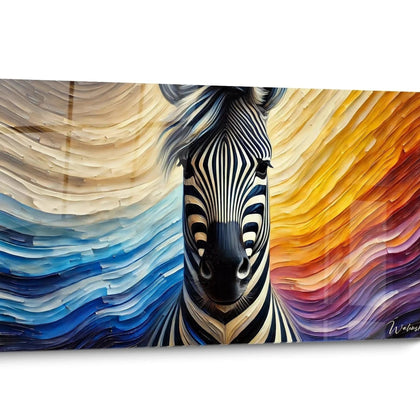
The minimalist black and white zebra wall art embodies the perfect meeting point between the graphic power of wild nature and contemporary simplicity. This stylized animal representation transforms the zebra's iconic stripes into an architectural motif that dialogues with current design codes. With its large dimensions, this mural artwork imposes itself as a structuring element capable of redefining a space's atmosphere while maintaining refined sobriety. The absence of color strengthens the visual impact of contrasts and creates a timeless decorative signature that transcends fleeting trends. This minimalist approach to the animal world particularly appeals to those seeking bold decoration without visual clutter, where each line counts and contributes to the overall balance of the composition.
The art of maximum contrast in contemporary interiors
The minimalist black and white zebra wall art exploits the power of absolute chromatic contrast to create an unparalleled visual dynamic in pared-down spaces. This radical two-tone approach perfectly meets the requirements of Scandinavian, industrial, or modernist interiors where reduced palettes become a guiding principle. The zebra's vertical stripes, simplified by the minimalist approach, generate a vertical graphic rhythm that amplifies the perception of ceiling height, an effect particularly sought after in lofts or double-height spaces.
Why choose a refined animal motif for a modern living room?
In a contemporary living room with pronounced architectural lines, the minimalist zebra motif acts as a bridge between organicity and geometry. Unlike naturalistic representations, this stylized version of the zebra extracts the animal's graphic essence to transform it into an architectural pattern. The large wall surfaces of today's living spaces require proportionally sized artworks: an imposing format allows the stripes to fully unfold and create an optical undulation effect that captures the gaze without aggressing it. This measured monumentality works particularly well with low-profile sofas and minimalist furniture that allow walls to breathe.
Monochrome balance against raw materials
The black and white of the minimalist zebra wall art establishes a striking dialogue with raw materials such as polished concrete, brushed steel, or whitewashed wood. This chromatic neutrality enables harmonious integration into environments where textures take precedence over colors. The simplified stripes create a rhythmic repetition that echoes tile joints, floorboard planks, or architectural concrete ribs. In a professional office or coworking space, this animal sobriety brings a touch of natural vitality without disrupting the chromatic coherence required by rigorous visual identity.
The zebra's organic lines, even when stylized, introduce biological breathing into spaces dominated by the strict orthogonality of contemporary furniture. This creative tension between natural curves and right angles generates subtle spatial dynamism, reinforcing visual interest without creating dissonance. Contemporary art collectors particularly appreciate this ability to merge animal reference and geometric abstraction.
Structure space through refined animal graphics
How do vertical stripes transform spatial perception?
The minimalist black and white zebra wall art uses the vertical orientation of its stripes as a tool for remodeling space visually. These ascending lines create an optical elevation effect particularly suited to rooms with standard ceilings or narrow corridors where one seeks to gain perceived verticality. In upscale commercial spaces such as showrooms or fashion boutiques, this graphic verticality evokes urban sophistication and naturally guides the gaze upward, creating an impression of prestige.
The minimalist simplification of the stripes eliminates superfluous details to retain only the fundamental black-white alternation, transforming the motif into a quasi-visual code. This formal reduction allows the brain to process the image as an architectural element rather than as mere animal decoration. Interior architects exploit this ambiguity to integrate the artwork into projects where the initial plan required a strong graphic element without overly explicit figurative reference.
Create a visual anchoring zone in open spaces
In large open-plan volumes, the minimalist black and white zebra wall art functions as a spatial marker that visually defines different functional zones without resorting to physical separations. Positioned behind a sofa in a loft, it defines the living area while maintaining the visual fluidity characteristic of open spaces. Its neutral palette creates no chromatic break that would fragment the space, yet its sufficiently powerful graphic impact establishes clear territorial presence.
The zebra's lines, through their stylized regularity, generate a predictable visual rhythm that soothes the gaze in environments sometimes overloaded with visual information. This contemplative quality responds to the needs of modern residential spaces where digital hyperconnectivity requires visual counterbalances. The large format amplifies this meditative effect by allowing immersion in the pattern without requiring eye movement.
The impact of stark contrasts on ambient lighting
The absolute black and white of the zebra motif interacts in a particular way with the various light sources in an interior. Under cool LED lighting, contrasts harden and accentuate the radical graphic dimension of the work, ideal for creative workspaces or galleries. Conversely, warm light softens transitions and reveals gray nuances that may exist in transition zones between stripes. This chromatic versatility allows the artwork to adapt to variations in ambient light throughout the day, offering an evolving visual experience.
Animality sublimated by geometric abstraction
The minimalist black and white zebra wall art performs a fascinating transition between naturalistic representation and pure abstraction. By extracting the emblematic zebra coat motif from its savanna context, the minimalist approach transforms it into a universal visual language comprehensible beyond cultural boundaries. This graphic universality particularly appeals to luxury hotels and corporate reception spaces seeking artworks that speak to international clientele without overly specific cultural markers.
What symbolism for an assertive interior?
Beyond its decorative impact, the zebra conveys strong symbolism: uniqueness, freedom, assertion of difference. The minimalist black and white version concentrates these values in a stripped-down visual expression that resonates with contemporary aspirations for authenticity and individuality. In a master bedroom, this stylized animal presence creates an asserted personal territory without the aggressiveness that a realistic representation of wild animal might carry. Freelance professionals often choose this type of artwork for their office as it simultaneously projects creativity and professional rigor.
The repetition of stripes also evokes discipline and order, qualities appreciated in work environments. Yet the animal origin of the motif maintains a vital connection with nature that humanizes sometimes overly sterile office spaces. This duality makes the minimalist zebra wall art an ideal compromise between professional requirement and biophilic well-being.
Integration into a monochrome gallery wall
For collectors developing a black and white thematic gallery wall, the minimalist zebra wall art brings essential organic variation among urban photography or geometric abstract pieces. Its imposing format allows it to serve as a central anchor around which to organize smaller works. The regularity of the stripes dialogues harmoniously with other graphic patterns such as chevrons, checkerboards, or concentric circle compositions, creating a sophisticated visual conversation.
On staircases or multi-story ascents, where wall space develops vertically, the naturally vertical orientation of zebra stripes accompanies the upward movement and reinforces circulation fluidity. This quasi-architectural function transcends the mere decorative role to actively participate in spatial experience.
Is minimalist black and white zebra wall art suitable for all interior styles?
While particularly adapted to contemporary, Scandinavian, and industrial interiors, the minimalist black and white zebra wall art possesses remarkable stylistic flexibility. In a classic interior, it creates a refreshing contrast of temporality that modernizes without altering. Eclectic spaces integrate it as an element of chromatic stability. Only highly ornamental Baroque or Rococo interiors might conflict with its radical sobriety.
What dimensions should be prioritized to maximize the visual impact of minimalist black and white zebra wall art?
Large formats are systematically favored for this type of artwork as they allow stripes to unfold in their natural amplitude. A minimum size of 100x150 cm ensures the motif truly structures the space rather than getting lost in it. On a wall section of 3 to 4 meters wide, a size of 150x200 cm or larger creates the sought-after dramatic impact while maintaining graphic pattern legibility.
Does minimalist black and white zebra wall art require specific lighting?
Unlike color-sensitive artworks, black and white proves more tolerant of lighting conditions. Nevertheless, indirect or diffused lighting better preserves gray nuances and avoids reflections that might mask certain areas. An adjustable spotlight allows modulating contrast intensity according to time and desired ambiance, thus transforming the artwork into a participatory ambient lighting element.


 Zebra Portrait Profile Artwork - Intense Gaze - Black and White Animals Edition233,90 €
 Zebra Serenity Monochrome Painting - Zebra Edition233,90 €
 Simplicity Striped Canvas - Zebra Animals Edition233,90 €
 Striped Harmony Canvas - Zebra Animals Edition233,90 €
 Striped Elegance Canvas - Animals Edition233,90 €