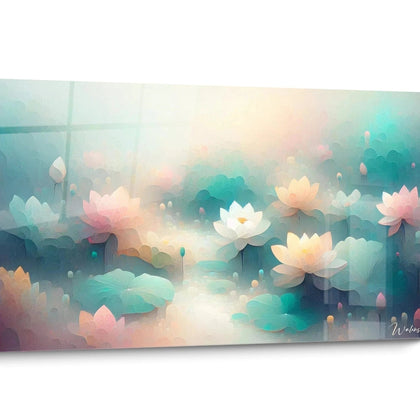
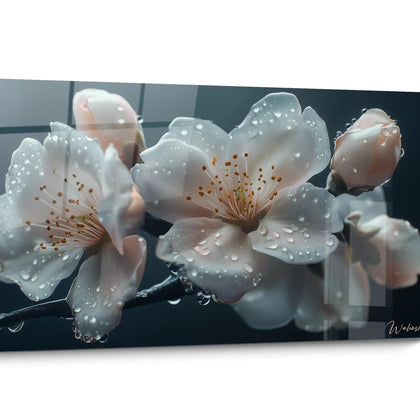
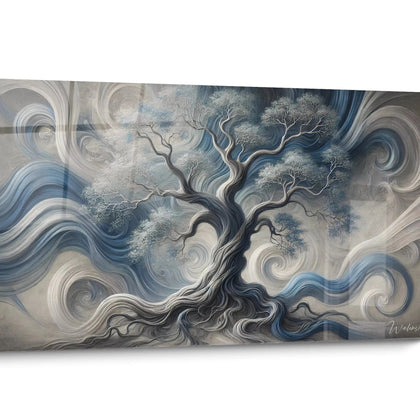
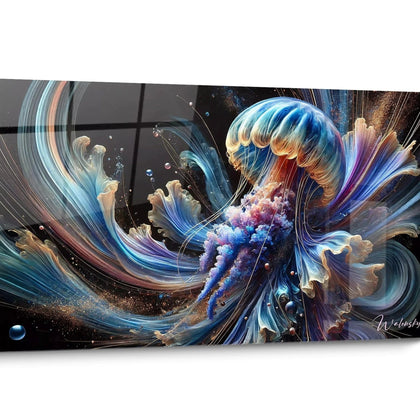
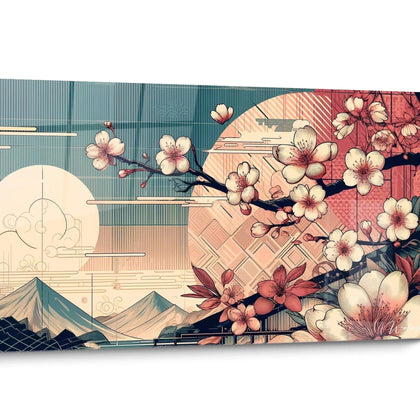
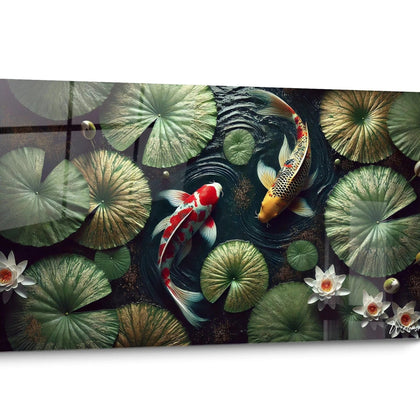
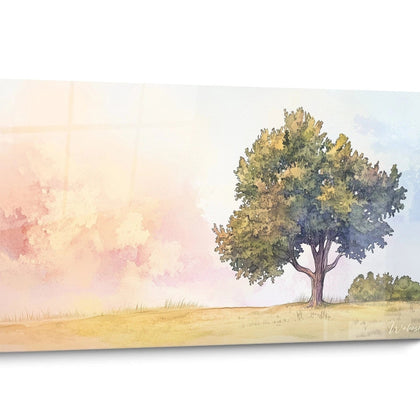
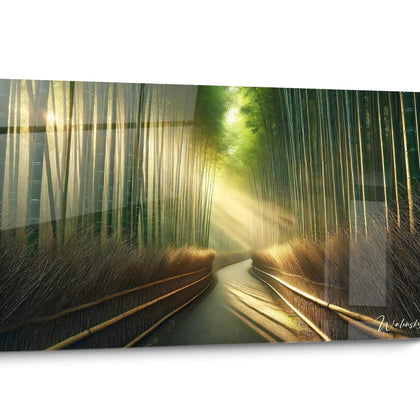
A minimalist yoga room wall art instantly transforms the ambiance of a practice space into a sanctuary of serenity. Designed for yoga studios and personal meditation spaces, this type of wall decoration meets the specific needs of practitioners seeking a pared-down atmosphere conducive to introspection and concentration. Minimalist aesthetics promote the visual release essential to authentic practice, eliminating any superfluous distraction that might disrupt mental alignment during asanas or seated meditation. Our large-format creations scrupulously respect the principles of minimalist design applied to contemplative environments, offering a soothing visual presence without ever dominating the energetic space of the room.
Creating a Visual Sanctuary for Yoga Practice
Installing a minimalist yoga room wall art represents far more than a simple decorative choice: it is the creation of a focal point that channels the collective energy of the group during sessions. The monumental formats we offer establish an architectural presence that psychologically defines the sacred practice space without resorting to physical barriers. This approach perfectly meets the needs of instructors wishing to arrange dedicated zones for different practice intensities within the same studio.
How does a pared-down visual influence conscious breathing?
Monochrome-dominant minimalist compositions significantly facilitate pranayama concentration by offering neutral visual support. Unlike art-heavy works that stimulate mental activity, the graphic simplicity of minimalist wall art calms the flow of parasitic thoughts. Vinyasa or Ashtanga practitioners, disciplines requiring precise breath-movement synchronization, report notable improvements in their focus when their gaze naturally rests on simple geometric shapes between sequences.
The importance of neutral color palettes in yoga spaces
Sand tones, off-white, pearl gray, and natural beige constitute the privileged chromatic vocabulary for a minimalist yoga wall art intended for professional studios. These earthy hues resonate with the lower chakras, energetically anchoring the practice while maintaining soft luminosity that doesn't strain peripheral vision during prolonged postures. For multi-disciplinary studios also offering yin yoga or yoga nidra, this chromatic neutrality proves essential: it adapts to the dim lighting variations necessary for restorative practices, unlike works with marked contrasts that create disturbing reflections.
Strategic sizing for collective spaces
A large-format minimalist yoga room wall art naturally establishes itself as a foundational element of spatial design. Formats exceeding 150 centimeters allow optimal visibility even from Savasana positions, where the gaze naturally directed at the front wall seeks a visual rest point. This monumental scale responds to the generous proportions of ceiling heights characteristic of contemporary yoga studios, typically arranged in former industrial lofts or repurposed commercial spaces.
The Subtle Influence of Minimalism on Meditative Quality
A minimalist yoga room wall art acts as a silent catalyst for meditative state by drastically reducing external visual solicitations. Contemplative neuroscience demonstrates that visually simplified environments decrease prefrontal cortex activation, thus facilitating access to alpha and theta brain waves characteristic of deep meditative states. For Vipassana or mindfulness meditation teachers, integrating a pared-down visual becomes a non-verbal pedagogical tool that reinforces the intention to return to essentials.
Why does the absence of traditional symbols foster universality?
Unlike Hindu or Buddhist iconographic representations that may create cultural resistance among some practitioners, minimalist yoga wall art offers inclusive spiritual neutrality. This secular approach to contemplative design perfectly matches Western studios welcoming diverse clientele, where the absence of explicit religious reference allows each person to project their own spiritual intention. Abstract geometric forms – imperfect circles, horizontal lines evoking the horizon – become universal supports for contemplation, transcending specific traditions.
Visual synchronization with practice cycles
Minimalist aesthetics possess this remarkable quality of never tiring the eye, a crucial property in a space frequented daily. Regular practitioners develop an evolving relationship with the work: what initially appears as simple visual silence gradually reveals subtle nuances, textural plays, imperceptible tonal variations. This gradual discovery naturally accompanies progress in yoga practice itself, where repetition of the same sequences constantly unveils new depths.
Energy balance through asymmetric composition
Many minimalist yoga space wall art works intelligently exploit the Japanese principle of ma – negative space meaning. A decentered composition, where visual elements deliberately occupy a third of the format, creates dynamic tension that prevents the work from becoming bland or merely decorative. This calculated asymmetry subtly dialogues with the imbalances practitioners seek to harmonize during their session, establishing a metaphorical resonance between the work and the yoga practice's quest for inner balance.
Selecting Minimalist Wall Art Suited to Yoga Requirements
Choosing a minimalist yoga room wall art requires fine understanding of the environmental constraints specific to these spaces. Unlike traditional art galleries, yoga rooms undergo significant thermal variations related to hot yoga, increased humidity due to collective perspiration, and fluctuating sound levels requiring materials that absorb reverberations. Our large-format creations integrate these technical parameters while preserving minimalist aesthetic integrity.
Which material characteristics should be prioritized for optimal durability?
Professional yoga studios require works resistant to variable hygrometric conditions, particularly in studios offering Bikram or hot yoga where humidity reaches 40%. Rigid supports treated against moisture ensure long-term dimensional stability, avoiding unsightly warping that would compromise the purity of minimalist lines. Easy maintenance also constitutes a determining criterion: a water-cleanable surface allows particle deposits to be removed without altering the matte finish characteristic of minimalist style.
Articulation with other pared-down decorative elements
Minimalist yoga wall art integrates harmoniously into a coherent decorative ecosystem including air-purifying plants, natural textiles, and Scandinavian-style furnishings with clean lines. This holistic approach to design creates visual continuity where each element reinforces the message of authenticity and return to essentials. For studio owners wishing to explore other aesthetics while maintaining coherence, Abstract Yoga Room Wall Art offers an interesting transition to more expressive compositions while preserving the simplicity necessary for contemplative practice.
Strategic positioning according to sequence orientation
The placement of minimalist yoga wall art must respond to the movement flows characteristic of different yoga styles taught. In dynamic practices oriented toward the front of the room (facing the mirror or instructor), the front wall constitutes the privileged location. For more introspective approaches like yin yoga, where practitioners spend long minutes in passive postures facing different directions, multiplying minimalist focal points on several walls creates a soothing visual envelope regardless of body orientation.
Lasting investment in studio visual identity
Beyond its immediate decorative function, large-format minimalist yoga wall art structures the studio's visual identity, instantly becoming recognizable in promotional photographs and social media. This aesthetic signature differentiates the studio in a competitive market where image matters as much as teaching quality. The monumental formats we offer naturally create valuable photographic backdrops, transforming each session into an authentic visual communication opportunity.
Can minimalist yoga wall art suit domestic spaces?
Absolutely, the imposing formats we offer adapt perfectly to rooms dedicated to personal practice, transforming a guest bedroom or basement into a true yoga sanctuary. Monumental scale visually compensates for often-lower residential ceilings, creating an impression of verticality and openness conducive to regular practice without requiring costly architectural modifications.
How should minimalist wall art be maintained in an intensive practice environment?
Simple monthly dusting with a slightly dampened microfiber cloth generally suffices to preserve the impeccable appearance of quality minimalist wall art. For high-traffic studios, more thorough quarterly cleaning with a neutral product eliminates microscopic accumulations without compromising matte finishes. This ease of maintenance represents considerable advantage over wall textiles requiring regular professional cleaning.
What is the average lifespan of large-format minimalist yoga room wall art?
With professional-quality materials and positioning away from direct sunlight, minimalist wall art retains its aesthetic integrity for 10 to 15 years minimum, even in the demanding conditions of a high-traffic commercial studio. This exceptional longevity makes it a remarkably cost-effective investment compared to temporary decorative solutions requiring replacement every 2-3 years due to fading or premature wear.


 Painting Inspired by Wanderer Above the Sea of Fog by Caspar David Friedrich No.3 – Tribute to Famous Artist233,90 €
 Weeping Willow Painting No. 1 - Nature Edition233,90 €
 Olive Painting No.3 - Nature Edition233,90 €
 Ginkgo Leaf Wall Art No. 3 - Nature Edition233,90 €
 Ginkgo Leaf Wall Art No.1 - Nature Edition233,90 €
 Eucalyptus Wall Art No. 1 - Nature Edition233,90 €
 The Path of Awakening Wall Art - Diverse Zen Edition233,90 €
 Zen Orchid Wall Art - Orchid Nature Edition233,90 €
 The Art of Tea Wall Art - Traditional Asia Edition233,90 €
 The Koala Embrace Canvas - Koala Animals Edition233,90 €
 The Feline Stretch Wall Art - Cat Animals Edition233,90 €
 Brilliance of Purity Wall Art - Abstract Flower Edition233,90 €
 Geometric Balance Painting - Abstract Cubism Edition233,90 €
 Textured Nature Wall Art - Nature Edition233,90 €
 Vertiginous Quietude Wall Art - Zen Edition233,90 €
 Balance Pastel Wall Art - Zen Edition233,90 €
 Forest Balance Canvas - Zen Edition233,90 €
 Minimalist Harmony Wall Art - Zen Edition233,90 €
 Blue Poetry Wall Art - Zen Edition233,90 €
 Calm Abstract Painting - Zen Edition233,90 €
 Silver Whisper Painting - Minimalist Abstract Edition233,90 €
 Snowy Silhouette Painting - Minimalist Abstract Edition233,90 €
 Spring Breath Wall Art - Abstract Edition233,90 €
 Breath of Greenery Canvas - Minimalist Abstract Edition233,90 €