


Labrador Retriever Watercolor Wall Art
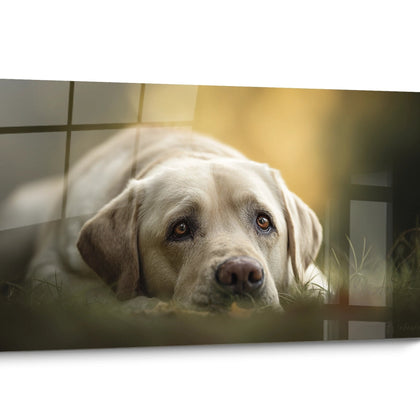
The Labrador Retriever Watercolor painting captures all the sweetness and loyalty of this iconic breed. This collection celebrates the natural charm of the labrador through watercolor dog portraits with delicate and expressive tones. Each creation highlights the tender gaze and endearing personality of this faithful companion. Perfect for dog lovers, this Labrador decorative painting brings a warm artistic touch to your interior and celebrates the unique bond between humans and their best friend.
 Golden Labrador Portrait Painting with Blue Eyes Surrounded by Watercolor Foliage - Canine Tenderness - Labrador Retriever Painting Edition273,90 €
 White Labrador Portrait Painting with Golden Eyes - Tender Gaze - Labrador Retriever Painting Edition273,90 €
 Labrador Retriever Canvas with Watercolor Tones - Artistic Portrait - Labrador Retriever Canvas Edition228,90 €
Explore further
In Labrador Retriever Watercolor Wall Art
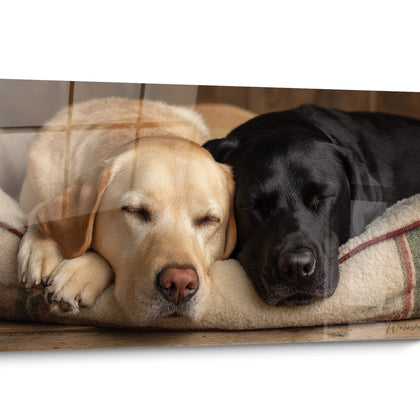
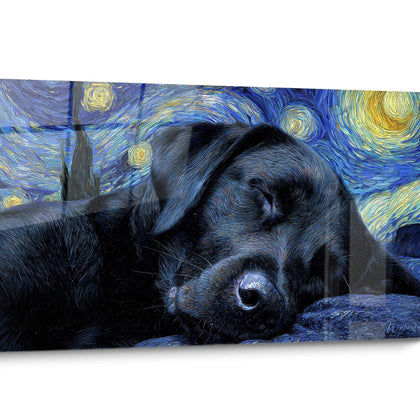
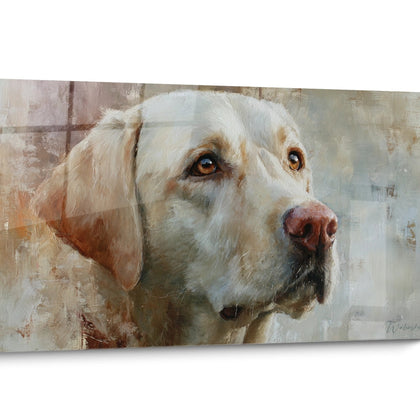
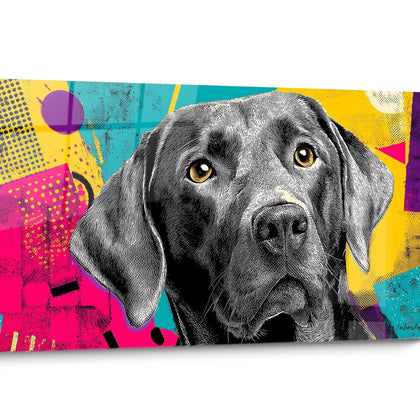
All about Labrador Retriever Watercolor Wall Art
- Labrador Retriever Watercolor Wall Art Presentation
- Watercolor Art Celebrating the Labrador
- Watercolor Nuances and Rendering
- Decorative Integration of XXL Formats
A labrador retriever watercolor wall art brings a unique artistic dimension to your interior by capturing the very essence of this iconic breed through delicate pictorial technique. Unlike photographic representations or monochrome compositions such as the labrador retriever black and white wall art, watercolor restores the softness of the gaze and the silky texture of the coat through fluid transitions and subtle transparencies. This artistic approach is particularly suited to labrador owners seeking emotional evocation rather than exact reproduction, transforming their companion into a true large-scale mural artwork.
Canine Expression Captured Through Watercolor Technique
Watercolor technique radically transforms the representation of the labrador retriever by creating renderings where pigments blend naturally to reproduce the authenticity of the coat. Artists specializing in this discipline exploit the properties of successive washes to progressively build the depth of the characteristic brown gaze of the breed, using translucent overlays that evoke the natural moisture of the labrador's expressive eyes.
Why does watercolor particularly enhance the labrador retriever?
This breed is distinguished by a double-layer coat texture that reflects light in a particular way, creating subtle chromatic variations impossible to capture in uniform solid colors. Watercolor restores these micro-variations through its organic gradations, where other techniques fail to convey the vitality of the fur. The characteristic wet areas after a swim, an identity element of the aquatic retriever, find their natural expression in controlled flows and the transparency effects inherent to this discipline.
The chromatic particularities of labrador coats in watercolor
Rendering a chocolate labrador requires a complex palette combining burnt sienna, red ochre, and touches of violet to escape the flatness of uniform brown. For yellow labradors, the artist must master variations ranging from pale cream to intense fox-red, incorporating amber reflections in areas of direct light. Black subjects require particular virtuosity: building depth without resorting to pure black, by layering Prussian blues, dark greens, and purples to create a vibrant, nuanced black.
The importance of paper texture in the final rendering
XXL formats intended for contemporary living spaces require a rough-textured paper allowing pigments to adhere to the surface irregularities and create this characteristic texture. On large surfaces exceeding 120 cm, the grain becomes an element of visual reading at distance that adds visual relief, avoiding the flat effect of digital reproductions. This texture directly influences perception depending on viewing angle and natural lighting conditions in your room.
Watercolor Rendering Techniques to Enhance Canine Emotion
A labrador retriever watercolor wall art in large format stands out through its ability to convey the endearing personality of the breed thanks to specific technical choices. Contemporary artists favor the wet-on-wet method for backgrounds, creating atmospheric blends that highlight the main subject without visual competition. This approach generates colored halos evoking the natural environments of the labrador: misty shores, autumn woodlands, or summer meadows.
How are the characteristic facial expressions captured?
The labrador's glossy nose requires precise white reservation surrounded by progressive dark glazes to simulate the wet and reflective surface. Translucent whiskers are suggested by dry scraping on still-wet pigment, a technique revealing the underlying white support. The modeling of the characteristic smiling lips of the breed is achieved by alternating untouched areas and discreet cast shadows, creating volume without graphic heaviness.
Capturing movement and abundant energy
To evoke the natural dynamism of the retriever, watercolorists employ controlled splashes and directional flows suggesting movement without freezing the composition. These calculated splatters recall water lifted during the characteristic swims of the breed, reinforcing subject identity. On imposing mural formats, these gestural effects bring a contemporary dimension that dialogues with modern interiors while preserving the traditional sensitivity of watercolor.
Chromatic contrasts to accentuate visual presence
Pairing a labrador in warm tones against complementary cool backgrounds (cerulean blues, emerald greens) creates an optical vibration that naturally draws the eye. This theory of simultaneous contrasts, particularly effective in watercolor thanks to transparencies, confers monumental presence even at distance. Owners seeking strong visual impact in a spacious living room will favor these compositions with high chromatic differential rather than tone-on-tone harmonies.
Space Enhancement Through Monumental Labrador Watercolor
Integrating a labrador retriever watercolor wall art in XXL format radically transforms the spatial perception of contemporary living spaces. These large-scale creations, often exceeding 100 cm in width, become architectural focal points that structurally organize the space. The lightness inherent to watercolor technique compensates for the monumentality of the format, avoiding the oppressive effect that thick oils or saturated acrylics on equivalent surfaces might generate.
Which environments particularly benefit from these watercolor works?
Spaces with mineral dominance—polished concrete, exposed stone, contemporary tiles—find perfect balance with the organic fluidity of watercolor representing this four-legged companion. This material opposition creates a valuable decorative tension, humanizing minimalist interiors through the emotional evocation of the labrador. Double-height ceilings and blind walls of stairwells constitute privileged locations where the monumental format can fully express itself without constraint.
The influence of natural light on watercolor pigments
Unlike saturated prints, watercolor pigments react subtly to daily light variations, revealing different nuances according to the hours. Indirect exposure near a bay window allows characteristic transparencies to vibrate without risk of alteration by direct UV. This living quality of the work, which visually evolves with the solar course, reinforces the emotional bond with the representation of your companion, as if their expression naturally shifted throughout the day.
Decorative associations enhancing watercolor aesthetics
Furniture in light wood with Scandinavian essences—bleached oak, natural ash—creates aesthetic consistency with the soft tones of sand or chocolate labrador watercolors. Natural textiles such as crinkled linen or bouclé wool extend the sensoriality evoked by the painted coat, establishing a visual tactile dialogue. For compositions featuring black labradors, association with brushed metal elements—aged brass, patinated steel—brings contemporary sophistication without disrupting chromatic harmony.
Is a labrador retriever watercolor wall art suitable for humid spaces like conservatories?
Unheated conservatories present hygrometric variations incompatible with the stability of professional watercolor supports. Prioritize climate-controlled rooms where relative humidity remains below 65% to preserve pigment integrity and prevent warping. Air-conditioned living spaces constitute the ideal environment.
What is the optimal viewing distance to appreciate a large-format labrador retriever watercolor wall art?
Formats exceeding 120 cm require a minimum distance equivalent to 1.5 times their diagonal for harmonious global perception. At this distance, watercolor effects—blends, textures, transparencies—read as a coherent whole. Close approach then reveals the technical richness of details and the artist's gestures.
Can digital reproductions faithfully render the watercolor effect of labrador retriever wall art?
Current high-definition printing processes effectively reproduce chromatic variations, but cannot simulate the three-dimensional texture of paper grain nor the brightness variations between saturated areas and white reserves. This tactile dimension, essential to authentic watercolor, remains the domain of original creations or artisanal reproductions incorporating genuine grain.
Further reading
Our articles on this topic
- Watercolor cat painting: creating a soft, poetic atmosphere at home
- Australian Shepherd Watercolor Painting: The Perfect Decor for a Child's Bedroom
- Golden retriever painting for a child's room: the guide to choosing well
- Dog Watercolour Painting for Children's Bedroom: How to Choose the Perfect Wall Companion
- Gift idea: greyhound painting for a devoted owner
- Pointer Anglais Black-and-White Watercolor Painting: The Poetic Touch for Your Bedroom
L'art qui suscite l'envie
Maison belge d'art mural grand format
14 jourspour changer d'avis*
Protection Walenskyincluse
Fabriquéen Italie
FormatXXL
Kit de fixationtoujours fourni
* Hors tableaux personnalisés et tailles personnalisées


