


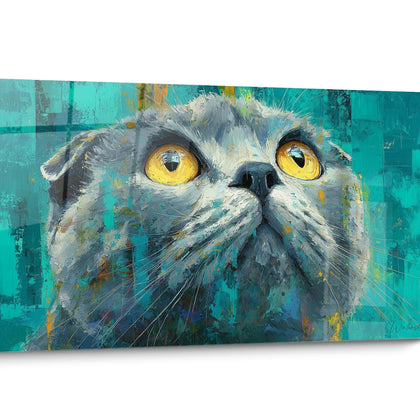
Gray Scottish Fold Cat Wall Art
The Painting Scottish Fold Cat Grey captures the timeless elegance of this iconic feline breed. Our collection celebrates the softness and unique charm of the Scottish Fold with grey fur, with its characteristic folded ears and endearing gaze. Each artwork reveals the gentle personality of these distinguished felines, bringing a touch of refinement to your decor. Perfect for lovers of Scottish Fold Cat Wall Decor, this wall art transforms living room, bedroom or office into a sophisticated feline gallery.
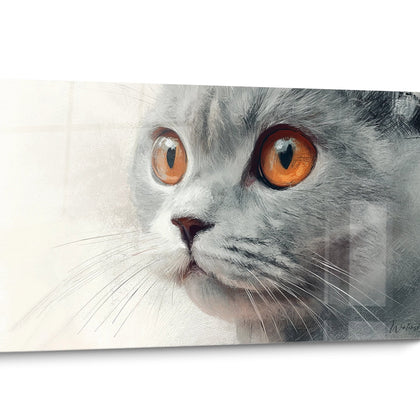
 Scottish Fold Cat Portrait Painting - Captivating Gaze - Scottish Fold Cat Edition233,90 €
 Gray Scottish Fold Cat Painting Amber Eyes - Contemplative Gaze - Scottish Fold Cat Edition233,90 €
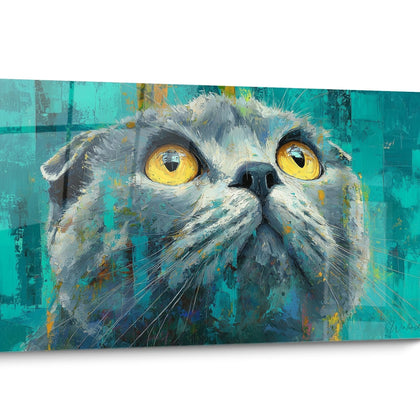
 Gray Scottish Fold Cat Painting Golden Eyes - Captivating Gaze - Scottish Fold Cat Edition233,90 €
 Scottish Fold Cat Painting Golden Eyes - Hypnotic Gaze - Scottish Fold Cat Edition233,90 €
 Scottish Fold Cat Painting Grey - Contemplative Gaze - Scottish Fold Cat Edition233,90 €
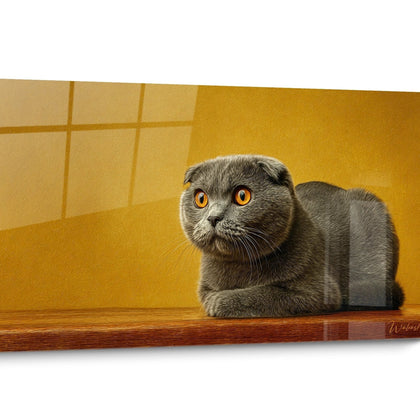
 Scottish Fold Cat Sitting Wall Art - Golden Gaze - Scottish Fold Cat Edition233,90 €
 Scottish Fold Cat Gray Wall Art - Golden Gaze - Scottish Fold Cat Edition233,90 €
 Scottish Fold Cat Wall Art Amber Eyes - Enchanting Gaze - Scottish Fold Cat Edition233,90 €
 Scottish Fold Cat Wall Art Golden Gaze - Modern Artistic Portrait - Scottish Fold Cat Edition233,90 €
 Scottish Fold Cat Wall Art Golden Gaze - Feline Tenderness - Scottish Fold Cat Edition233,90 €
 Scottish Fold Cat Portrait Wall Art - Captivating Amber Gaze - Scottish Fold Cat Edition213,90 €
Explore further
In Gray Scottish Fold Cat Wall Art
All about Gray Scottish Fold Cat Wall Art
- Description Tableaux Chat Scottish Fold Grey
- Monochrome Feline Elegance
- Psychology of Grey Shades
- Architectural Integration
The Scottish Fold grey cat painting embodies the very essence of contemporary feline refinement, capturing the iconic sweetness of this breed with folded ears in an exclusively monochrome palette. This artistic representation transcends simple wall decoration to become a manifesto of sophisticated minimalism, where each shade of grey reveals the velvety texture of the Scottish Fold's characteristic coat. The intense contemplative gaze, emphasized by subtle contrasts between deep anthracite and bright silver, transforms your space into a sanctuary dedicated to timeless feline elegance.
Our exclusive collection offers monumental formats designed to magnify the silent and majestic presence characteristic of this breed. The grey scale representation allows for exceptional decorative versatility, naturally harmonizing with minimalist architectures, Scandinavian interiors, industrial ambiances, or ultra-contemporary environments. Unlike multicolored saturated compositions, this monochrome approach preserves the authentic natural appearance of the blue grey Scottish Fold, a breed particularly sought after for its uniform coat and exceptional hair density.
Each creation captures the unique anatomical characteristics of the Scottish Fold - delicately folded ears forming a natural crown, expressively enlarged round eyes, compact morphology, and subtle musculature - while exploiting the unsuspected richness of grey tones. These large dimensions reveal details imperceptible on smaller formats: infinitesimal variations between the slate grey of the nose, the pearl grey of the paw pads, and the deep bluish grey characteristic of premium lineages. This chromatic specificity makes it the preferred acquisition of feline purists and collectors of monochrome animal art.
The Art of Grey Scale to Reveal the Soul of the Scottish Fold
Why does grey particularly sublimate the Scottish Fold?
The Scottish Fold grey cat painting exploits a fascinating genetic truth: this breed naturally presents a uniformly distributed pigmentation density creating coats of exceptional homogeneity, particularly in the British blue grey varieties. This biological characteristic is artistically translated by an in-depth exploration of tonal values, where each nuance conveys a distinct emotion. Charcoal grey evokes the ancestral nobility of Scottish cats, while pearl grey reflects the legendary gentleness of their temperament.
The chromatic variations within an exclusively grey palette allow to visually map the incomparable texture of the Scottish Fold's coat: dense undercoat forming thermal insulation, shiny guard hairs creating silver reflections, and that famous plush softness resulting from the characteristic double layer. On monumental formats, these gradations become palpably visible, creating a tactile illusion that radically distinguishes this work from general feline representations. The voluntary absence of saturated colors focuses attention on the pure expressiveness of the gaze and the contemplative gesture characteristic of this calm breed.
Tonal variations as a signature of authenticity
Unlike luxurious golden interpretations, the grey monochrome approach requires a superior technical mastery of contrasts and halftones. Breeders recognize four distinct categories of grey in the Scottish Fold: classic blue grey, diluted lilac grey, tipped silver grey, and smoke grey with white roots. A faithful artistic representation integrates these chromatic subtleties to create depth and biological authenticity.
Strategic areas require differentiated tonal treatments: the contours of the folded ears needing delicate shadows to suggest the unique cartilage, the edges of the nose requiring bright reflections to evoke the leather texture, and above all the amber or copper iris creating the only point of warm temperature in this cold symphony. This chromatic tension between gray body and golden gaze generates an irresistible visual magnetism, a phenomenon amplified by the imposing dimensions favoring contemplative immersion.
How does gray influence spatial perception?
Neuroscience confirms that grayscale monochrome compositions reduce visual fatigue and promote meditative concentration, perfect for demanding professional spaces or rooms dedicated to rest. The Scottish Fold gray cat painting acts as an intelligent chromatic neutralizer: it absorbs surrounding hues without creating visual competition, while structuring the space with its monumental presence. In contemporary architectures with restricted palettes, it becomes a focal point of organic life introducing vitality without stylistic disruption.
The generous scale transforms the Scottish Fold into an almost totemic presence, its characteristic static posture evoking a silent guardian rather than a domestic animal. Lovers of biophilic design find a connection to nature filtered through urban sophistication, while collectors of animal art appreciate a quasi-scientific documentation of this natural genetic mutation that spontaneously appeared in 1961. This historical dimension adds narrative depth absent from generic feline representations.
Chromatic Psychology and Emotional Impact of the Gray Feline
What emotions does a gray cat specifically convey in the collective unconscious?
The psychology of color attributes paradoxical qualities to gray: diplomatic neutrality and timeless sophistication coexist with introspective melancholy and unfathomable mystery. Applied to the Scottish Fold gray cat painting, this paradox is resolved in the unique personality of the breed, renowned for its balanced temperament between feline independence and demonstrative affection. Gray becomes a visual metaphor for this behavioral duality, neither coldly distant nor excessively demonstrative.
Studies on decorative preferences reveal that buyers of gray feline representations seek emotional stability and anchoring in tradition, while also valuing aesthetic modernity. The Scottish Fold, a relatively recent breed but genetically stable, perfectly embodies this temporal tension. Its folded ears, a dominant mutation fixed by rigorous selection, symbolize mastered adaptation rather than evolutionary chance, resonating with individuals who appreciate a harmonious control of their environment.
The influence of gray textures on the interior atmosphere
Beyond the hue, the virtual tactile perception plays a decisive role. The Scottish Fold's coat has a unique density (900-1200 hairs per centimeter versus 600-800 for standard cats), creating an exceptional velvety visual texture. On a large format, this material richness transcends bidimensionality: observers frequently report an irresistible urge to stroke the artwork, a psychological phenomenon called "tactile affordance" by cognitive ergonomists.
This sensory invitation transforms the installation space into a zone of emotional comfort, particularly effective in demanding offices or medical spaces requiring soothing without infantilization. Unlike stylized graphic interpretations, the realistic gray approach maintains professional dignity while introducing a reassuringly living presence. Monumental formats amplify this protective effect, the benevolent feline gaze seeming to watch over the space with the contemplative attention characteristic of the breed.
Why does gray cross all decorative trends?
Analysis of interior trends over three decades reveals the remarkable constancy of gray as a neutral chromatic foundation, while accent colors evolve cyclically. The Scottish Fold gray cat painting is therefore a lasting decorative investment, immune to the fleeting fluctuations of seasonal palettes. Its ability to dialogue with various materials - raw concrete, blond Scandinavian wood, brushed metals, natural textiles - makes it a universal stylistic pivot.
Interior designers favor this versatility for high-end residential projects where clients anticipate future decorative changes. While a work with saturated colors dictates strict chromatic constraints, the gray scale adapts fluidly, its impact relying on form, composition, and presence rather than chromatic shock. This strategic flexibility explains the marked preference among affluent buyers seeking longevity of investment rather than immediate gratification.
Strategic Integration into Contemporary Architectures
Where to position a large-format monochrome feline for maximum impact?
The optimal placement of a Scottish Fold cat painting in gray requires analysis of visual flows and architectural convergence points. Transition spaces – generous entrances, monumental stairwells, widened hallways – particularly benefit from this contemplative presence that slows movement and encourages meditative pause. The characteristic seated posture of the Scottish Fold, with moderate verticality and a stable base, naturally fits into architectural compositions that prioritize horizontality and terrestrial anchoring.
Walls exposed to indirect natural light fully reveal tonal subtleties, changing reflections according to the sun's course, creating organic animation without technology. Avoid prolonged direct exposure, which would uniformize delicate nuances and betray chromatic complexity. Corner configurations, often overlooked, become strategic opportunities: the feline gaze oriented towards the main room creates a symbolic guardian, while orientation towards the exterior suggests shared contemplation between the occupant and the artistic subject.
How to compose a dialogue between a feline work and existing furniture?
The monochrome gray approach facilitates bold integrations impossible with complex palettes. A large Scottish Fold can visually anchor a minimalist living room to scattered furniture, creating cohesion through a centralizing presence rather than chromatic repetition. Discerning collectors exploit temperature contrast: warm wood furniture (walnut, teak) against cool gray generates a dynamic and balanced tension, while association with polished concrete or steel amplifies industrial sophistication.
Total monochrome spaces – gray bedrooms, anthracite kitchens, neutral offices – risk emotional flatness without a living point. The introduction of an expressive feline gaze, even within a coherent gray palette, breaks monotony through psychological dimension: animal presence suggests life, potential movement, conscious attention. This subtle animation radically differentiates the work from hyperrealistic multicolored representations which, despite superior technique, can seem static due to excessive detail.
Which professional spaces particularly value this aesthetic?
Sophisticated corporate environments – law firms, corporate headquarters, executive spaces – widely adopt gray feline imagery for the perfect balance between humanizing the workspace and maintaining professional authority. The Scottish Fold, a British breed associated with feline aristocracy, conveys elitist codes without ostentation, its compact morphology evoking contained power rather than demonstrative aggression.
Photographic studios and creative agencies exploit the meta-reflexive dimension: the cat as a historical artistic subject dialogues with contemporary practice, while the monochrome choice demonstrates mastery of formal constraints. Veterinary clinics specializing in felines use representations of the purebred breed as identifiers of expertise, the Scottish Fold serving as an immediate visual reference for knowledgeable clients. This communication functionality adds utilitarian value to the aesthetic dimension, justifying investment in premium formats.
Perceptual evolution according to daily light variations
A characteristic often overlooked: a well-executed gray composition transforms radically according to ambient lighting, creating an evolving work without technological intervention. Cold morning light accentuates the characteristic blues of a blue-gray Scottish Fold, while evening incandescent lighting warms the tones, revealing brown undertones present in mature pelts. This natural chromatic mutability generates constant perceptual renewal, combating visual fatigue affecting static works.
Architectural lighting professionals recommend a color temperature of 3000-3500K for optimal balance, neither too cold (which hardens gray tones) nor too warm (which yellows nuances). The complete absence of direct light source preserves the volumetric modeling suggesting three-dimensionality, while grazing light dramatizes the texture of the fur and accentuates the characteristic ear relief. These technical considerations, rarely applied to standard residential decoration, distinguish a professional installation from an amateur hanging, maximizing the return on premium format investment.
What size should be favored for a gray Scottish Fold cat painting in a contemporary living room?
Monumental dimensions (120-180 cm width) are essential for spacious living rooms exceeding 30m², creating an immersive presence that transforms the Scottish Fold into a permanent visual companion. This generous scale reveals anatomical details impossible to perceive on reduced formats: the fineness of the ear fold, the iris gradient, the variations in fur density between body areas. The psychological impact of a feline gaze of almost life-size generates a superior emotional connection, a phenomenon documented in environmental psychology as "positive parasocial presence".
How to maintain the chromatic intensity of a gray representation over the years?
Although grays present superior chromatic stability to bright colors sensitive to photodegradation, a few precautions preserve tonal depth: seasonal 180° rotation for uniform light exposure, monthly dusting with an antistatic microfiber cloth, maintaining humidity levels between 40-60% to prevent drying. Absolutely avoid chemical cleaners that can alter the surface, preferring gentle vacuuming around the edges. These simple gestures guarantee the durability of the investment over decades, the gray retaining its timeless nobility where saturated colors show premature aging.
Is the gray Scottish Fold painting suitable for restored historic interiors?
Paradoxically, this contemporary aesthetic integrates remarkably well into heritage architectures through a sophisticated temporal dialogue. Gray recalls ancient patinas, aged noble stones, oxidized metals, creating a chromatic continuity with historical materials. The Scottish Fold, a breed established in the 1960s but evoking centuries-old British feline aristocracy, embodies a bridge between tradition and modernity. Specialized restorers in high-end renovations exploit this mastered contrast: inserting a resolutely current presence into a historical setting, without betraying architectural codes. The monumental scale, far from creating anachronism, dialogues with the generous volumes of old residences, where timid formats would seem lost. This approach to temporal fusion distinguishes avant-garde collections from generalist Scottish Fold representations lacking the conceptual boldness necessary for these complex installations.


