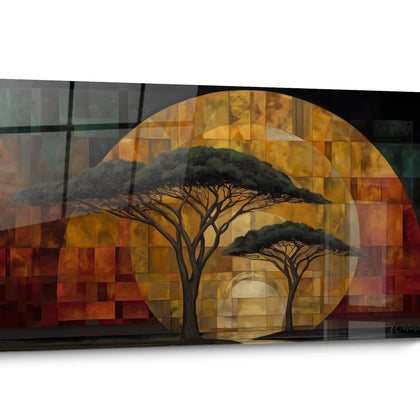
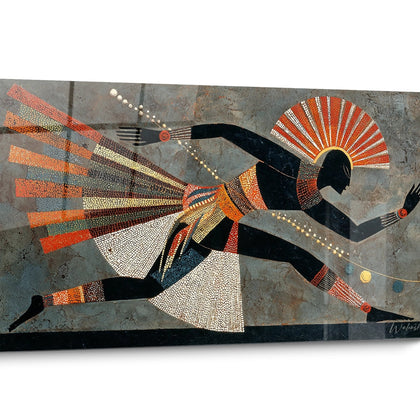
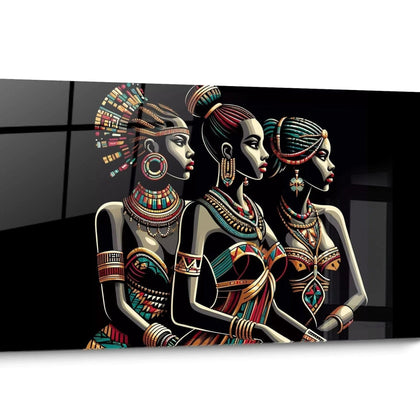
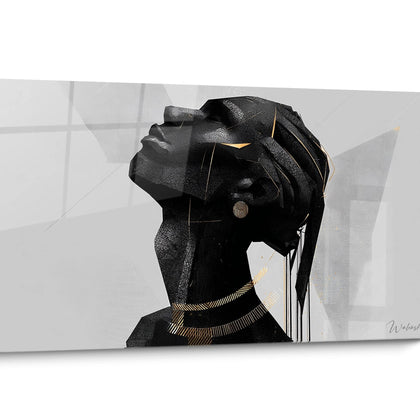
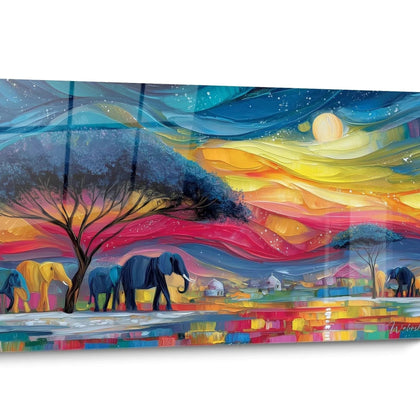
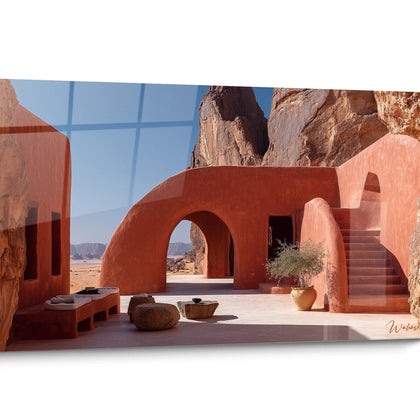
A geometric Africa wall art transforms your space into a contemporary gallery where the rigor of forms meets the warmth of the African continent. These large-format creations celebrate the intersection between ancestral visual traditions and modern minimalist aesthetics, offering a wall presence that structures space while telling a profound cultural story. Each geometric composition draws from the visual vocabulary of mudcloth textiles, ritual scarifications, or Sahelian architectures to create a universal and timeless decorative language.
The Art of Structured African Patterns for Contemporary Spaces
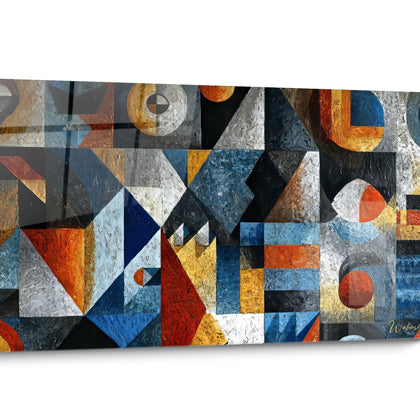
The geometric Africa wall art reinterprets the visual codes of African civilizations through a refined geometric grammar. Triangles evoke Dogon masks, diamonds recall Kuba weavings, while parallel lines cite traditional body paintings. This graphic approach allows integrating a millennial cultural heritage into modern, Scandinavian, or industrial interiors without creating stylistic discord.
How do Africanized angular forms structure large architectural volumes?
In double-height spaces or industrial lofts, these monumental compositions function as visual pillars. The rhythmic repetitions of geometric motifs create a cadence that guides the eye vertically, amplifying volume perception. A triptych of African geometric wall art arranged in a stair pattern naturally fits a stairwell, transforming a circulation zone into an immersive artistic journey.
Synergy between African geometry and contemporary sculptural furniture
Pairing a geometric Africa wall art with streamlined furniture creates fascinating formal dialogues. The sharp angles of mural compositions echo in tapered metal legs, while concentric circles inspired by Maasai shields resonate with round coffee tables. This correspondence between wall art and furniture design establishes sophisticated decorative coherence, particularly sought in premium design projects.
Collectors especially appreciate the balance between cultural expressiveness and formal discipline this style offers. Unlike classical figurative representations, these geometric works integrate equally well in an architecture firm or a fashion showroom. Extra-large formats – some exceeding three meters – transform an entire wall into an aesthetic manifesto, particularly suited to commercial spaces seeking distinctive visual identity. To explore other expressions of this continental art, the abstract Africa wall art collection offers more fluid variations maintaining this same graphic energy.
Modern Tribal Architecture: When Geometry Becomes Spatial Narrative
Which visual codes of traditional African architectures inspire these mural creations?
The geometric Africa wall art draws directly from the architectural vocabulary of Sahelian habitats and Dogon granaries. Stratified compositions evoke banco constructions with ribbed facades, while checkerboard patterns cite Kassena case murals. This transposition of architectural scale to mural format creates a fascinating mise en abyme: the observer contemplates an abstract representation of inhabited space, generating rare narrative depth in geometric art.
Commercial space designers particularly exploit this architectonic dimension to create immersive atmospheres. A fusion restaurant or boutique hotel can thus evoke Africa without resorting to tourism clichés, by installing a series of monumental geometric panels that redefine room proportions. Dominant vertical lines visually lengthen ceilings, while horizontal compositions widen perspectives in narrow corridors.
Chromatic strategies specific to African geometric compositions
A geometric Africa wall art palette follows distinct chromatic logic. Ochres, Sienna earths, and oxide reds dominate, anchored by deep blacks recalling indigo dyes. This deliberate chromatic restriction intensifies shape impact, each color acquiring structural rather than decorative function. Nordic minimalist spaces particularly benefit from this measured chromatic warmth, which warms white atmospheres without overloading them.
Institutional buyers – corporate lobbies, cultural spaces, premium medical offices – favor these creations for their ability to simultaneously convey modernity and cultural grounding. A four-meter African geometric wall art installed in a boardroom asserts international openness while demonstrating informed aesthetic sensitivity. Repetitive patterns also generate a soothing effect, comparable to Zen gardens, particularly appreciated in waiting areas or mediation spaces.
Graphic Symbolism: Decoding the Visual Language of African Forms
Each element of a geometric Africa wall art conveys codified meanings from ancestral semiotic systems. Zigzags evoke the mythological python serpent, guardian of waters and symbol of wisdom. Spirals represent the cyclical evolution of time in West African cosmologies. Stacked chevrons cite scarifications of passage to adulthood. This symbolic density transforms the work into narrative support, each contemplation revealing new layers of meaning.
The psychological impact of tribal geometric structures in living spaces
Neuroesthetics research demonstrates that regular geometric patterns, particularly those inspired by non-Western visual traditions, activate brain areas associated with pattern recognition and aesthetic pleasure. A geometric Africa wall art installed facing a work area can thus improve concentration through its meditative effect, formal repetitions creating stable visual anchoring. Interior design professionals exploit this functional dimension to optimize cognitive performance in creative offices or coworking spaces.
Discerning collectors specifically seek compositions balancing symmetry and asymmetry – a central principle in African aesthetics where harmony arises from controlled imbalance. This dynamic visual tension energizes static spaces: an overly harmonious living room gains character, a neutral bedroom acquires strong identity. Extra-tall vertical formats particularly suit Haussmann apartments with moldings, creating historical dialogue between classical European ornamentation and timeless African geometry.
Integration in contemporary heritage renovation projects
Interior architects specializing in historic building rehabilitation use these works as modernist counterpoints. In a former factory converted to a loft, an eight-meter linear African geometric triptych dialogues with exposed metal structures, angular motifs echoing rivets and beams. This temporal juxtaposition – European industrial heritage and African visual legacy – generates resolutely contemporary hybrid interiors, sought by cultured urban clientele.
Where to place geometric Africa wall art to maximize its architectural impact?
Favor walls perpendicular to main windows so natural raking light reveals reliefs and textures. In open spaces, use these creations as visual delimiters between functional zones – separating living room and dining room without physical partitioning.
How to combine multiple African geometric wall art pieces without creating visual saturation?
Maintain strict chromatic coherence but vary motif scales: pair a composition with large areas with another featuring micro-patterns. Follow the odd-number rule (3 or 5 pieces) and ensure generous spacing – at least 40 cm between each frame for monumental formats.
Are geometric Africa wall art pieces suitable for entirely white minimalist interiors?
Absolutely, they constitute the ideal intervention to humanize these spaces. Their rigorous geometry respects minimalist purity while their earthy tones introduce necessary organic warmth. Choose monochrome versions in ochre-black ranges for optimal integration.


 Geometric Shapes Wall Art Ochre and Burgundy - Earth Harmony - African Abstract Edition232,90 €
 Geometric Forms Wall Art Ochre and Burnt Sienna - Warm Mosaic - African Abstract Edition233,90 €
 Geometric Forms Ochre and Sienna Wall Art - Saharan Harmony - Abstract African Edition233,90 €
 Geometric Shapes Wall Art - Contemporary Mosaic - Abstract African Edition232,90 €
 Geometric Shapes Wall Art - Tribal Mosaic - African Abstract Edition233,90 €
 Geometric Shapes Wall Art - African Mosaic - African Abstract Edition233,90 €
 Geometric Shapes Wall Art - Urban Mosaic - African Abstract Edition233,90 €
 Geometric Forms Wall Art - Modern Mosaic - Abstract African Edition213,90 €
 Geometric Forms Wall Art - Modern Harmony - African Abstract Edition213,90 €
 African Woman Painting with Colorful Body Art - Contemporary Tribal Art - African Face Edition213,90 €
 African Woman Wall Art Geometric Beauty - Africa Edition233,90 €
 African Woman Guardian of Patterns Wall Art - Africa Edition233,90 €
 African Forms Mosaic Sacred - africa edition Painting233,90 €
 African Woman Wall Art Amber Gaze - Africa Edition233,90 €
 African Woman Painting Tribal Soul - africa edition233,90 €
 African Woman Wall Art Daughter of the Sun - Africa Edition213,90 €
 Geometric Bronze Wall Art - Abstract Africa Edition233,90 €
 African Enchantment Canvas - Africa Edition233,90 €
 Masked Enigma Wall Art - Signature Edition233,90 €