


African Tribal Wall Art
The Painting Africa Tribal celebrates the authenticity and richness of traditional African art. This exclusive collection captures the essence of ancestral cultures through powerful ethnic motifs and vibrant compositions. Each work reveals the soul of Africa with African tribal representations that evoke traditions, spirituality and cultural identity. Earthy tones, sacred symbols and traditional ethnic motifs transform your space into an authentic art gallery.
 African Woman Artwork - Queen with Red Pearls - African Face Edition273,90 €
 African Woman with Necklace Painting - Contemporary Ethnic Portrait - African Face Edition273,90 €
 Colorful African Woman Painting - Modern Tribal Portrait - African Face Edition273,90 €
 African Woman Painting with Colorful Body Art - Contemporary Tribal Art - African Face Edition228,90 €
 Abstract Geometric Composition Wall Art - Contemporary Ethnic Mosaic - African Tribal Art Edition228,90 €
 African Abstract Art Painting - Cosmic Symbols - African Culture Edition228,90 €
 African geometric art wall art - Colorful abstract faces - African culture edition273,90 €
 Elephant Memory of the Savanna Painting - African Landscape Edition273,90 €
 Tribal Spirit Artwork - African Mask Edition228,90 €
 Elephant Spiritual Animal Painting - tribal art edition228,90 €
 Elephant Tribal Tattoo Painting - tribal art edition228,90 €
 Elephant Spirit Animal Painting - tribal art edition273,90 €
 Buffalo Guardian of the Ancestors Painting - Tribal Art Edition273,90 €
 African Wall Art Purple Mask - africa edition273,90 €
 African Sword Wall Art Blood and Gold - Africa Edition273,90 €
 Black African Abstraction Wall Art Whispers of the Void - Africa Edition273,90 €
 African Woman Wall Art Amber Gaze - Africa Edition273,90 €
 African Woman Painting Tribal Soul - africa edition273,90 €
 African artwork Master of winds - africa edition228,90 €
 African Woman Painting Tribal Soul - africa edition228,90 €
 African Enchantment Canvas - Africa Edition273,90 €
 Masked Enigma Wall Art - Signature Edition273,90 €
 African Beauty Wall Art - Africa Edition273,90 €
 Femininity and Tradition Painting - Africa Edition273,90 €
Explore further
In African Tribal Wall Art
-
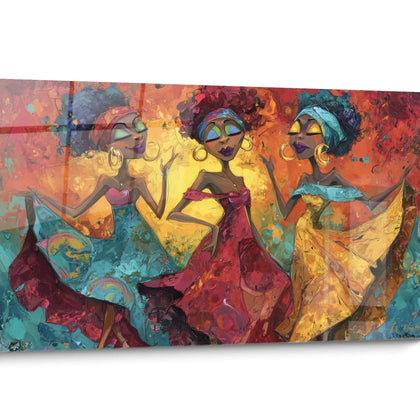 Africa Wall Art608
artworks
Africa Wall Art608
artworks
-
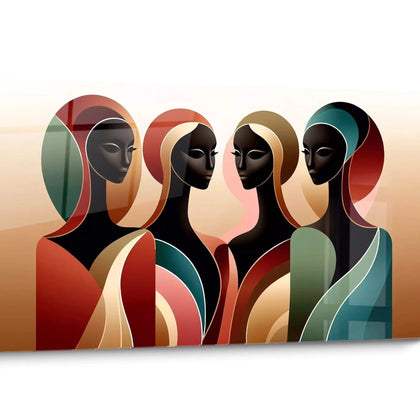 Africa Portrait Wall Art24
artworks
Africa Portrait Wall Art24
artworks
-
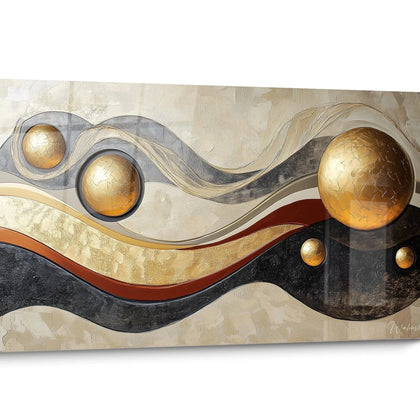 Golden Africa Wall Art24
artworks
Golden Africa Wall Art24
artworks
-
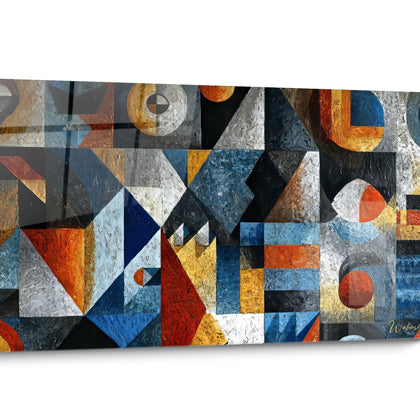 Abstract Africa Wall Art24
artworks
Abstract Africa Wall Art24
artworks
-
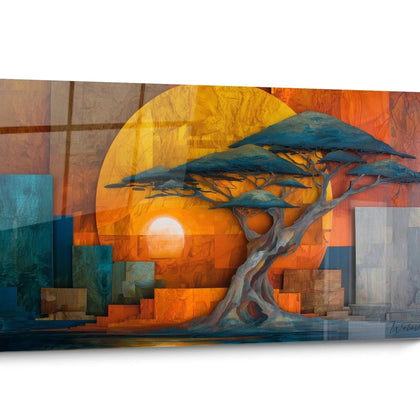 Africa Landscape Wall Art24
artworks
Africa Landscape Wall Art24
artworks
-
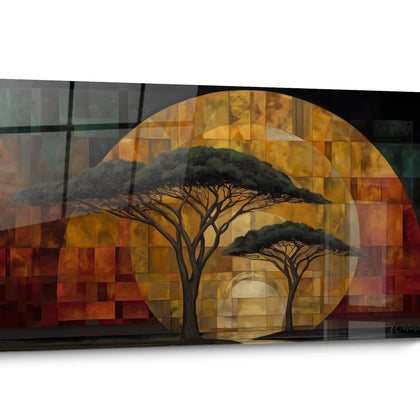 Africa Orange Wall Art24
artworks
Africa Orange Wall Art24
artworks
-
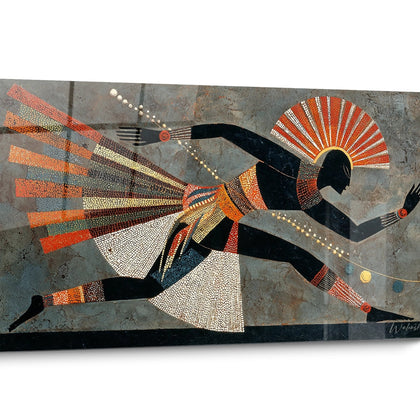 African Dance Wall Art24
artworks
African Dance Wall Art24
artworks
-
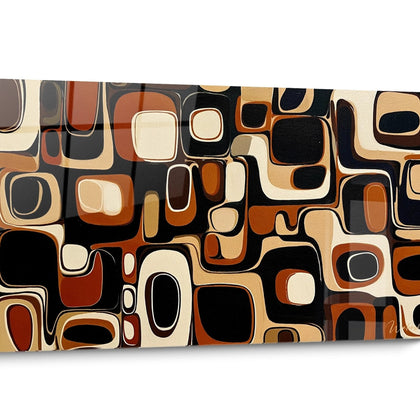 Geometric Africa Wall Art19
artworks
Geometric Africa Wall Art19
artworks
-
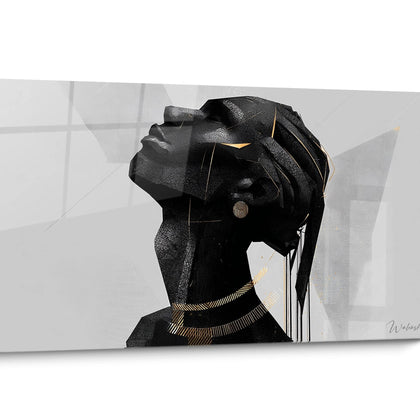 Black and White Africa Wall Art15
artworks
Black and White Africa Wall Art15
artworks
-
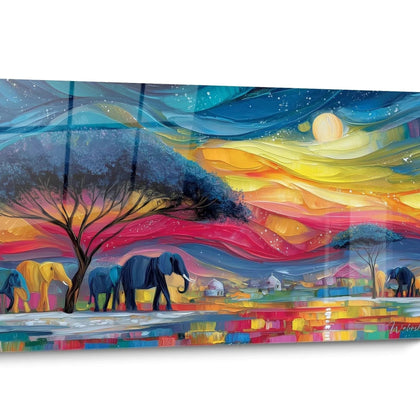 Africa Elephant Wall Art24
artworks
Africa Elephant Wall Art24
artworks
-
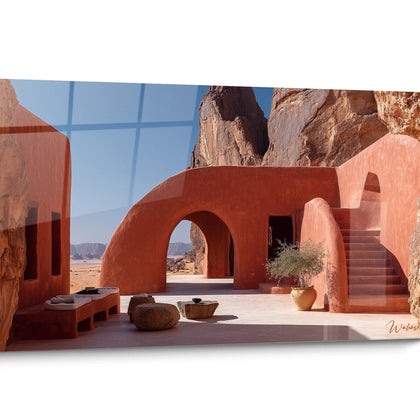 Africa Architecture Wall Art5
artworks
Africa Architecture Wall Art5
artworks
All about African Tribal Wall Art
- Presentation of Tribal Africa Artwork
- African Cultural Identity
- Tribal Visual Codes
- Architectural Integration
The tribal Africa artwork embodies the visual heritage of the ancestral civilizations of the African continent, translating monumental wall formats of the symbolic systems of the first peoples. These graphic creations transcribe the ritual markings, ceremonial scarifications and identity motifs used for millennia by the Dogon, Masai, Ashanti or Ndebele ethnic groups. Unlike landscape or animal representations, this artistic category focuses exclusively on codified human iconography: stylized ritual masks, sculpted profiles with sacred proportions, geometric compositions loaded with cosmogonic meanings. Investing in a large-scale tribal African artwork responds to a desire for deep cultural anchoring, particularly sought after in contemporary residential spaces seeking an authentic connection with universal anthropological roots. The imposing formats available today allow for total immersion in these ancestral graphic universes, radically transforming the spatial perception of modern environments.
Ethnographic Symbolism and Cultural Transmission of Tribal Motifs
The tribal Africa artwork constitutes a contemporary vector for preserving the graphic systems developed by traditional African societies over several millennia. Each visual element present in these wall compositions originates from specific initiation practices: concentric circular motifs recall the sacred drums used during the rites of passage to adulthood among the Bantu peoples, while vertical alignments of geometric symbols reproduce the distinctive scarifications identifying clan affiliation in Nilotic societies.
What ancestral codes are represented in African tribal artworks?
Stylized human representations systematically integrate the ritual proportions established by master sculptors: vertical elongation of the face evoking the connection to the celestial world, almond-shaped eyes symbolizing spiritual clairvoyance, reduced mouth indicating mastery of sacred speech. These aesthetic canons, far from being arbitrary, translate a complex cosmology where each part of the body embodies a metaphysical principle. Acquiring a monumental African tribal artwork physically installs these symbolic structures in the domestic space, creating a daily visual dialogue with these millennial wisdoms.
Ritual colorimetry at the service of identity expression
The color palette used in these wall creations never results from decorative chance but faithfully reproduces the traditional pigments invested with specific ritual meanings. Red ochre, extracted from ferruginous clays, universally symbolizes vital force and ancestral blood in Yoruba and Ashanti cultures. Kaolin white evokes spiritual purity and serves as mediation with the invisible world during initiations. Deep black, traditionally obtained by vegetable carbonization, represents terrestrial fertility and mystical introspection. The XXL formats currently offered considerably amplify the psychological impact of these codified color associations, transforming an ordinary wall into a surface of intense cultural evocation. For a complementary approach exploring contemporary geometries inspired by the continent, the universe of African abstract artwork offers fascinating modernist interpretations.
Ceremonial masks as a universal visual language
The depiction of traditional masks forms the core iconographic element of the Africa tribal painting, these ritual objects having always functioned as interfaces between the visible and invisible realms. Punu masks from Gabon, recognizable by their white complexion and raised scarifications, embody ancestral female spirits. Dan masks from Côte d'Ivoire, with their prominent tubular eyes, served as judges in community conflicts. Transposed into large-scale contemporary wall formats, these ritual faces maintain their original magnetic presence, creating focal points of intensity comparable to those of the traditional sacred spaces where they were originally displayed.
Geometric Grammar and Visual Architecture of Tribal Compositions
The spatial organization of an Africa tribal painting obeys compositional principles radically different from classical Western perspective. The structure favors hieratic frontality, positioning figures in an eternal timelessness rather than in a sequential narrative space. This visual approach finds its roots in the mural paintings of the Ndébélé dwellings in South Africa, where each geometric motif occupies a defined territory according to mathematical rules passed down exclusively between generations of women.
How do geometric motifs structure tribal space?
The repetitive triangulations present in these compositions are not mere ornamentation but reproduce kinship and marriage alliance systems governing lineage societies. A triangle pointing upwards traditionally represents the male principle and patrilineal authority, while its inverted version symbolizes female fertility and matrilineal transmission. Their alternation creates visual rhythms comparable to the polyrhythms of sacred percussion. On a panoramic format African tribal painting, these geometric oscillations generate a hypnotic optical dynamic, particularly suited to linear architectural spaces such as entrance hallways or the longitudinal walls of contemporary living rooms.
Symbolic stratification and multi-layered reading
Unlike Western compositions guiding the gaze towards a single focal point, the Africa tribal painting deploys a multiplicity of equivalent centers of attention, reflecting the decentralized structure of traditional villages. Each zone of the wall format constitutes an autonomous semantic universe while participating in the overall harmony of the ensemble. This organization recalls the Kente fabrics of Ghana, where each woven band carries a proverb or maxim while integrating into the general message of the textile. For residential spaces favoring visual openness and progressive contemplation, this stratification allows for renewed discovery with each observation, the gaze capturing new symbolic details according to the angle of approach and ambient lighting conditions.
Ritual symmetry versus organic asymmetry
Tribal compositions constantly play on the tension between cosmic order and earthly vitality. Some paintings favor strict axial symmetry, evoking the universal balance sought during harmonization ceremonies. Others adopt a controlled asymmetrical distribution, reflecting the unpredictability of the natural forces that rituals seek to tame. This compositional duality offers varied integration possibilities depending on the interior architecture: geometric minimalist spaces benefit from strict symmetry, while organic environments with irregular volumes resonate with asymmetrical compositions. Currently available large-scale wall formats allow for full exploitation of these structural variations, creating architectural dialogues impossible with standard formats.
Spatial Activation and Atmospheric Transformation through Tribal Iconography
The installation of a monumental Africa tribal painting provokes a radical metamorphosis of spatial perception, far beyond simple decorative addition. These culturally charged compositions function as atmosphere generators, psychologically densifying the space they occupy. Interior designers specializing in high-end residential environments strategically use these wall pieces to create zones of intensive contemplation, counterbalancing the visual agitation of contemporary living spaces saturated with screens and digital information.
Which residential spaces particularly value African tribal tribal art?
Entrance halls with generous vertical volumes are the ideal location for these compositions, immediately creating a strong identity marker upon entering. The verticality characteristic of stylized tribal figures naturally amplifies the perception of ceiling height, particularly effective in lofts or Haussmann apartments. Libraries and reading rooms also benefit remarkably from this dense cultural presence, the ancestral iconography creating an environment conducive to introspection and deep concentration, unlike usual superficial stimulations.
Material dialogue with contemporary architectural textures
The African tribal painting establishes particularly expressive material contrasts with the dominant smooth surfaces of modern architecture. Facing polished concrete plaster, large-format tiles, or lacquered panels, the graphic expressiveness of tribal motifs introduces a welcome visual roughness. This textural opposition does not create an aesthetic conflict but generates a productive tension, considerably enriching the sensory complexity of the space. Residential environments combining exposed natural stone and raw concrete find in these wall compositions a cultural bridge between raw mineral and symbolic sophistication, evoking prehistoric cave paintings reinterpreted by contemporary consciousness.
Light management and progressive revelation of motifs
Lighting is a determining parameter in the complete visual activation of a large-format Africa tribal painting. Unlike photographic works requiring uniform light, these graphic compositions reveal different symbolic depths depending on the orientation and light intensity. Side grazing light accentuates the graphic dimension of contours and color separations, while diffused frontal light unifies the whole in a totalizing presence. Programmable lighting systems allow the perception of the work to evolve throughout the day, creating an atmospheric variability comparable to the ritual transformations performed during traditional ceremonies stretching from dusk to dawn.
Why choose an Africa tribal painting for a contemporary interior?
Integrating an Africa tribal painting into a modern residential environment responds to a growing need for authentic cultural anchoring in the face of globalized aesthetic standardization. These compositions offer an anthropological depth absent from industrial decorative productions, establishing a tangible connection with millennial systems of thought still relevant to question our relationship with the sacred, community and identity.
What size to prioritize for an African tribal painting in a living room?
For main reception areas, formats exceeding 120 centimeters in width allow for complete visual immersion, creating a true cultural portal rather than a simple decorative element. These monumental dimensions respect the original scale of mural frescoes and ceremonial masks from which these compositions are inspired, restoring their initial psychological impact designed to impress and transform collective consciousness during community rituals.
How to combine an Africa tribal painting with modern furniture?
The stylistic contrast between ancestral iconography and contemporary design creates a productive aesthetic dialectic. The clean lines of Scandinavian or minimalist furniture offer a neutral setting that enhances the symbolic density of tribal motifs, while natural materials such as solid oak or raw linen establish material correspondences with the organic universe of African traditional cultures. This combination avoids a museum-like effect while maintaining the cultural integrity of each element.
Further reading


