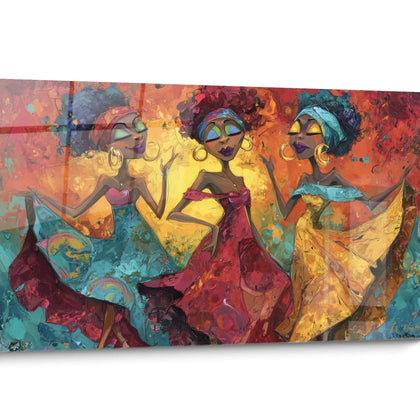
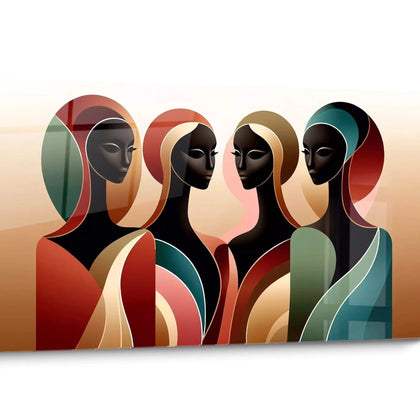
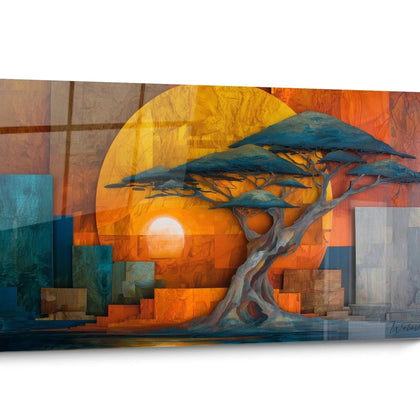
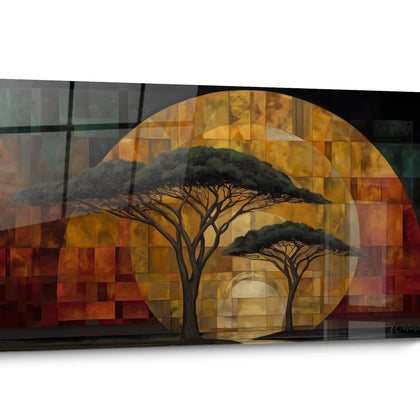
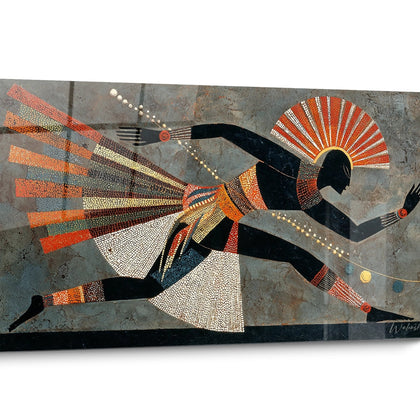
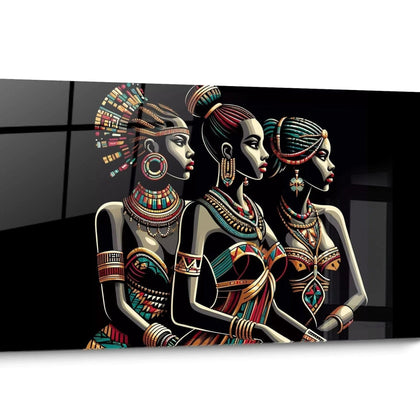
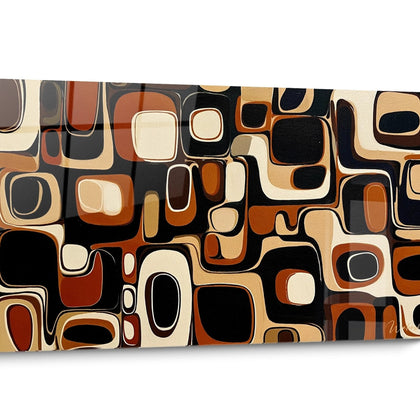
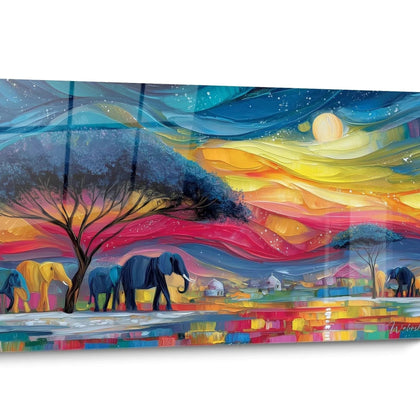
The black and white Africa wall art transforms ethnic aesthetics into a minimalist mural masterpiece, where African cultural richness expresses itself through radical chromatic contrast. This monochrome approach elevates tribal motifs, wild fauna silhouettes, and continental landscapes by creating pure visual intensity, freed from any colorful distraction. The absence of hues allows geometric forms, organic textures, and graphic compositions to reveal their raw narrative power, transforming each artwork into an audacious artistic statement for modern interiors seeking refined authenticity.
African Graphic Expression in Chiaroscuro
The black and white Africa wall art harnesses the power of contrast to magnify Africa's visual heritage. Geometric motifs inspired by Kente, Bogolan, or Adinkra textiles gain new dimension when translated into absolute chromatic duality. This reduction to the essential creates instant legibility of ancestral symbols, where each line, each curve becomes an autonomous narrative element.
Which African motifs work best in monochrome?
Simplified tribal representations, savanna animal silhouettes, and stylized ceremonial masks find their maximum expression in this restricted palette. An African elephant rendered in deep black against an immaculate background acquires monumental presence, its body mass becoming wall sculpture. Zebras, naturally striped, emerge as obvious subjects, their natural camouflage transformed into a hypnotic graphic composition that plays with visual perception.
The architectural dimension of radical contrast
In contemporary spaces with white or gray walls, a large-format black and white Africa wall art functions as a structuring visual anchor. The horizontal panoramic format (150x80 cm or larger) suits landscape compositions particularly well, where Saharan dunes and horizons create rhythmic horizontal bands. Vertical format privileges representations of majestic baobabs or tribal portraits, whose verticality dialogues with high-ceiling room architecture.
Alliance with modern artistic movements
This monochrome aesthetic naturally bridges African tradition and movements like Scandinavian minimalism or art deco. A tableau depicting African women with simplified regalia rendered as black silhouettes integrates seamlessly into japandi interiors, where simplicity reigns. For those exploring abstract compositions of African inspiration, the monochrome version offers visual coherence facilitating multiple artworks without chromatic saturation.
Refined Ethnic Decor for Contemporary Interiors
Incorporating black and white Africa wall art meets contemporary decorative standards that value cultural authenticity without excessive folklorization. This approach allows expressing attachment to African aesthetics in professional or residential contexts demanding visual restraint. Architecture firms, concept boutiques, and urban lofts increasingly adopt this formula that reconciles strong cultural identity with chromatic neutrality.
How to create a monochrome African-themed wall gallery?
Multi-tableau black and white composition enables deploying an extended visual narrative without cacophony. A vertical trilogy depicting different ethnicities (Maasai, Himba, Zulu) as stylized portraits creates elegant anthropological narration. Size alternation (one large central format 120x80 cm framed by two 60x40 cm formats) generates dynamic visual rhythm while maintaining African thematic unity.
Complementary material and textural associations
Black and white Africa wall art dialogues particularly well with raw natural materials: driftwood, woven plant fibers, matte black artisanal ceramics. In a living room, the monochrome artwork looming above solid teak furniture creates visual stratification where graphic bidimensionality contrasts with furniture's organic three-dimensionality. Ecru linen or hand-woven cotton textiles complete this restricted palette without compromising it.
Which spaces benefit most from this restrained ethnic decor?
Bedrooms seeking zen ambiance find soothing spirituality in these refined African representations. A triptych of stylized baobabs above the bed establishes symbolic connection with natural cycles. Home offices gain character with a stylized African continent map in black-on-white graphic treatment, asserting cultural identity without disrupting concentration. Narrow entryways brighten visually with a vertical format (40x120 cm) depicting an elegant giraffe, creating illusion of increased height.
Seasonal evolution of monochrome perception
Unlike colored artworks whose impact varies with natural light, the black and white Africa wall art maintains constant visual power. In winter, when luminosity decreases, radical contrast compensates for ambient darkening. In summer, the chromatic coolness of white balances excessive light warmth, creating visual breathing sensation in the space.
Cultural Symbolism and African Wall Staging
Choosing black and white Africa wall art transcends simple decoration to become affirmation of aesthetic philosophy. Chromatic reduction amplifies the symbolic charge of depicted elements: each savanna animal carries significance (lion for leadership, elephant for ancestral wisdom, eagle for strategic vision), each tribal motif conveys millennial communal values.
Dramatic staging through targeted lighting
Installing adjustable LED spots at neutral color temperature (4000K) accentuates the inherent theatricality of African monochrome. A beam directed at 30-degree angle on a tableau depicting a tribal mask creates micro-shadows enriching perception of graphic reliefs. For XXL formats (200x100 cm and larger), indirect lighting through LED strips concealed behind the frame generates luminous halo visually detaching the artwork from the wall, creating near-sculptural presence.
What symbolism do African animals convey in black and white?
The rhinoceros rendered as massive silhouette evokes resilience and endangered species protection, transforming the artwork into silent ecological commitment. Flocks of migratory birds crossing graphic sky symbolize freedom of movement and seasonal cycles. An elephant herd in minimalist treatment reminds of matriarchal social structures and intergenerational transmission, themes particularly relevant for multigenerational family spaces.
Visual narration through thematic assembly
Creating a monochrome "Africa" gallery wall enables telling a complete geographic or cultural story. A horizontal sequence of five tableaus (each 50x50 cm) can illustrate landscape evolution from Saharan desert to equatorial forests, creating continental visual journey. Alternation between animal representations, ethnic portraits, and abstract landscapes generates captivating narrative rhythm without aesthetic rupture.
How does format influence emotional impact?
Square formats (100x100 cm) suit centered compositions like Adinkra-inspired mandalas or frontal African feline portraits, creating meditative visual stability. Extreme panoramics (180x60 cm) excel in depicting animal migrations or infinite horizons, establishing horizontal dynamic that visually widens space. Narrow vertical formats (30x90 cm) in series of three create repetitive architectural rhythm evoking traditional case columns.
Is black and white Africa wall art suitable for small spaces?
Absolutely. In a studio or reduced space, a medium format (80x60 cm) in monochrome creates powerful focal point without visually burdening the room. Black and white contrast optically enlarges space by creating perceptual depth, unlike saturated colors that can visually close down small volumes.
Can you mix multiple African styles in black and white?
The monochrome palette naturally unifies diverse African inspirations. A tableau of geometric Berber motifs harmoniously adjoins sub-Saharan African mask representations, chromatic unity creating visual coherence despite distinct cultural origins. This approach enables panAfrican exploration without chaotic eclecticism.
What ambiance does a large black and white Africa wall art create in a living room?
An imposing format (150x100 cm or larger) establishes contemporary art gallery ambiance, transforming the living room into an assumed cultural space. Monochrome brings timeless sophistication traversing decorative trends, guaranteeing lasting aesthetic relevance. The artwork becomes conversation catalyst, starting point for discussions on art, culture, and identity engagement.


 Elegant African Woman Painting - Golden Goddess - African Culture Edition213,90 €
 African Woman Profile Painting - Ancestral Heritage - African Face Edition233,90 €
 Modern African Woman Painting - Golden Elegance - African Face Edition233,90 €
 Contemplative African Woman Painting - Golden Elegance - African Face Edition213,90 €
 Acacia Tree Witness of Nomadic Seasons - African Landscape Edition233,90 €
 Elephant Spirit Animal Painting - tribal art edition233,90 €
 Buffalo Guardian of the Ancestors Painting - Tribal Art Edition233,90 €
 African Wall Art Purple Mask - africa edition233,90 €
 Black African Abstraction Wall Art Whispers of the Void - Africa Edition233,90 €
 African Women Painting Golden Sisters - Africa Edition233,90 €
 African Art Mirror of Lands - africa edition213,90 €
 African artwork Master of winds - africa edition213,90 €
 African Wall Art Modern Vision - Africa Edition213,90 €
 African Queen of Silence Wall Art - Africa Edition213,90 €
 African Puzzle Identity Wall Art - Africa Edition213,90 €