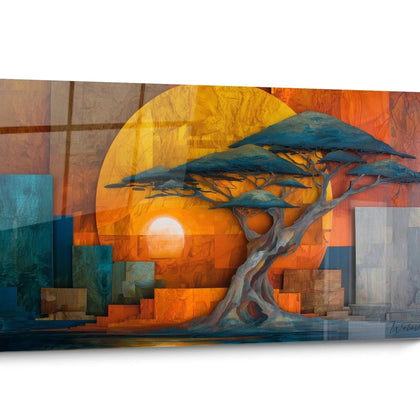
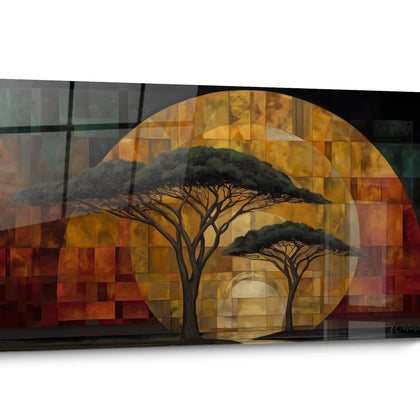
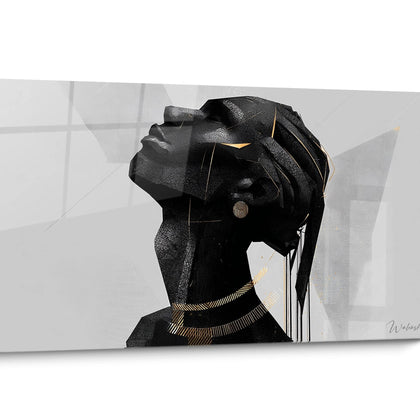
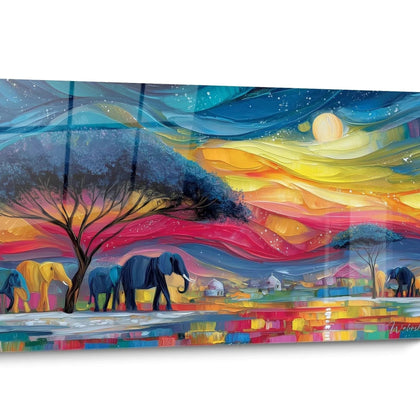
The African architecture wall art celebrates the extraordinary diversity of constructions across the African continent, from Sudanese mosques to Fulani dwellings, passing through Dogon villages and Swahili palaces. This artistic mural expression captures the bold geometric lines, ancestral materials, and organic forms that characterize traditional African housing. Discover how these monumental architectural representations transform your living spaces into true galleries celebrating African constructive genius, while engaging in a contemporary decorative approach that values the built heritage of the continent.
African Architecture as a Major Decorative Statement
The African architecture wall art stands as a powerful aesthetic declaration in contemporary interiors seeking a profound connection with millennia-old constructive traditions. Representations of emblematic structures such as millet granaries, banco mosques, or circular dwellings bring an incomparable cultural dimension that transcends simple wall decoration.
Why choose an African architectural representation for your interior?
Traditional African architecture offers exceptional visual richness: complex geometric patterns of Hausa facades, stratification of Dogon terraces, sensual curves of Nubian constructions. These structural elements translate a philosophy of building in harmony with the environment, using local materials such as raw earth, banco, or rosewood. A large-scale mural capturing these architectural marvels becomes a narrative focal point that tells the story of African civilizations through their buildings.
The most sought-after African architectural styles in wall decoration
Certain architectural typologies generate particular enthusiasm: the Sahelian mosques with characteristic pegs, fortified Berber villages of the Maghreb, the oblong Musgum cases in Cameroon with their relief patterns, or the royal palaces of the Benin kingdom. These architectures present instantly recognizable silhouettes that create striking visual compositions. For a more conceptual approach, also explore the abstract African wall art which reinterprets these architectural forms in contemporary visual grammar.
Creating dialogues between African built heritage and modern design
Integrating an African architectural representation into a contemporary space generates a fascinating creative tension. The vertical lines of Sudanese minarets contrast beautifully with refined Scandinavian furniture, while the fractal patterns of circular villages bring organic complexity to minimalist environments. This juxtaposition simultaneously values ancestral African constructive innovation and contemporary aesthetics, creating culturally stratified and visually rich interiors.
The impact of monumental formats on spatial perception
A large-scale African architecture wall art radically transforms the experience of a space. The monumentality of representations - whether the Great Mosque of Djenné or multi-story granaries - requires a generous scale to restore their original majesty. These imposing formats create a visual window onto African architectural landscapes, establishing an illusory depth that perceptually enlarges rooms while culturally anchoring the domestic environment.
Typology of African Constructions and Their Artistic Translation
How does African vernacular architecture inspire mural creations?
African vernacular architecture reveals remarkable adaptive ingenuity according to climate zones and available resources. Cylindrical cases with conical roofs in savannas, rectangular rammed-earth dwellings in Sahelian zones, or stilt structures in humid regions constitute distinct typologies. An African architecture wall art capturing these morphological variations offers fascinating anthropological insight into habitat strategies developed across the continent.
African architectural decorative elements translated into visual composition
Beyond the structures themselves, African architectural ornamentation presents extraordinary richness: mural frescoes of Kassena cases with symbolic motifs, bas-reliefs of Yoruba royal palaces, decorative ironwork of Zanzibari doors. These ornamental details, when magnified in an imposing mural format, reveal the aesthetic sophistication of African constructive cultures. The color palettes - ochres of terracotta, whites of lime, blacks of charcoal decor - create natural harmonies particularly suited to interiors seeking material authenticity.
Sacred and monumental architecture: temples, mosques, and palaces
African religious and royal edifices offer spectacular architectural compositions ideal for mural representations. The Great Mosque of Djenné in Mali, with its facade bristling with beams and massive towers, constitutes a global architectural icon. The rock-hewn churches of Lalibela in Ethiopia present fascinating inverted monumentality. The palaces of Abomey in Benin, with their successive courtyards and narrative bas-reliefs, visually tell dynastic history. An African architecture wall art capturing these sacred structures brings profound spiritual and historical dimension.
Villages and urban ensembles: collective composition
Some architectural representations privilege the overall view rather than the isolated building. Dogon villages clinging to the Bandiagara cliffs, with their complex vertical stratification, create visual compositions of inexhaustible richness. The Berber ksour of southern Morocco, with their integrated defensive architectures within mineral landscape, offer monumental panoramas. These traditional African urban views generate mural artworks particularly suited to large spaces requiring sustained visual complexity, such as entrance halls, professional spaces, or primary living room walls.
Strategic Integration and Space Enhancement through African Architecture
In which environments does African architecture wall art produce the most impact?
African architectural representations thrive particularly in specific contexts. Professional spaces - architecture firms, travel agencies, cultural research offices - benefit from the informative and inspiring dimension of these works. Residences valorizing contemporary ethnic design or Afro-modernism find in these African architecture wall arts coherent cultural anchoring. Thematic hotels and restaurants use these representations to create authentic cultural immersion, far beyond superficial decorative folklore.
Creating visual paths with African architectural lines
Pronounced vertical structures of many African architectures - minarets, elevated granaries, defensive towers - generate ascending visual dynamics that naturally direct the gaze. These vertical compositions effectively balance dominant horizontal spaces. Conversely, sprawling villages or case alignments create horizontal rhythms that amplify width perception. Strategic exploitation of these architectural orientations allows visually correcting inadequate spatial proportions while introducing substantial cultural richness.
Decorative associations enhancing African architectural heritage
A monumental artwork representing African architecture harmonizes remarkably with certain complementary decorative elements. Traditional African textiles - Malian bogolans, Ghanaian kentes, Nigerian indigos - create coherent cultural echoes. Architectural basketry - Fulani baskets, woven mats - recalls traditional constructive materials. Solid wood sculptures, utilitarian ceramics, or traditional instruments establish material dialogue with architectural representations. This decorative stratification constructs immersive cultural narration that transcends simple accumulation of ethnic objects.
Lighting and highlighting architectural details
African architecture representations often present characteristic play of shadows and light - reliefs of banco facades creating chromatic modulations according to sunlight, marked contrasts of desert architectures under overhead light. To restore this dimensionality, lateral directed lighting reveals represented textures and depths. Large compositions particularly benefit from graduated illumination guiding the gaze through different architectural planes, from detailed foreground to contextual backgrounds, thereby maximizing the narrative depth of the work.
Where to place African architecture wall art in a contemporary living room?
Prioritize the main wall visible from the entrance, ideally facing the sofa or perpendicular to windows to avoid reflections. The central height of the artwork should correspond to seated eye level, creating natural visual connection. In open spaces, position the work as a transition element between distinct functional zones.
Does African architecture wall art suit a professional office?
Absolutely, particularly in creative, cultural, or international fields. These representations project an image of cultural openness, intellectual curiosity, and appreciation of world heritage. They also generate memorable conversation points with clients and partners, while creating a visually stimulating environment for creative thinking.
How to combine multiple African architecture artworks without visual overload?
Maintain chromatic or stylistic coherence between works - same geographic region, similar palette, or unified artistic treatment. Space pieces generously to allow visual breathing. Alternatively, create a structured gallery composition with a dominant central element surrounded by smaller complementary pieces, respecting visual weight principles to avoid spatial fragmentation.


 Berber Architecture Painting - Traditional Tunisian Terrace - African Landscapes Edition233,90 €
 Traditional Tunisian Architecture Painting - Berber Village with Ochre Domes - African Landscapes Edition213,90 €
 Desert Architecture Painting - Red Stone Refuge - African Landscapes Edition233,90 €
 Wall Painting Architecture Passage of Souls - edition Africa233,90 €
 Architecture Wall Art Reflections of the Orient - Africa Edition213,90 €