


Colorful Cane Corso Dog Canvas Art
The Painting Dog Cane Corso Colorful celebrates the majesty of this iconic Italian breed through an explosion of vibrant colors. This artistic collection captures the power, elegance, and intense gaze of the Cane Corso in modern and bold compositions. Perfect for dog lovers and enthusiasts of contemporary canine wall decoration, it brings a unique artistic touch to your interior. Each work sublimates the noble and protective character of this Italian molossus in pop art version.
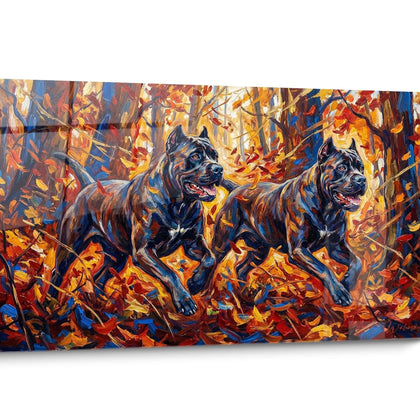
 Two Cane Corso Running Through Autumn Foliage - Wild Momentum - Cane Corso Edition273,90 €
 Black Dog in Swirling Lavender Field Canvas - Purple Reverie - Cane Corso Edition273,90 €
 Cane Corso Canvas with Colorful Floral Motifs - Floral Explosion - Cane Corso Edition273,90 €
 Cosmic Dog Painting with Purple and Blue Colors - Galactic Vision - Cane Corso Edition228,90 €
Explore further
In Colorful Cane Corso Dog Canvas Art
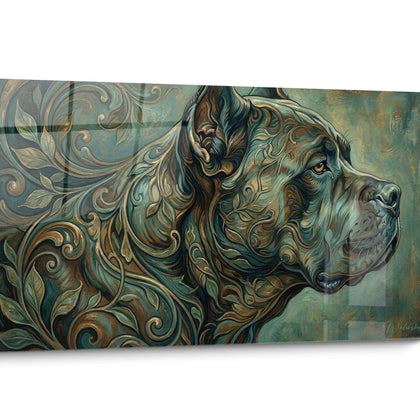


All about Colorful Cane Corso Dog Canvas Art
- Presentation Colorful Cane Corso Painting
- Visual Chromotherapy
- Molossoid Artistic Expression
- Large Format Decorative Impact
Colorful Cane Corso dog paintings transform the natural power of the Italian molossoid into a true chromatic wall symphony. These large-format artistic creations capture the intensity of the gaze and the imposing musculature of this ancestral guardian through saturated palettes and bold contrasts. Unlike conventional representations, these works exploit vibrant hues - electric blues, incandescent oranges, deep purples - which magnify every anatomical detail of the Cane Corso. The available XXL formats, frequently reaching 120 to 180 cm, allow for total visual immersion where each chromatic nuance reveals the fierce nobility of this protective breed.
Chromatic Energy at the Service of Canine Power
The colorful Cane Corso painting exploits the psychology of color to amplify the intimidating presence of this Italian molossoid. Contemporary artists use chromatic fusions - fuchsia pink on a cyan background, lemon yellow contrasting with Byzantine purples - creating a visual tension that reflects the protective and vigilant temperament of the breed. This polychrome approach transforms the characteristic wrinkles of the forehead into luminous reliefs, while the drooping lips become architectural curves highlighted by orange or purple gradients.
What color combinations enhance the morphology of the Cane Corso?
Complementary chromatic triptychs - cobalt blue/copper orange, emerald green/magenta - accentuate the massive build and cubic head of the Cane Corso. Large-dimension panoramic color formats allow the coat to be fragmented into distinct chromatic zones: chest in warm golden tones, muzzle in cool azure hues, creating a striking visual map. This color segmentation naturally guides the gaze towards the key expressive points - piercing eyes, powerful jaw, cropped ears - while maintaining anatomical unity.
Color saturation as an amplifier of presence
A Cane Corso painting with saturated colors acts as an energy catalyst in contemporary living spaces. Ultra-vivid pigments - electric turquoise, vermilion red, cadmium yellow - generate an autonomous luminosity that instantly energizes an entrance hall or a minimalist living room. This chromatic intensity compensates for the architectural sobriety of modern interiors, where the painting becomes an absolute focal point. Cane Corso owners seeking to visually celebrate their companion particularly appreciate these rainbow versions that transform the traditional black, gray or fawn coat into a multicolored explosion. To explore different aesthetics, the modern Cane Corso painting collection offers complementary stylistic variations.
Chromatic harmonization with the architectural environment
Installing a large-format colorful Cane Corso painting requires reverse chromatic reflection: rather than harmonizing, the goal is to create a controlled contrast. On anthracite or pure white walls, explosions of colors - rainbow gradients, fluorescent shades - create a calculated visual shock that simultaneously enhances the artwork and the architecture. Industrial spaces with metal beams or exposed brick particularly benefit from these color injections that humanize the structural coldness. Informed collectors use indirect lighting to progressively reveal the chromatic layers throughout the day.
The Artistic Expression of the Molossoid through Color
Artists specializing in paintings dog Cane Corso colored develop innovative mixed techniques where the tradition of canine portraiture meets chromatic abstraction. Some creations superimpose layers of translucent hues - pink lacquers, bluish glazes - creating an optical depth that simulates the texture of the Cane Corso's short coat. Others favor bold, pop art-style blocks, transforming the molossoid into a contemporary icon with clean lines and vibrant monochrome fillings.
How does the colorful palette reveal the character of the Cane Corso?
Cool shades - glacial blues, deep purples, spruce greens - convey the constant vigilance and legendary composure of the Cane Corso in the face of danger. Conversely, warm palettes - carmine reds, solar oranges, honey yellows - express the passionate loyalty and tenderness that this guardian reserves for his family. Bichrome works combining cold and warm tones on the same composition capture this behavioral duality: protective ferocity towards strangers, overflowing affection towards loved ones. Vertical formats accentuate the imposing stature, while panoramic horizontal formats emphasize the breadth of the chest.
Polychromatic artistic techniques applied to the Cane Corso
Contemporary creations use dripping chromatique, where multicolored drips run through the portrait of the Cane Corso, symbolizing the raw energy and contained power of the breed. Other artists adopt the technique of geometric color blocking, deconstructing the anatomy into polygonal facets with contrasting colors - one ear in cyan, one cheek in magenta, one eye rimmed in yellow - creating a cubist vision of the molossoid. These unconventional approaches appeal to lovers of contemporary art seeking to combine canine passion with avant-garde aesthetics. The painting collection dog Cane Corso portrait complements this offering with traditional figurative interpretations.
The symbolism of colors in the universe of the Cane Corso
The chromatic choice of a colorful Cane Corso painting conveys precise subliminal messages. The dominant red evokes the Roman warrior heritage of the Canis Pugnax, a direct ancestor of the Cane Corso used in the arenas. Deep blue recalls the aristocratic nobility of the Sicilian owners who preserved the breed in the 19th century. Rainbow palettes celebrate the diversity of natural coats - black, lead gray, fawn, brindle - magnifying them to visual hyperbole. This metaphorical approach transforms a simple decorative portrait into a visual manifesto celebrating the millennial history of this Italian protector. For a more luxurious aesthetic, explore the paintings dog Cane Corso golden with metallic finishes.
Visual and Decorative Impact of Monumental Color Format
Acquiring a painting dog Cane Corso colored of large dimension constitutes a structuring decorative investment for contemporary residential spaces. Formats exceeding 150 cm create a wall presence comparable to a virtual window opening onto a parallel chromatic universe. In an industrial loft with cathedral-like volumes, these monumental works function as visual pillars that anchor the different functional zones - living room, dining room, office space - without physical partitions.
Why choose an XXL format for a colorful Cane Corso painting?
The imposing dimensions - 120x180 cm or larger - allow for exceptional definition of the Cane Corso's anatomical details: each furrowed brow becomes a colorful canyon, each mustache hair transforms into a precise chromatic line, each pupil reflection captures miniature galaxies. This monumental scale fully justifies the investment for Cane Corso owners seeking to immortalize the majesty of their companion. Visitors experience a visual confrontation similar to a real encounter with this 50 kg molossoid, reproducing the characteristic intimidating presence effect of the breed.
Spatial arrangement around a monumental colorful artwork
The installation of a polychrome Cane Corso painting in a large format dictates the complete organization of the surrounding space. Sofas and armchairs naturally orient themselves towards the artwork, creating a domestic art gallery configuration. The dominant colors of the painting - electric blues, saturated oranges - can be echoed in touches in cushions, rugs or adjacent decorative objects, creating subtle chromatic resonances. This inverted design approach, where art guides the layout rather than the other way around, characterizes avant-garde interiors. To diversify your canine collection, consult the entire Cane Corso dog painting range, bringing together all stylistic variations.
Heritage enhancement and decorative investment
Colorful, large-format Cane Corso paintings signed by emerging artists constitute lasting heritage acquisitions. Unlike ephemeral decorative trends, these works capitalize on two enduring values: the growing popularity of the Cane Corso as a premium companion breed, and the timeless appeal of animal portraiture in the history of art. Discerning collectors particularly seek limited edition, numbered series where each copy presents unique chromatic variations. This uniqueness guarantees potential appreciation in the secondary market, particularly for pieces combining signatures of recognized artists and exceptional dimensions. Ultra-wide panoramic formats remain particularly sought after for commercial spaces - veterinary clinics, premium dog kennels, exhibition halls - where they instantly communicate expertise and passion. The realistic Cane Corso dog painting collection offers an alternative for lovers of photographic precision.
What is the best orientation for a colorful, large-format Cane Corso painting?
Prefer a wall perpendicular to the main windows to avoid direct reflections while benefiting from lateral natural lighting that reveals the chromatic nuances. Vertical formats are suitable for narrow spaces such as wide hallways or room corners, while horizontal panoramas are best placed above long sofas or buffets.
How to maintain a large-dimension, colorful Cane Corso dog painting?
A monthly dusting with a dry microfiber cloth is sufficient for smooth surfaces. Avoid any chemical product that could alter the saturated pigments. For formats exceeding 150 cm, check the wall fixings annually, the significant weight requiring suitable heavy-duty anchors, particularly on plasterboard partitions.
Can multiple colorful Cane Corso paintings be combined in the same room?
Triptych or diptych compositions work perfectly if they share chromatic consistency - even the same base palette with tonal variations. Avoid overloading: a striking, colorful large format is generally sufficient as a unique focal point, complemented eventually by more discreet monochrome works in the peripheral areas to create a clear visual hierarchy.
Further reading
Our articles on this topic
- Dog Lover Gift Idea: Give an Original Decorative Painting That Melts Hearts
- Gift idea: Australian Cattle Dog painting for a devoted owner
- Which wall art to choose for a keeshond owner
- Large cane corso painting for a professional office: a sizing guide
- Colorful Irish Wolfhound painting: the perfect gift for a dog lover
- Corgi Painting: Which Room to Choose for a Cheerful Decor?
L'art qui suscite l'envie
Maison belge d'art mural grand format
14 jourspour changer d'avis*
Protection Walenskyincluse
Fabriquéen Italie
FormatXXL
Kit de fixationtoujours fourni
* Hors tableaux personnalisés et tailles personnalisées


