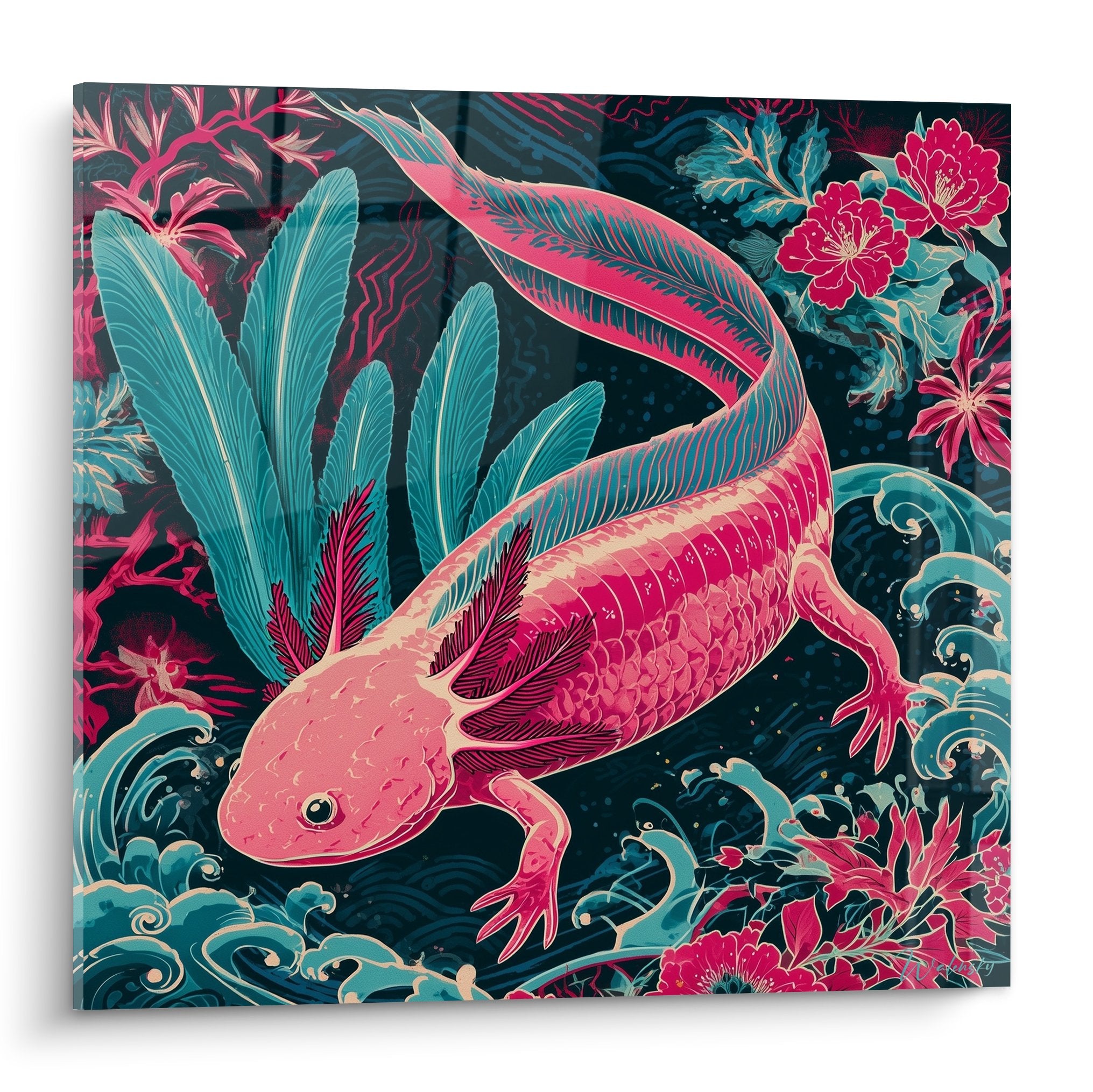
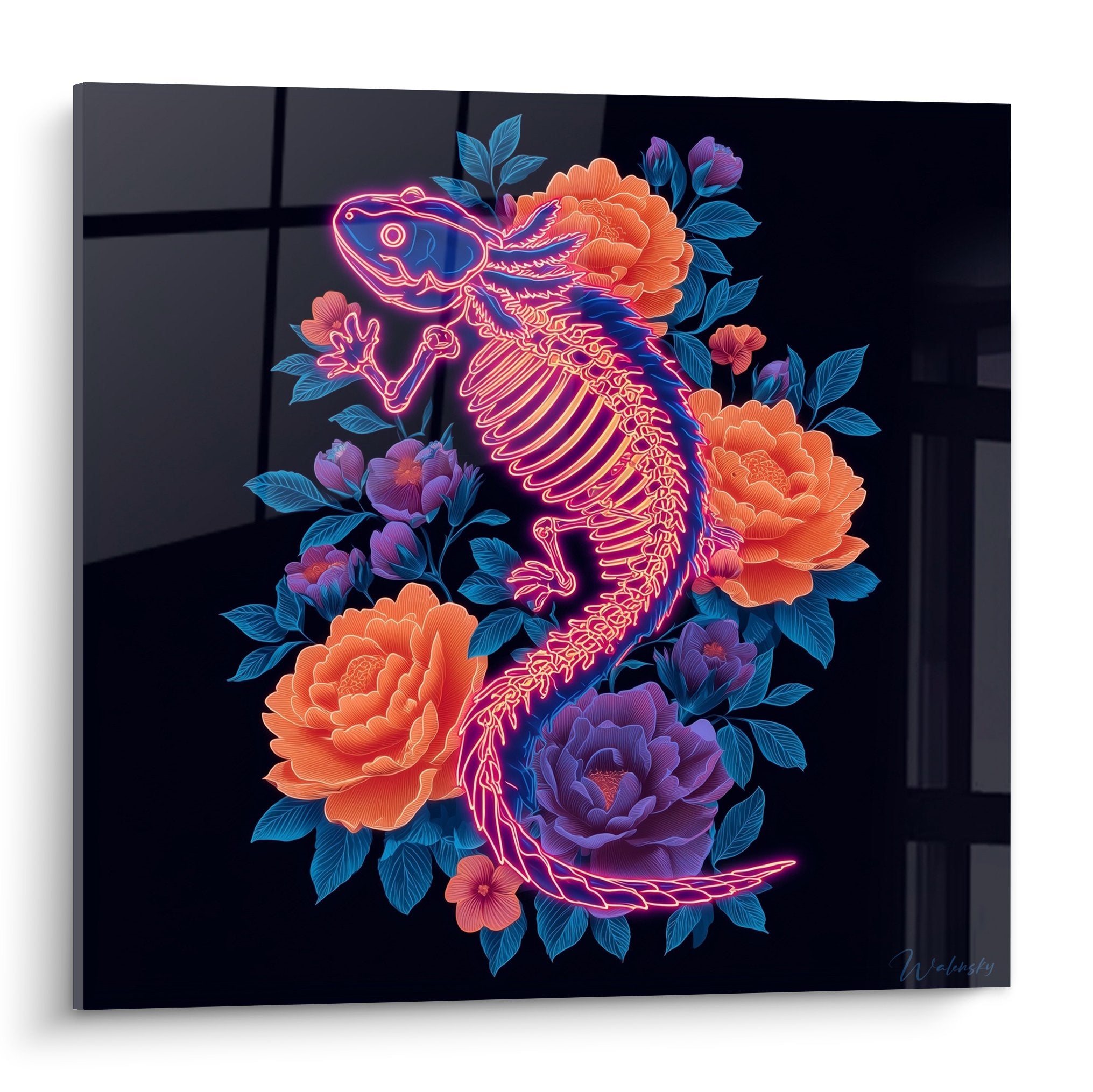
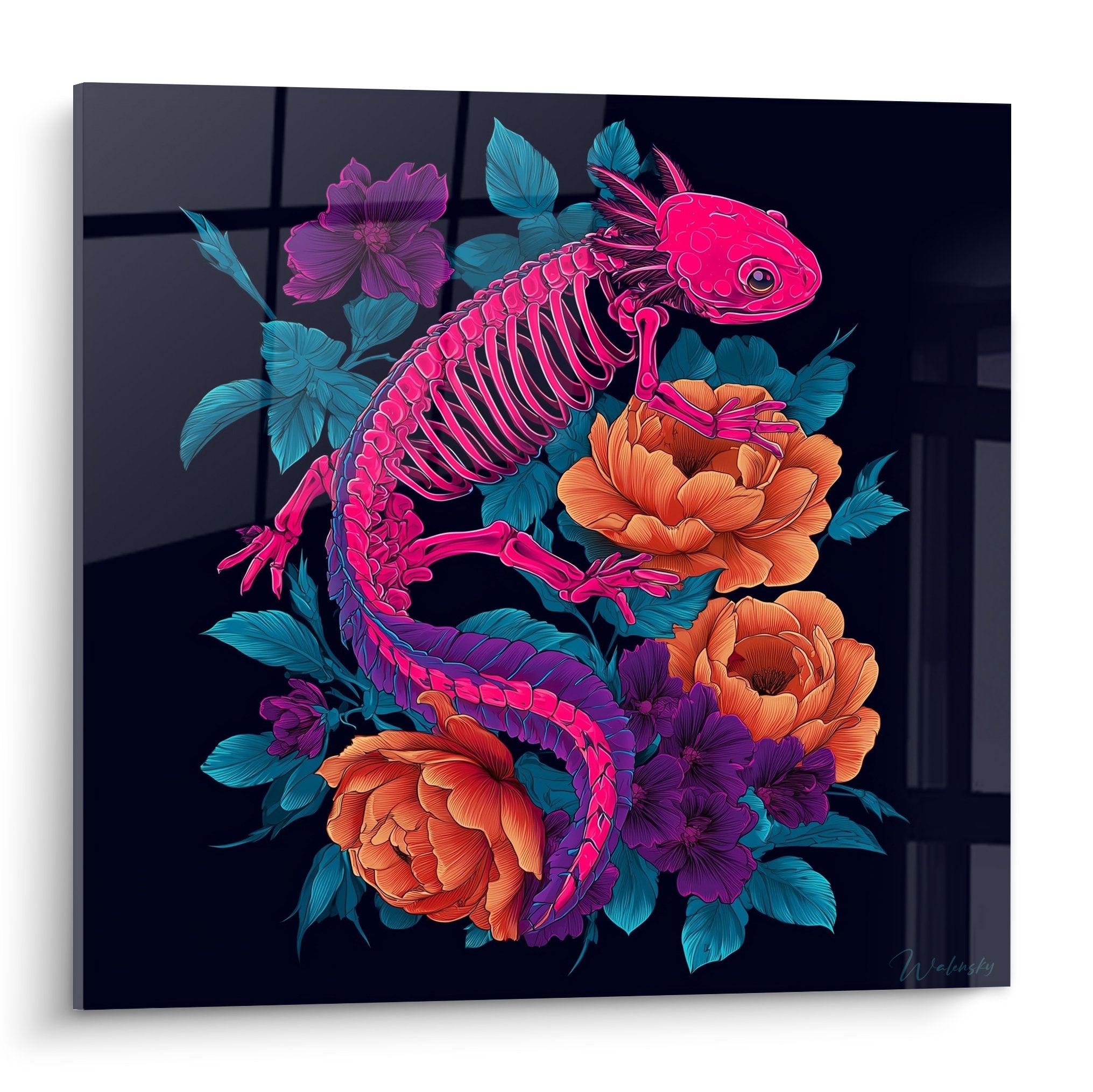
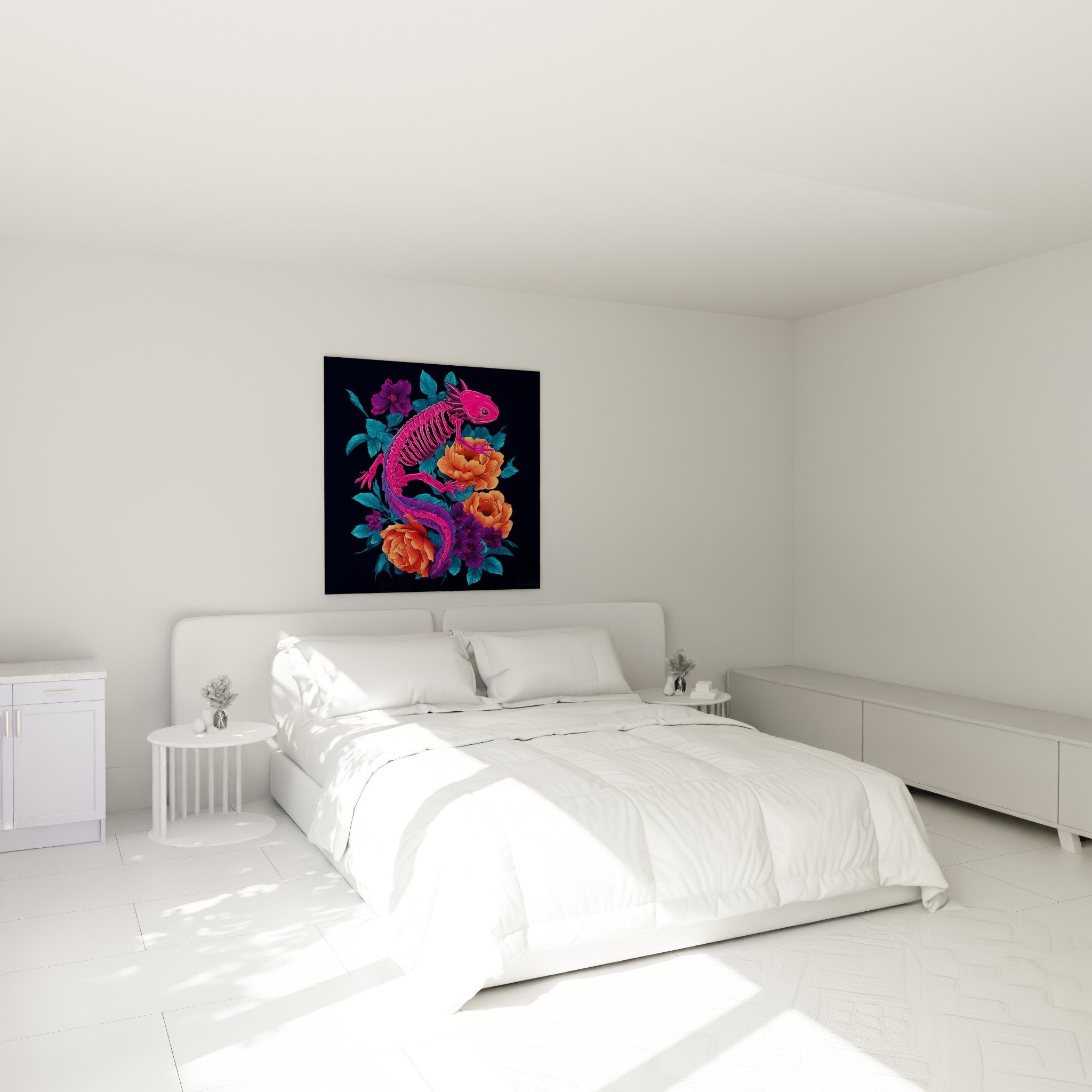
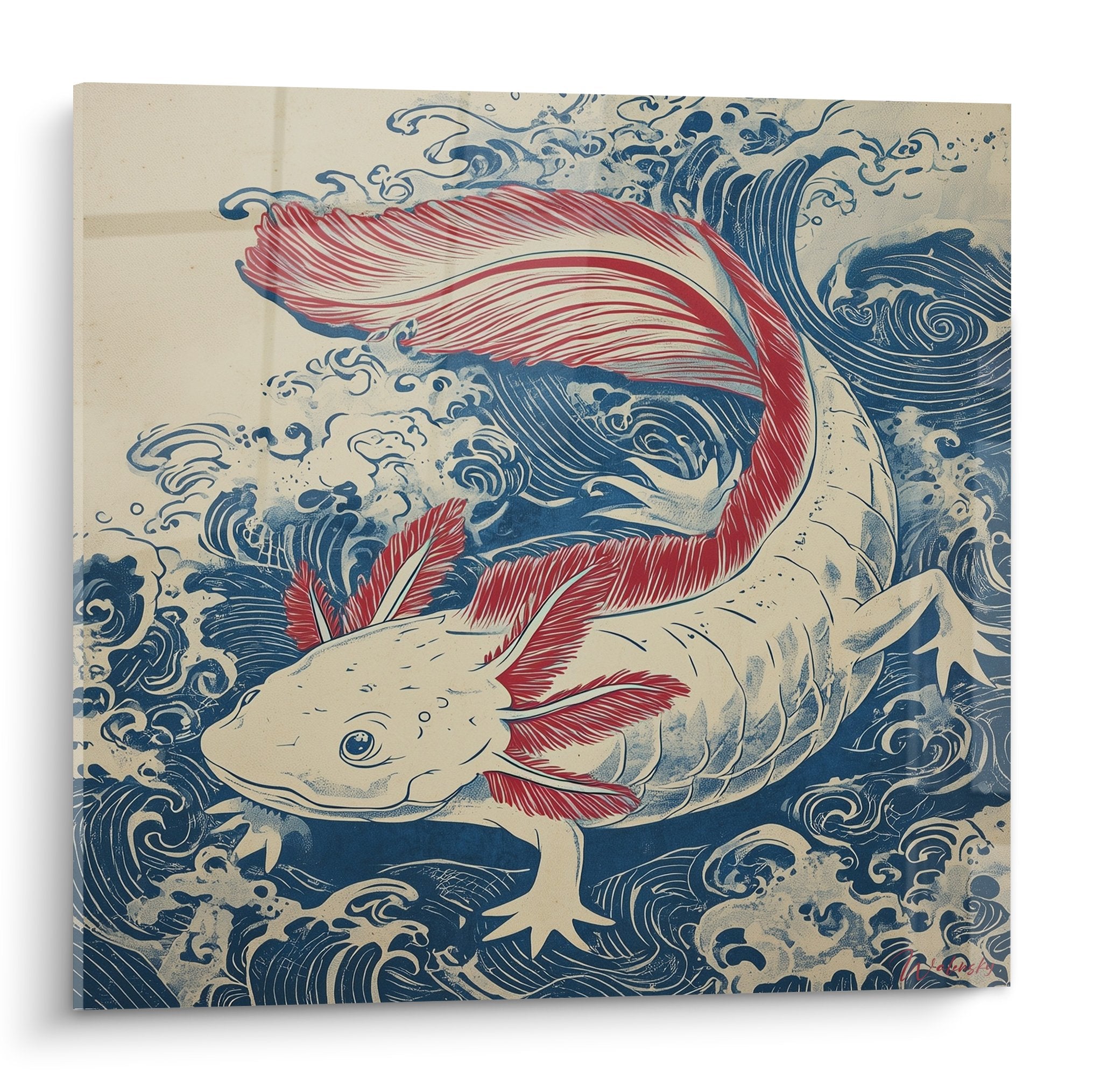
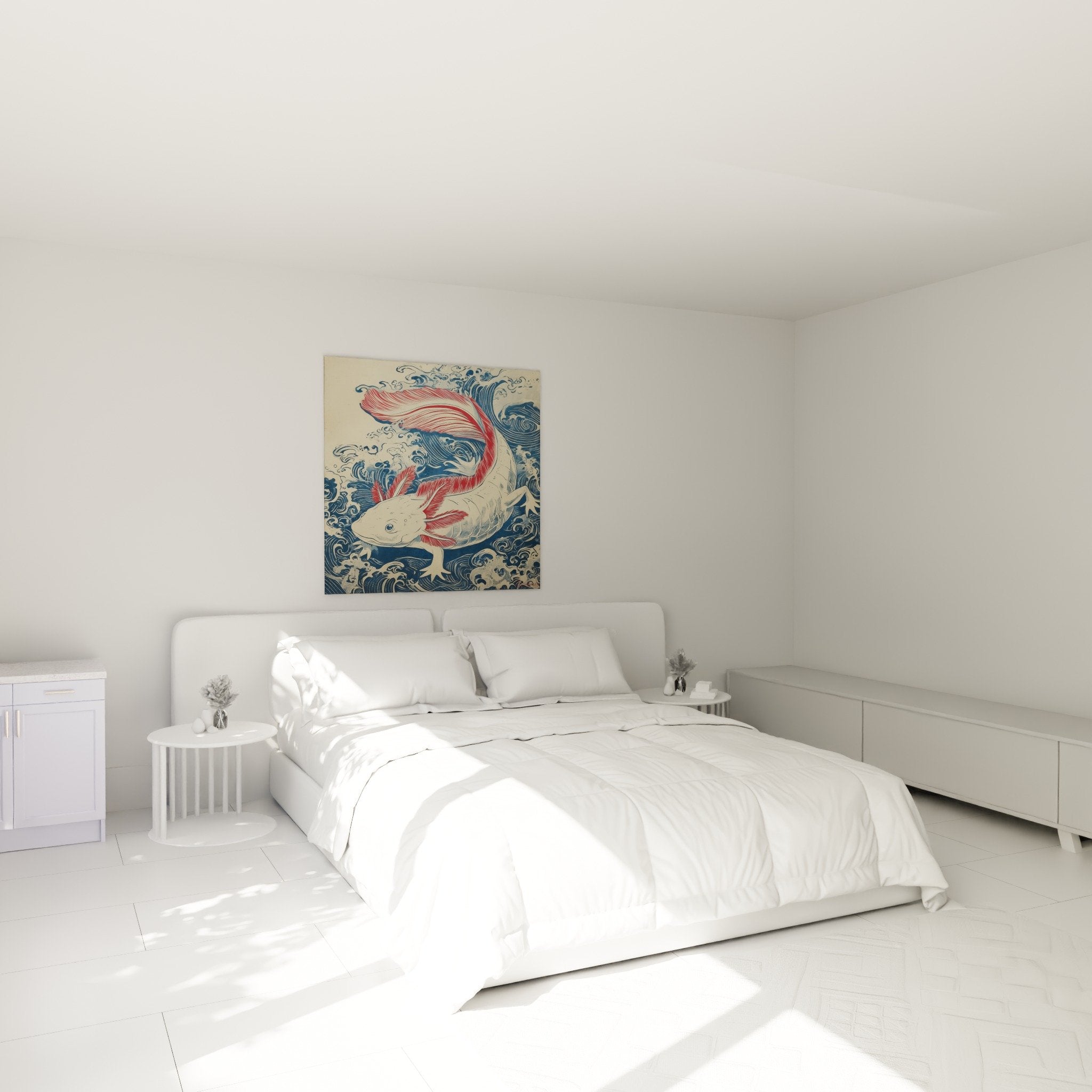
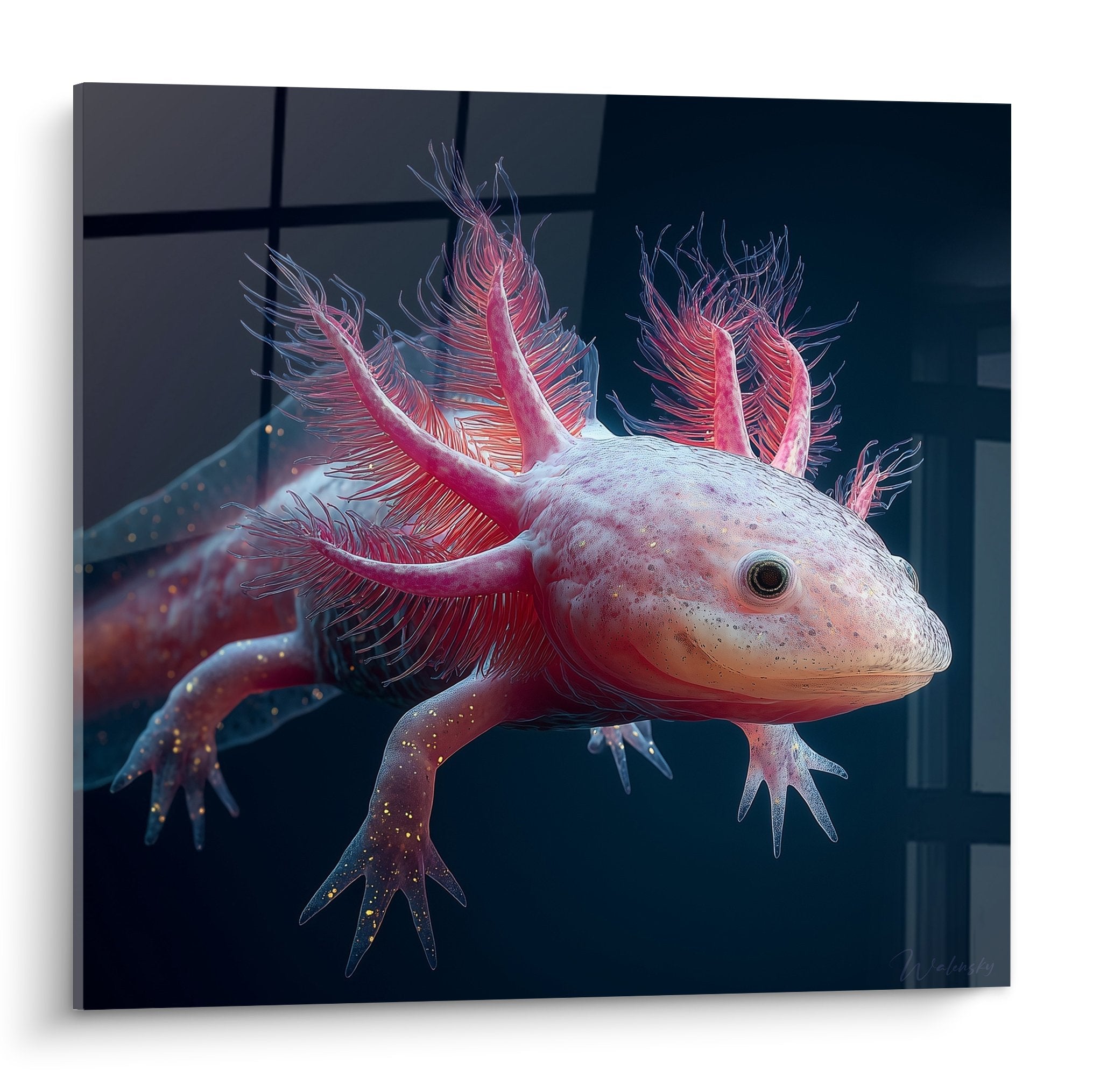
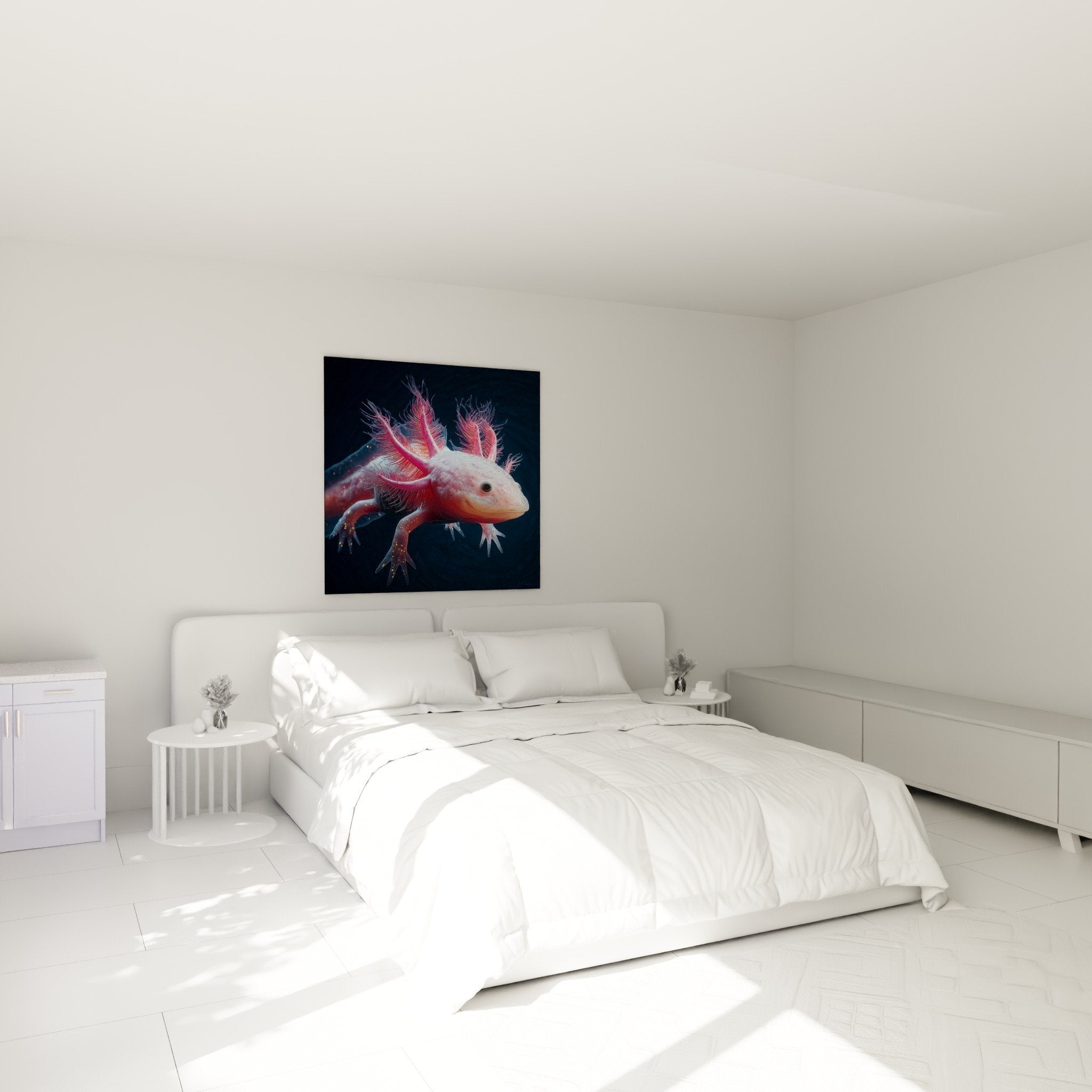
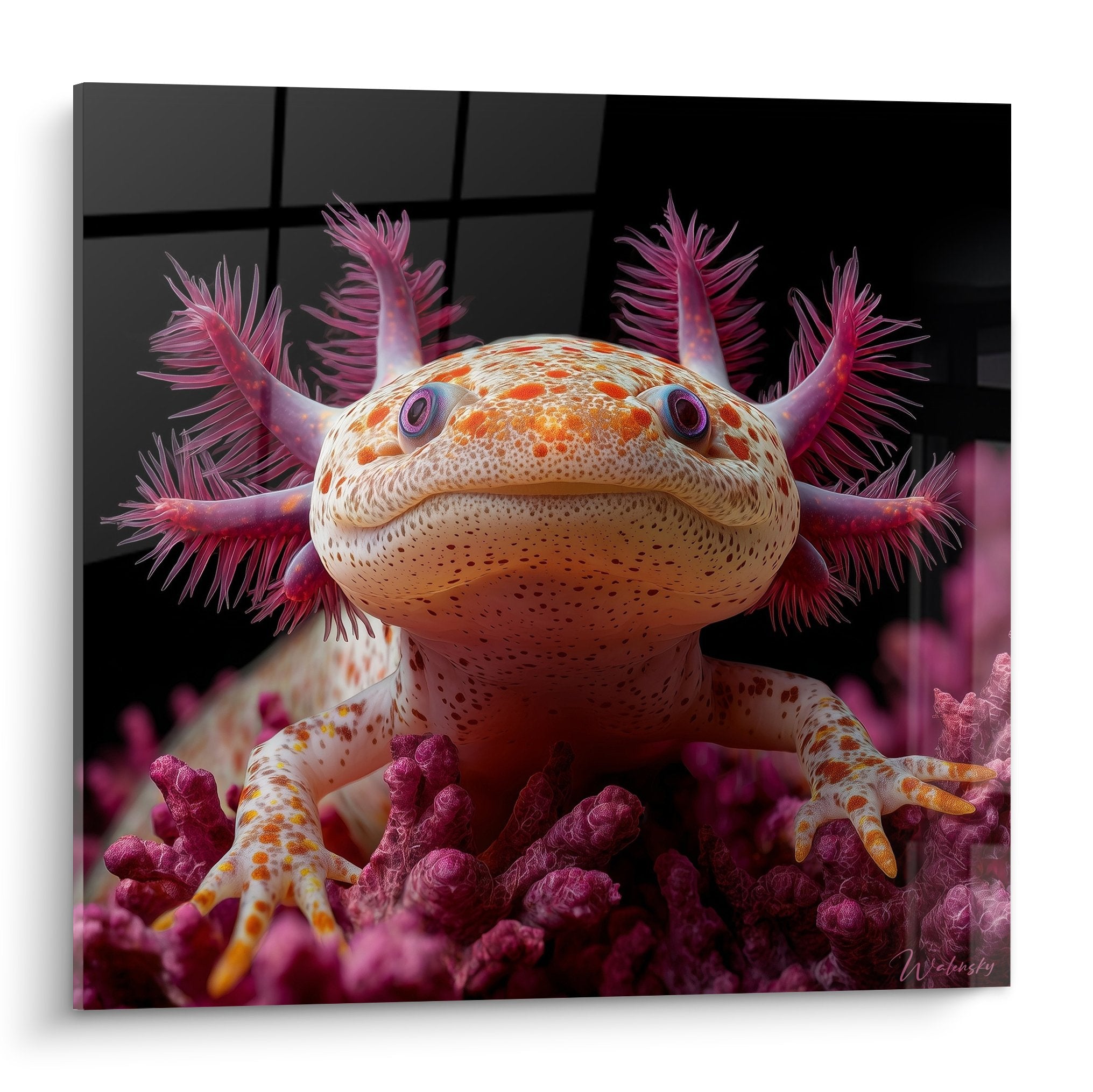
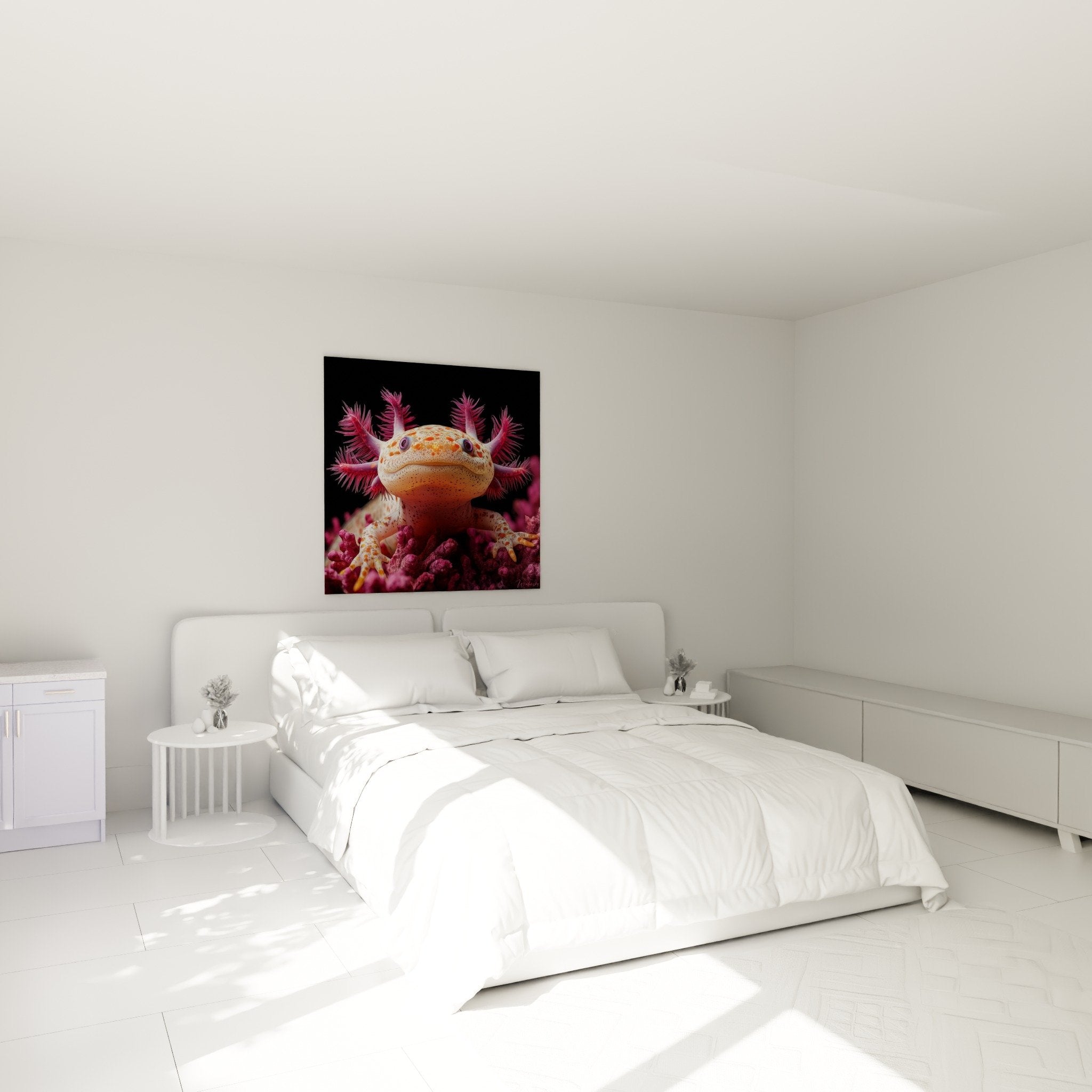
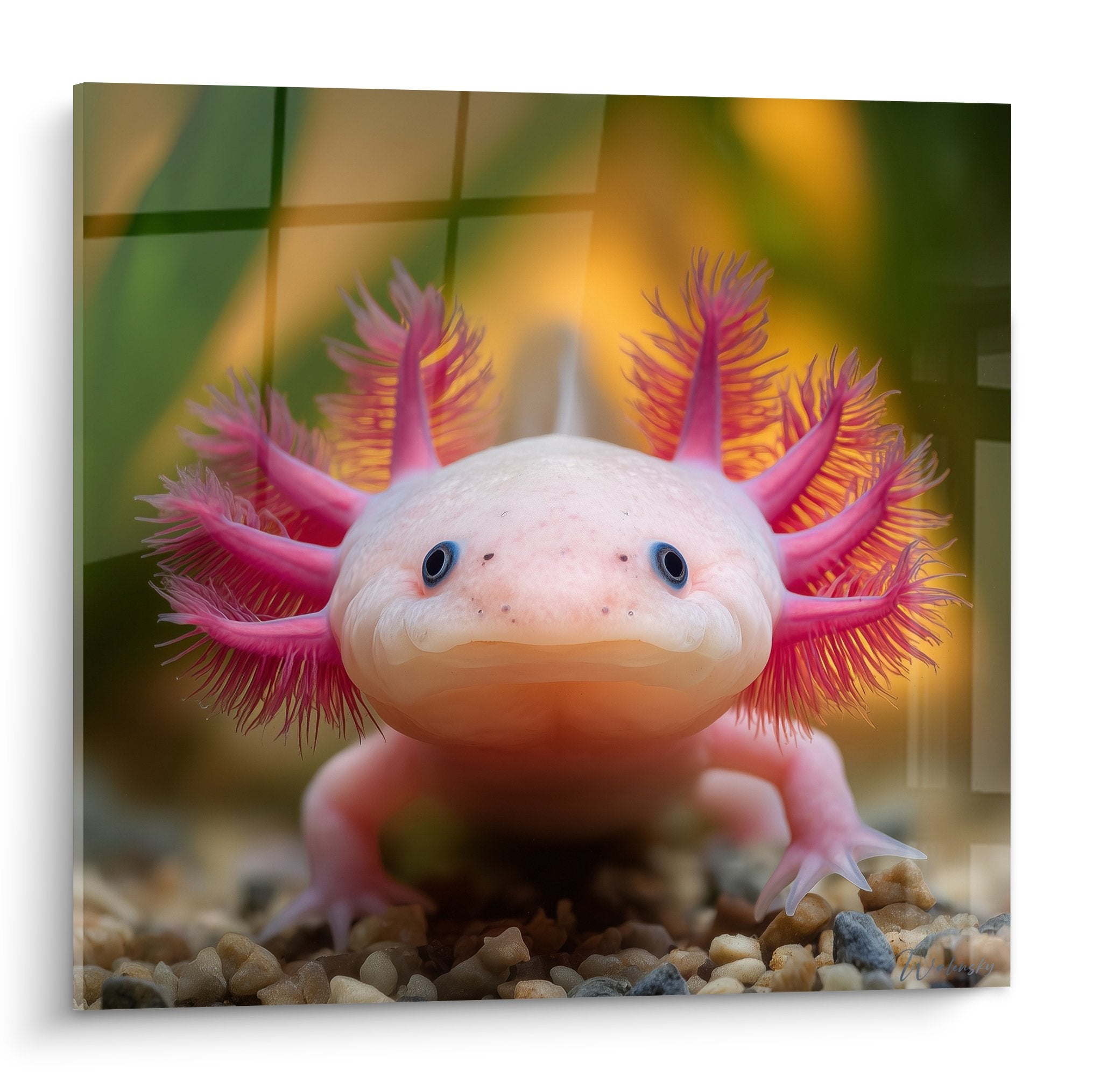
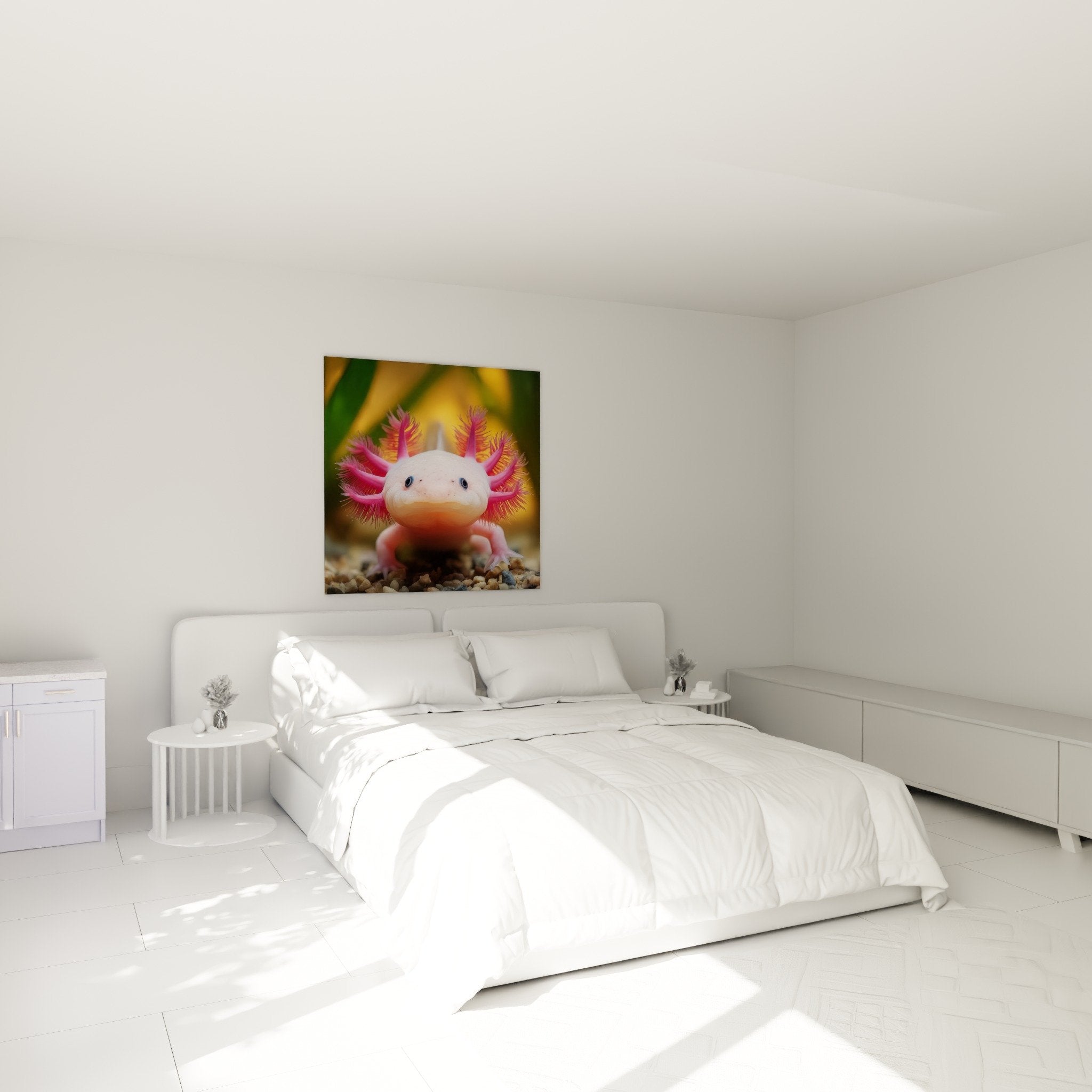
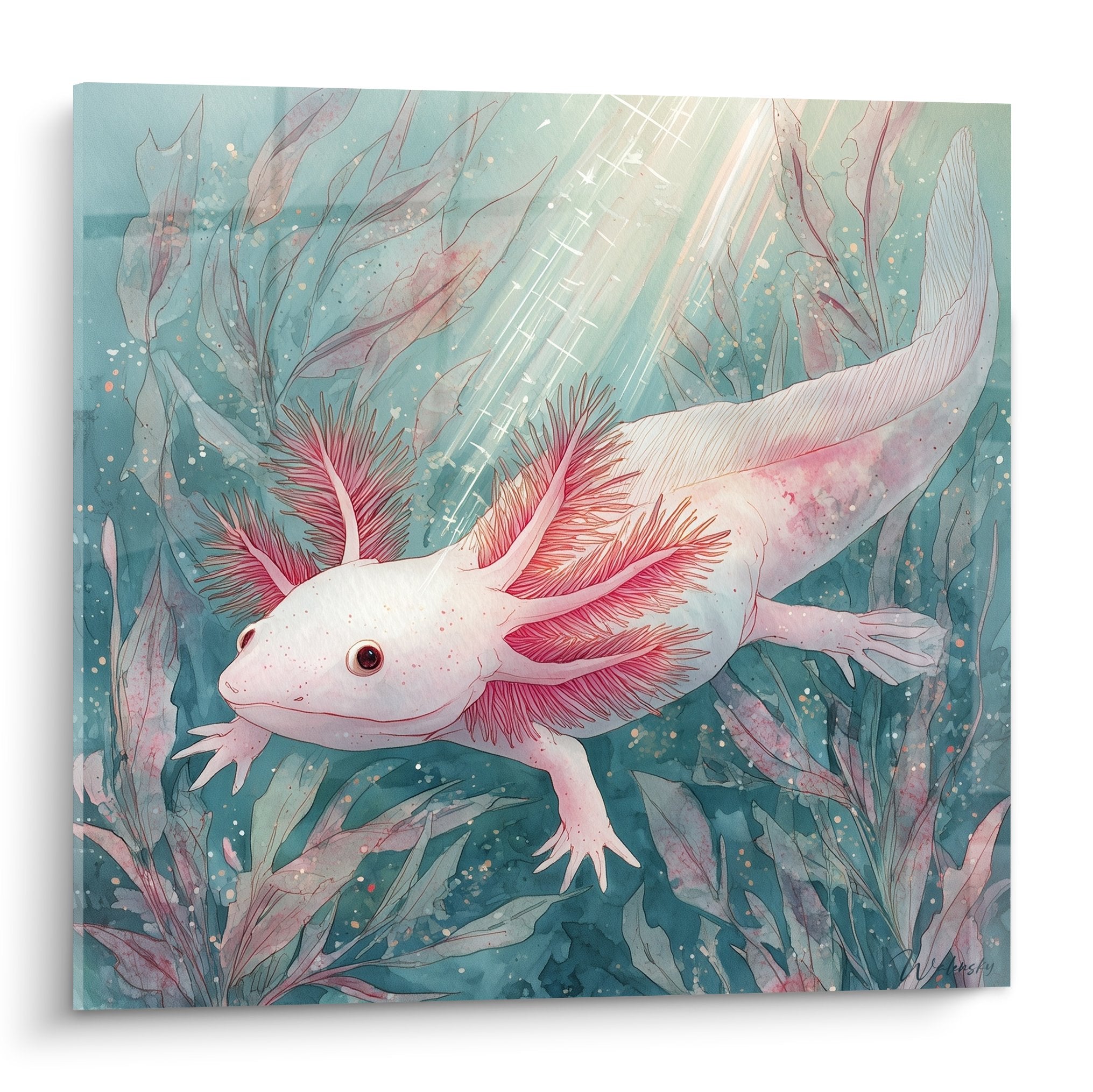
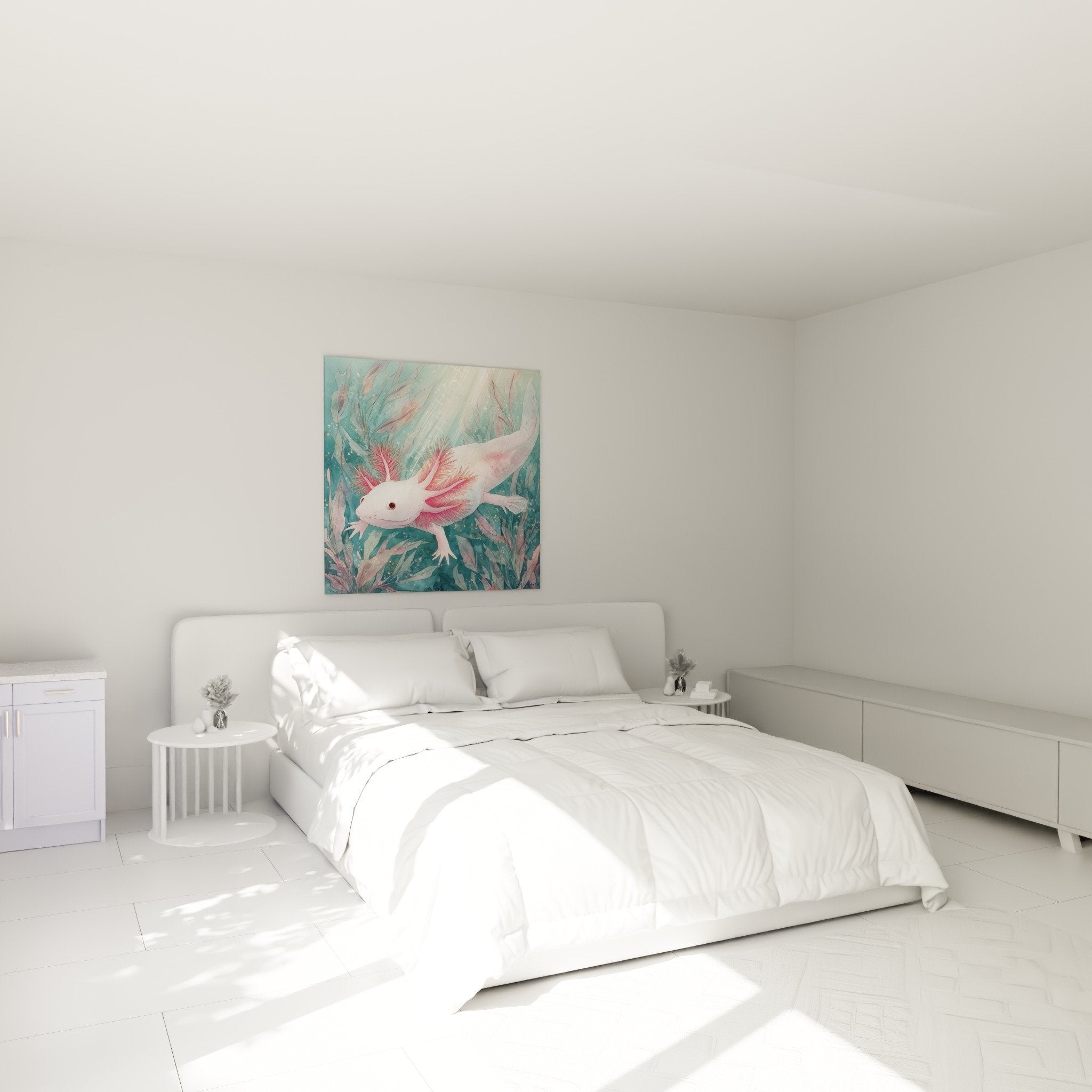
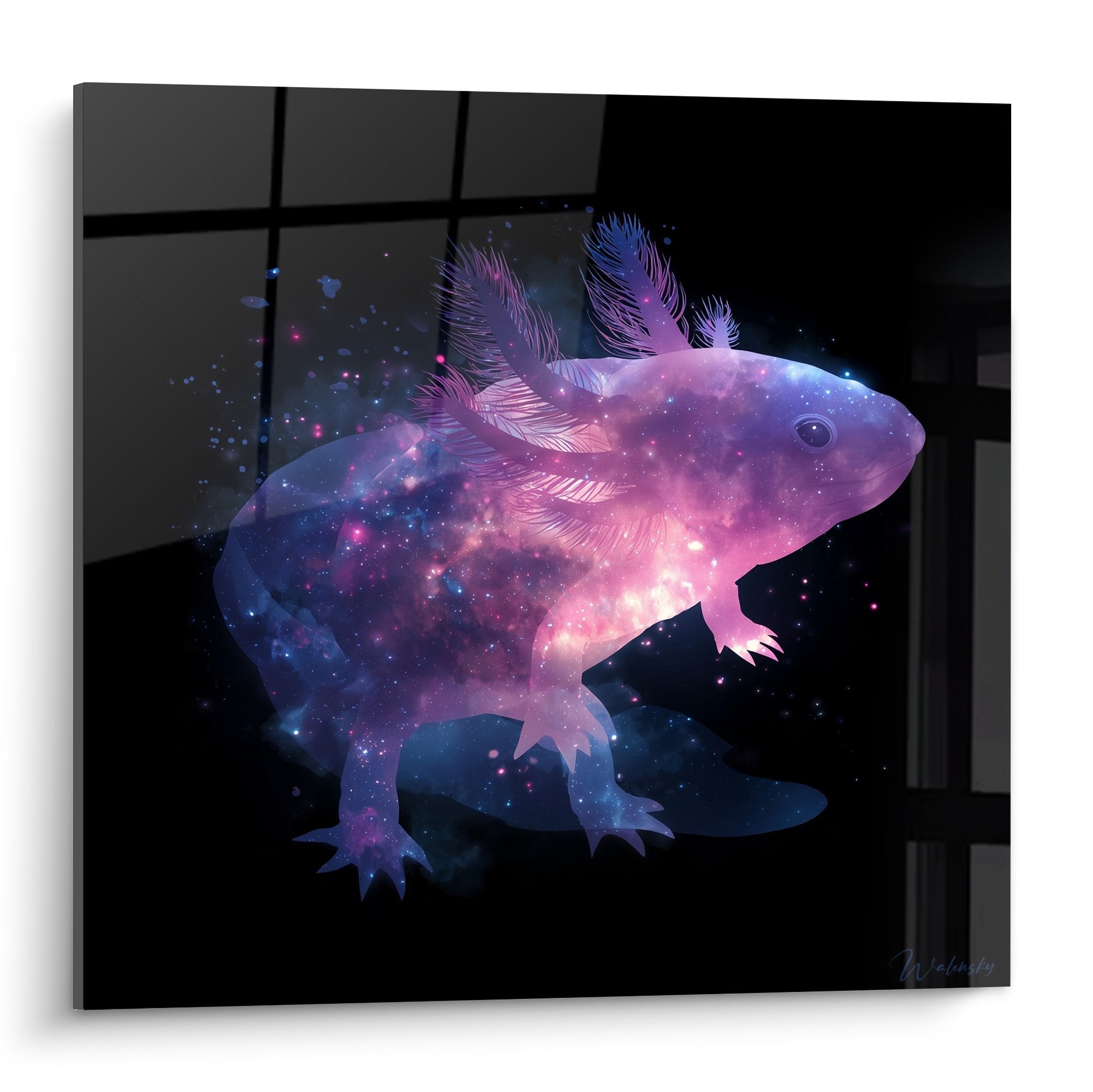
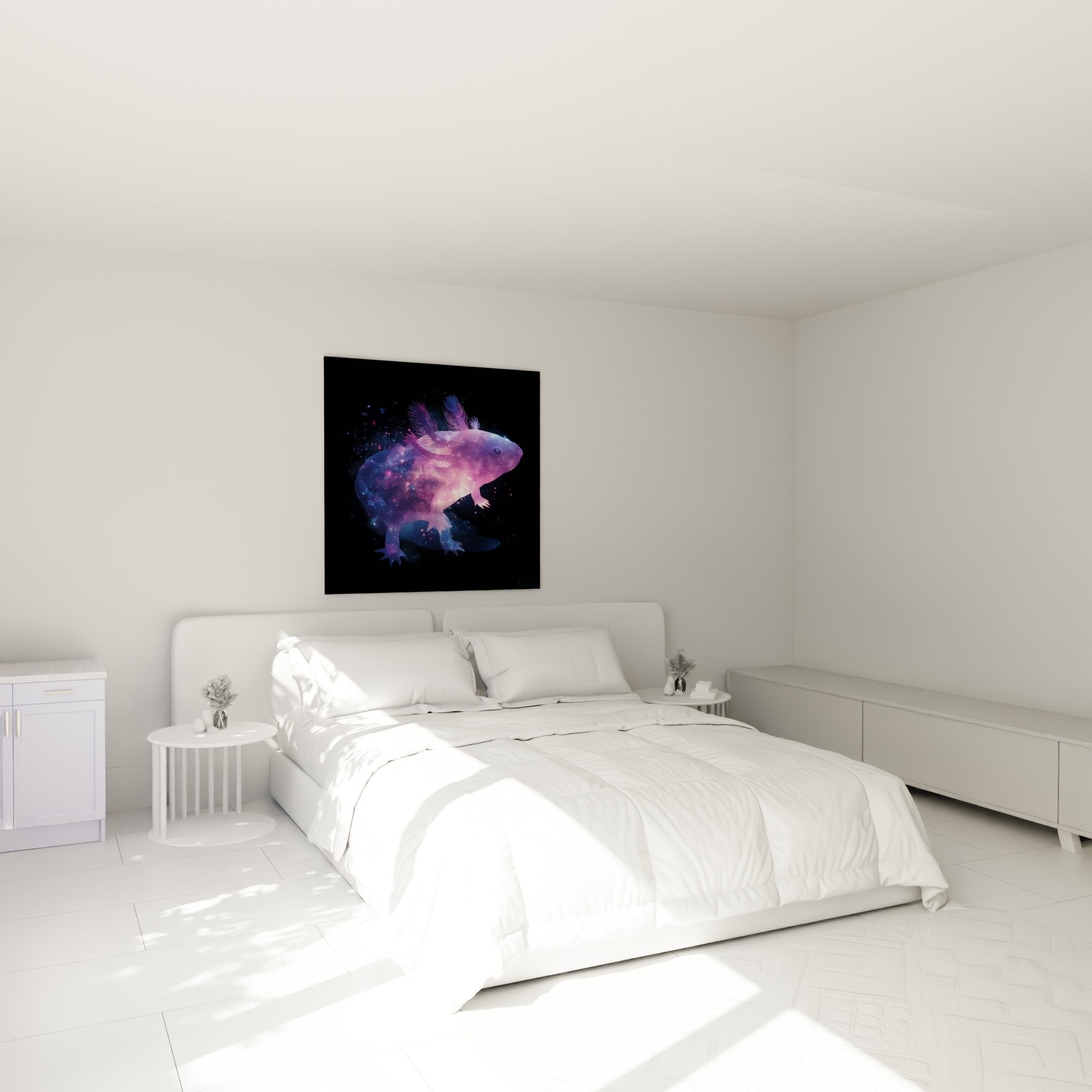
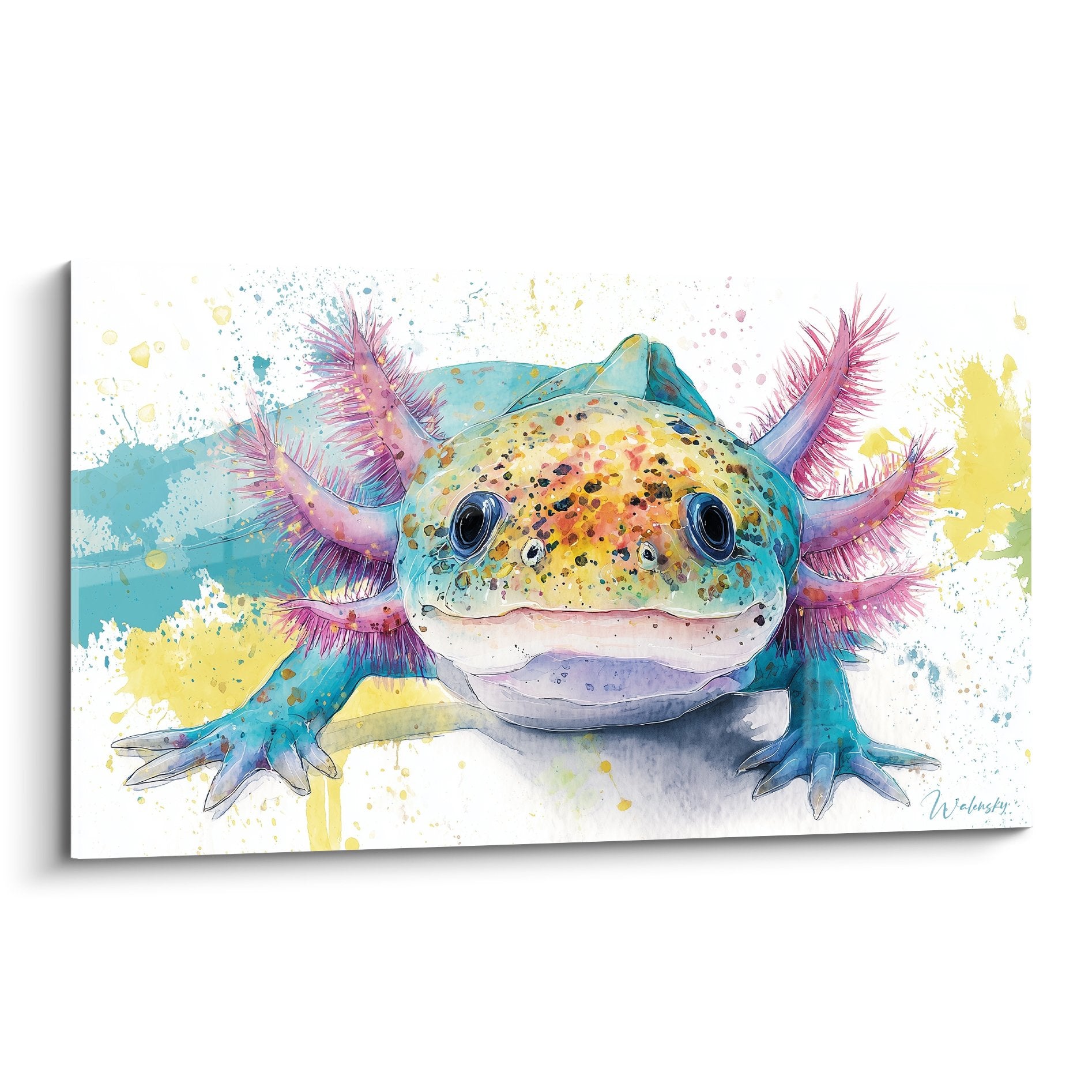
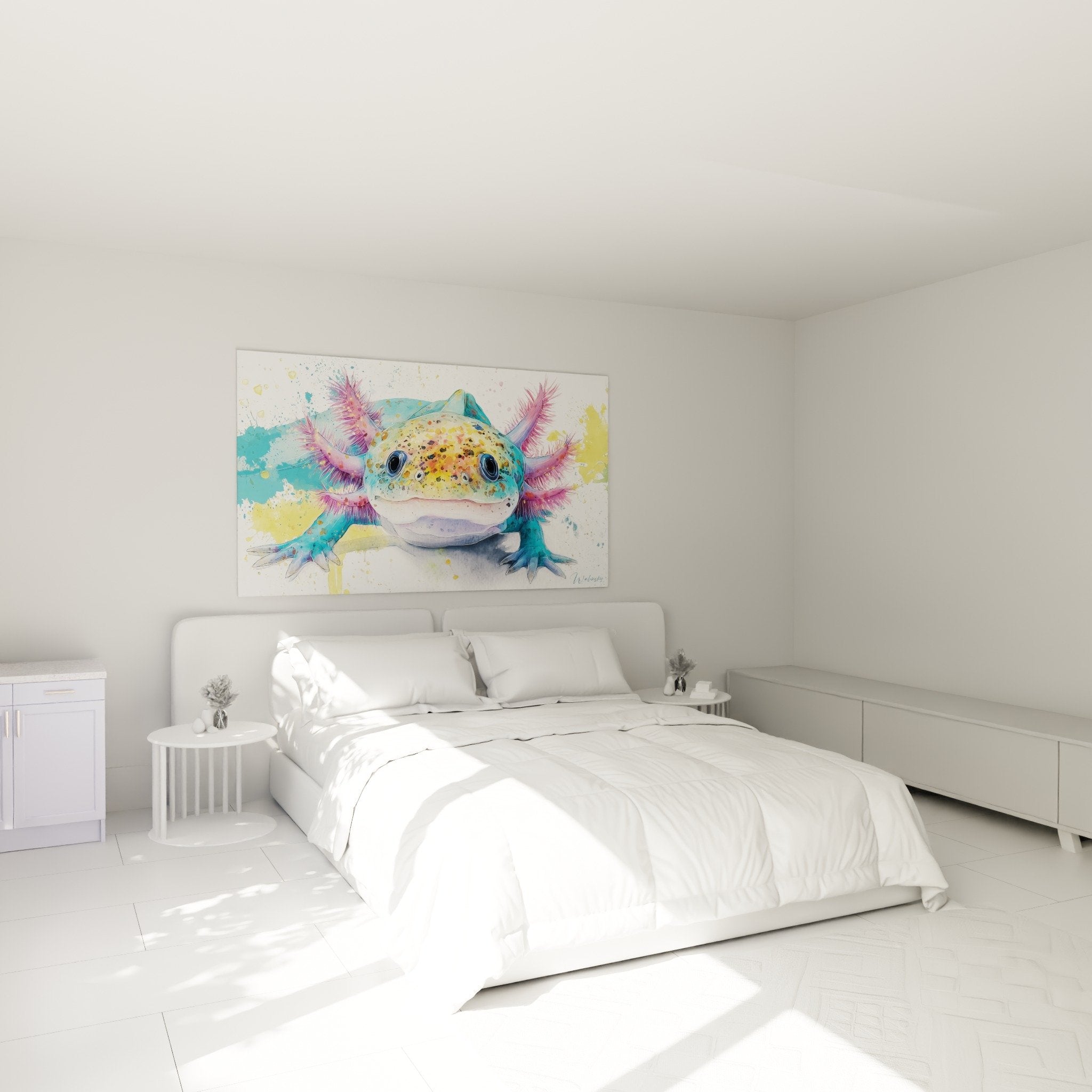
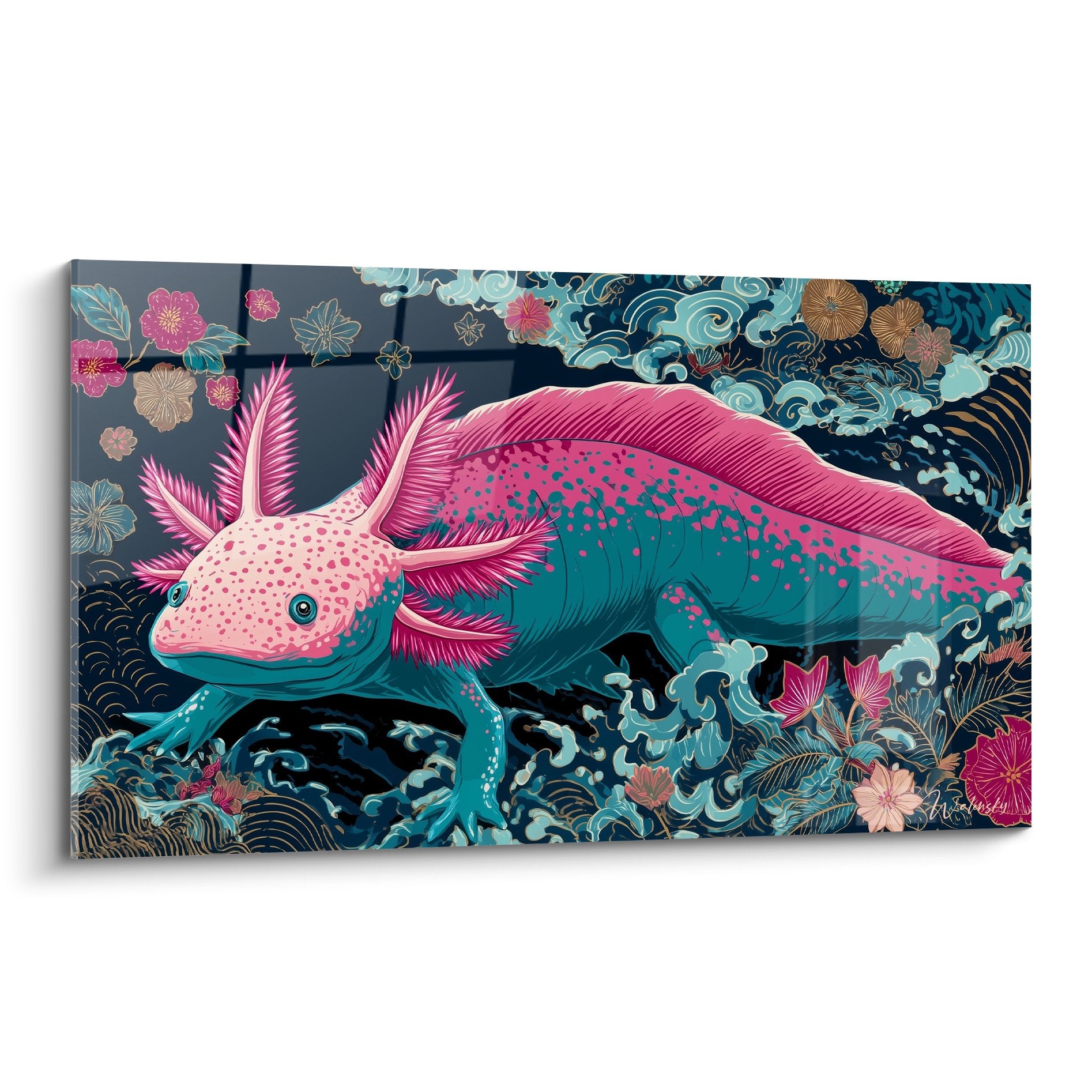
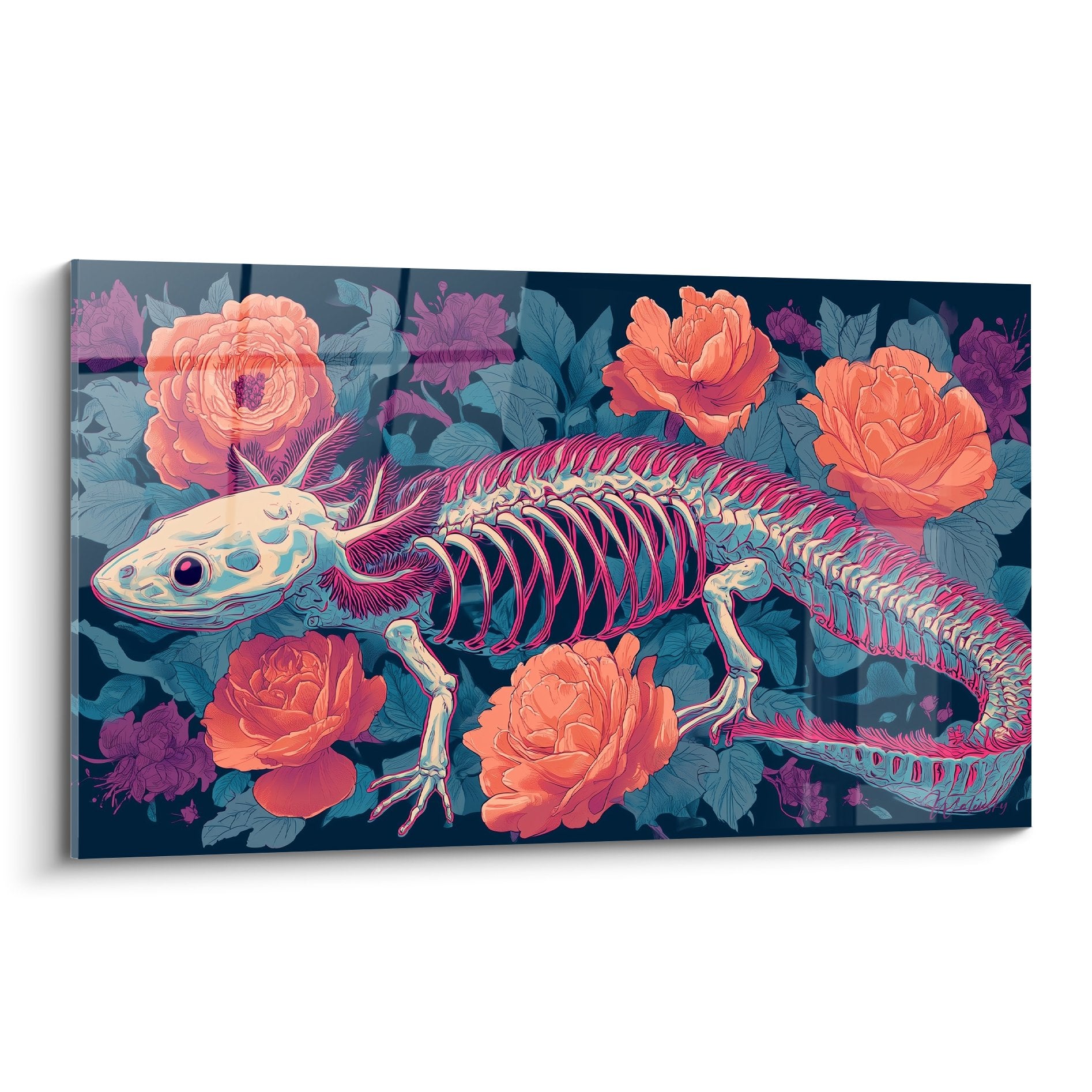
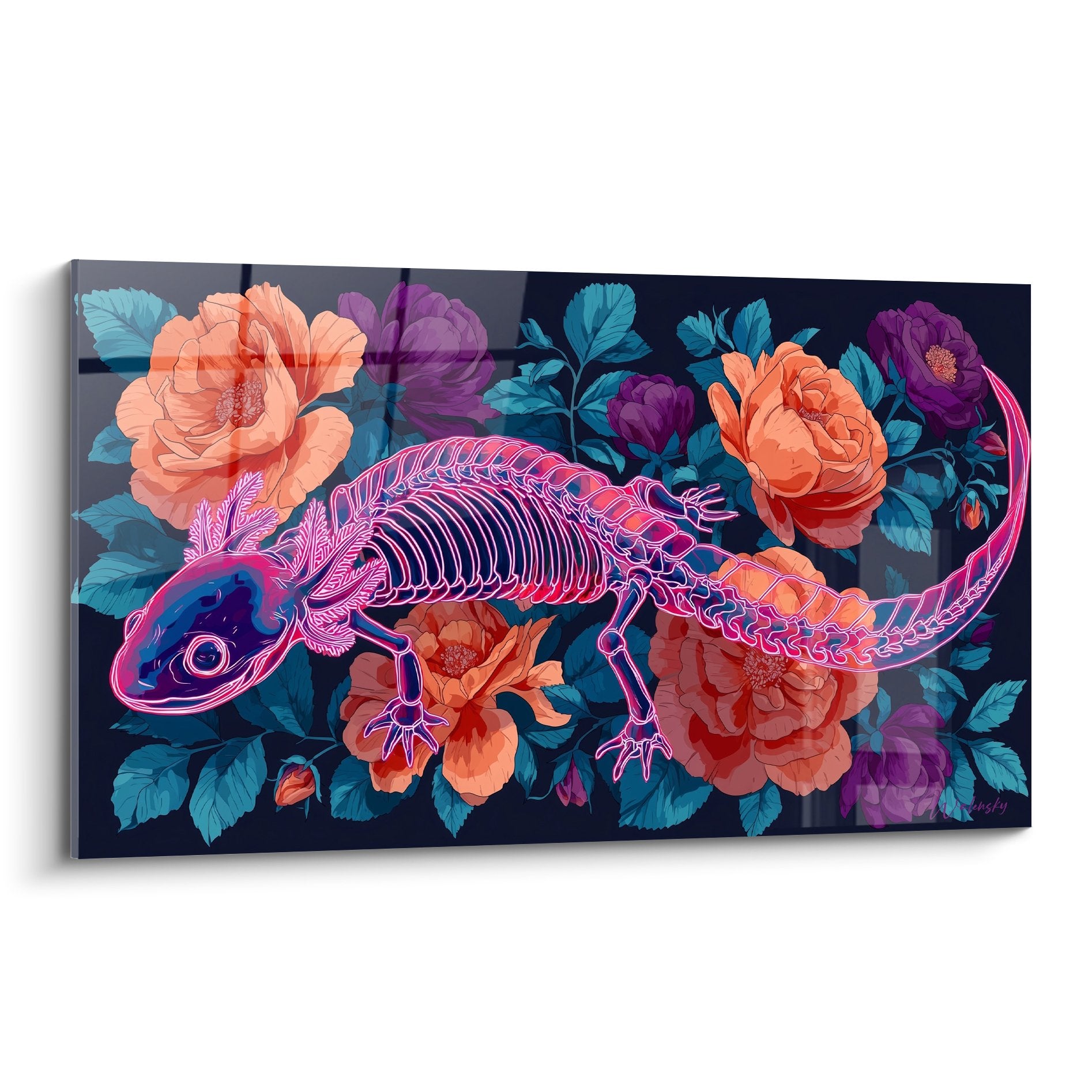
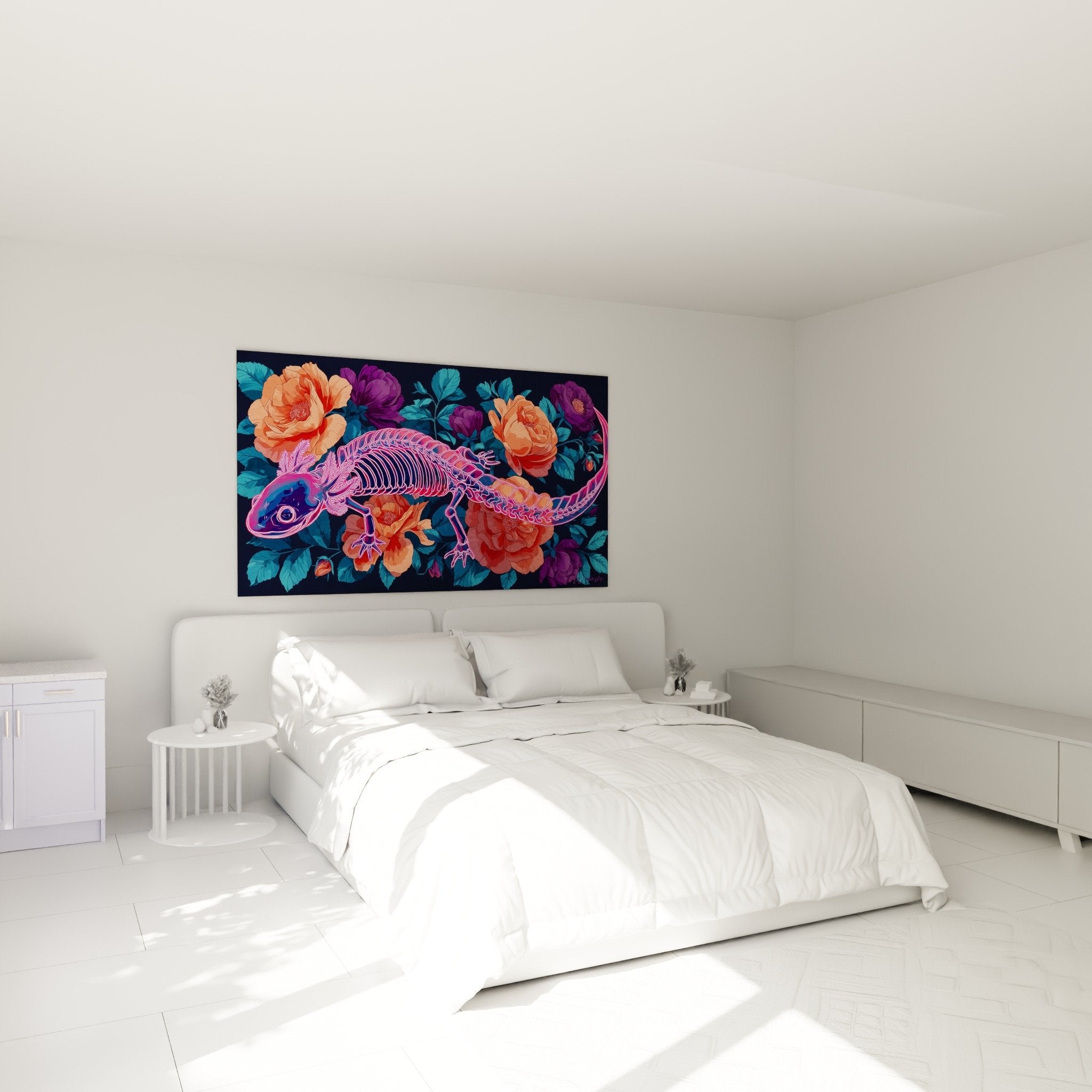
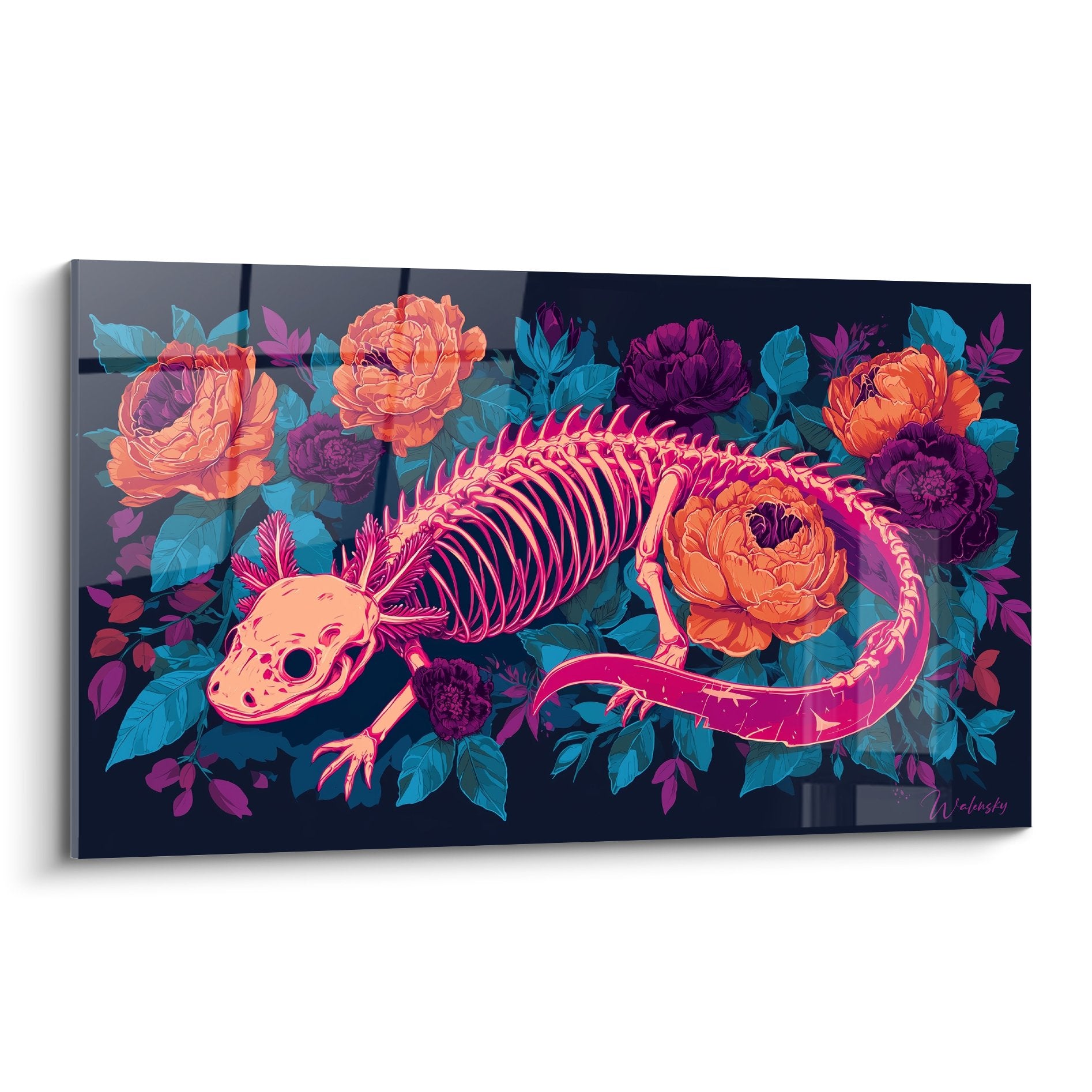
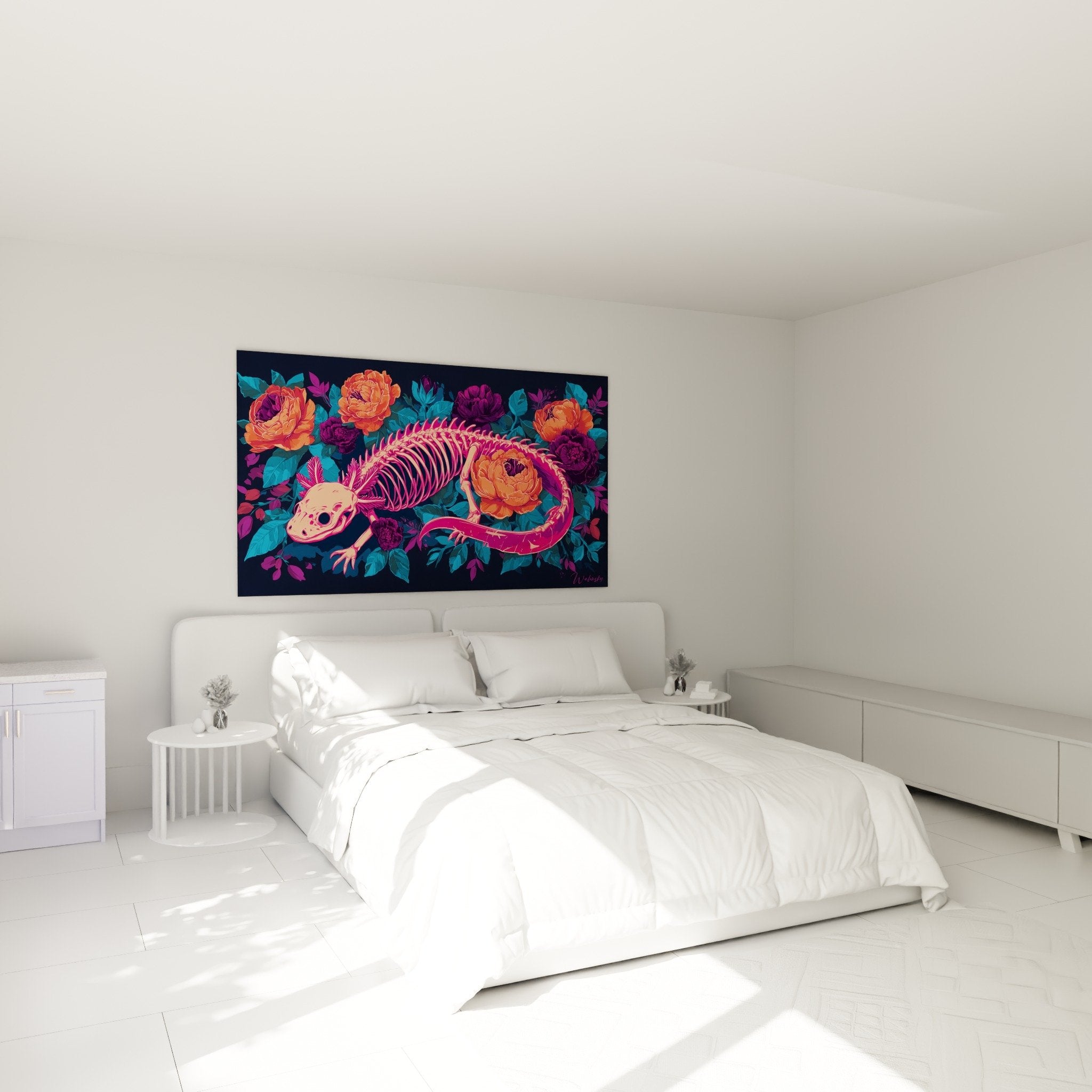
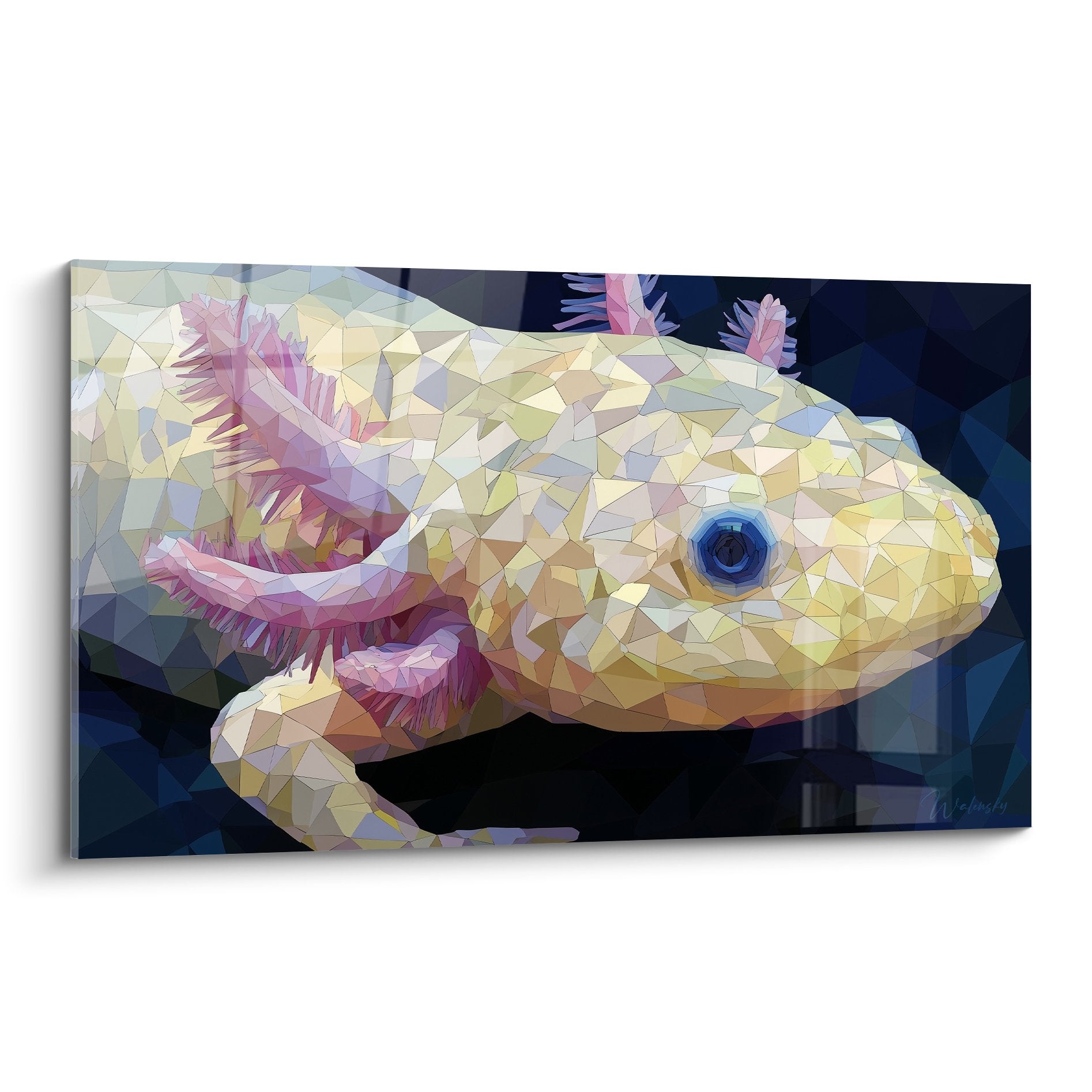
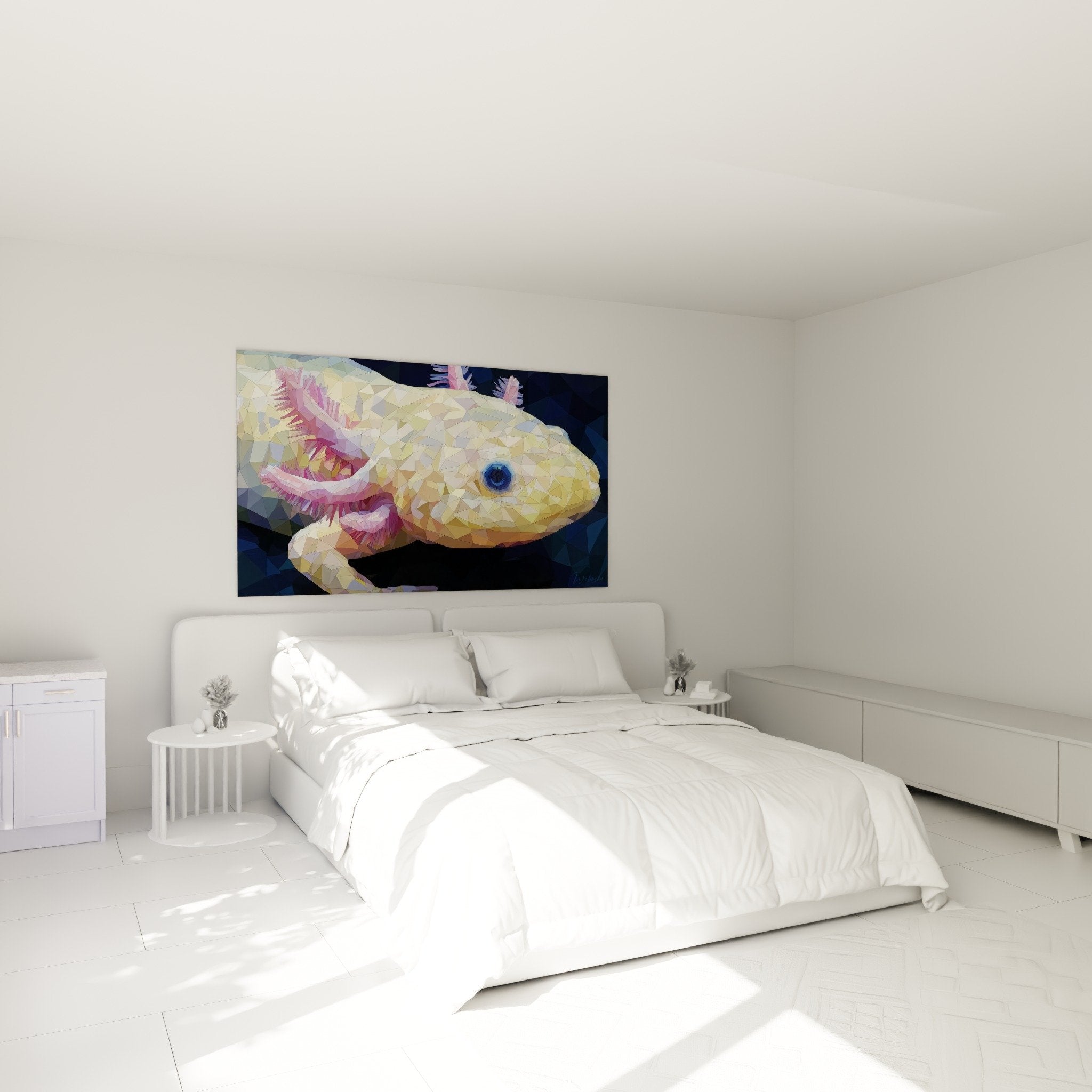
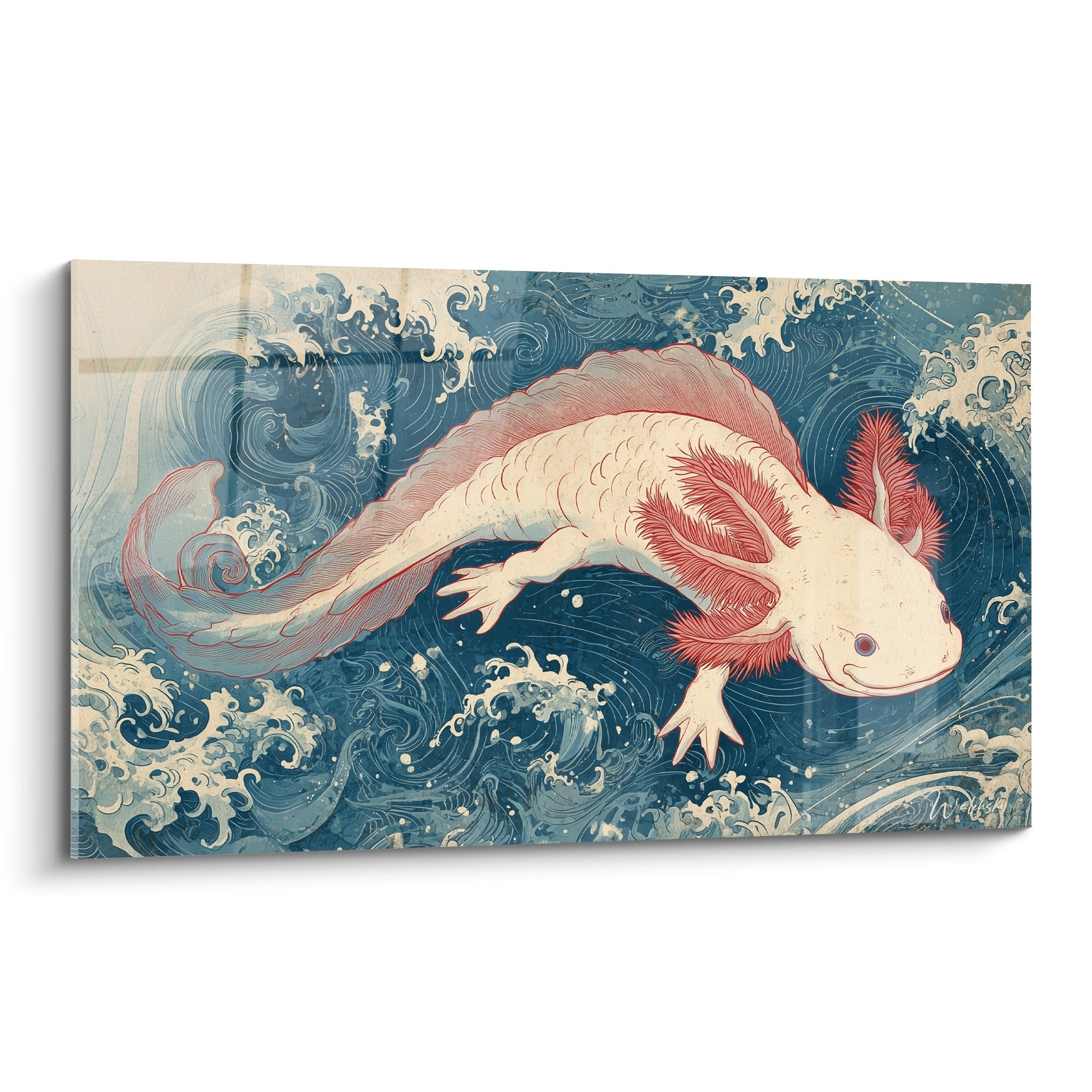
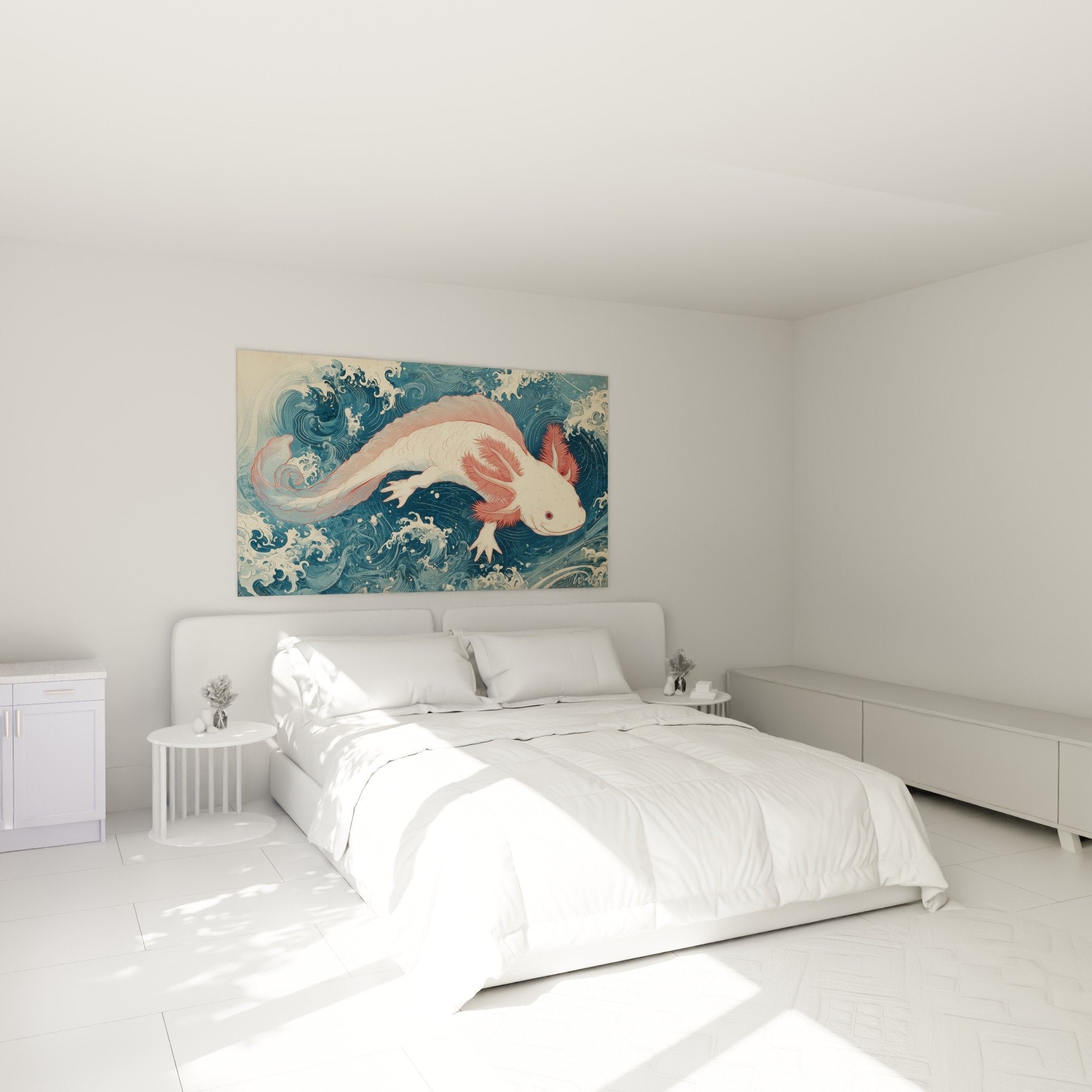
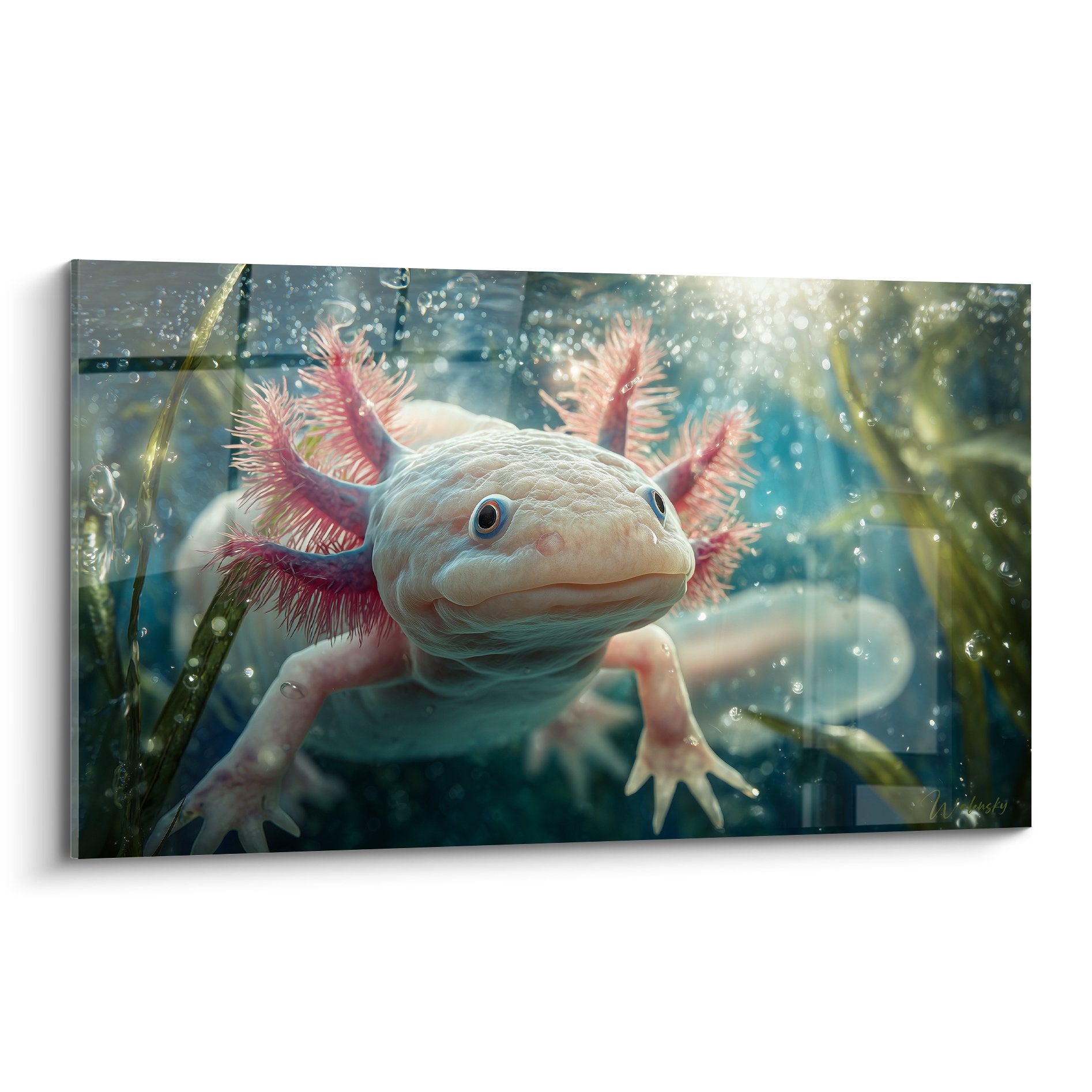
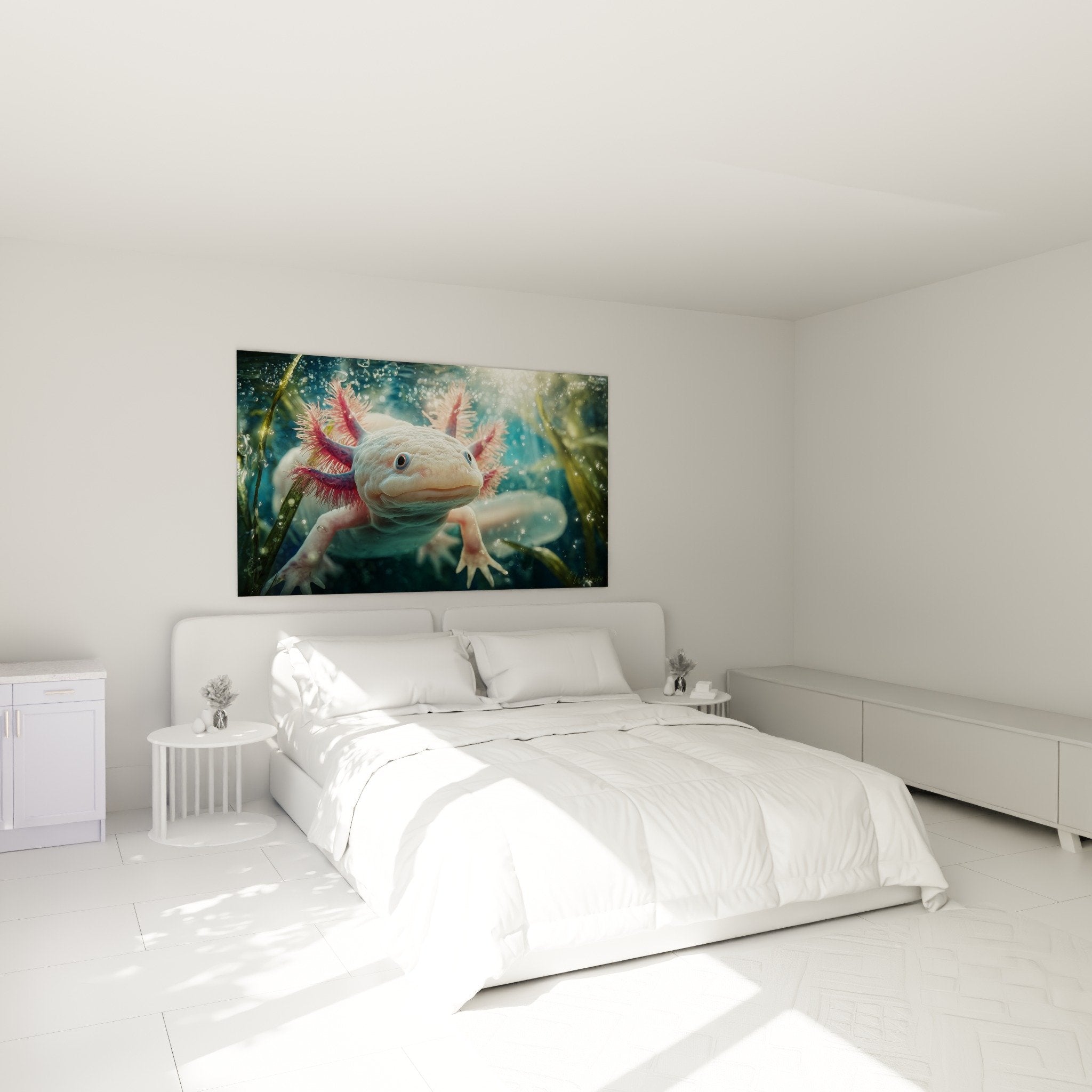
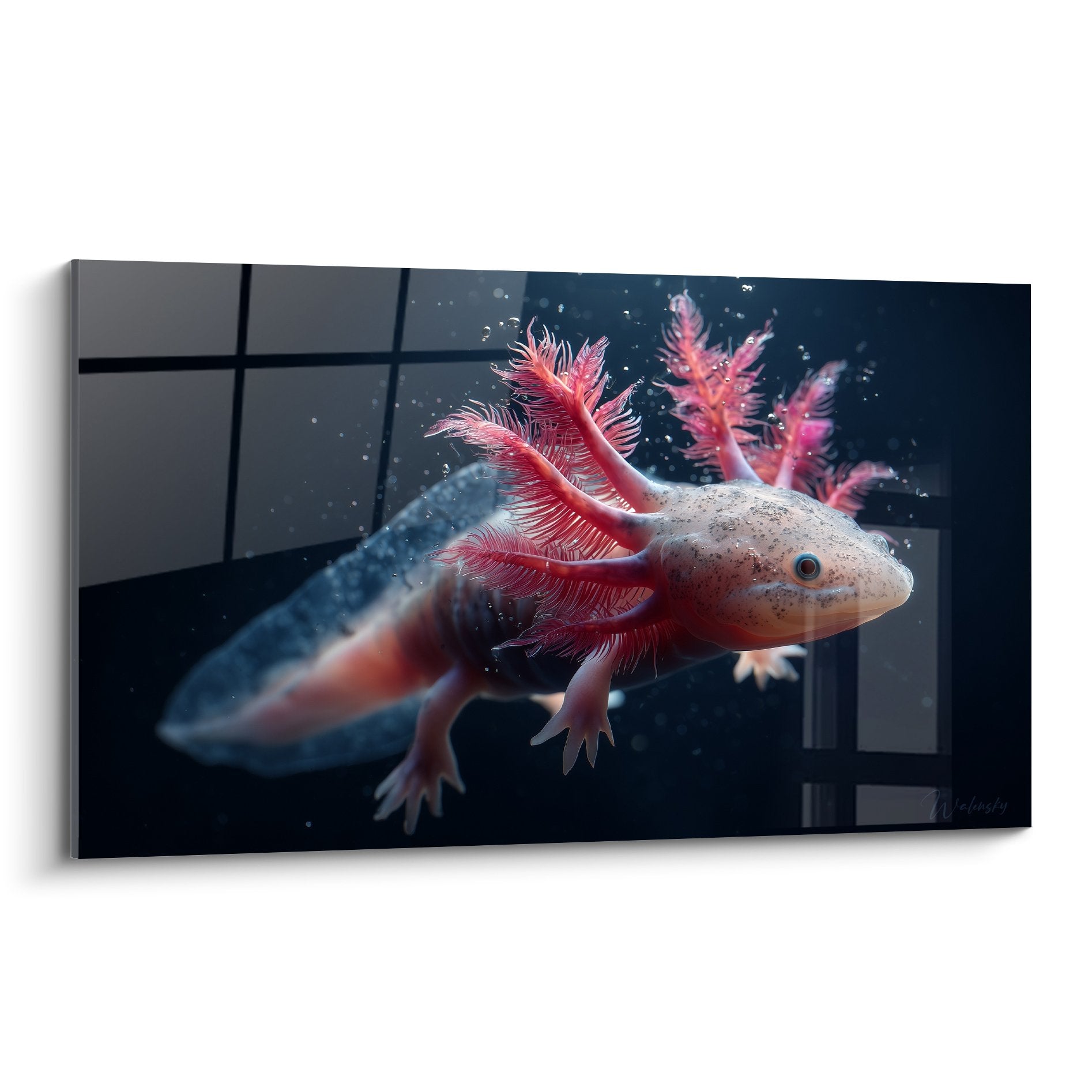
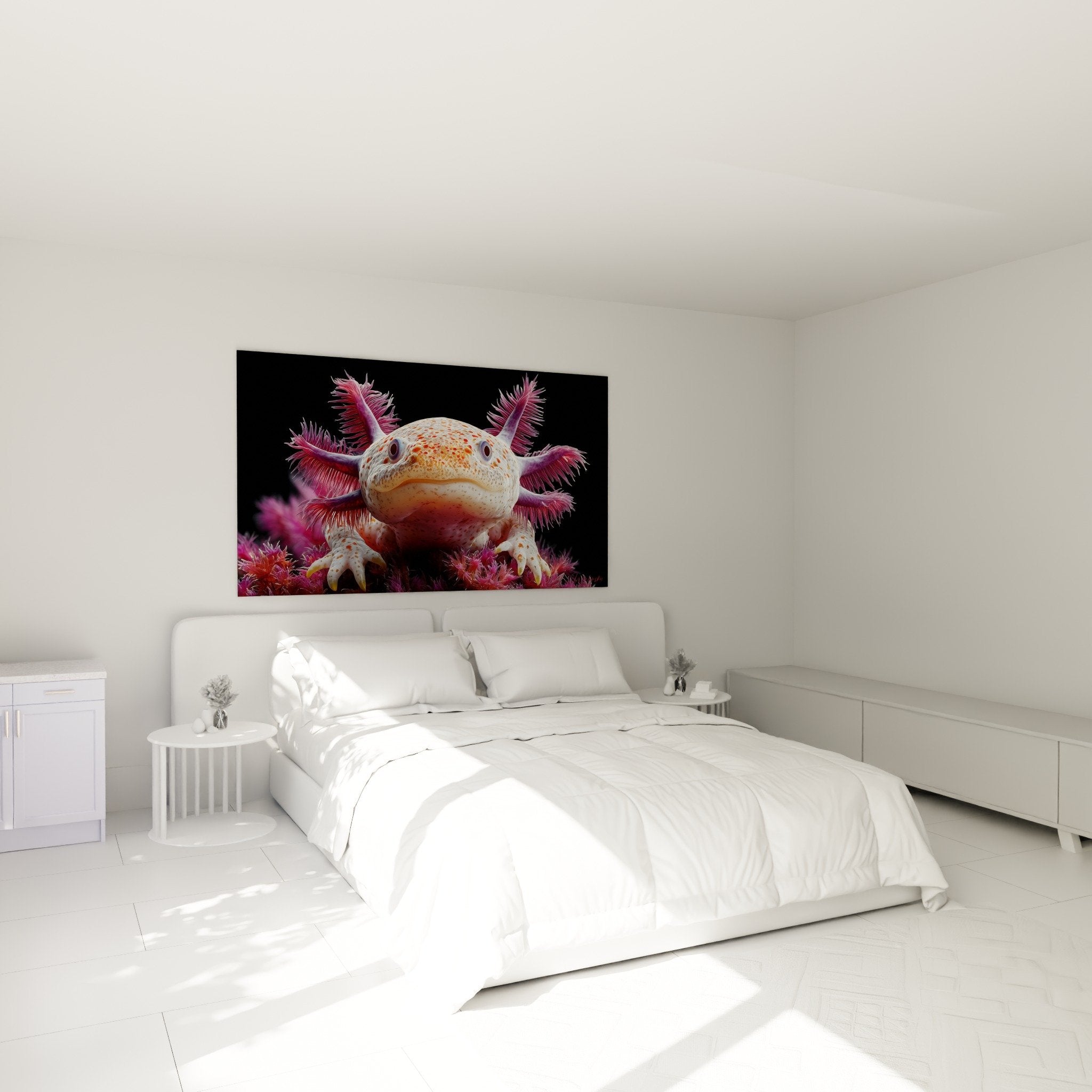
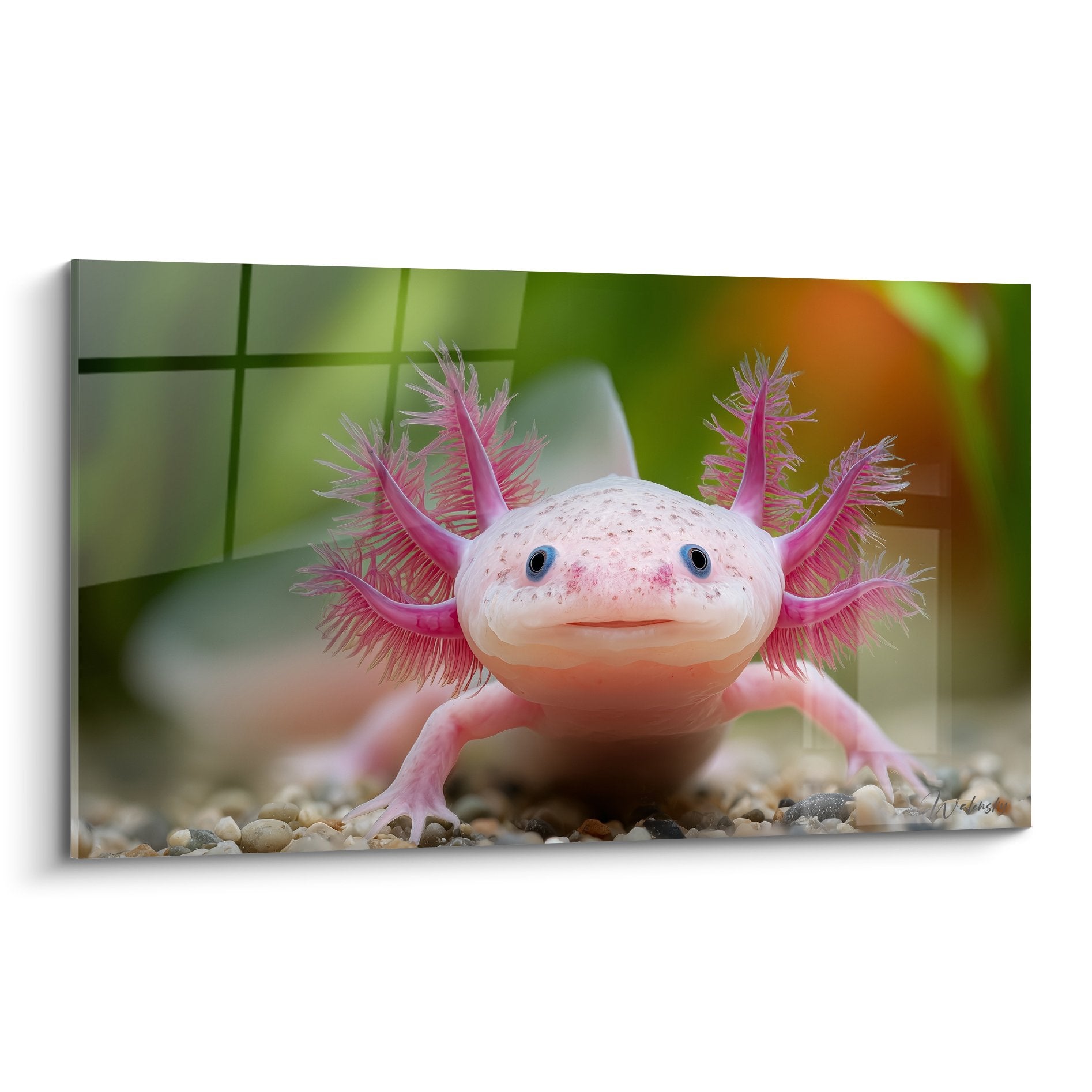
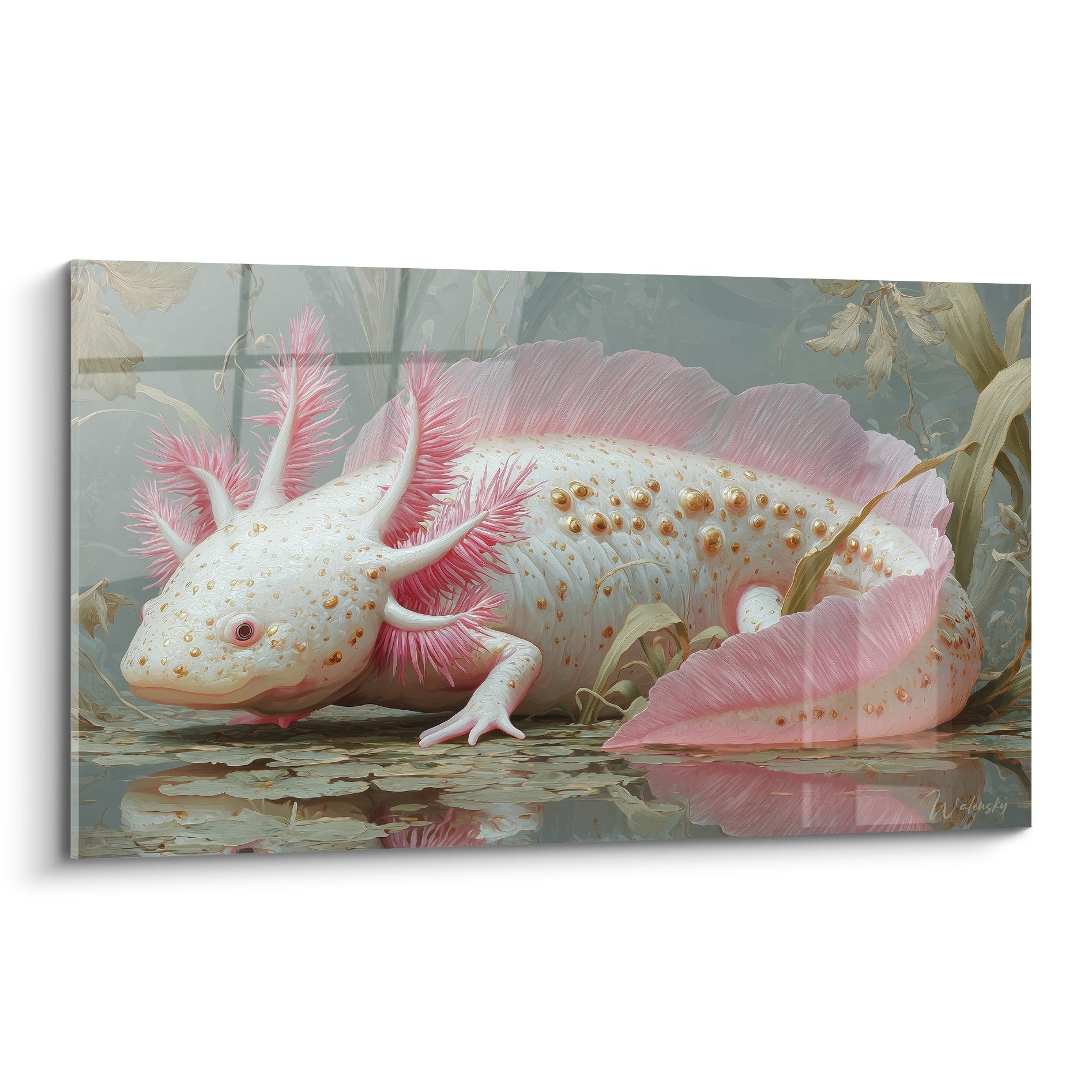
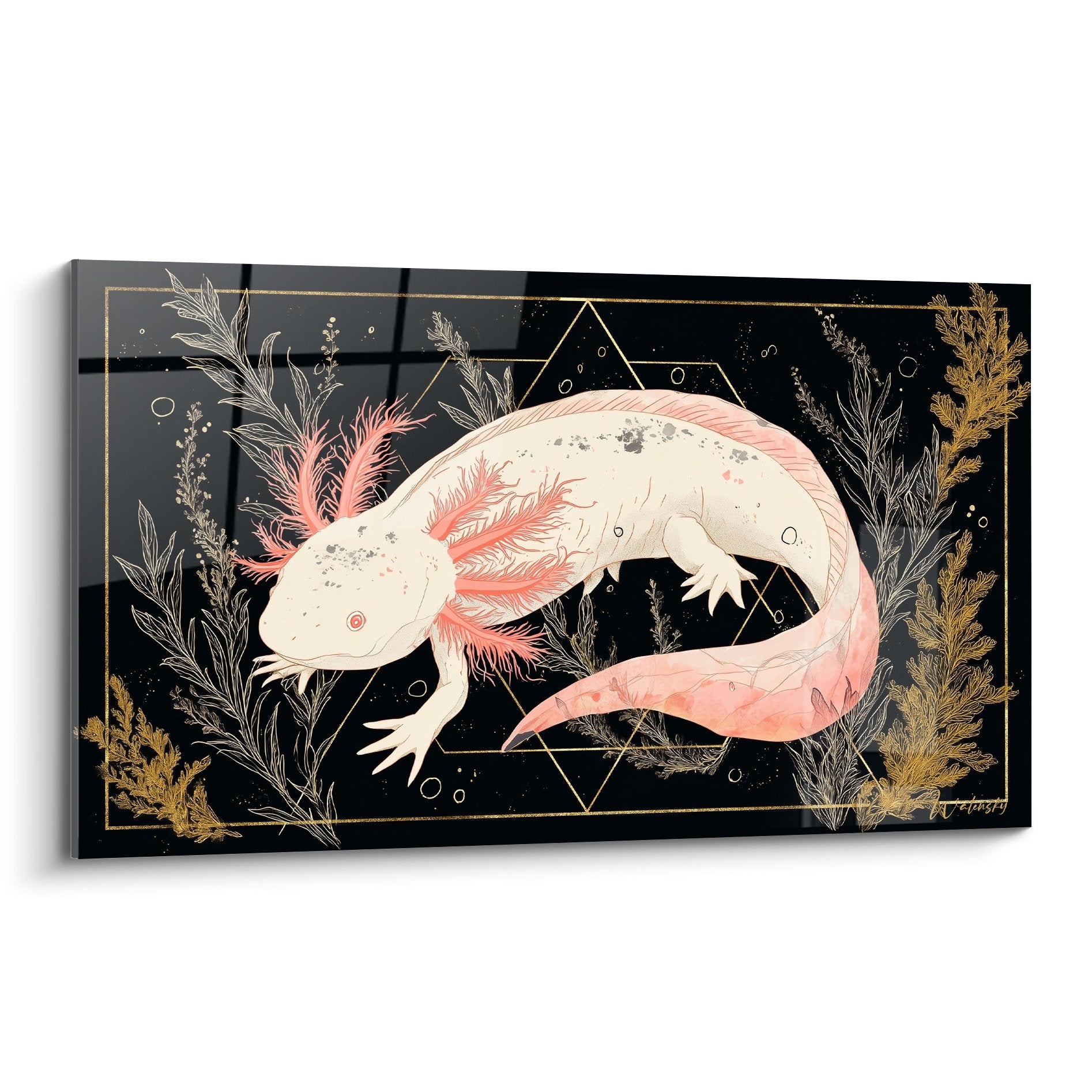
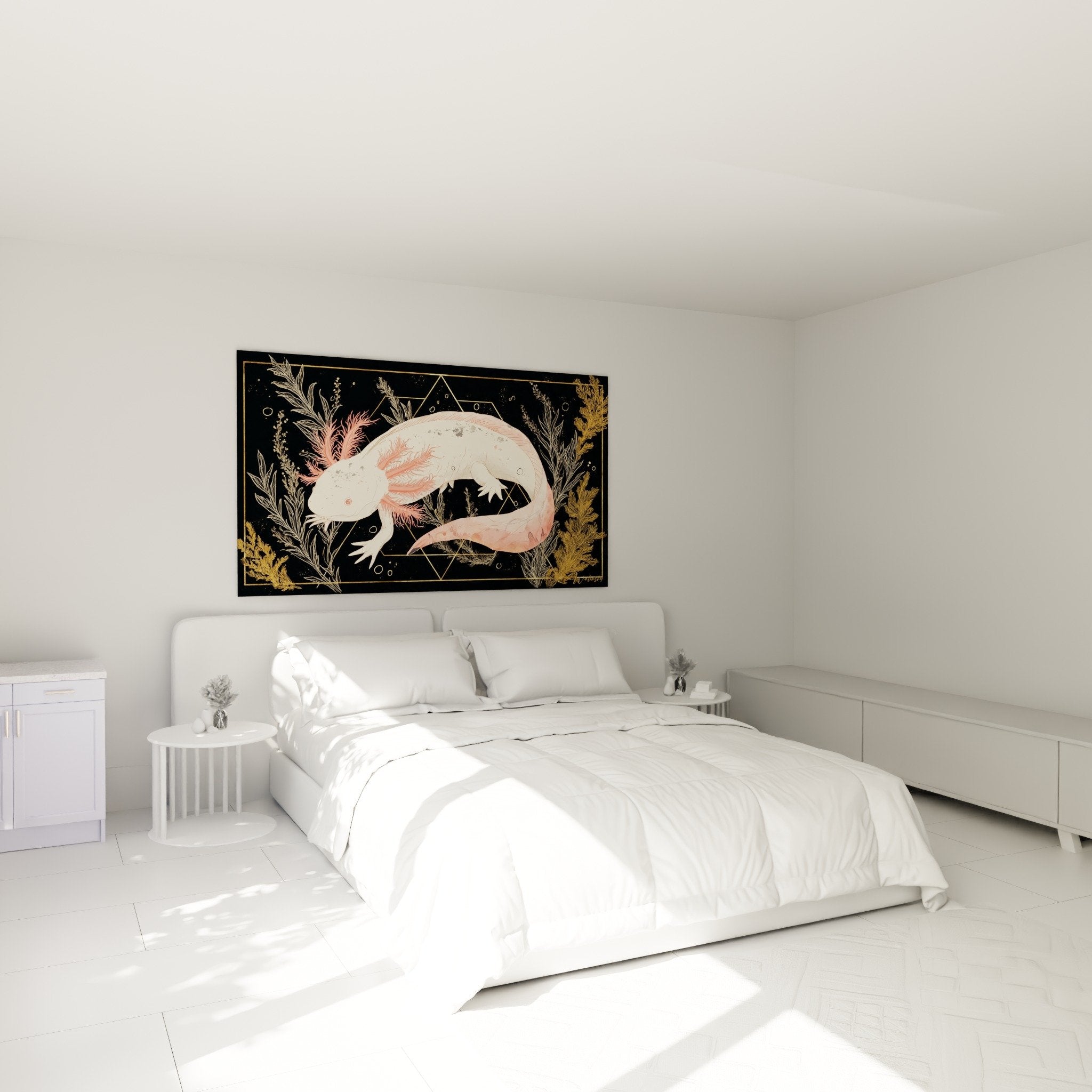
Discover our exclusive collection of axolotl wall art, fascinating creatures originating from the Mexican canals of Xochimilco. These large-format mural representations capture the unique appearance of this neotenic salamander, with its characteristic external gills and enigmatic smile. Transform your interior spaces into genuine aquatic sanctuaries through these immersive artworks that celebrate one of the planet's most extraordinary amphibians. Each piece showcases the fascinating colors of the axolotl, from leucistic pink to wild brown, creating a captivating visual presence in any room.
Creating an Aquatic Atmosphere with an Axolotl Wall Art
An axolotl wall art radically transforms the atmosphere of a space by instantly evoking the underwater world of Mexican volcanic lakes. The generous dimensions of our reproductions create a visual window into this unique ecosystem, particularly effective in relaxation spaces or medical offices specializing in aquarium keeping. The soothing effect of aquatic tones combined with this salamander's singular facial expression generates a sought-after meditative ambiance.
Why is the axolotl so captivating in wall decoration?
The axolotl's distinctive morphology, with its external gills resembling pink or purple feathers, offers organic aesthetics rarely exploited in decoration. This neotenic creature retains its larval characteristics throughout its life, creating an appearance that is simultaneously childlike and mysterious. An axolotl wall piece captures this fascinating duality, immediately drawing attention through contrasts between translucent skin and flamboyant gill appendages. For biodiversity enthusiasts, this decorative choice manifests distinctive ecological sensitivity.
The chromatic impact of axolotl varieties in XXL format
The different genetic variations of the axolotl offer an exceptional color palette for wall decoration. The leucistic specimen presents pale pink and golden tones that harmonize perfectly with Scandinavian or minimalist interiors. Wild axolotls, in their mottled brown and olive shades, bring earthly depth to contemporary spaces. In large format, these color variations become architectural elements in their own right, visually structuring the space while preserving aquatic softness. This decorative approach aligns perfectly with the trend of animal wall art that celebrates exceptional biodiversity.
Integrating axolotl iconography in educational spaces
Scientific facilities, biology laboratories and cellular regeneration research centers find in the axolotl wall art a perfect symbolic representation. This salamander possesses extraordinary regenerative abilities, capable of reconstituting entire limbs, making it an icon of modern biomedical research. A large-scale mural visual in a conference room or university hallway instantly communicates commitment to scientific innovation. Precise anatomical details stimulate intellectual curiosity while offering an elegant and professional visual presence.
The Mexican Axolotl as a Cultural Decorative Element
The axolotl wall art establishes a direct visual connection with Mesoamerican cultural heritage, where this creature was venerated by the Aztecs as an incarnation of the god Xolotl. This mythological dimension adds narrative depth to your interior decoration, transforming a simple decorative element into a conversation piece charged with symbolism. Authentic Mexican restaurants, Latin American art galleries and spaces dedicated to Aztec heritage find in these mural representations an authenticity that reinforces their visual identity.
How does axolotl wall art strengthen a biophilic visual identity?
The integration of an axolotl wall art into a biophilic design strategy brings an aquatic dimension often neglected in interior design. Unlike dominant plant or terrestrial representations, this neotenic salamander's iconography evokes high-altitude lacustrine ecosystems, creating enriching sensory diversity. Veterinary clinics specializing in exotic pets use these visuals to reassure their passionate amphibian clientele. The mural presence of this rare animal communicates expertise and ecological sensitivity, reinforcing professional credibility.
Optimal environments for displaying a mural axolotl
Humidity-controlled spaces such as spacious bathrooms or conservatories particularly benefit from large-format axolotl wall art. The thematic association between the aquatic element and humid environment creates natural decorative coherence. Aquarium shops, specialized pet stores and aquatic conservation centers use these representations to visually identify their amphibian-dedicated zones. A large-scale axolotl mural also serves as a focal point in children's rooms passionate about marine biology, stimulating their scientific curiosity while harmoniously structuring the space.
What messages does an axolotl wall art convey in a modern interior?
Choosing an axolotl wall art demonstrates particular sensitivity toward critically endangered species. This salamander, virtually extinct in the wild, symbolizes the fragility of lacustrine ecosystems facing urbanization. Displaying this emblematic creature manifests commitment to biodiversity conservation, a message particularly valued in professional spaces related to the environment. Ecological NGOs, wetland protection foundations and environmental research institutes adopt this iconography to materialize their mission visually. In imposing format, the axolotl becomes a silent ambassador for an urgent cause, transforming decoration into subtle environmental activism.
Unique Visual Characteristics of Axolotl Wall Art
The axolotl's morphological peculiarities offer exceptional visual opportunities for contemporary wall decoration. Its tree-like external gills create complex organic patterns that capture light uniquely, generating shadow and depth effects particularly effective in large format. This salamander's lidless eyes, combined with its permanent smile due to jaw structure, confer rare expressivity in the animal kingdom. An axolotl wall art exploits these anatomical characteristics to create a presence that is simultaneously gentle and intriguing.
The albino axolotl versus the wild axolotl in mural representation
The leucistic albino variant of the axolotl, with its translucent pink skin and bright red gills, produces a radically different visual impact from the brownish wild form. Neutral-toned interiors benefit from the ethereal luminosity of the pink axolotl, which functions as a delicate chromatic accent without dominating the space. Conversely, axolotl wall art representing the melanistic or wild form brings earthy tones that visually anchor spaces with cool palettes. This phenotypic diversity allows precise decorative personalization according to existing chromatic harmonies, offering rare flexibility for a specific animal motif.
Why does the axolotl appeal to enthusiasts of atypical creatures?
The axolotl occupies a unique position in collective imagination, halfway between the fantastic aquatic dragon and the fascinating scientific creature. Its extraterrestrial appearance, with gill extensions resembling alien antennae, naturally attracts fans of fantastic aesthetics and biological science fiction. An axolotl wall art thus finds its place in spaces dedicated to geek culture, tabletop gaming boutiques or digital creation studios. This salamander perfectly embodies the unknown biodiversity that inspires fictional universes, creating a visual bridge between zoological reality and creative imagination.
Complementary decorative associations with axolotl wall art
The axolotl's natural environment, the Xochimilco canals with their floating gardens (chinampas), suggests specific vegetative decorative associations. Aquatic plants such as water lilies, waterweed or duckweed in secondary representation reinforce thematic coherence. Decorative elements evoking the volcanic structures of Mexican highland lakes—basaltic rocks, gray mineral textures—amplify immersion in the natural habitat. For commercial spaces related to aquarium keeping or terrariums, associating the axolotl wall art with decoration elements evoking lacustrine ecosystems creates coherent and memorable customer experience, reinforcing specialized brand identity.
Is an axolotl wall art suitable for a child's bedroom?
Absolutely, axolotl wall art constitutes an ideal choice for stimulating children's scientific curiosity while creating a soothing ambiance. Its smiling appearance and soft colors reassure, while its unusual character encourages questions about biodiversity and aquatic ecosystems. This mural representation perfectly combines educational value and childlike aesthetics without falling into infantilization.
Where should you place an axolotl wall art to maximize its visual impact?
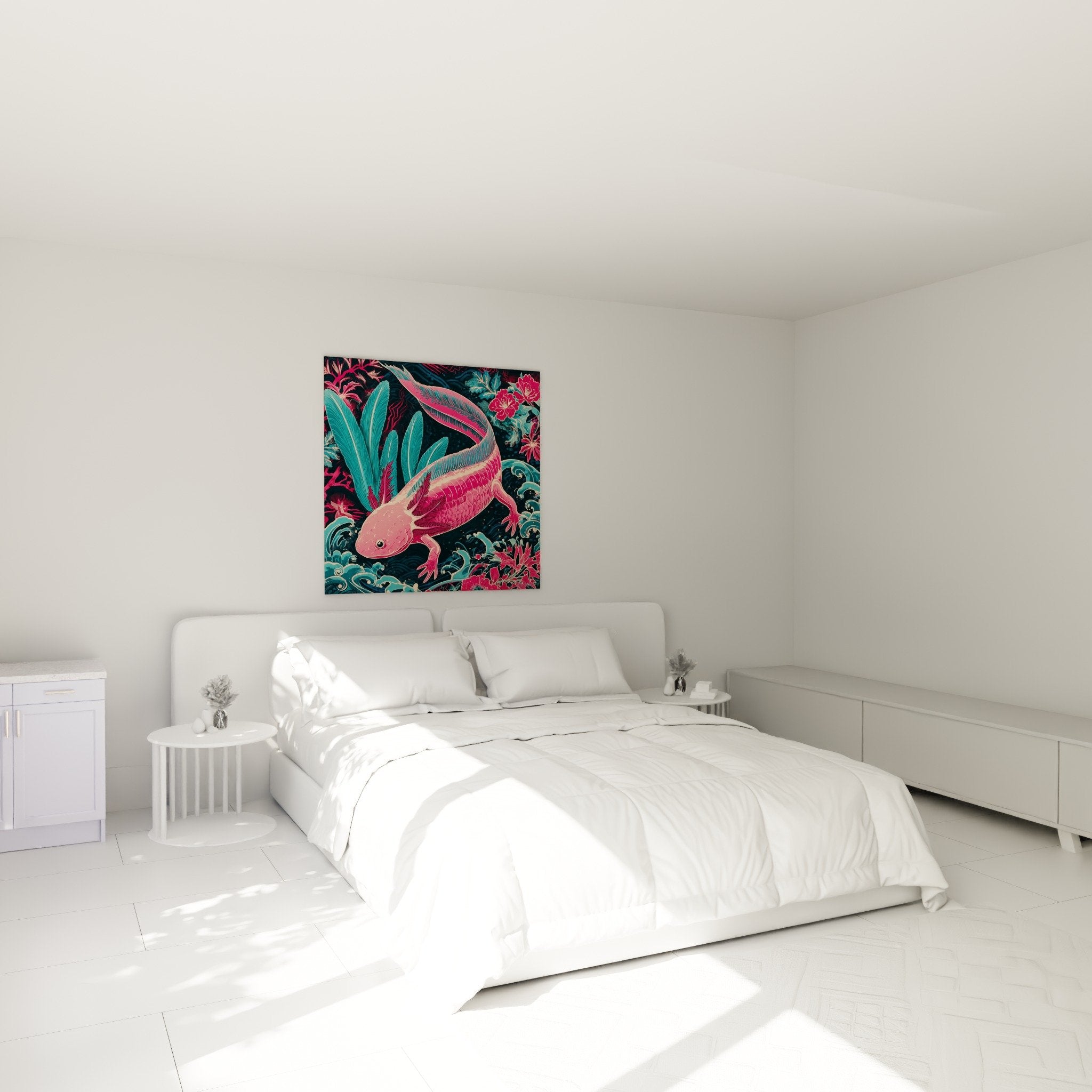
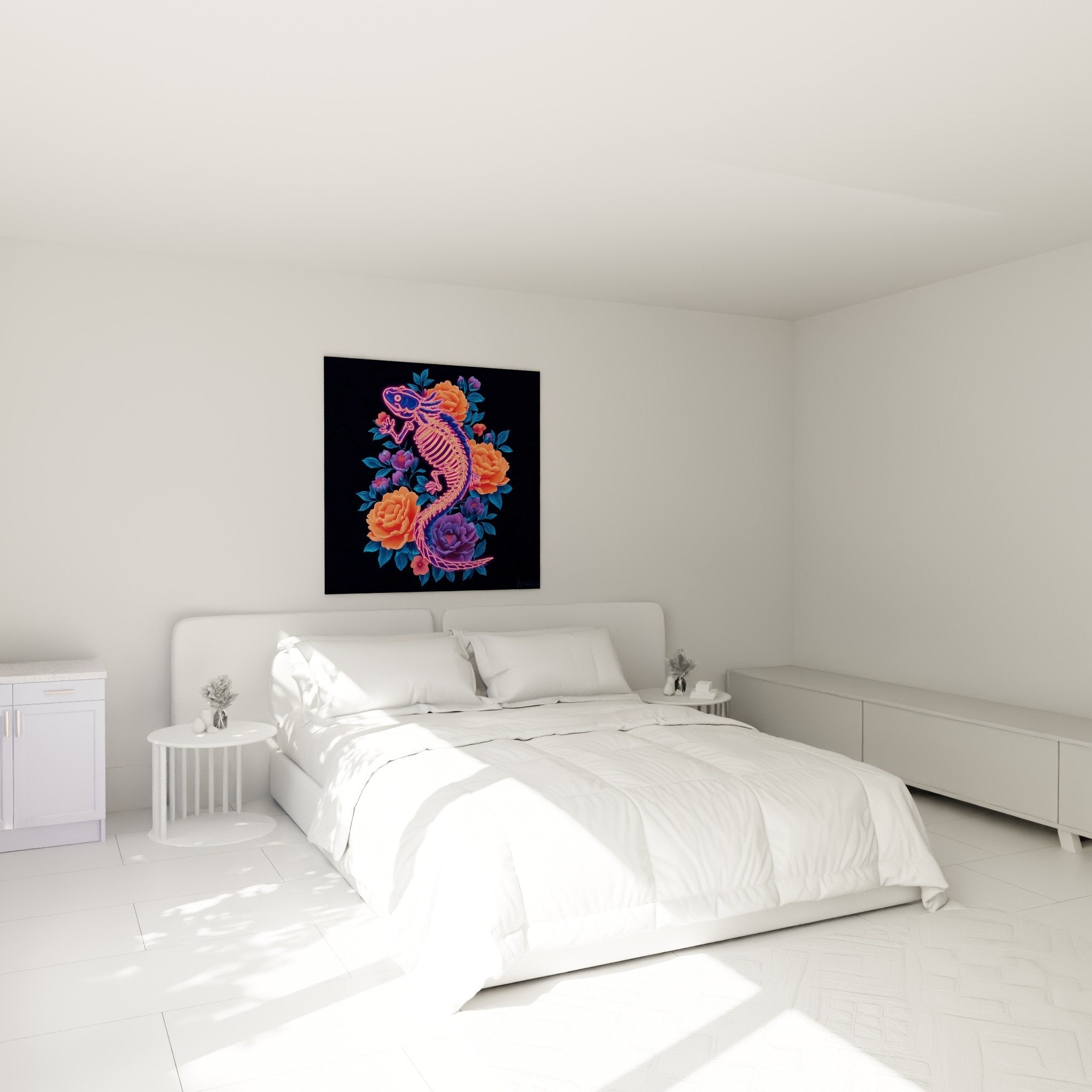
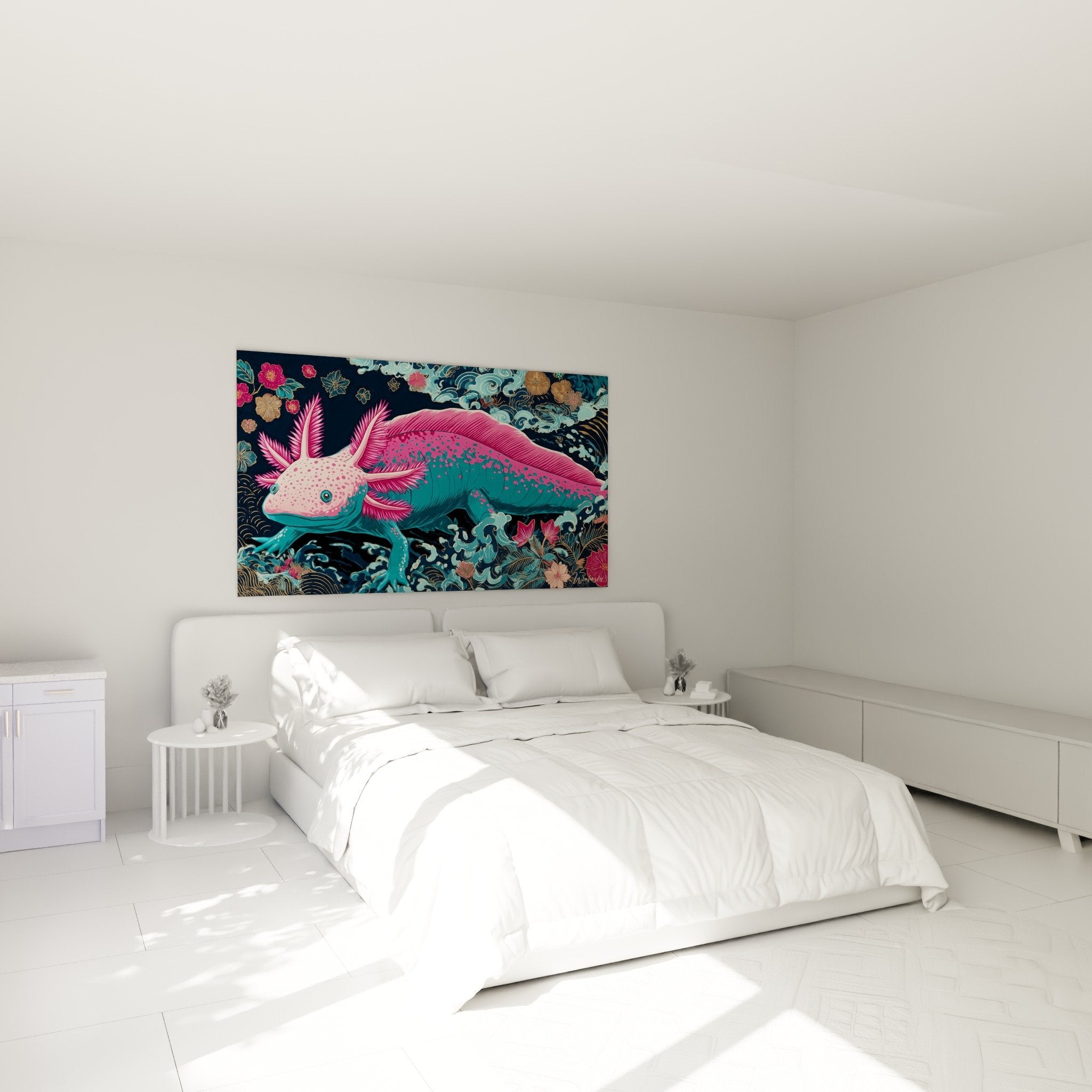
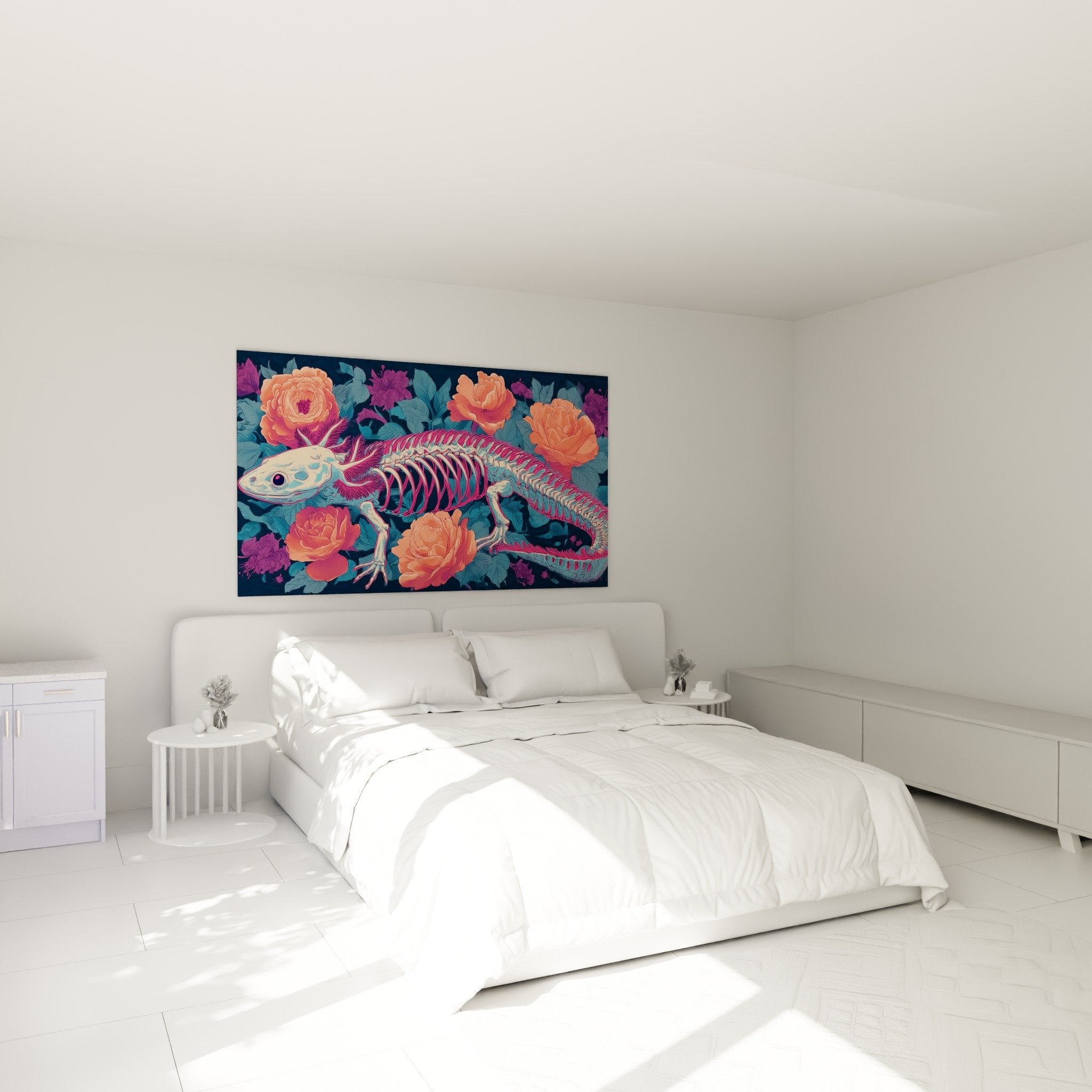
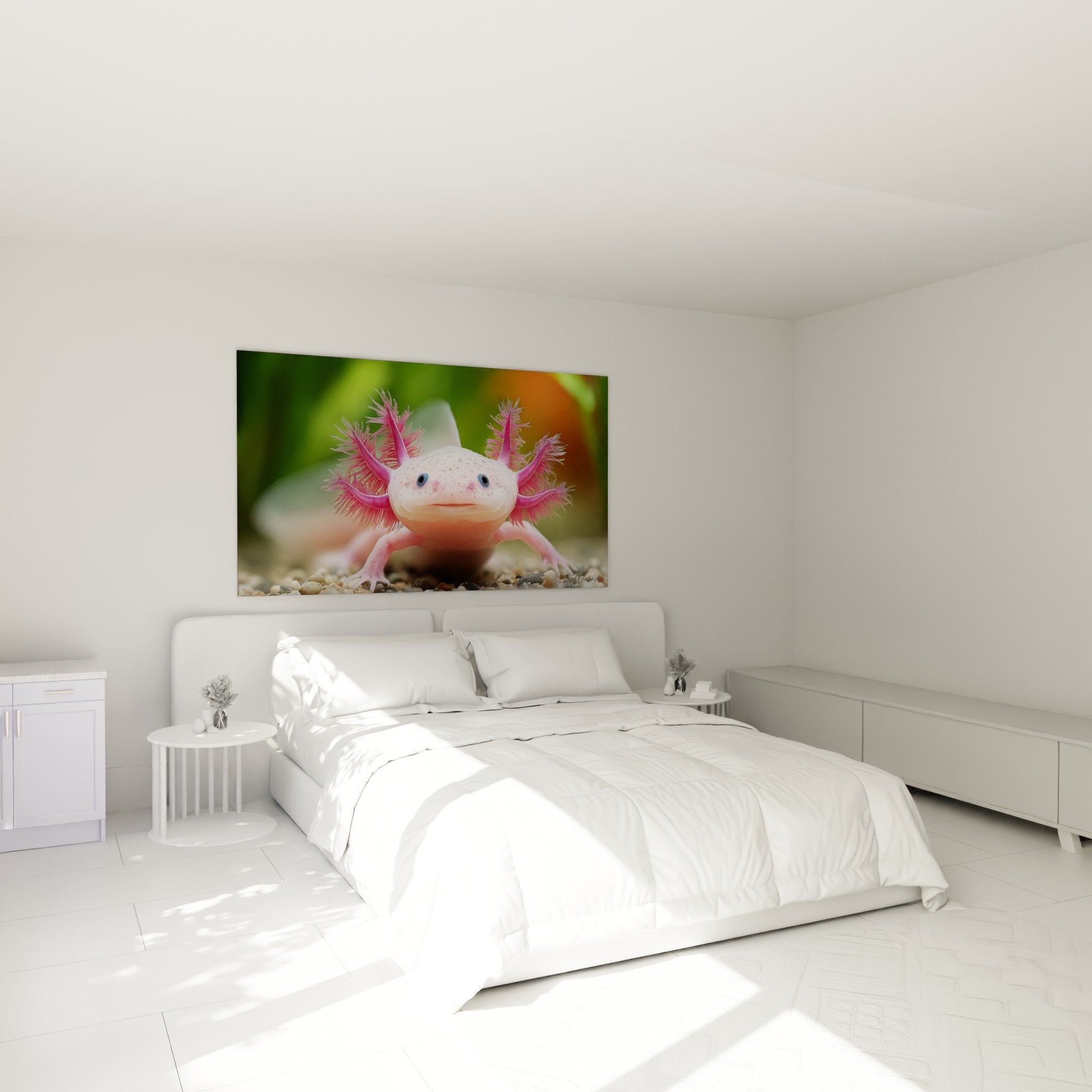
Spaces benefiting from indirect natural light particularly showcase axolotl wall art, whose subtle nuances fully express themselves without glare. Walls perpendicular to windows, slightly recessed alcoves or quiet circulation areas allow optimal contemplation. In professional environments, prioritize waiting or break areas where this aquatic creature's calming character can fully operate.
Does axolotl wall art integrate into a minimalist decorative style?
Contemporary minimalism welcomes axolotl wall art perfectly, particularly in its leucistic variants with refined tones. This creature's formal simplicity, with its fluid lines and neutral expression, naturally harmonizes with visual reduction principles. In generous format, a single axolotl wall art suffices to animate a white wall while preserving the spatial sobriety characteristic of minimalism, creating this unique focal point without decorative excess.