

Athletic Art Deco Wall Art
The Athleticism Art Deco painting celebrates the power of athletic movement through the refined aesthetics of the 1920s. This exclusive collection captures the energy of athletes in bold geometric compositions, typical of the athletic Art Decostyle. Each work sublimates strength, speed and body elegance with clean lines and contrasting colors. Perfect for lovers of vintage sports decoration, this collection transforms your space into a true tribute to athletic beauty.
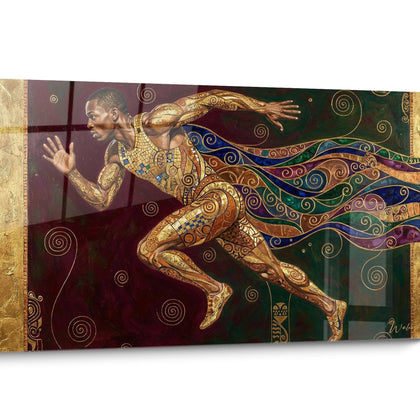
 Runner Art Deco Wall Art - Golden Elegance - Athletics Edition233,90 €
 Discus Thrower Wall Art - Ancient Athlete in Motion - Athletics Edition233,90 €
 Discobulus Bronze Painting - Ancient Discus Thrower - Athletics Edition233,90 €
Explore further
In Athletic Art Deco Wall Art



All about Athletic Art Deco Wall Art
- Presentation Artwork Athleticism Art Decor
- The Sporting Art Deco Aesthetic
- Athletic Compositions and Motifs
- Architectural Integration
The athleticism artwork Art Deco embodies the fascinating encounter between the geometric elegance of the 1920s-1930s and the celebration of athletic movement. These large-scale wall creations capture the spirit of an era when athleticism represented the ideal of physical perfection and modernity. Each composition translates the clean lines, stylized shapes, and geometric patterns characteristic of Art Deco to enhance the dynamics of athletic disciplines. The retro-modern aesthetic of these works particularly harmonizes with spacious interiors seeking a touch of vintage refinement. Whether it depicts sprinters with angular silhouettes, throwers with statuesque gestures, or jumpers in full extension, each visual evokes mechanical grace and controlled power. These large wall compositions are aimed at lovers of design history, collectors of retro-sporting pieces, and contemporary spaces seeking to integrate a strong cultural reference.
The Visual Essence of Art Deco Movement Applied to Athletics
The athleticism Art Deco artwork is distinguished by its unique graphic vocabulary inherited from the Roaring Twenties. Athletic silhouettes are treated with a characteristic geometrization: aerodynamic curves, sharp angles, and perfect symmetries evoking both mechanical precision and bodily elegance. Artists of this period magnified sprinters, javelin throwers, and hurdlers by transforming them into stylized icons where each muscle becomes a pure geometric form.
What graphic characteristics define the sporting Art Deco aesthetic?
The color palette favors marked contrasts: deep blacks, brilliant golds, metallic silvers, and touches of vibrant colors such as carmine red or cobalt blue. These color choices reinforce the visual impact in reception areas or spacious entrance halls. To complement this refined vintage atmosphere, you can explore our collection of Gold Athleticism Artwork which accentuates this luxurious dimension typical of the era.
The sporting iconography of the 1920s-1930s
The Art Deco era coincides with the rise of the modern Olympic Games and the democratization of athletics as a popular spectacle. Wall compositions from this period immortalize the flagship disciplines: sprints with explosive starts, relays with choreographed baton passes, high jumps with perfect arcs. Each representation celebrates human effort transcended by geometric aesthetics. Backgrounds often integrate radiating motifs, ascending chevrons, or speed lines that amplify the sensation of movement and progression.
How does this style influence high-end contemporary interiors?
In converted industrial lofts, Haussmannian apartments, or prestigious professional spaces, the athleticism Art Deco artwork brings a timeless sophistication. Its ability to dialogue with Scandinavian design furniture, brushed metal elements, and noble materials such as marble makes it a preferred choice for interior architects. Panoramic formats accentuate the monumentality characteristic of the Art Deco spirit, transforming an entire wall into a major artistic statement.
Visual Compositions and Symbolism of the Stylized Athletic Body
The Art Deco athletics artwork is based on specific compositional principles that radically distinguish these works from contemporary sports representations. The figure of the athlete becomes a universal archetype, stripped of individualistic details to embody the ideal of performance and functional beauty. Proportions are often elongated according to the Art Deco canon, giving runners and jumpers a sculptural elegance reminiscent of interwar monumental statues.
Recurring geometric motifs in decorative athletic imagery
Several visual elements characterize these large-scale wall compositions:
- Dynamic diagonal lines suggesting speed and upward trajectory
- Zigzag and chevron patterns evoking kinetic energy
- Concentric circles representing stadiums, tracks, or the expansion of movement
- Geometric typography integrated with record numbers or motivational quotes
- Flat silhouettes creating dramatic light and shadow contrasts
Why favor a stylized representation over a realistic one?
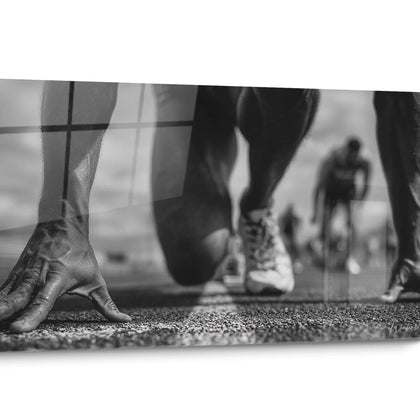
The Art Deco approach transcends simple sports documentation to create a visual mythology of athletic achievement. By eliminating superfluous details, these compositions focus attention on the essence of the gesture: the maximum extension of the long jumper, the powerful torsion of the thrower, the collective harmony of a relay. This controlled abstraction allows for a deeper emotional resonance than a descriptive photograph. Our Black and White Athletics Artwork collection also explores this characteristic formal purification.
The integration of cultural and national symbols
Many Art Deco athletics paintings subtly integrate references to the major international competitions of the 1920s-1930s: stylized flags, geometrized Olympic laurels, reinterpreted national symbols. These elements reinforce the historical and cultural dimension of the works, particularly sought after by collectors and heritage-focused institutions. XXL formats amplify this symbolic presence, transforming wall decor into a visual manifesto of excellence and achievement.
Architectural Enhancement and Spatial Staging
Installing a Art Deco athletics artwork of large format requires in-depth architectural consideration to maximize its visual impact and create consistency with the built environment. These monumental pieces naturally dialogue with spaces with generous volumes: double heights, loft blank walls, corporate reception halls, or private reception rooms. Their pronounced verticality or horizontality directly influences spatial perception.
In which architectural environments do these works flourish fully?
Interiors with clean lines and raw materials constitute the ideal setting: polished concrete, exposed brick, brushed steel, industrial glass roofs. The contrast between contemporary roughness and the retro refinement of Art Deco compositions creates a particularly prized aesthetic tension. Wellness spaces – high-end sports centers, private clubs, wellness areas – find in these stylized athletic representations an obvious thematic consistency while avoiding the banality of conventional sports visuals.
Decorative associations and strategic furniture complements
To amplify the Art Deco dimension, several associations prove particularly effective:
- Hanging geometric luminaires in brass or chrome reminiscent of the 1930s
- Streamline furniture with Macassar ebony or rosewood veneers
- Beveled mirrors with gilded frames creating sophisticated reflections
- Rugs with geometric patterns echoing the color palette of the artwork
- Animal or human figure sculptures in bronze, in the spirit of Chiparus
These elements create a coherent decorative ecosystem where the Art Deco athletics painting naturally occupies the position of focal point. The Athletics Bronze Painting collection offers metallic tones that harmonize perfectly with this type of universe.
How to adapt the artwork to the technical constraints of modern spaces?
Contemporary environments present specific challenges: integrated lighting systems, controlled acoustics, climate regulation. The positioning of the painting must anticipate light sources to avoid parasitic reflections while benefiting from lighting that enhances the contrasts characteristic of the style. In professional spaces where acoustics matter, the wall surface can be prepared with absorbent panels before installation. For a more contemporary approach to decorative athletics, our Modern Athletics Painting offers current interpretations that dialogue differently with architecture.
The inspiring dimension in performance environments
Beyond pure aesthetics, the Art Deco athletics painting conveys values of achievement and excellence particularly sought after in executive offices, consulting rooms or coaching spaces. The stylized representation of effort transformed into formal beauty naturally inspires ambition and the quest for perfection. This motivational function complements the decorative dimension, justifying the investment in imposing formats that permanently mark the minds. Our entire Athletics Painting collection explores these different facets of decorative sports representation.
What is the historical origin of the Art Deco athletics painting?
The Art Deco athletics painting finds its roots in the interwar period (1920-1940), a time when the Art Deco movement celebrated both industrial modernity and the cult of the perfect body. The Olympic Games in Paris 1924 and Amsterdam 1928 particularly inspired artists who immortalized athletic feats according to the aesthetic canons of the time: geometrization, stylization and celebration of speed.
How to maintain an Art Deco athletics painting of large dimensions?
Monumental formats require regular dusting with a dry microfiber cloth to preserve the intensity of the characteristic contrasts. Avoid direct exposure to sunlight which could alter the pigments, particularly the gold leaf and bright colors typical of the style. Controlling ambient humidity (45-55%) preserves the integrity of materials in spaces with high ceilings.
Why choose an Art Deco athletics painting rather than a contemporary sports representation?
The Art Deco athletics painting offers a cultural and historical depth absent from current sports visuals. Its ability to transcend ephemeral trends thanks to its anchoring in a major artistic movement of the 20th century guarantees lasting decorative relevance. The timeless aesthetic suits interiors seeking simultaneously sophistication, cultural reference and an inspiring dimension without falling into banal motivational imagery.


