







American Curl Cat Art Deco Wall Art
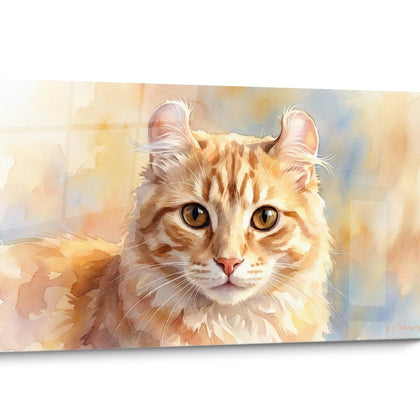
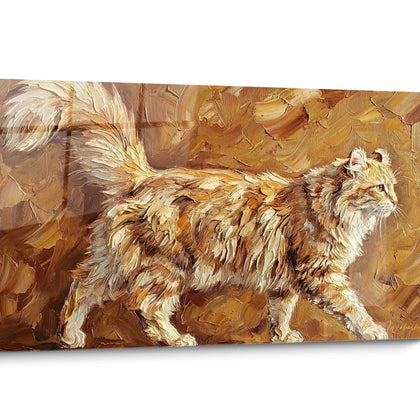
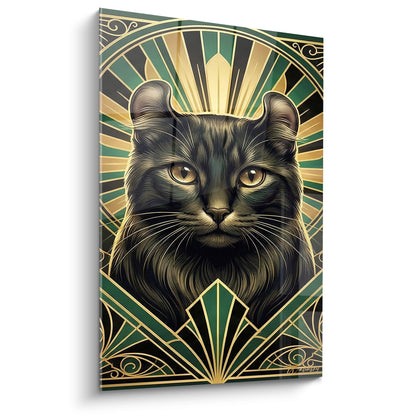
The Cat Painting American Curl Art Deco celebrates the natural elegance of this breed with curled ears in an iconic artistic style. This collection combines the feline grace of the American Curl cat with the geometric lines and sophisticated colors characteristic of the Art Deco 1920s. Each composition captures the aristocratic posture and distinctive charm of this breed, enhanced by golden geometric patterns and refined color palettes. Perfect for lovers of vintage feline wall decorations, this artistic universe transforms your interior into an elegant gallery.
 Radiant Art Deco Cat Painting - Golden Majesty - American Curl Edition273,90 €
 Art Deco Golden Cat Painting - Geometric Feline Elegance - American Curl Edition228,90 €
 Stylized Cat Painting Decorative Art - Piercing Gaze - American Curl Edition228,90 €
Explore further
In American Curl Cat Art Deco Wall Art
All about American Curl Cat Art Deco Wall Art
- American Curl Cat Painting Art Deco Presentation
- Geometric Feline Elegance
- Symbolism and Visual Architecture
- Collection and Decorative Valorization
The American Curl cat Art Deco painting embodies the bold encounter between feline exuberance and the geometric refinement of the 1920s. This wall representation celebrates the emblematic curved ears of this rare breed through the aesthetic codes of the decorative movement that marked the interwar period, offering a visual composition where linear sophistication meets animal expressivity in a controlled chromatic dialogue.
The Visual Architecture of the Art Deco Movement Applied to the Feline
The American Curl cat Art Deco painting masterfully exploits the morphological signature of this exceptional breed: its ears delicately curved backward become architectural elements that naturally integrate into the broken lines and trapezoidal forms characteristic of the decorative style of the Roaring Twenties. This anatomical peculiarity transforms each representation into a symphony of controlled curves and precise angles, where the ear curvature dialogues with zigzag patterns, chevrons and radiant forms inherent to this artistic period.
How do geometric lines sublimate feline morphology?
The visual expression adopted for these large-scale wall compositions relies on monumental verticality and fan motifs that defined the decorative architecture of the Chrysler Building or the Palais de la Porte Dorée. Contrasting flat colors – deep black, gleaming gold, metallic silver, cobalt blue – create dramatic depth that amplifies the imposing presence of the animal. Contemporary designers reinterpret the luxurious palettes of the era by favoring bold combinations where the American Curl's gaze becomes a magnetic focal point, framed by geometric friezes that recall the ironwork of Edgar Brandt.
The Chromatic Typology of Monumental Compositions
For generous spaces seeking immediate visual impact, the large-format American Curl cat Art Deco painting develops a tripartite chromatic strategy: background structured in inverted checkerboard or solar radiation, feline subject treated as stylized silhouette with essential anatomical details, and foreground enriched with geometricized floral ornaments. This visual hierarchy creates a depth reading that captures attention from a distance while revealing decorative subtleties upon close observation. Metallic variations integrated into certain premium compositions add a reflective dimension that transforms the artwork depending on the viewing angle and ambient light intensity.
Integration into Contemporary Architectural Volumes
Buyers of American Curl cat paintings frequently seek pieces capable of dialoguing with striking architectural elements: marble fireplaces, structured woodwork, restored moldings or converted industrial spaces. The generous format of these wall creations – often beyond 120 centimeters in their dominant dimension – gives them a sculptural presence that functions as a decorative manifesto rather than a simple ornamental complement. In spacious entrance halls, these representations immediately establish a sophisticated aesthetic vocabulary that announces the character of adjacent interior spaces.
Cultural Symbolism and Historical Resonance of Feline Compositions
The American Curl cat Art Deco painting inscribes itself in an iconographic tradition that dates back to Egyptian representations of Bastet, reinterpreted through the modernist prism of the 1920s. This era, fascinated by Egyptomania following the discovery of Tutankhamun's tomb, found in stylized animal forms privileged terrain for expression. The American Curl, with its distinctive morphology and aristocratic allure, perfectly embodies this fusion between Oriental exoticism and Western sophistication that characterized the decorative movement of the interwar period.
Why does this aesthetic resonate particularly in contemporary interiors?
Wall compositions adopting this stylistic register respond to a growing aspiration toward environments that escape austere dominant minimalism. They introduce controlled theatricality, opulence disciplined by geometry that particularly seduces lovers of refined maximalist decoration. The American Curl's coat becomes a pretext for visual texture play: parallel hatching evoking pleated fabrics, scale motifs recalling precious wainscoting, chromatic gradations suggesting the Oriental lacquers prized by designers of the era. This ornamental richness functions remarkably in spaces with generous volumes where it can deploy its complexity without visual saturation.
Decorative Codes Transposed from Architecture to Animal Iconography
Analysis of recurring motifs reveals systematic transposition of emblematic architectural elements: curved ears adopt the form of reinterpreted Ionic volutes, the tail becomes a geometricized arabesque extending the directional lines of the composition, whiskers transform into light rays evoking the stylized sunrises omnipresent in decorative vocabulary. This methodology transforms each golden American Curl cat painting into a formal study where each anatomical element finds its equivalent in the ornamental repertoire of the era.
Association with Noble Materials and Luxurious Finishes
Discerning collectors seek compositions that establish a material dialogue with their environment: brushed brass frames recalling original wall appliqués, rigid support assemblies evoking the decorative panels of transatlantic ocean liners, satin finishes creating depth effects similar to geometric stained glass. This attention to peripheral details transforms the acquisition into a coherent decorative investment, particularly valuable in spaces where restored period furniture converges with contemporary design inspired by French masters such as Ruhlmann or Leleu.
Acquisition Strategies and Heritage Valorization of Wall Pieces
Investment in a large-format American Curl cat Art Deco painting constitutes an approach to spatial valorization that transcends simple decoration. These wall creations function as visual anchors around which the entire decorative apparatus of a room is organized. Informed buyers favor monumental formats capable of structuring walls of five meters or more, transforming neutral architectural surfaces into assumed aesthetic manifestos.
What criteria distinguish an exceptional composition from a conventional interpretation?
Execution quality manifests itself in the sophistication of the chromatic palette employed: beyond binary contrasts, remarkable works develop subtle tonal transitions that enrich visual reading. The anatomical details of the American Curl – coat texture in color transition zones, luminous intensity in the iris, fineness of whiskers – reveal the level of technical mastery. Premium compositions frequently integrate subtle relief elements or brilliance variations that create visual dynamics evolving with daily light conditions, transforming the artwork into a living presence rather than a static image.
Articulation with Complementary Thematic Collections
Collectors developing a coherent approach often establish visual dialogues between different stylistic interpretations of the same feline breed. A vintage American Curl cat painting with patinated sepia tones can create a fascinating conversation with an Art Deco version featuring vibrant chromaticism, establishing a visual narrative that traverses aesthetic eras. This strategy of reasoned accumulation functions particularly well in spacious corridors, monumental staircases or libraries where multiple compositions can coexist without visual competition, each contributing its share to a global decorative narrative.
Aesthetic Permanence and Evolution of Decorative Trends
Unlike ephemeral fashions, the Art Deco register benefits from historical legitimacy and institutional recognition that guarantee its long-term relevance. Dedicated museums – the Museum of the 1930s in Boulogne-Billancourt, permanent collection of the Metropolitan Museum – ensure continuous cultural valorization that protects these aesthetic choices from obsolescence. For high-end professional spaces – law offices, executive offices, luxury boutiques – these wall compositions instantly communicate affiliation with values of excellence, refinement and cultural knowledge that transcend contemporary taste fluctuations.
Is an American Curl cat Art Deco painting suitable for modern residential spaces?
Absolutely, these compositions bring historical depth and visual sophistication that create an enriching contrast with the streamlined lines of contemporary architecture, establishing a stimulating temporal dialogue rather than mere stylistic coherence.
How to determine the optimal size for an American Curl cat Art Deco painting?
The general rule recommends that a wall composition occupy between 60 and 75% of the width of the main furniture it overlooks, or constitute an autonomous focal point occupying approximately one-third of available wall surface to guarantee balanced visual impact without saturation.
Do geometric Art Deco patterns risk creating excessive visual saturation?
Professionally designed compositions integrate visual rest zones and a hierarchization of ornamental elements that prevent perceptual overload, the feline subject functioning as a calming anchor point within the surrounding geometric structure.


