


African Tribal Face Wall Art
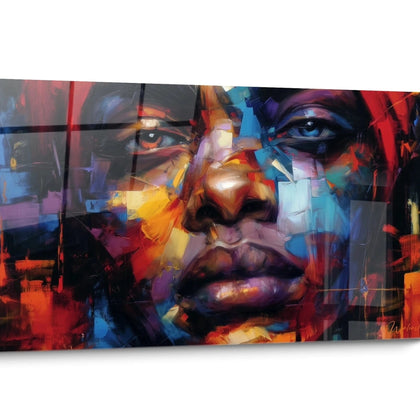
Our African Tribal Face Painting collection celebrates the cultural richness of the African continent through striking ethnic portraits. Each work captures the authenticity of African tribal faces with remarkable artistic depth. These creations highlight ancestral traditions, ritual scarifications, and distinctive ethnic adornments. Perfect for an authentic African wall decoration, these paintings bring character and spirituality to your interior.
 African Woman Artwork - Queen with Red Pearls - African Face Edition273,90 €
 African Woman Face Painting - Beads and Weavings - African Face Edition273,90 €
 African Woman Face Painting - Tribal Mystery - African Face Edition273,90 €
 Tribal African Face Painting - Golden Beauty - African Face Edition228,90 €
 Colorful African Woman Painting - Modern Tribal Portrait - African Face Edition273,90 €
 Painting Three Elegant African Women - Tribal Elegance - African Face Edition273,90 €
 African Man Tribal Colorful Paintings - Cultural Identity - African Face Edition228,90 €
 African Woman Painting with Colorful Body Art - Contemporary Tribal Art - African Face Edition228,90 €
 Four Adorned African Women Wall Art - Ancestral Heritage - African Face Edition242,90 €
 Woman Painting Living Memory Adornment - African Face Edition228,90 €
 Portrait Painting Of Celebrations - African Face Edition228,90 €
 African Face Kaleidoscope Ancestral Painting - African Face Edition228,90 €
 Face Painting Memory of the Ancestors - African Face Edition273,90 €
 Portrait Painting Masai Oracle - African Face Edition273,90 €
 Portrait Painting Priestess of Colors - African Face Edition273,90 €
 African Face Artwork Ancestral Mask - Africa Edition273,90 €
 African Wall Art Purple Mask - africa edition273,90 €
 Ancestral Flames Warriors Painting - Africa Edition273,90 €
 African Face Artwork Ethnic Magic - Africa Edition273,90 €
 African Woman Wall Art Amber Gaze - Africa Edition273,90 €
 African Mask Wall Art Ancestral Gaze - africa edition273,90 €
 African Woman Tribal Wisdom Painting - africa edition273,90 €
 African Woman Painting Tribal Soul - africa edition273,90 €
 African Mask Artwork Drums Echo - Africa Edition273,90 €
Explore further
In African Tribal Face Wall Art
-
 African Face Wall Art148
artworks
African Face Wall Art148
artworks
-
 African Face Black and White Wall Art8
artworks
African Face Black and White Wall Art8
artworks
-
 Golden African Face Wall Art24
artworks
Golden African Face Wall Art24
artworks
-
 African Face Pop Art Wall Art7
artworks
African Face Pop Art Wall Art7
artworks
-
 African Face Street Art Wall Painting4
artworks
African Face Street Art Wall Painting4
artworks
-
 African Face Portrait Wall Art24
artworks
African Face Portrait Wall Art24
artworks
-
 Colorful African Face Wall Art24
artworks
Colorful African Face Wall Art24
artworks
-
 Abstract African Face Canvas Art20
artworks
Abstract African Face Canvas Art20
artworks
-
 African Face Profile Wall Art24
artworks
African Face Profile Wall Art24
artworks
-
 Modern African Face Wall Art24
artworks
Modern African Face Wall Art24
artworks


All about African Tribal Face Wall Art
- African Tribal Face Wall Art Presentation
- Symbolism and Authenticity
- Placement and Ambiance
- Heritage Valorization
The African tribal face wall art embodies an exceptional encounter between ancestral memory and contemporary decorative expression. Unlike abstract or stylized representations, these works preserve the authenticity of ethnic features, ritual scarifications and traditional ornaments that tell centuries of history. Each captured gaze reveals a specific cultural identity, an affiliation to a precise ethnicity, transforming your space into an anthropological gallery. These large-scale creations magnify the expressive power of faces, where every detail - facial tattoos, ceremonial headdresses, nasal ornaments - becomes a captivating focal point. Acquiring such a wall art responds to a quest for decorative authenticity, a desire to anchor your interior in a profound cultural dimension that transcends simple aesthetics. These tribal representations create a unique contemplative atmosphere, inviting travel and discovery of ancient African civilizations.
The Authenticity of Tribal Representations in Modern Decoration
What is the significance of facial scarifications in African tribal art?
The African tribal face wall art distinguishes itself through the precision of scarifications represented, these ritual marks that identify ethnic belonging and social status. The geometric patterns engraved on cheeks, forehead or temples tell stories of initiations, passages to adulthood or royal lineages. In Yoruba, Fulani or Makonde cultures, each pattern possesses a codified meaning that the mural artwork transposes with fidelity. These details bestow exceptional narrative depth to your decoration, transforming the artwork into a living ethnographic document.
Large formats reveal with striking clarity these traditional body ornamentations, allowing appreciation of the complexity of tribal motifs. Unlike African tribal face abstract wall art which simplify features, tribal representations document cultural practices with precision. This ethnographic accuracy addresses the expectations of authentic African art collectors and anthropology enthusiasts.
Traditional ornaments as visual decorative language
Elaborate headdresses, Maasai beaded necklaces, Mursi lip plates or Ndebele neck rings constitute powerful visual elements that enrich the composition. An African tribal face wall art highlights these ceremonial ornaments worn during sacred rituals or community celebrations. These traditional accessories bring exceptional chromatic and textural dimensions, with contrasts between ancient metals, natural fibers and mineral pigments.
The integration of these ornaments in your space creates a unique decorative vocabulary, difficult to reproduce with other types of artworks. The generous dimensions allow appreciation of the fineness of the artisanal work represented, from complex braiding to cowrie arrangements. This ornamental richness harmonizes particularly well with interiors that value global craftsmanship and ethnographic collections, creating visual dialogues between continents and eras.
Creating an Immersive Cultural Atmosphere with Tribal Portraits
How does a tribal face transform the energy of a contemporary living room?
Installing an African tribal face wall art in a living room generates a contemplative human presence that radically modifies the atmosphere. Unlike landscapes or abstractions, the gaze of a tribal face establishes direct emotional connection with occupants. This intensity of visual contact creates a meditative anchor point, particularly appreciated in reception spaces where one wishes to stimulate cultural conversations.
Large formats function as anthropological windows open onto distant civilizations, transforming a wall into a cultural portal. The chosen facial expression - wisdom of an elder, pride of a warrior, serenity of a matriarch - subtly influences room ambiance. Tribal art collectors privilege these works for their capacity to generate quasi-physical presence, a silent dialogue between ancestral traditions and urban modernity.
Integration into professional cultural spaces
Art galleries, cultural centers, international law offices or travel agencies particularly value these tribal representations. An African tribal face wall art instantly communicates values of cultural diversity, international openness and respect for heritage. In a directorial office, it signals sensitivity to intercultural issues and appreciation for African heritage.
Fusion restaurants or gastronomic establishments exploring African cuisines use these works to reinforce their cultural identity. The tribal portrait becomes a commercial storytelling element, visual authenticity that validates the venue's positioning. Monumental dimensions are perfectly suited to commercial spaces with high ceilings, where the artwork must assert itself despite surrounding movement and activity, creating a memorable visual landmark for clientele.
Valorizing African Heritage Through Wall Decoration
Why choose a tribal portrait to celebrate your African roots?
For people of African descent living in diaspora, the African tribal face wall art represents far more than a decorative choice: it constitutes an act of identity reconnection. Displaying a face bearing traditional ethnic markers - Dogon scarifications, Surma facial paintings, Himba hairstyles - amounts to honoring ancestral memory and transmitting this heritage to future generations. These artworks become cultural transmission supports in homes, pedagogical tools for teaching children the richness of African civilizations.
Large formats allow creation of spaces dedicated to celebrating African identity, particularly in family rooms or personal libraries. Unlike generic representations, specific tribal portraits allow identification and valorization of precise ethnicities - Maasai, Zulu, Ashanti - strengthening sense of belonging. This identity dimension transforms acquisition into major emotional and cultural investment.
The tribal portrait collection as private gallery
Enlightened enthusiasts develop thematic collections grouping different African ethnicities, thus creating comparative mural galleries. This curatorial approach enables exploration of the continent's phenotypic and cultural diversity: fine features of Fulani nomads, broadened faces of Bantus, enigmatic expressions of Dogons. Each African tribal face wall art brings its specific ethnographic quality, progressively building a visual panorama of African peoples.
This collection strategy responds to an approach of permanent cultural education, transforming the home into a personal museum. The imposing dimensions of each artwork allow detailed reading of facial and ornamental particularities, facilitating stylistic comparisons. For ethnic art investors, these coherent sets acquire cultural value superior to isolated pieces.
Does an African tribal face wall art suit all interior styles?
Absolutely, these artworks integrate remarkably in minimalist contemporary interiors where they create striking contrast, chic ethnic spaces which they authenticate, and even industrial decors where their humanity warms raw materials. Their stylistic versatility rests on the universality of human expression.
What is the difference between a tribal artwork and a framed ethnographic photograph?
The African tribal face wall art offers an artistic interpretation that sublimes features through pictorial work, accentuated contrasts and expressive chromatic choices. Unlike documentary photography, it transposes reality toward an amplified aesthetic dimension, ideal for wall decoration with strong visual impact.
How to maintain a large-scale African tribal face wall art?
Gentle monthly dusting with a dry microfiber cloth suffices to preserve color brilliance. Avoid direct sun exposure which could alter pigments, and maintain stable humidity to protect the support, ensuring optimal conservation of this precious cultural piece.


