








Colorful African Face Wall Art
Our African Face Painting Colorful collection celebrates the beauty and richness of contemporary African art. Each artwork captures the essence of colorful ethnic portraits through vibrant and expressive compositions. These creations highlight the cultural diversity of Africa with dazzling palettes that bring life and character to your spaces. Perfect for enhancing a modern living room or a personal gallery, these modern African art paintings transform your walls into true artistic celebrations.
 Woman Painting Divine Colored Connection - African Face Edition273,90 €
 African Woman Portrait Painting - Color Mosaic - African Face Edition273,90 €
 African Woman Face Painting - Colorful Expressionist Portrait - African Face Edition273,90 €
 Colorful African Woman Painting - Modern Tribal Portrait - African Face Edition273,90 €
 African Face Mosaic Colorful Painting - Contemporary Artistic Fusion - African Face Edition228,90 €
 African Woman Face Painting with Colorful Art - Artistic Expression - African Face Edition273,90 €
 African Woman Painting with Colorful Body Art - Contemporary Tribal Art - African Face Edition228,90 €
 Two African Women Profile Painting - Ethnic Harmony - African Face Edition273,90 €
 Four Adorned African Women Wall Art - Ancestral Heritage - African Face Edition242,90 €
 Woman Painting Living Memory Adornment - African Face Edition228,90 €
 African Face Kaleidoscope Ancestral Painting - African Face Edition228,90 €
 African Face Painting With Thousand Sparkles - African Face Edition228,90 €
 Woman Painting Fire of the Ancestors - African Face Edition273,90 €
 Portrait Painting Aurora Multicolored Radiant - African Face Edition273,90 €
 Face Painting Mystic Sun - African Face Edition273,90 €
 African Face Painting Soul Reflections - African Face Edition273,90 €
 African Face Painting Fragments of Africa - African Face Edition273,90 €
 African Face Painting Telluric Force - African Face Edition273,90 €
 Woman Painting Amber and Sunlight Gaze - African Face Edition273,90 €
 Face Painting Splendor with Purple Lips - African Face Edition273,90 €
 Face Painting Radiant Dignity - African Face Edition273,90 €
 Face Painting Africa's Breath - African Face Edition273,90 €
 African Woman Continent Pride Wall Art - Africa Edition273,90 €
 African Wild Beauty Wall Art - Africa Edition228,90 €
Explore further
In Colorful African Face Wall Art
-
 African Face Wall Art148
artworks
African Face Wall Art148
artworks
-
 African Face Black and White Wall Art8
artworks
African Face Black and White Wall Art8
artworks
-
 Golden African Face Wall Art24
artworks
Golden African Face Wall Art24
artworks
-
 African Face Pop Art Wall Art7
artworks
African Face Pop Art Wall Art7
artworks
-
 African Face Street Art Wall Painting4
artworks
African Face Street Art Wall Painting4
artworks
-
 African Face Portrait Wall Art24
artworks
African Face Portrait Wall Art24
artworks
-
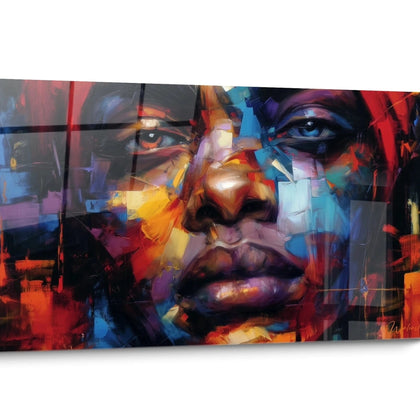 Abstract African Face Canvas Art20
artworks
Abstract African Face Canvas Art20
artworks
-
 African Face Profile Wall Art24
artworks
African Face Profile Wall Art24
artworks
-
 African Tribal Face Wall Art24
artworks
African Tribal Face Wall Art24
artworks
-
 Modern African Face Wall Art24
artworks
Modern African Face Wall Art24
artworks


All about Colorful African Face Wall Art
- Colorful African Face Wall Art Presentation
- Chromatic Cultural Expression
- Visual Dynamics and Ambiance
- Celebrating Afro Heritage
The colorful African face wall art represents a vibrant celebration of identity and the rich cultural wealth of the African continent. These large-format mural works capture the essence of ethnic portraiture while exploding with bold hues that instantly transform your environment. Unlike monochrome or neutral representations, these artistic creations play on chromatic saturation to magnify facial features, traditional hairstyles, and the expressiveness of gazes. Each shade of incandescent red, solar yellow, electric blue, or emerald green dialogues with ochre and terracotta tones to create a composition that pulses with energy. The strategic use of vibrant colors on dark or contrasted backgrounds allows you to focus attention on the emotional intensity of the depicted subject, making these artworks powerful visual anchors in contemporary spaces, afro-centric living rooms, cultural offices, or private galleries.
Pigmentary Explosion in Service of African Identity
The colorful African face wall art transcends mere decoration to become a chromatic identity affirmation in your interior. The expressive power of these works lies in their ability to combine ethnic portraiture with a bold prismatic palette, creating a visual dialogue between ancestral tradition and aesthetic modernity. Saturated hues are never gratuitous: they evoke natural pigments used in tribal ceremonies, vibrant wax fabrics, or ritual body paintings that mark life passages in various African cultures.
Why choose a colorful African face wall art?
Integrating a colorful African face wall art into a living space responds to a search for decorative singularity while valuing non-Western aesthetics. Vibrant colors applied to specific physiognomic features – high cheekbones, full lips, deep gazes – create a striking contrast that immediately captures the eye. This chromatic concentration on the face allows you to play with perceived emotions: warm oranges and yellows convey joy and vitality, while deep purples and blues suggest wisdom and spirituality. For collectors of afro-contemporary art, these pieces represent an aesthetic investment consistent with current trends celebrating cultural diversity and mixed beauty.
The symbolism of African chromatic palettes
Each color combination in a colorful African face wall art carries symbolic weight inherited from continental traditions. Scarlet red evokes vital force and initiatory rites, golden yellow recalls royalty and ceremonial masks, while deep green symbolizes fertility and connection to ancestral land. These chromatic codes, when adorning a face with contemplative or determined expressions, transform the work into a condensed visual narrative. Large formats amplify this pigmentary narration, allowing appreciation of subtle nuances in gradations applied to shadow and light areas of the face. For those exploring contemporary representations of abstract African face art, the colored approach offers a figurative alternative that preserves emotional intensity while remaining more accessible to African art newcomers.
The psychological impact of large-format colored portraits
The presence of a large-scale colored human face activates specific neurological responses in the observer. Our brain, programmed to decode facial expressions, immediately resonates with these portraits, while saturated colors stimulate brain zones associated with primary emotions. This double stimulation – facial recognition and chromatic response – creates a particularly powerful immersive visual experience in reception spaces. A colorful African face wall art positioned facing the entrance thus becomes an identity marker that instantly communicates the aesthetic and cultural values of the inhabitants, while initiating a sensory conversation before any verbal exchanges.
Composing a Living Space Around Chromatic Portraits
Integrating a colorful African face wall art into your interior architecture requires a strategic approach that maximizes its visual impact while creating coherence with other decorative elements. These works function as ambiance amplifiers, capable of radically transforming space perception through their chromatic density. In a living room with neutral tones – beiges, grays, off-whites – the colored portrait becomes the catalyzing element that infuses energy and personality, avoiding the clinical effect of overly minimalist interiors. The large dimensions of these artworks allow you to cover entire walls, creating a visual window into a different cultural universe.
How vibrant colors dialogue with your furnishings?
Positioning a colorful African face wall art requires anticipating chromatic echoes with the rest of the room. If your work features warm dominants – reds, oranges, yellows – it will naturally harmonize with exotic woods like wengé or teak, as well as with textiles featuring geometric patterns inspired by Kente or Bogolan. Conversely, a portrait with cool tones – electric blues, emerald greens, deep purples – will create stimulating contrast with furniture featuring clean lines in brushed metal or light leather. The mistake to avoid is multiplying sources of saturated colors: the artwork should remain the unique focal point, with other elements playing a supporting role rather than competing chromatically.
Which spaces benefit most from colorful African portraits?
Professional spaces dedicated to creative professions – communication agencies, design studios, architecture firms – find in the colorful African face wall art a precious ally for stimulating inspiration and asserting distinctive visual identity. In lofts and open spaces where functional zones overlap, these monumental portraits serve as visual delimiters, creating psychological alcoves without resorting to physical partitions. Medical or legal waiting rooms also adopt these works to humanize environments often perceived as cold, the presence of an expressive face creating emotional connection that eases tensions. For private residences, the main living room wall or the space above an L-shaped sofa constitute privileged placements where large format can deploy all its narrative power.
Creating visual sequences with multiple portraits
For collectors with extensive wall surfaces, assembling multiple colorful African face wall art in series or triptych format opens fascinating narrative possibilities. By playing on palette variations – one portrait with warm dominants, another in cool tones, a third in complementary shades – you create a chromatic conversation that guides the eye through the space. This approach works particularly well in long corridors or stairwells, where portrait succession creates visual rhythm that energizes circulation. The key is maintaining stylistic coherence – consistent contour treatment, comparable saturation levels, similar scale – while varying sufficiently the facial expressions and orientations to avoid monotony. These multiple compositions transform the wall into a personal gallery celebrating the diversity of physiognomies and expressions of the African continent.
Investing in Chromatic Afro-Contemporary Art
Acquiring a colorful African face wall art represents far more than a simple decorative purchase: it is a cultural and aesthetic positioning that fits within the global movement of reappropriation and celebration of African and diasporic identities. These works contribute to the visibility of aesthetics long marginalized in Western artistic circuits, thus contributing to a diversification of the domestic decorative canon. For people of African descent, these colored portraits function as valuable identity mirrors, countering historically limited or stereotyped representations of Black and mixed-race beauty in European academic art.
The rise of afro-aesthetics in decoration
The decorative art market has experienced growing demand for authentic and dignified representations of African cultures in recent years. The colorful African face wall art fits perfectly into this trend that simultaneously values cultural heritage and stylistic innovation. Large formats particularly meet the expectations of millennials and Generation Z who seek statement pieces capable of defining a space's identity while serving as conversation starters. These buyers privilege works that tell a story, that carry meaning beyond their immediate decorative value, making the colored African portrait a strategic choice for an interior that is both aesthetically impactful and culturally significant.
How to preserve the chromatic intensity of your work?
Investing in a large-dimension colorful African face wall art requires particular attention to its conservation to maintain pigment vibrancy over time. Unlike works with sober tones that age with a certain grace, saturated colors can lose their brilliance if exposed directly to ultraviolet rays. The ideal positioning thus avoids walls receiving direct sunlight during peak hours, preferring instead surfaces perpendicular to windows or protected by filtering sheers. For collectors concerned with optimal preservation, installing a controlled-spectrum LED lighting system allows you to showcase the work in the evening without accelerating pigment degradation. Regular dusting with a dry microfiber cloth suffices for routine maintenance, absolutely avoiding chemical products that could alter the superficial pigmentary layers.
Combining spirituality and chromatic aesthetics
Beyond their purely visual dimension, some collectors attribute a quasi-spiritual function to colorful African face wall art, considering them as energetic guardians of domestic space. This perception is rooted in African traditions where masks and facial representations carried symbolic and protective charges. The colors themselves are invested with specific vibratory properties in various cosmogonies: red for grounding and vitality, yellow for mental clarity and prosperity, blue for spiritual protection. Whether or not one adheres to these interpretations, the presence of a face with affirmed features and intense gaze undeniably creates presence in the room, subtly modifying atmosphere and inviting a form of silent dialogue. To maximize this effect, some choose portraits whose expression corresponds to the desired energy: serene gazes for bedrooms, determined expressions for offices, subtle smiles for convivial spaces.
Where to place a colorful African face wall art to maximize impact?
The main living room wall, immediately visible from the entrance, constitutes the privileged location for a large-format colorful African face wall art. This central position allows the work to visually structure the entire space and affirm the aesthetic identity of the place from the outset. The imposing dimensions of large-format models require a minimum ceiling height of 2.60 meters to avoid visual crushing effect.
Which wall colors work best with a colorful African portrait?
Neutral backgrounds – pure white, pearl gray, sand beige – offer optimal contrast to make the chromatic intensity of a colorful African face wall art stand out. An anthracite or matte black wall creates sophisticated theatricality where vibrant colors seem to literally emerge from darkness. Absolutely avoid: already-colored walls in saturated tones that would compete visually with the artwork and dilute its impact.
Does a colorful African face wall art suit minimalist interiors?
Absolutely, architectural minimalism actually offers the ideal setting for a large-format colorful African face wall art. Pure lines and sober furnishings create a perfect frame where the work can deploy its full expressive power without visual distraction. This juxtaposition between structural simplicity and chromatic richness generates an aesthetic tension particularly sought after in premium contemporary decoration.


