


African Face Portrait Wall Art
Our Painting Visage africain Portrait collection celebrates the authentic beauty and cultural richness of the African continent. Each artwork captures the intensity of the gazes, the nobility of the features, and the deep soul of contemporary African portraits. These artistic creations enhance your interior by bringing a touch of ethnic elegance and authenticity. Perfect for an African-inspired wall decoration, they transform your spaces into personal art galleries and tell fascinating stories.
 African Woman Painting Autumn - Goddess with Golden Leaves - African Face Edition273,90 €
 African Woman Painting - Coral Petals - African Face Edition273,90 €
 African Woman Artwork - Queen with Red Pearls - African Face Edition273,90 €
 African Woman Painting - Golden Elegance - African Face Edition273,90 €
 Golden African Woman Painting - Ancestral Majesty - African Face Edition273,90 €
 African Woman with Necklace Painting - Contemporary Ethnic Portrait - African Face Edition273,90 €
 African Woman Autumn Painting - Floral Metamorphosis - African Face Edition273,90 €
 African Woman Autumn Painting - Seasonal Metamorphosis - African Face Edition228,90 €
 Contemplative African Woman Painting - Golden Elegance - African Face Edition228,90 €
 African Woman Painting - Modern Profile - African Face Edition228,90 €
 Colorful African Woman Painting - Modern Tribal Portrait - African Face Edition273,90 €
 Two African Women Profile Painting - Ethnic Harmony - African Face Edition273,90 €
 African Woman Painting with Oranges - Tropical Portrait - African Face Edition228,90 €
 African Woman Painting Urban Goddess - Africa Edition273,90 €
 African Woman Goddess Floral Painting - africa edition273,90 €
 African Wall Art Visual Melody - Africa Edition273,90 €
 African Wall Art Pearls of Wisdom - africa edition273,90 €
 African Woman Wall Art Geometric Beauty - Africa Edition273,90 €
 African Woman Wall Art Floral Crown - Africa Edition273,90 €
 African Woman Sunflower Goddess Wall Art - Africa Edition273,90 €
 African Woman Floral Beauty Art - Africa Edition273,90 €
 African Woman Painting Tribal Soul - africa edition273,90 €
 African Wild Beauty Wall Art - Africa Edition228,90 €
 African Wall Art Heir to the Lands - Africa Edition228,90 €
Explore further
In African Face Portrait Wall Art
-
 African Face Wall Art148
artworks
African Face Wall Art148
artworks
-
 African Face Black and White Wall Art8
artworks
African Face Black and White Wall Art8
artworks
-
 Golden African Face Wall Art24
artworks
Golden African Face Wall Art24
artworks
-
 African Face Pop Art Wall Art7
artworks
African Face Pop Art Wall Art7
artworks
-
 African Face Street Art Wall Painting4
artworks
African Face Street Art Wall Painting4
artworks
-
 Colorful African Face Wall Art24
artworks
Colorful African Face Wall Art24
artworks
-
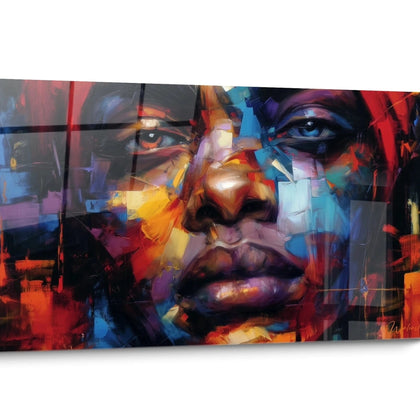 Abstract African Face Canvas Art20
artworks
Abstract African Face Canvas Art20
artworks
-
 African Face Profile Wall Art24
artworks
African Face Profile Wall Art24
artworks
-
 African Tribal Face Wall Art24
artworks
African Tribal Face Wall Art24
artworks
-
 Modern African Face Wall Art24
artworks
Modern African Face Wall Art24
artworks


All about African Face Portrait Wall Art
- African Face Painting Portrait Presentation
- The Expressiveness of African Portraiture
- Visual Impact in Large Spaces
- Symbolism and Cultural Identity
The African face portrait painting embodies a fascinating encounter between the ancestral art of the continent and contemporary aesthetics. These monumental creations capture the intensity of the gaze, the nobility of features, and the spiritual depth that characterize human representation in African imagery. Each work becomes a silent dialogue between tradition and modernity, transforming your space into a gallery dedicated to celebrating human beauty in its most authentic form. The generous formats of these compositions allow total immersion in the emotional universe of the depicted subject, creating an almost tangible presence in your interior.
The Captivating Expressiveness of Monumental African Portraiture
A large-scale African face portrait painting establishes an immediate emotional connection with the observer through the intensity of the captured gaze. The deep pupils, often enhanced with subtle reflections, create the striking illusion of being observed in return, transforming passive contemplation into an interactive experience. This visual reciprocity amplifies considerably with imposing formats, where each physiognomic detail – skin texture, expression lines, bone structure – acquires a sculptural presence in the inhabited space.
What emotions do contemporary African portraits convey?
The color palette employed in these facial representations frequently favors dramatic contrasts between deep ochres, intense ebonies, and touches of brilliant white. These chromatic oppositions serve not only aesthetics: they sculpt the volumes of the face, accentuate the dimensionality of features, and confer natural theatricality to the expression. The areas of shadow and light dialogue to reveal the psychological complexity of the subject, evoking contemplative serenity, affirmed pride, or introspective melancholy.
The silent narration of portrayed features
Each wrinkle, scar, or stylized tribal mark on an African face portrait painting tells a collective and personal story. Contemporary artists reinterpret traditional scarifications as purely visual graphic elements or as claimed identity symbols. This ambivalence creates exceptional narrative richness, where the buyer can project their own cultural interpretations while respecting the aesthetic integrity of the work. Adornments – elaborate headdresses, metallic ornaments, traditional fabrics – become compositional elements that structure the pictorial space.
Monumentality in service of psychological intimacy
Paradoxically, the enlargement of the face to imposing proportions does not create distance but accentuates the perceived intimacy with the subject. Micro-expressions become legible: the slight forehead furrow suggesting reflection, the hint of a smile at the corner of the lips evoking secret complicity, the imperceptible tension of the jaw betraying inner determination. For collectors seeking a large-format African face art portrait, this emotional legibility constitutes a major decision criterion, transforming the acquisition into a relational choice as much as an aesthetic one.
Visual Dominance and Spatial Anchoring of Large-Scale Portraits
In contemporary architectural volumes characterized by generous ceiling heights and minimalist walls, the monumental African face portrait painting functions as the absolute focal point. Its ability to capture and direct the gaze upon entering the space makes it the structuring element of any decorative composition. Double heights, often perceived as difficult to embellish, find their ideal resolution in these imposing effigies that establish a harmonious proportional dialogue with the surrounding architectural volume.
How to position an African portrait in a professional space?
Corporate reception halls, international law offices, or high-end reception spaces particularly benefit from the installation of a large-format African portrait. The work instantly communicates values of dignity, intercultural openness, and aesthetic sophistication. Strategic positioning facing the main entrance creates an effect of benevolent confrontation: the visitor feels welcomed by a human gaze before even interacting with staff, establishing a warm relational tone despite the formality of the professional context.
The chromatic balance between subject and environment
The dominant earthy tones in the representation of African complexions – variations of amber, caramel, sepia, and ebony – integrate naturally with decorative palettes favoring contemporary raw materials. Polished concrete, teak or wengé woodwork, natural linen textiles, and patinated metals find in these portraits an organic chromatic complement. This harmony is never monotonous thanks to strategically placed color accents: turbans in deep blues, jewelry in brilliant golds, backgrounds in vibrant reds that energize the whole without creating visual cacophony.
Managing visual flows in open spaces
In residential or commercial open-space configurations, a large-scale modern African portrait painting visually segments the space without erecting physical barriers. Installed on a dividing wall between living area and workspace, it marks the functional transition while maintaining spatial fluidity. The frontal gaze of the depicted subject generates a perceptual directionality that naturally guides circulation, while its aesthetic presence simultaneously enhances the two zones it delimits. To explore this styling approach further, discover the possibilities offered by an abstract African face painting that deconstructs traditional portrait codes.
Embodiment of Identity and Deep Cultural Resonance
Beyond its purely aesthetic dimension, the African face portrait painting functions as a powerful vector of identity for members of the African diaspora. Hanging these representations in one's interior constitutes an act of cultural reappropriation, affirming pride in one's origins and transgenerational continuity. Grandparents, parents, and children recognize themselves in the universal features of these faces that transcend particular ethnicities to celebrate a shared Africanity, transforming the home into a space of memorial transmission.
What significance do gazes carry in African portraits?
The direction of the gaze in these compositions carries considerable symbolic importance. A direct gaze, staring frontally at the observer, evokes assumed confrontation, refusal of historical erasure, and the claim for visibility. Conversely, a averted gaze, lost toward an off-canvas horizon, suggests introspection, spiritual connection with ancestors, or projection toward an emancipated future. Discerning collectors select the gaze orientation according to the symbolic function they wish to assign to the space: affirmation in an office, contemplation in a bedroom, welcome in a living room.
Generational representation and its implications
Portraits favoring aged faces – deep wrinkles, graying hair, wisdom-filled gazes – valorize traditional African gerontocracy where age confers authority and respect. These representations find their ideal place in personal libraries or spaces dedicated to reflection. Conversely, portraits of young people with smooth features embody dynamism, generational rupture, and creative adaptation to contemporary realities. This duality allows for composing generational diptychs or triptychs that visually narrate cultural continuity despite social transformations.
Decorative appropriation beyond African origins
The universality of human expression captured in these works transcends cultural boundaries. Collectors of various origins invest these African portrait wall paintings as testimony to cosmopolitan openness and aesthetic curiosity. In spare Scandinavian interiors, the contrast between Nordic minimalism and African expressive intensity creates a particularly dynamic visual tension. New York industrial lofts welcome these monumental faces as humanistic counterpoint to the rigor of metal and exposed brick architectural structures, reintroducing warmth and narrative into potentially cold spaces.
Is an African face portrait painting suitable for all interior styles?
Absolutely, thanks to its intrinsic visual strength that allows it to assert itself equally well in a maximalist fecund decor or in a minimalist environment. Its figurative character immediately humanizes any space, creating an emotional connection point regardless of the surrounding decorative style.
What viewing distance should one prefer to appreciate a large-format African portrait?
Monumental formats ideally require a viewing distance equivalent to 1.5 to 2 times the diagonal of the work to allow comfortable overall apprehension. However, proximity reveals technical details – brushstrokes, textures, chromatic nuances – that enrich the contemplative experience during repeated passages in front of the work.
Do modern African portraits require specific lighting?
Lateral directional lighting particularly enhances contrasts and the dimensionality of features, creating shadow plays that accentuate the sculptural presence of the face. Direct overhead lighting can however flatten volumes; favor multiple and indirect light sources to reveal all the tonal complexity of the work according to different times of day.
Further reading


