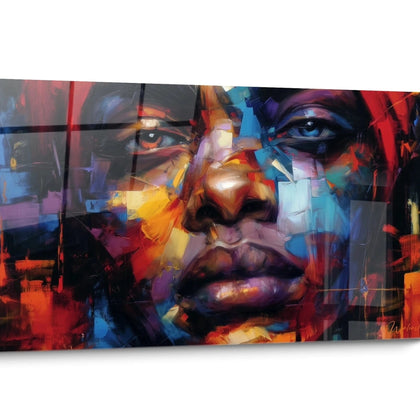
The African face street art painting embodies the explosive encounter between African ancestral heritage and the rebellious energy of contemporary metropolises. This form of monumental mural expression captures the essence of African faces through the prism of urban graffiti, stencil work, and mixed techniques inherent to hip-hop culture. These large-format creations radically transform the atmosphere of modern spaces by infusing them with a powerful contestatory and identity dimension, perfectly suited to industrial lofts, urban galleries, cutting-edge coworking spaces, and interiors with pronounced character.
Identity Expression Through African Street Art
The African face street art painting stands out for its unique capacity to convey contemporary identity narrative. Unlike traditional representations, this aesthetic integrates street visual codes: paint splatters, urban typographies, graphic superimpositions and dripping techniques that dialogue with African features. This fusion creates a hybrid visual language where traditional scarifications blend with tags, where afro hairstyles become chromatic explosions worthy of Brooklyn or Johannesburg walls.
Why does street art magnify monumental African portraits?
Graffiti techniques bring an emancipatory dimension to African representations. The XXL format characteristic of these creations - often exceeding 120x80 cm - reproduces the scale of urban mural frescoes and imposes dominant visual presence. Solid blocks of saturated colors, striking contrasts between deep black and fluorescent hues, and the use of virtual aerosol cans create this distinctive grainy texture. This approach transforms each face into a visual manifesto, each gaze into a declaration of urban existence.
Urban symbols integrated into African compositions
Street art iconography enriches these portraits with multiple layers of meaning: stylized crowns evoking Basquiat, geometric patterns recalling kente fabrics reinterpreted as graffiti, inclusion of fragmented texts in African languages with bombing typography. These large-dimension paintings frequently integrate elements of digital collage, simulated paint runs and multi-layer stencil effects. For a complementary approach exploring the deconstruction of forms, discover our collection of African face abstract painting where geometrization meets African identity.
Urban authenticity in contemporary spaces
Installing a large African face street art painting in a minimalist or industrial environment creates productive aesthetic tension. Raw concrete, exposed steel and exposed bricks of urban lofts naturally dialogue with this street aesthetic. These monumental works function as visual anchors in open spaces, creative meeting rooms or fashion showrooms, where their assertive dimension inspires innovation and disruptive thinking.
Graffiti Techniques Applied to African Faces
The specificity of the African face street art painting lies in the application of methodologies inherent to contemporary graffiti. The artists who create these monumental pieces master layering techniques - superposition of graphic layers - that confer depth and complexity to portraits. The characteristic spray gradients, contours marked in deep black and highlights in pure white faithfully reproduce the aesthetic of urban frescoes while celebrating African features with respect and pride.
How do urban chromatic codes transform the African portrait?
The color palette of street art differs radically from classical representations. These large-scale creations favor saturated hues from graffiti culture: fluorescent pinks, electric blues, lemon yellows that contrast with skin tones and create intense optical vibration. Backgrounds often treated in concrete gray, charcoal black or brilliant whites reinforce the impact of faces. This aggressive and deliberate chromatic approach immediately captures attention in commercial environments, galleries or bold residential spaces.
Graffiti texture and its rendering in mural format
True African face street art paintings meticulously reproduce the characteristic imperfections of graffiti: controlled runs, areas of deliberate overspray, simulated pressure variations that create zones of varying opacity. This attention to technical detail differentiates these works from simple colored portraits. In large format - commonly 150x100 cm or more - these subtleties become perceptible and reinforce urban authenticity. Effects of cracks, accelerated aging and tag superimposition add a temporal dimension evoking walls transformed through successive interventions.
Urban typographic and calligraphic integration
Many of these monumental compositions integrate textual elements treated in wildstyle or bubble letters: stylized African names, activist quotes, poetic fragments in vernacular languages. This typographic inclusion reinforces the narrative and contextual dimension. Letters become graphic elements in their own right, sometimes partially masked by the face, creating visual archaeology. This textual stratification transforms each XXL painting into an urban palimpsest where African identity inscribes itself in the continuum of global hip-hop culture.
Monumental Impact in Contemporary Architectural Spaces
The African face street art painting in monumental format functions as an architectural declaration rather than simple decoration. These imposing pieces - often available in dimensions exceeding 180x120 cm - are designed to visually dominate the space and redefine its atmosphere. In cutting-edge professional environments, creative agencies, design studios or concept stores, they immediately signal a progressive and inclusive cultural identity. Their mural scale creates an immersive experience comparable to that of in-situ urban frescoes.
Which spaces benefit most from a monumental African street art painting?
Generous volumes constitute the ideal environment for these large-dimension creations. Double-height spaces, clear gable walls and open-plan spaces of lofts allow optimal appreciation. Afro-urban fusion restaurants, concept bars, temporary exhibition rooms and technology company reception halls exploit this aesthetic to project a contemporary and socially conscious image. In residential settings, cathedral-like living rooms, monumental stairwells and master bedroom walls welcome these XXL portraits that become architectural focal points.
The spatial dynamic created by the monumental gaze
An African face treated in street art and reproduced in very large format establishes a direct psychological connection with the observer. The often frontal and penetrating gaze, enlarged to architectural scale, creates an almost-human presence in the space. This visual confrontation generates particular energy, transforming circulation zones into memorable experiences. Commercial design professionals exploit this property to create Instagram-ready zones that encourage social sharing and reinforce brand identity.
Association with urban and industrial furniture
These monumental paintings naturally dialogue with industrial-urban aesthetics: exposed metal structures, raw steel furniture, projector-type lighting and polished concrete floors. The opposition between the human warmth of the African face and the coldness of industrial materials creates productive tension. Hybrid spaces combining urban vegetation (living walls, large tropical plants) and these street art portraits generate particularly sought-after afro-futuristic ambiances in boutique hospitality and premium coworking spaces.
What longevity for a large-dimension African street art painting?
Unlike ephemeral outdoor graffiti, these indoor mural reproductions benefit from guaranteed stability. High-resolution printing processes on rigid supports ensure optimal preservation of vibrant colors and contrasts even under indirect light exposure. Minimal maintenance - occasional dusting - suffices to maintain visual impact for decades. This permanence allows for investment in these monumental pieces as permanent architectural elements rather than temporary decorations, with appreciation value for contemporary urban art collectors.
Where to place an African face street art painting to maximize visual impact?
Prioritize clear walls benefiting from visual distance of at least 3 to 4 meters to appreciate the overall composition. Placements facing main entrances create immediate wow effect, while walls perpendicular to circulation zones extend the visual experience. Avoid competition with other heavily decorated elements: these monumental portraits demand minimalist staging that grants them their full expressive power.
Is an African street art painting suitable for family residential interiors?
Absolutely, provided you fully embrace this assertive urban aesthetic. Families sensitive to cultural diversity, contemporary art and non-conventional aesthetics find in it a way to educate visually while creating a stimulating environment. Teen spaces, playrooms and home cinemas particularly welcome these creations that dialogue with youth culture while conveying positive and inclusive identity messages.
How does the value of a monumental African face street art painting evolve?
The market for African urban art experiences sustained growth driven by international recognition of artists like Fakir, Kouka Ntadi or Emo de Medeiros. Authentic monumental pieces or certified limited editions constitute cultural investments whose appreciation follows growing interest in contemporary African narratives. Beyond speculative aspect, these large-dimension works provide lasting aesthetic satisfaction and affirm a progressive cultural positioning appreciated in creative and entrepreneurial circles.


 African Woman Face Painting with Colorful Art - Artistic Expression - African Face Edition233,90 €
 African Man with Sunglasses Wall Art - Urban Traditional Portrait - African Face Edition233,90 €
 African Face Land of Our Fathers Painting - African Face Edition213,90 €
 African Portrait Painting Street Echo - africa edition233,90 €