


Afghan Hound Dog Vintage Wall Art
The Vintage Afghan Greyhound Dog Painting celebrates the aristocratic grace of this iconic breed in a refined retro spirit. This collection captures the elegance of the Afghan Greyhound through artistic compositions with nostalgic tones, perfect for dog lovers and vintage style enthusiasts. Each creation highlights the majestic silhouette and silky coat of the Afghan Greyhound, enhancing your wall decoration with character. Ideal for a living room, bedroom or animal-dedicated space, this vintage dog art collection brings a touch of authenticity and nobility to your interior.
 Black Afghan Hound with Pink Peonies Wall Art - Floral Portrait - Afghan Hound Edition273,90 €
 Two Afghan Hounds in Victorian Costumes with Bowler Hats - Aristocratic Portraits - Afghan Hound Edition273,90 €
 Afghan Hound Crowned with Purple Flowers - Elegant Floral Portrait - Afghan Hound Edition273,90 €
 Golden Long-Haired Hound Painting on Sage Green Flowered Background - Aristocratic Portrait - Afghan Hound Edition273,90 €
Explore further
In Afghan Hound Dog Vintage Wall Art
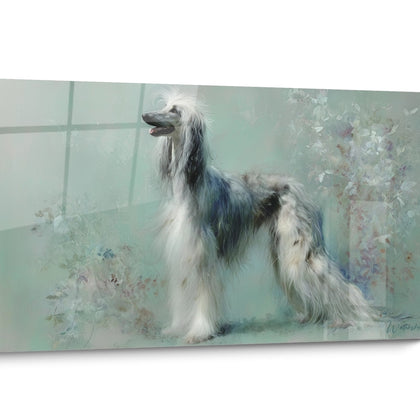

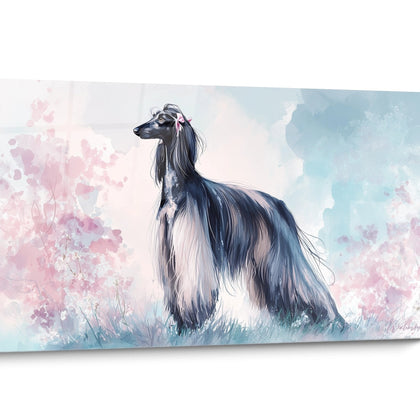


All about Afghan Hound Dog Vintage Wall Art
- Presentation Painting Afghan Hound Vintage
- Retro Aesthetics & Timeless Decor
- Canine Elegance & Prestige
- Ambiance & Authenticity
The painting Afghan Hound Vintage embodies the aristocratic elegance of a mythical breed captured in authentic retro aesthetics. This large-format wall representation sublimates the proud silhouette and silky coat characteristic of the Afghan Hound through a nostalgic prism evoking the canine illustrations of the 1950s-1970s. Designed for lovers of heritage decor seeking a distinctive work, this painting combines feline nobility and vintage charm to transform any space into a personal gallery dedicated to exceptional breeds. The generous dimension of this creation allows you to appreciate every anatomical detail that makes this Afghan hound renowned, from its sculpted profile to its majestic gait, all enhanced by a vintage patina that confers authenticity and cachet.
The Retro Soul of the Afghan Hound Vintage Painting
The painting Afghan Hound Vintage draws its character from the canine iconography of the mid-20th century, a golden age of international dog shows where this Afghan hound reigned supreme. The visual translation is inspired by antique chromolithographs and animal portraits commissioned by European aristocracy, creating a temporal bridge between cultural heritage and contemporary decoration.
Why does the vintage style particularly magnify the Afghan Hound?
The vintage approach reveals the very essence of this ancient breed whose origins date back to the Afghan mountains. Sepia tones, faded ochres and softened contrasts reproduce the atmosphere of Victorian photographic studios where the first European specimens were immortalized. This patinated color palette highlights the silky texture of the legendary coat, accentuating the impression of frozen movement characteristic of zoological illustrations of the time. The slightly grainy texture evokes handcrafted printing processes, conferring a tactile depth absent from contemporary digital representations.
The decorative impact of retro aesthetic codes
Integrated into an interior with mid-century modern or neo-classical accents, this painting naturally dialogues with Scandinavian furniture from the 1960s and varnished teak libraries. Its presence evokes the cozy living rooms of London dog clubs, creating a revisited English club atmosphere. Lovers of painting Afghan Hound Watercolor will appreciate the difference in rendering: where watercolor offers modern transparency and fluidity, vintage imposes structure and tangible nostalgia.
Heritage authenticity and canine collection
For collectors of historical canine representations, this work is in line with the naturalist plates of Mahler or the equestrian portraits of Stubbs transposed to the canine universe. The imposing format allows you to appreciate the distinctive anatomical details: the high set tail characteristic, the pronounced brow, the prominent hips typical of oriental racing hounds. This morphological fidelity combined with the era's aesthetics makes it a centerpiece for any space dedicated to the history of hunting or the veneration of pure breeds.
The Afghan Hound As a Symbol of Decorative Refinement
Choosing an painting Afghan Hound Vintage transcends the decorative act to affirm an erudite aesthetic sensibility. This breed, nicknamed "the aristocrat of the canine world", conveys specific socio-cultural codes: distinction, natural elegance, and a taste for the exceptional. Its wall representation becomes a visual manifestation of a personality that values heritage and exclusivity.
How does this breed sublimate a high-end residential space?
The elongated profile and haughty posture of the Afghan Hound create elongated vertical lines that harmoniously counterbalance the extended horizontal spaces of luxury apartments. In an entrance hall, this painting immediately establishes a sophisticated tone, preparing the visitor to discover a well-maintained interior. The recommended large dimensions (panoramic or imposing square format) allow for the strategic occupation of the bare walls of industrial lofts or cathedral-like living rooms, areas often difficult to dress consistently.
Pairing with complementary furniture and works of art
The vintage aesthetic of this painting naturally calls for specific decorative complements: antique globe on brass stand, decorative gramophone, collection of leather-bound books with gilded edges, or beveled mirrors with patinated frames. This synergy creates a visually coherent ecosystem evoking modern cabinets of curiosities. Collectors of rare breeds often prefer several canine wall representations to create a thematic gallery: pairing this vintage Afghan Hound with other breeds of the same standing (Borzoi, Saluki, Irish Wolfhound) reinforces the atmosphere of a prestigious kennel.
Which room best enhances this type of representation?
The private office or home library constitute the preferred locations, creating a studious atmosphere tinged with nobility. In these spaces of reflection, the contemplative gaze of the Afghan Hound accompanies moments of concentration, its soothing presence contrasting with the dynamic energy of working breeds. Lovers of maximalist decoration also integrate it into complex wall compositions, associated with antique maps, framed herbariums or vintage taxidermy, creating narrative wall galleries evoking 19th-century naturalistic exploration voyages.
Create an Authentic Atmosphere with an Exceptional Canine Portrait
The installation of a vintage Afghan Hound dog painting subtly alters the psychology of a space, introducing a temporal and narrative dimension. This aristocratic canine presence establishes a particular atmosphere, a mixture of contemplative serenity and discreet grandeur, particularly sought after in interiors aspiring to timelessness.
The psychological effect of heritage canine representations
Unlike jovial companion breeds, the Afghan Hound exudes a mysterious and slightly distant aura that permeates the space. Its deep gaze, captured in the vintage aesthetic, evokes ancestral portraits of historic homes, creating a symbolic lineage with European equestrian and hunting traditions. This reassuring presence without being intrusive is particularly suitable for formal reception areas where one wishes to impress without ostentation. Large dimensions accentuate this impression of a living presence, as if the animal silently guarded the premises.
Create a consistent aesthetic between eras
For owners of renovated historic homes seeking to preserve the soul of the place while modernizing, this painting operates as an effective temporal mediation. It naturally dialogues with original moldings, antique parquet floors and marble fireplaces, while accepting coexistence with contemporary appliances and modern technologies. This adaptability stems from its fundamental timelessness: neither frankly old nor resolutely modern, it occupies this reassuring in-between characteristic of successful vintage.
Which environments particularly benefit from this canine presence?
High-end professional spaces (law firms specializing in equestrian law, antique dealers, orientalist art galleries) strategically use these representations to signal expertise and refinement. In residential settings, renovated country houses, manor houses, and converted old farms find in this wall art a visual anchor consistent with their heritage architecture. Haussmannian urban apartments also benefit from this aristocratic touch that reinforces their original bourgeois character, creating a narrative continuity between architectural past and decorative present.
Complementarity with ambient and natural lighting
The vintage patina reacts particularly well to indirect and warm light sources (arc floor lamps, aged brass wall sconces, exposed filament Edison bulbs) which accentuate the subtle contrasts and depth of the faded hues. Positioned facing a north-facing window, the wall art benefits from stable light throughout the day, avoiding direct glare that could alter the perception of delicate nuances. This sensitivity to the luminous environment recalls the constraints of authentic works of art, reinforcing its status as a demanding decorative object.
Is a Vintage Afghan Hound Dog wall art suitable for contemporary minimalist interiors?
Paradoxically yes, when used as a single focal point in a clean space with neutral tones. The contrast between architectural minimalism and the narrative richness of the artwork creates a sophisticated visual tension, avoiding the clinical coldness often criticized in ultra-contemporary interiors.
How to enhance this Vintage Afghan Hound Dog wall art in a narrow hallway?
In a vertical or narrow panoramic format, it transforms a neglected circulation space into an intimate gallery. The presence of the Afghan Hound accompanies the progression through the hallway, creating an experience of progressive discovery of anatomical and textural details impossible to grasp in a single glance.
Can a Vintage Afghan Hound Dog wall art be combined with other animal representations?
Absolutely, by favoring either species with similar connotations (wild felines, majestic deer, noble birds of prey) or other dog breeds of the same pedigree. Avoid associations with farm animals or tropical exotic species that would dilute the aristocratic thematic consistency.
Further reading
Our articles on this topic
- Whippet Greyhound Painting in Japandi Living Rooms: How to Create Harmony
- Lhasa Apso Painting for a Child's Room: The Ideal Tibetan Companion
- Afghan Hound painting: the perfect touch of elegance for a modern living room
- Afghan Hound: Character and Symbolism, the Ideal Subject for a Painting
- Why the Afghan Hound Captivates Artists and Interior Designers
- Afghan Hound Painting: The Original Gift That's Sure to Please
L'art qui suscite l'envie
Maison belge d'art mural grand format
14 jourspour changer d'avis*
Protection Walenskyincluse
Fabriquéen Italie
FormatXXL
Kit de fixationtoujours fourni
* Hors tableaux personnalisés et tailles personnalisées


