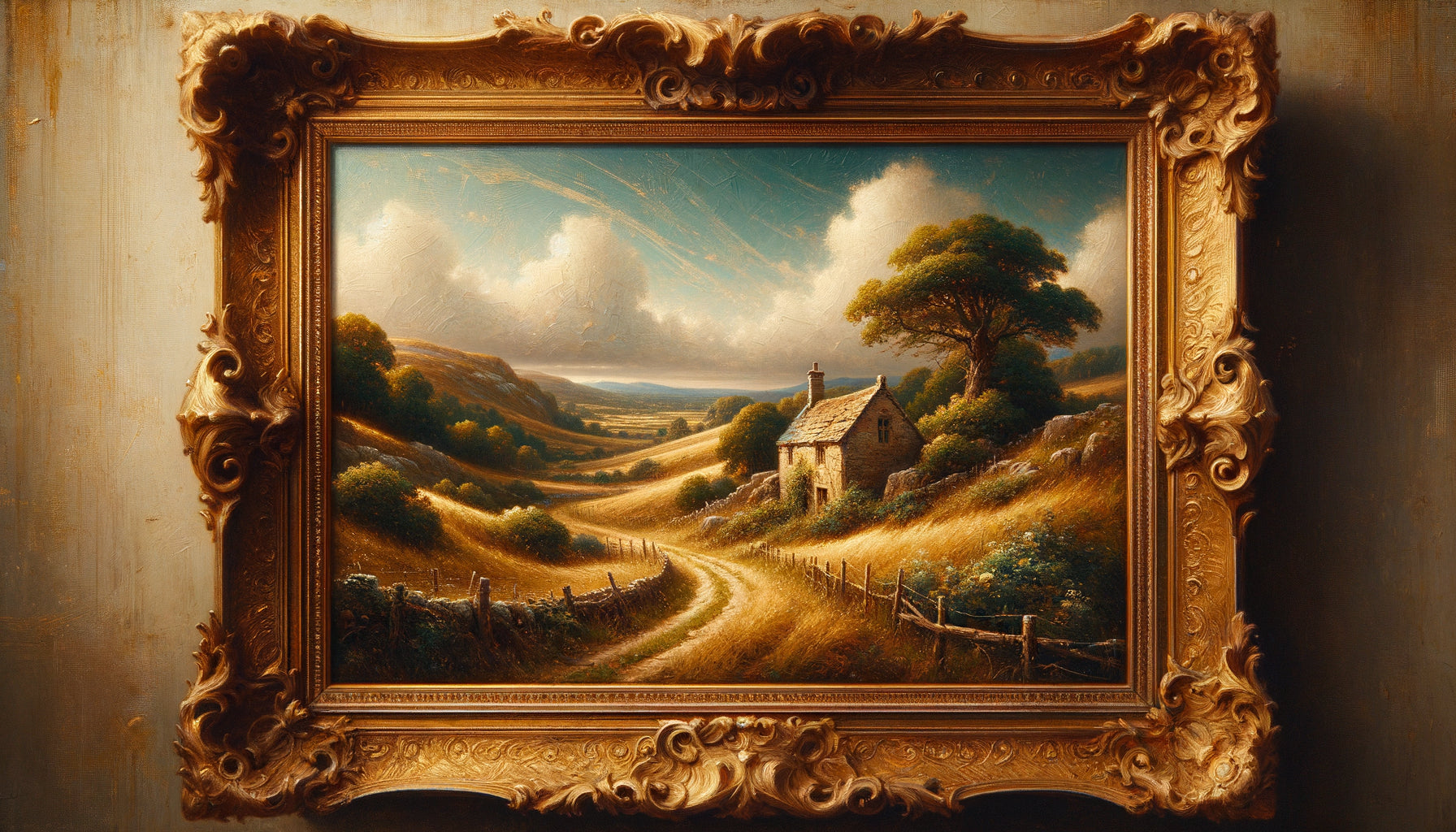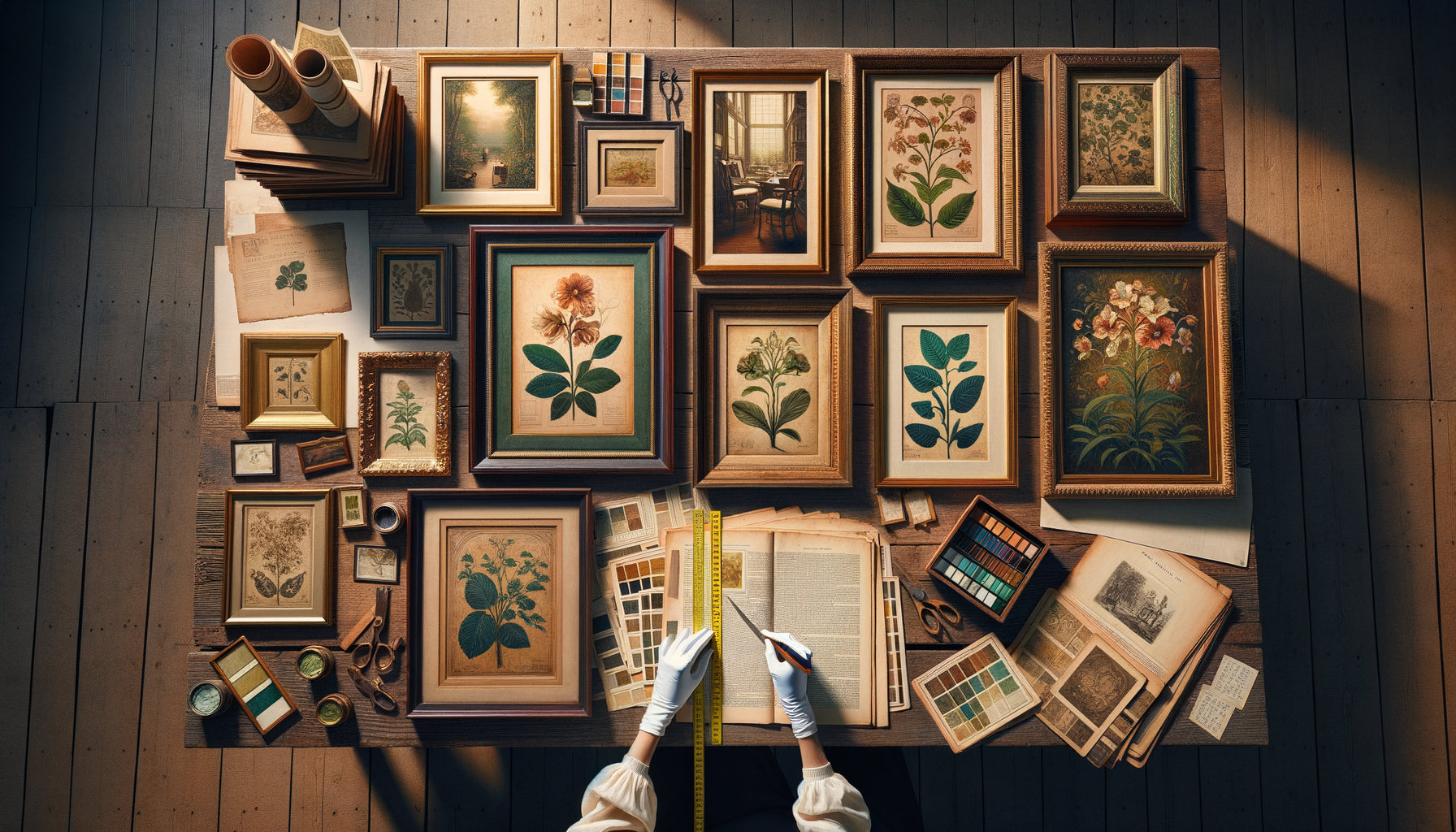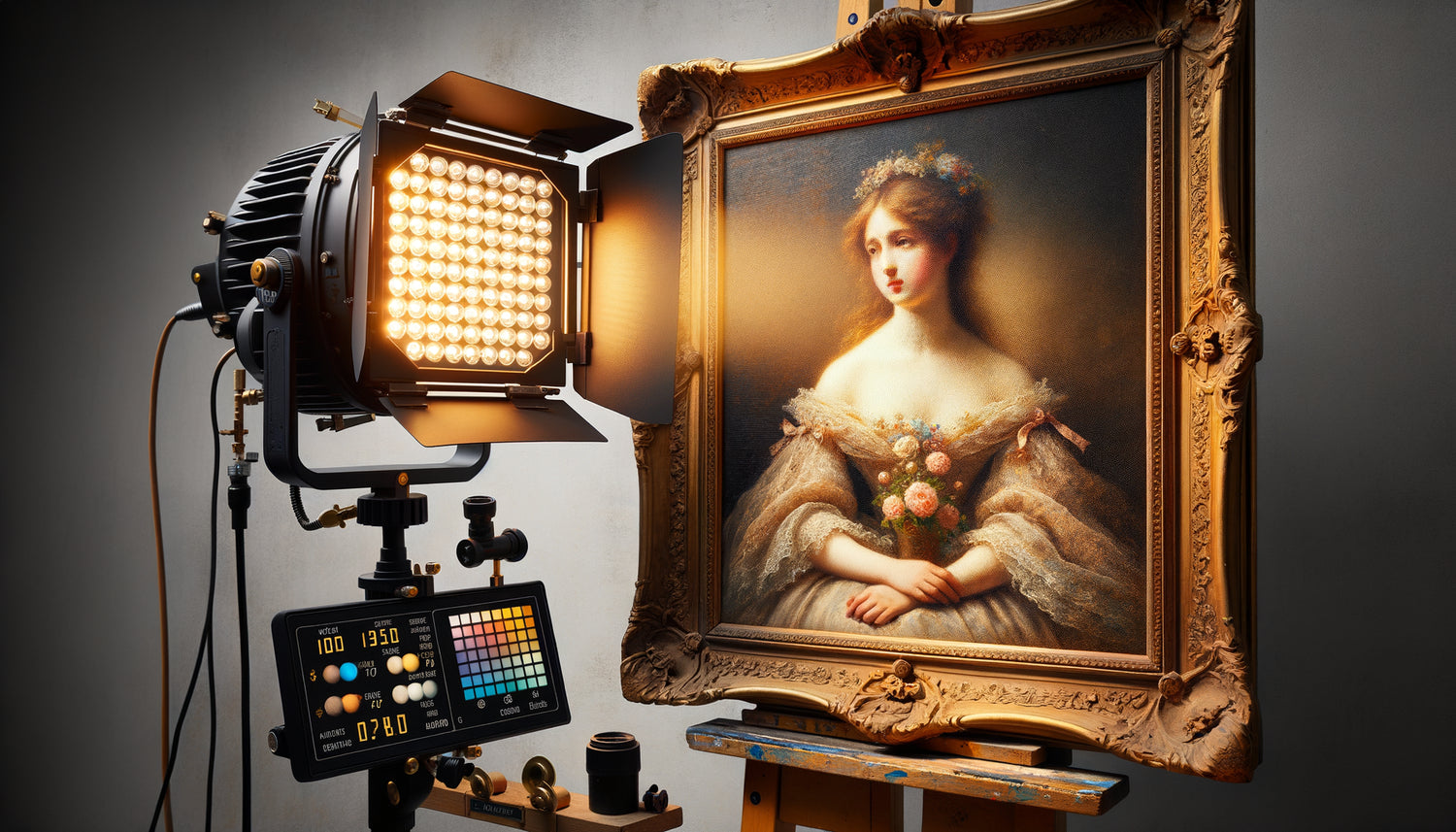
This morning again, I observed this troubling phenomenon in the workshop of a Parisian collector: her magnificent Art Deco portrait from the 1920s, once vibrant with deep blues and warm ochres, now exhibited faded, almost ghostly tones. The culprit? A cheap LED sconce installed six months earlier. This scene repeats too often in the interiors I visit for expertise and restoration.
Here's what suitable LED lighting brings to your vintage paintings: optimal preservation of delicate pigments over decades, a chromatic enhancement faithful to the artist's original intention, and absolute peace of mind regarding the emotional and financial investment that represents your wall art.
You have probably already noticed this frustrating dilemma: how to fully admire your vintage painting without compromising its longevity? Old incandescent lights literally cooked the canvases. Halogens generated destructive heat. And now that LEDs dominate the market, you feel lost facing technical mentions: CRI, color temperature, UV, luminous intensity...
Rest assured. After twenty-three years spent restoring 19th and 20th century works, I have learned to decode these criteria to protect this visual heritage. I will pass on exactly what I recommend to collectors and regional museums with whom I collaborate.
In the next few lines, you will discover the specific characteristics of LED lighting respectful of your vintage wall paintings, the technical traps to avoid at all costs, and how to transform your lighting installation into a silent guardian of your decorative treasures.
The invisible trap of standard LEDs on ancient pigments
Vintage paintings are not simple printed reproductions. Their organic pigments – these ochres extracted from clays, these cobalt blues ground by hand, these madder reds from roots – possess an intrinsic vulnerability to luminous radiations. Unlike modern chemically stabilized industrial paints, these old compositions react violently to certain wavelengths.
Economic white LEDs emit a spectrum concentrated in the short wavelengths, particularly intense blue. This blue radiation penetrates deeply into the pictorial layers and triggers irreversible photochemical reactions. I have documented chromatic alterations of up to 40% in just eighteen months of continuous exposure under this unsuitable type of LED lighting.
The phenomenon is exacerbated by old varnishes. These protective layers naturally yellow with time, creating an amber filter that already alters the perception of original colors. When a cold-dominant LED lighting is added, the chromatic conflict becomes visible: flesh tones turn greenish, skies become metallic gray, harmonies carefully composed by the artist collapse.
The color rendering index: the non-negotiable criterion
Let me tell you about a spectacular transformation. A client owned a 1930s still life that he found dull, almost banal. After replacing his LED spotlights with CRI 80 by models with CRI 95, he called me, astonished: "It's as if the painting had been professionally cleaned!" No restorer had intervened yet. Simply, the colors were regaining their true expression.
The color rendering index (CRI in English) measures a light source’s ability to faithfully reproduce tints compared to natural light. For a delicate vintage wall art piece, this criterion far outweighs all others. Here is the hierarchy I consistently apply:
CRI below 85: dangerous for visual appreciation and misleading about the actual state of preservation. Reds tend towards orange, greens become yellowish, impossible to assess subtle nuances.
CRI between 85 and 90: acceptable for general ambient lighting, but insufficient to highlight the chromatic qualities of an antique work. Complex pigments lose their depth.
CRI between 90 and 95: recommended for most vintage paintings. This level correctly restores harmonious colors without betraying the artist's original intention. This is the minimum threshold I recommend.
CRI above 95: ideal for exceptional works or pigments particularly sensitive to light. Some museum LEDs reach CRI 98, offering near-perfect chromatic fidelity. The investment is justified for significant collectibles.
How to check the CRI of your current LEDs
This information is usually on the packaging or datasheet. Be wary of vague mentions like 'natural light' without a numerical value. Serious manufacturers clearly display 'CRI 90+' or 'Ra>95'. If you can’t find this data, consider that LED lighting probably doesn’t meet museum standards required to protect your vintage wall art pieces.

Color temperature: finding the balance between warmth and fidelity
I learned this lesson during an installation at an antique dealer specializing in vintage advertising posters. We had selected LEDs with CRI 95 – impeccable on paper – but the color temperature at 6500K (cold white) created a glacial atmosphere that stripped these Belle Époque works of their warm nostalgia. After replacement with 3000K, the ambiance regained its authenticity.
The color temperature, expressed in Kelvin (K), determines the luminous tone of your LED lighting. For a delicate vintage painting, this characteristic directly influences the perceived atmosphere and consistency with the pictorial tones of the time.
2700K (warm white): evokes old incandescent bulbs. Perfect for classic interiors, paintings with warm hues (ochres, browns, reds). This temperature reinforces the nostalgic dimension of vintage works. However, be aware that it can slightly yellow whites and attenuate blues.
3000K (warm neutral white): my preferred choice for 80% of antique wall paintings. This balanced compromise respects color harmonies without imposing a marked dominance. It adapts to natural ambient variations between morning and evening.
4000K (neutral white): is suitable for modern works or minimalist contemporary interiors. For delicate vintage paintings, this temperature may seem too clinical, evoking more of a commercial space than an intimate interior.
Above 5000K: formally discouraged for antique paintings. This cold, almost daylight light distorts period atmospheres and creates unpleasant visual dissonances with naturally warm pigments.
Avoid UV and infrared rays: invisible protection
Here's a disturbing truth: the most serious damage to a vintage painting is not immediately visible. They accumulate silently, cell pigment after cell pigment, until the point of no return. Ultraviolet and infrared radiation act as invisible saboteurs, even when the work appears perfectly illuminated.
Ultraviolet rays break the molecular bonds of organic pigments. On an 1880s watercolor that I appraised, exposure to cheap LEDs emitting residual UV had caused complete bleaching of the madder rose in twenty-four months. Irreversible. Unrepairable.
Infrared rays generate heat, even minimal. This thermal elevation accelerates the chemical aging of binders (oils, animal glues, gums) and dries out supports (canvas, wood, cardboard). I have observed premature cracking on Art Nouveau panels directly attributable to LED infrared lighting that was too close.
Museum-quality LEDs integrate specific filters that completely eliminate these harmful radiations. Look explicitly for the mentions 'UV-free' or 'No UV/IR emission' in the technical specifications. For a valuable vintage wall painting, this criterion alone justifies an additional cost of 30 to 50% on the price of LED lighting.
The revealing test of adhesive tape
Stick an opaque paper strip onto an inconspicuous area of your artwork (back of the frame, hidden border). After six months of continuous exposure to your current LED lighting, remove it. If you notice a color difference between the protected area and the exposed area, your lighting is gradually damaging the artwork. Immediate change needed.

Light intensity and distance: the curator's rule
In the museum reserves where I regularly work, fragile artworks are stored in total darkness. Why? Because every photon of light represents a potential micro-aggression. Of course, you won’t be collecting vintage paintings to hide them in the dark. The goal is to find the minimal threshold allowing for comfortable visual appreciation without excessive exposure.
The museum rule that I apply limits illumination to a maximum of 150 lux for sensitive artworks (watercolors, pastels, textiles), and 200 lux for stable oil paintings. For reference, a normally lit office receives 500 lux, a shaded exterior around 10,000 lux. A delicate vintage painting truly requires moderate LED lighting.
The distance between the LED source and the artwork directly influences this intensity. I use this practical formula: for a 500 lumen LED spotlight, maintaining a minimum distance of 100 cm provides approximately 120 lux on the painted surface – ideal for an antique oil painting. Reducing this distance to 50 cm quadruples the exposure, potentially damaging.
Dimmer switches are a valuable ally. They allow you to adapt LED lighting according to the moments: subdued light for an intimate atmosphere in the evening, slightly higher intensity when you want to admire the pictorial details. Favor LEDs compatible with dimming to avoid flickering that is destructive to the eyes and pigments.
Lighting angle and reflection: reveal without dazzling
A collector recently showed me his family portrait, dating from 1910, beautifully framed but completely unreadable due to a luminous reflection covering the face of the central character. His LED lighting, though expensive and technically impeccable, was simply poorly positioned. The angle of incidence created a mirror where an artwork should have appeared.
The ideal angle for a directional LED spotlight is 30° relative to the vertical of the painting. This inclination allows for uniform illumination while directing reflections towards the floor rather than towards the observer. For glass-framed works (frequent in antique artworks), this angle becomes critical: 5° difference is enough to turn your installation into a visual catastrophe.
Adjustable LED strips offer considerable flexibility. You adjust the angle gradually to completely eliminate unwanted reflections. I particularly recommend these systems for vintage wall artworks under convex glass (a common technique from the early 20th century), whose curvature multiplies reflection problems.
Some collectors prefer indirect lighting: LEDs directed towards the ceiling or wall, which then diffuse a soft and uniform light over the artwork. This approach radically eliminates reflections but reduces contrast and visual impact. To be reserved for contemplative atmospheres, less spectacular but deeply relaxing.
My quick positioning trick
Use an LED flashlight to simulate different angles before final installation. Observe the reflections, shadows, and light uniformity. Lightly mark the optimal location with a pencil. This two-minute preview avoids unnecessary drillings and costly disappointments.
Your walls deserve artworks that transcend generations
Discover our exclusive collection of Vintage artworks
Recommended LED systems for delicate vintage artworks
Having laid the theoretical groundwork, let's move on to concrete solutions. Here are the three LED lighting configurations that I regularly install for collectors concerned with preserving their antique wall artworks.
Museum-quality LED sconces on articulated arms: my preferred solution for 60% of situations. These specialized luminaires systematically integrate CRI>95, total UV/IR filtration, and adapted color temperatures (2700-3000K). Their adjustable positioning allows fine-tuning the lighting angle after installation. Reference brands: Modulightor, Erco, Luctra. Budget: 180-400€ per sconce.
LED rails with directional spotlights: ideal for wall galleries featuring multiple vintage artworks. The flexibility of positioning compensates for the compromise on light quality (CRI generally 90 versus 95+ for dedicated sconces). Favor systems that allow individual LED bulb replacement to adapt lighting according to each artwork. Budget: 250-600€ for 3 meters equipped.
High CRI indirect LED strips: a discreet solution for subdued atmospheres. Installed in cornices or behind moldings, these strips diffuse soft and uniform light. Note: you must absolutely require CRI>90 and high LED density (minimum 120 LEDs/meter) to avoid visible bright spots. This option is particularly suitable for large-format paintings. Budget: €80-200 per meter equipped with power supply.
In all cases, check the announced lifespan: minimum 25,000 hours for museum-quality LED lighting. This longevity guarantees chromatic stability over the years, an essential criterion for a vintage painting that you want to admire under constant conditions.
Beyond lighting: creating a global protective environment
Perfectly chosen LED lighting is not enough if other environmental factors simultaneously attack your vintage wall art. I have too often seen exemplary lighting investments ruined by positioning or maintenance errors.
Absolutely avoid: direct exposure to sunlight (even filtered by a light curtain), proximity to a radiator or fireplace, installation facing a south-facing window, humid rooms (bathrooms, kitchens), locations receiving projections (splashes, condensation).
Prioritize: walls perpendicular to windows, spaces with stable temperatures (18-22°C), environments with controlled humidity (45-55%), areas protected from frequent traffic avoiding vibrations and shocks.
An annual cleaning with a soft anti-static duster preserves the readability of the work without risking damage to the pictorial surface. For exceptional antique paintings, consultation with a restorer every five years allows for early detection of alterations invisible to the untrained eye.
Now imagine your interior bathed in this perfectly calibrated light. Your vintage painting regains the chromatic depth that the artist carefully orchestrated a century ago. Visitors stop, captivated by this mysterious presence that seems to emanate from the work itself rather than a technical device. You now know that beyond this immediate aesthetic pleasure, you are actively protecting a fragment of cultural heritage for future generations.
Start today by checking the CRI of your current lighting. If this simple check reveals an index below 90, you have here the explanation of this diffuse impression that your vintage paintings do not reveal all their beauty. A targeted replacement with museum-quality LEDs will radically transform your daily experience of these works that you cherish.
Frequently Asked Questions
Are LEDs really safer than traditional bulbs for my vintage painting?
Absolutely, provided you choose museum-quality LEDs. Older incandescent bulbs emitted heavily in the infrared (heat) and contained traces of UV, two mortal enemies of ancient pigments. Halogens were even worse, with surface temperatures reaching 300°C which could literally bake a nearby canvas. Properly specified museum LEDs (CRI>90, UV/IR filtration, moderate intensity) eliminate these dangers while dividing electrical consumption by ten. I measured surface temperatures of only 40°C on professional LED spotlights after three hours of continuous operation – negligible for preservation. The real progress lies in chromatic stability: unlike halogens whose spectrum drifts with age, quality LEDs maintain their color rendering for 25,000 hours. For a delicate wall art piece you wish to pass down intact, LED technology undoubtedly represents the safest option available today.
Can I use standard LED bulbs from a department store to illuminate my antique artwork?
Technically possible, but strongly discouraged for a vintage painting of sentimental or financial value. Consumer LEDs optimize lumen-cost efficiency at the expense of color rendering. Their CRI typically ranges between 75 and 85 – acceptable for a hallway but catastrophic for faithfully reproducing the subtle nuances of a 1900 watercolor or the complex glazes of an Art Nouveau oil painting. I compared side by side the lighting of an Impressionist landscape under discount LED (CRI 80) then museum LED (CRI 97): vibrant greens became dull, violet shadows turned muddy gray, the overall harmony collapsed. If your budget requires compromises, prioritize at minimum high-end domestic LEDs displaying CRI 90+ and explicitly certified UV-free. Keep standard LEDs for general room lighting, and invest in a dedicated museum wall sconce solely for the artwork – around €200 which will radically transform your daily experience of the work while protecting it effectively.
How many hours per day can I illuminate my vintage painting without risk?
Museum-grade preservation is based on 'cumulative luminous dose' rather than isolated daily duration. An antique painting progressively accumulates photochemical damage: 10 hours at 100 lux is equivalent to 5 hours at 200 lux in terms of impact. For a sensitive artwork (watercolor, pastel, fragile organic pigments), I recommend not exceeding 50,000 lux-hours annually – or about 4 hours daily at 150 lux, a comfortable level for visual appreciation. For a stable oil painting on canvas, you can double this exposure without worry. Installing a motion detector or timer radically transforms the equation: why illuminate the artwork during your absence or while sleeping? Some collectors adopt 'on-demand' lighting activated only during contemplative moments – a radical but remarkably effective solution. My pragmatic advice: aim for 3-4 hours of daily LED lighting for normal use, with systematic switching off in case of prolonged absence. This simple discipline can triple the chromatic lifespan of your vintage wall art compared to permanent 12-hour per day illumination.