

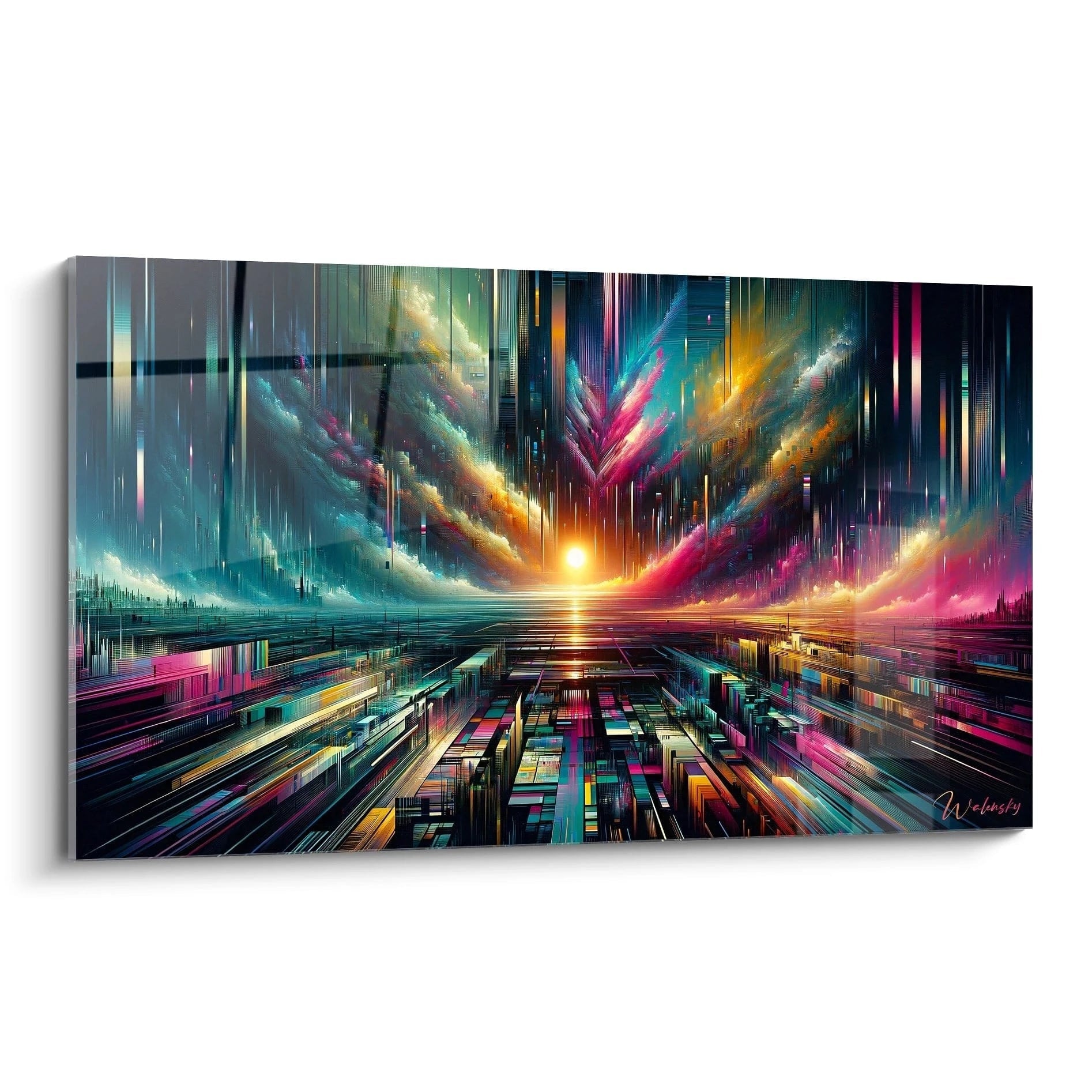
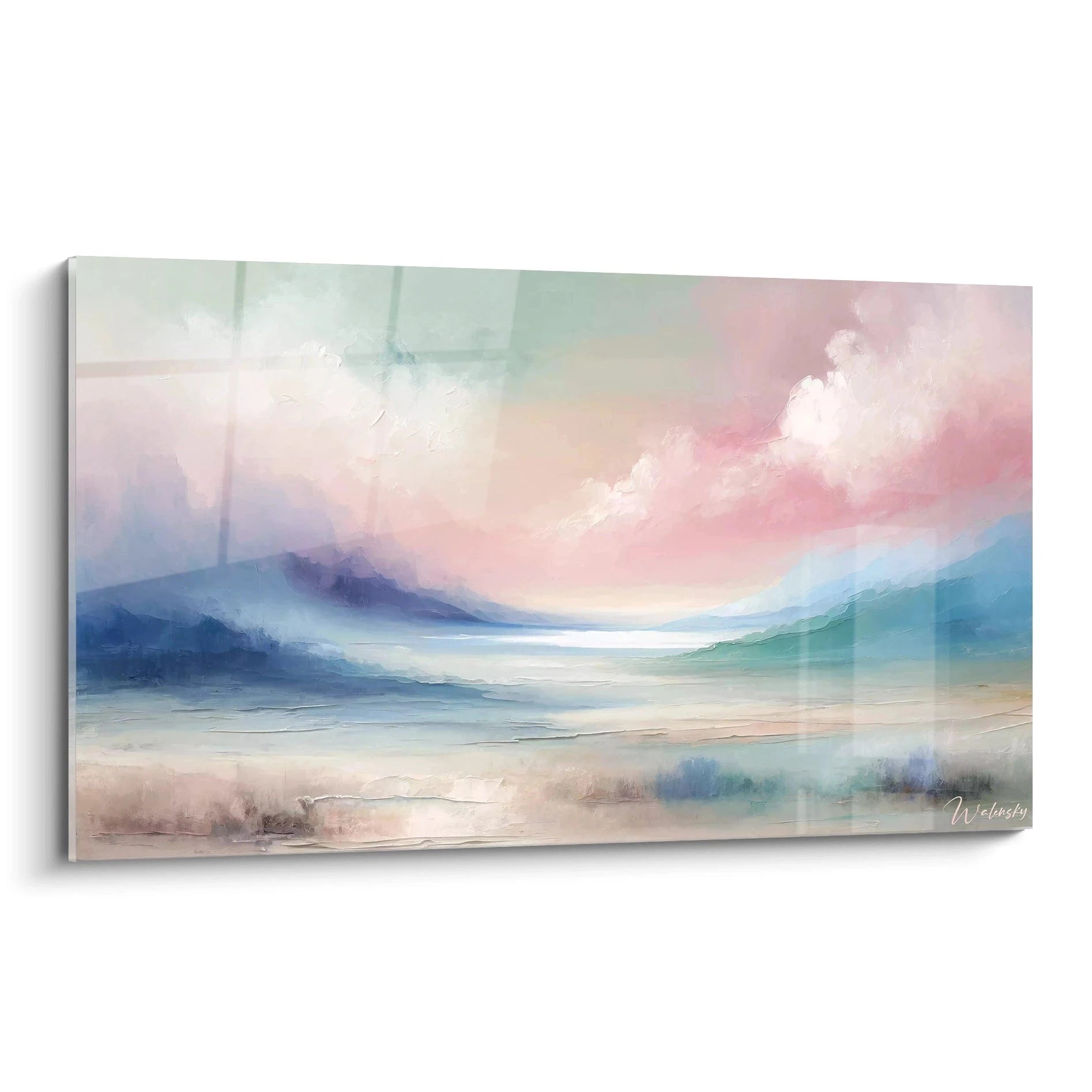

Oil Painting: Depth and Intensity for a Timeless Artwork
October 11, 2025 · 18 min read · by Walensky
You look at your living room with that strange feeling of incompleteness. Despite carefully chosen furniture and harmonious accessories, it lacks that visual presence which would transform the space into a true personalized cocoon.
The walls seem to be waiting for something, a work that captures the light and dialogues with your personality. You can already imagine your guests stopping in front of a canvas with deep colors, touched by this authenticity which is not found in industrial reproductions.
You may have already tried venturing into prints or framed posters, but the result leaves you wanting more. These solutions lack that textural richness and chromatic intensity that gives a true soul to an interior.
It's perfectly normal: these alternatives cannot reproduce the unique depth that only real pictorial matter can offer. True art requires techniques that transcend simple reproduction.
By the end of this article, you will understand why oil painting remains the reference technique for creating exceptional wall artworks, and how to choose the piece that will permanently transform your living space.
Why does oil painting still fascinate after 500 years?
In the digital age and instantaneity, choosing an authentic oil painting represents more than just a decorative purchase. It's like offering yourself a piece of artistic eternity, because this technique crosses the centuries without losing its luster. Imagine owning a work that will continue to reveal its subtle nuances in fifty years, while prints have faded. This is an opportunity to create a visual legacy that will mark your space for decades to come.
🎨 Collector's testimony: "When Marie hung her first oil painting in her Parisian living room, she did not expect this acquisition to change her relationship with her interior. Three years later, she admits that this artwork continues to reveal new details according to the daylight, creating a daily complicity with art."
Conversation with a decor expert
Understanding what makes your decor "flat" despite your efforts
Do you recognize yourself in these situations? A impeccably arranged living room but lacking character when receiving guests. Walls perfectly painted but seeming to wait for something indefinable. A consistent decoration on paper, but which provokes no particular emotion in your visitors.
What lies behind these symptoms is the absence of authentic visual relief in your space. Contrary to popular belief, the problem does not come from your taste or your budget, but from the very nature of the decorative elements chosen.
It's like trying to warm a room with a photo of a fireplace: the illusion can be perfect, but it will always lack that physical presence which transforms the atmosphere.
The truth about the "presence" of a work of art
Contrary to what reproduction marketing suggests, the magic of a painting does not reside solely in its image, but in its materiality. An oil painting interacts with light in a unique way, creating shadow and reflection games impossible to reproduce by print.
Think about the difference between looking at a photo of a chocolate cake and having the real cake in front of you: even if the image is perfect, that sensory dimension which provokes emotion is missing.
This discovery completely changes your decorative approach: instead of searching for the "right image", you begin to search for the "right presence" for your space, which opens up much richer and more personalized perspectives.
🔍 Immediate test: Observe a reproduction and a true painting under different lighting conditions. In 30 seconds, you will notice that the real canvas "lives" and transforms, while the print remains frozen in its flatness.
The most common mistake is to think that a successful decoration must present smooth and uniform surfaces. This belief leads to "safe" but visually monotonous solutions.
Imagine an orchestra where all the instruments played the same note: technically perfect, but lacking harmonic richness. Your interior needs these textural variations to create a captivating visual symphony.
Result: you end up with a "correct" space but which never transports you, which no longer surprises after a few weeks of cohabitation.
The Underestimated Impact of Paint Thickness
A detail that almost no one consciously notices, but which makes all the difference: the thickness of the paint layer. In a real oil painting, the reliefs created by brushstrokes capture and diffuse light in a unique way.
You can check this by observing how a canvas changes appearance depending on your position in the room: some areas seem to illuminate while others reveal unexpected depths.
This living dimension transforms your daily relationship with the artwork: it becomes a visual companion that evolves with the daylight and your movements in space.
The 3 signs of a decor lacking relief:
- The "showroom" effect: Your interior looks like a magazine exhibition, perfect but without personal soul. Rapid fatigue: You no longer notice your decorative elements after a few weeks, a sign that they lack visual richness. Lack of wonder: Your guests admire the consistency but never stop in front of a particular element that captivates them.
What really makes the difference in an exceptional oil painting is its construction in successive layers that create an optical depth impossible to achieve otherwise. Like a complex perfume that reveals its top, heart and base notes, a real canvas unveils its chromatic nuances progressively, creating this hypnotic visual effect that makes you want to keep observing it without getting tired. You can identify it by looking for this sensation of "traveling" in color, discovering shades that seem to emerge depending on the angle of observation.
The rule of chromatic richness: A real oil painting always contains more colors than those perceived at first glance. Test: observe the artwork for 2 minutes, you should discover at least 3 additional shades.
| ❌ Printed Reproduction | ✅ Authentic Oil Painting | 💡 Why this difference | 🎯 Concrete Benefit |
|---|---|---|---|
| Image frozen identical under all lighting | Appearance that evolves according to the light and viewing angleReliefs of paste create variable shadow playA work that surprises you every day|||
| Limited colors by printing inks | Infinite palette thanks to pigment mixturesThe superposition of layers creates unique nuancesChromatic richness that never tires|||
| Perfectly smooth surface | Living texture with reliefs and impastoEach brushstroke leaves its physical markTactile dialogue with the work (even from a distance)|||
| Rapid color degradation | Noble materials that improve with timeQuality pigments and durable protective varnishInvestment that enhances your interior sustainably
How to Choose Your First Oil Painting with Confidence
Acquiring your first oil painting should be a source of anticipation rather than anxiety. Like creating a garden, you must first prepare the ground (define your tastes), then sow the right seeds (choose the artwork), and finally cultivate the relationship (integrate it harmoniously). The final result? A transformed space that authentically reflects your personality and continues to inspire you year after year.
🎯 3-Step Progressive Method: First, identify your personal artistic sensibility, then assess the harmony with your space, and finally realize the acquisition with complete peace of mind. Each step brings you closer to that decorative revelation which will transform your daily life.
Step 1: Discovering Your Personal "Artistic Signature"
Before any purchase, it is crucial to identify what truly touches you in art. This exploration resembles the search for your signature fragrance: you know when you've found it, because something resonates immediately within you. The pleasure of this step lies in discovering tastes that you may not have suspected, opening up unexpected aesthetic horizons.
What You Need for This Exploration
- A Visual Reference Notebook: A simple notebook or your smartphone to capture the artworks that mark you. The goal is to identify stylistic constants in your favorites. Avoid limiting yourself to the "great masters" - explore contemporary art as well, which may reveal surprising affinities.
- Time for Observation Without Pressure: Moments of pure contemplation, without an immediate purchase objective. The principle: let your authentic emotions express themselves before your mind analyzes. These moments reveal your true sensitivity, beyond external influences.
- A Personal Reflection Space: Your current environment as a laboratory for experimentation. Observe which decorative elements already give you pleasure, as they contain valuable clues about your deep aesthetic preferences.
Let's move on to concrete practice now:
Systematic Exploration Method
Create Your "Sensitivity Map": For one week, photograph or note all the images that spontaneously stop you (magazines, social networks, shop windows). The goal is to capture your instinctive reactions before they are filtered by reflection. This collection reveals unconscious patterns in your tastes.
⏱️ Time: 10 minutes per day | ✅ Success when: You have 15-20 varied references | ⚠️ Attention: Do not censor any image, even if it seems "not artistic enough" - authentic tastes escape categories.
Analyze your constants: Spread out your references and look for common points: color palettes, atmospheres, styles, subjects. This analysis reveals your personal "aesthetic DNA". Also note what you dislike to refine your criteria by contrast.
⏱️ Time: 30 minutes | ✅ Successful when: You identify 3-4 recurring characteristics | ⚠️ Attention: Tastes evolve - this map is a guide, not an aesthetic prison.
Test your emotional reaction: Visit a gallery or browse online collections focusing on your physical sensations when facing the artworks. Some paintings evoke an immediate feeling of well-being, others create an energizing tension. These bodily reactions are reliable guides for your future choices.
⏱️ Time: 1-2 hours | ✅ Successful when: You clearly feel emotional differences between the artworks | ⚠️ Attention: Visual fatigue arrives quickly - limit to 20-30 works per session.
✅ Stage validation: You should be able to describe in 2-3 sentences what spontaneously attracts you to art. If you are still hesitating, continue exploring - it is better to take the time than to choose the wrong direction. This clarity is the foundation of all your future artistic choices.
OUR RECOMMENDED PRODUCTS
Step 2: Harmonize the artwork with your environment
Now that you know your artistic affinities, it is a matter of translating them into your living space. This step resembles tuning an instrument: you need to find the perfect resonance between the artwork and its environment. The excitement grows as you begin to visualize concretely the transformation of your interior, and every detail counts to create this magical harmony.
Spatial evaluation tools
- Precise measurements of your space: Wall dimensions, ceiling height, viewing distance. These technical data determine the ideal proportions of your future acquisition. An artwork that is too small will get lost, too large it will overwhelm the space.
- Analysis of natural lighting: Observation of light variations according to hours and seasons. This study reveals how your painting will evolve throughout the day, as natural lighting is the best revealer of nuances in an oil painting.
- Existing chromatic inventory: Color palette already present in your decoration. The goal is not necessarily perfect harmony, but a enriching complementarity that energizes the whole without creating visual cacophony.
Harmonious integration method
Define the impact area: Identify the wall that will benefit from the artwork and visualize its radiance in the space. A painting not only transforms its host wall, but influences the atmosphere of the entire room. Test different positions using temporarily pinned magazines.
⏱️ Time: 45 minutes | ✅ Success when: You have identified 2-3 optimal locations | ⚠️ Attention: Avoid high-traffic areas where the artwork will be more vulnerable.
Calculate visual proportions: For optimal balance, the artwork should occupy approximately 60-75% of the width of your main furniture (sofa, bed, console). This rule creates a proportional coherence without excessive rigidity. Adapt to your personal tastes and desired effect.
⏱️ Time: 20 minutes | ✅ Success when: You have defined a range of dimensions | ⚠️ Attention: These rules are guidelines, not obligations - emotion takes precedence over theory.
Anticipate light evolution: Observe your space at different times of the day and imagine how the reliefs of an oil painting will react to these variations. Morning, noon, evening, artificial lighting: each moment will reveal different aspects of your future artwork.
⏱️ Time: 3-4 observations spread over a day | ✅ Success when: You anticipate the play of light on the pictorial texture | ⚠️ Attention: Avoid direct sunlight which could alter colors in the long term.
🎯 Spatial Validation: You should be able to close your eyes and visualize precisely the effect of the artwork in your space. If this projection excites you, you are ready for the final step. This positive anticipation is the best indicator of a successful choice.
Step 3: Concretize your acquisition with expertiseYou have now reached the decisive moment: transforming your project into reality. This final stage resembles tasting a fine wine - you have learned to recognize quality, now you can fully enjoy your choice. The result you can visualize: in a few weeks, you will contemplate every day this artwork that reflects you, a daily source of inspiration and personal pride.
Technical evaluation criteria
- Quality of the canvas and preparation: Uniformly stretched support, smooth and regular primer. These technical details guarantee the longevity of your investment. A poorly prepared canvas will develop defects over time, altering the beauty of the artwork. Richness of the pictorial matter: Variable thickness of impasto, natural sheen of quality oils. These characteristics create this optical depth impossible to artificially reproduce. Beware of surfaces that are too uniform which betray an industrial technique. Overall artistic coherence: Harmony between technique, style and subject matter. A true work of art presents an aesthetic unity that is immediately felt, even without in-depth technical knowledge.
Secure acquisition protocol
Examine the artwork under different lighting conditions: Observe the painting in natural light, then artificial light, moving around to verify the constancy of your emotion. A real oil painting reveals new aspects depending on the viewing angle, enriching your visual experience.
⏱️ Time: 15-20 minutes of observation | ✅ Success when: Your visual pleasure remains intact under all lighting conditions | ⚠️ Attention: Be wary of a too-quick infatuation - take time to reflect.
Verify technical authenticity: Look for signs of genuine oil paint: visible brushstrokes, texture variations, signature integrated into the paste. These details authenticate the technique and guarantee that you are acquiring a genuine work, not a disguised reproduction.
⏱️ Time: 10 minutes of close examination | ✅ Success when: You clearly identify the characteristics of oil paint | ⚠️ Attention: Don't hesitate to ask the seller technical questions to validate authenticity.
Negotiate acquisition terms: Clarify delivery, potential installation and warranty details. A quality oil painting deserves a service to match. Ensure that transport will preserve the integrity of the artwork until it is installed in your home.
⏱️ Time: 15-30 minutes of discussion | ✅ Success when: All practical details are clarified | ⚠️ Attention: A work of art requires specific transport precautions - demand professional packaging.
🏆 Final confirmation: You should feel that particular excitement that accompanies a choice perfectly aligned with your tastes and project. If any doubt remains, allow yourself a period of reflection. This acquisition will transform your daily life - it deserves your full conviction.
Rule of progression in art: Start with a work that touches you immediately, rather than seeking "theoretical perfection". Your taste will refine with experience, and this first acquisition will become the foundation of your future personal collection.
Congratulations! You now master the subtleties of acquiring an authentic oil painting. This knowledge gives you a decisive advantage in recognizing quality and avoiding commercial traps that await art lovers.
🎨 Expert collector's secret: The best acquisitions are often made outside of "trendy" periods (art fairs, temporary exhibitions) when prices skyrocket. Cultivate your patience and expertise: artistic gems reveal themselves to those who know how to look beyond fleeting trends.
Frequent question from our readers
"Won't I get tired of an oil painting after a few years?"
This concern is very understandable - we live in the age of constant change! But experience proves otherwise: a true oil painting evolves with you and your gaze. Unlike a poster that reveals all its secrets in a few weeks, a painted work continues to reveal nuances according to your mood, the season, the transformations of your interior. It's like a book you rediscover with each reread - your aesthetic maturity always finds new pleasures there.
💡 Longevity test: Before buying, ask yourself if the work awakens your curiosity as much as your immediate pleasure. A painting that questions you, that contains a part of mystery, will accompany you more durably than a purely decorative crush.
Mistakes that can spoil your first artistic experience
Acquiring your first oil painting represents a precious moment that deserves to be preserved from avoidable disappointments. These mistakes are natural and understandable, but knowing them allows you to live this experience with all the serenity it deserves.
- ⚠️ Choosing only based on existing furniture: It is tempting to look for a perfect match with your current decor, but this approach dangerously limits your possibilities. An authentic work of art can inspire new decorative choices and enrich your style. Prioritize artistic emotion over strict coordination - harmony is built gradually. 📏 Underestimating the importance of dimensions: Many choose works that are too small for fear of "doing too much", creating a timid and little-impactful decorative effect. An oil painting with character assumes its visual presence. Dare generous proportions that will allow the work to fully express its personality in your space. 💰 Confusing price and artistic value: A high price does not guarantee quality, just as a moderate price does not necessarily indicate a lack of value. Focus on your aesthetic and technical criteria rather than purely financial considerations. Art escapes classic commercial logic. ⏰ Rushing the decision for fear of "missing out" : Sellers sometimes use time pressure, but a true work of art deserves better than a hasty decision. Allow yourself time to reflect - if the work really suits you, this evidence will stand the test of time. 🔍 Neglecting the detailed technical examination: Artistic emotion should not overshadow the verification of material quality. A poorly executed oil painting will develop defects that will spoil your enjoyment. Take the time to examine the canvas, preparation, and pictorial technique.
✅ Pre-acquisition checklist: Does the artwork evoke the same emotion after 15 minutes of observation? Do the technical aspects correspond to oil painting standards? Does your enthusiasm withstand a night of reflection? These simple checks prevent most buyer's remorse.
Your questions about acquiring an oil painting
For an authentic oil painting of medium size (approximately 50x70 cm), count between €300 and €800 depending on the artist and complexity. This range guarantees solid technical quality and lasting decorative value. To optimize your budget, prioritize talented emerging artists rather than established names - you may discover tomorrow's next master!
A modern oil painting dries on the surface in 1 to 3 weeks depending on the thickness of the impasto and weather conditions. Complete drying takes 6 to 12 months, but you can hang it as soon as the surface no longer sticks to your finger. This characteristic of oil is part of its charm: the work continues to evolve subtly, developing its definitive personality progressively.
Contrary to popular belief, a oil painting well executed requires minimal maintenance: a delicate dusting every 6 months with a soft brush is sufficient. Avoid excessive humidity and direct sunlight exposure. The robustness of quality oils explains why some masterpieces cross the centuries without major alteration - your acquisition is a long-term investment.
Several clues reveal the authenticity of an oil painting: visible and irregular reliefs created by brushstrokes, variations in shine depending on the areas, characteristic smell (slightly oily), and above all this unique ability to change appearance according to lighting. Imitations have a uniformly matte or shiny surface, without these subtle nuances that create the magic of real oil paint.
Your artistic transformation begins today
Imagine yourself in a few weeks, contemplating this oil painting that now illuminates your daily life. Every morning, your gaze lingers on these nuances that seem to dance with the daylight. Your guests spontaneously stop in front of this artwork that tells your personality without saying a word. This discreet but deep pride in choosing true art transforms your relationship with your living space.
Beyond immediate beauty, you have developed a more refined artistic eye, an ability to recognize quality that will serve you for all your future aesthetic choices. This visual education enriches your perception of the world and strengthens your confidence in your personal tastes, far from standardized decorative dictates.
Understanding oil painting was the most delicate step - now that you master these subtleties, all that remains is to trust your sensitivity. Start by observing a few works with this new gaze, and let yourself be guided by this authentic emotion that never deceives. Your personal masterpiece awaits somewhere, ready to transform your universe.
🎨 Art reaches out to you: Your artistic sensitivity already exists; it was just waiting for the keys to express itself. Take the first step towards this aesthetic adventure that will enrich your life far beyond your walls - it will nourish your soul every day.
Explore our collections


