







How to Integrate a Banana Leaf Painting into a Successful Tropical Decor
8 min read · by Walensky
BANANA LEAF PAINTING
A green banana leaf hung alone on a white wall, and it's already a miss. Not because the motif doesn't work — it works beautifully — but because tropical decor is never played out on a single piece. It is built, layered, nuanced. And that's exactly where most interiors stumble: they buy the right painting, but forget to think about the whole around it.
The direct answerTo integrate a banana leaf painting into a successful tropical decor, pair it with natural materials (rattan, raw wood, linen) rather than plastic or cold metal, limit the palette to two or three dominant tones, and avoid multiplying competing plant motifs on the same wall. One strong painting, well framed, is worth more than an accumulation of tropical clichés.This guide doesn't revisit the choice of room — that's settled. It tackles the wall composition itself: how to combine several banana leaf paintings together, which materials enhance them, and above all, how to avoid the "all-inclusive resort" effect that lurks in any poorly controlled tropical decor.
- Pair the painting with raw, natural materials (rattan, linen, unvarnished wood) rather than smooth, cold surfaces.
- Two to three paintings maximum on the same wall, with a tight palette built around two dominant tones.
- Vary the contrasts (deep green, terracotta, graphic black and white) rather than piling up identical greens.
Tropical decor, far more than a simple plant motif
A successful tropical decor is not reduced to planting leaves everywhere. It rests on a balance between plant density, natural materials and warm light — a bit like a Balinese pergola that filters the sun without ever smothering it.
The banana leaf painting holds a special place in this balance: it brings the motif without the weight. No pot to water, no leaf yellowing in winter. Just the graphic shape of the leaf, its veins, its texture, frozen in a composition that never moves.
The boho tropical style, which largely dominates this aesthetic, deliberately blends origins: a rattan armchair from Indonesia, a Berber rug, a gilded brass pendant light. The painting punctuates this ensemble without ever fully dominating it.
The plant motif does not make tropical decor. It is the harmony of the materials around it that turns a simple painting into a true stage design.
Which materials and textures to pair with your painting
The rule is simple: anything that touches raw material works, anything too smooth or too industrial breaks the mood. A banana leaf painting hung above a white melamine piece of furniture instantly loses its warmth.
Rattan, wicker and raw wood, the best allies
Rattan remains the signature material of the tropical style. A woven shelf, a mirror framed in wicker, a driftwood console: these elements create a dialogue of textures with the surface of the painting, whether it is printed on glossy acrylic glass or matte Dibond aluminum.
- Acrylic glass: for a room with controlled light, where subtle reflections reinforce the gallery effect.
- Dibond aluminum: for a living room facing a window, where the matte finish avoids any annoying reflections in full daylight.
Natural textiles (linen, jute, cotton) to soften the whole
A natural linen cushion, a raw cotton throw draped over a sofa, a woven jute rug: these textures absorb light rather than reflecting it. They balance the graphic sharpness of the painting and keep the room from looking like a shop window display.
Lightly crumpled linen, not ironed to a perfect crease, tells the tropical story better than an immaculately smoothed fabric. The boho style feeds on a certain controlled carelessness.
Gilded brass comes in as a third material, almost as a final touch: a pendant light, furniture handles, a small vase. It wakes up the palette without ever becoming the main subject of the room.

Favorite
Green Tropical Leaf Painting on Peach Background - Tropical Pause - Banana Leaf Edition
From €273.90
Discover this paintingComposing a wall gallery with several banana leaf paintings
A tropical wall gallery works on the same principle as a well-organized bookshelf: each element has its place, none shouts louder than its neighbor. Combining several banana leaf paintings therefore requires a genuine compositional logic, not a simple haphazard alignment.
Mixing tones (green, terracotta, gold, black and white) without overloading
The classic pitfall is wanting everything to coexist: tropical green, fuchsia pink, pastel blue, gold, black. The result: a wall that looks like an advertisement for a holiday resort rather than a thoughtfully designed interior.
The best approach: choose one dominant tone and one contrasting tone. Deep green and gold for a warm mood, terracotta and pastel blue for a softer version, or graphic black and white for a resolutely contemporary look.
— Our selection


Examples of successful pairings according to the desired atmosphere
Three typical stagings, three very different results — to adapt according to the character you want to give the room.
Warm boho atmosphere : a painting in peach and soft green tones, placed above a raw linen sofa, surrounded by a rattan pendant light. The whole stays gentle, almost pastel, far from any garish cliché.
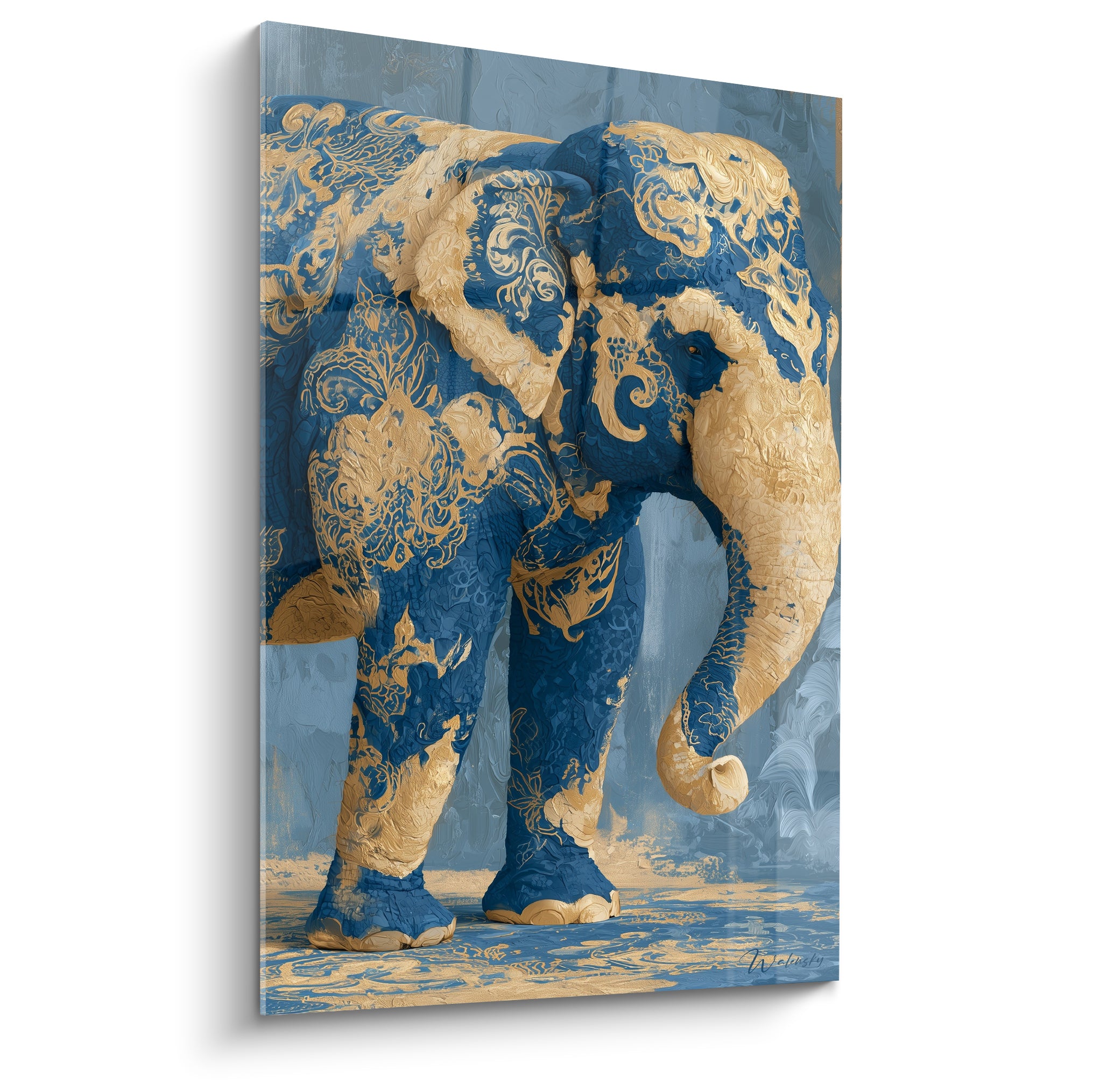
Mineral and golden atmosphere : a deep blue and gold composition, paired with more noble materials — marble, brass, dark wood. The result comes closer to a high-end interior than to a bamboo hut.
Contrasting black and yellow atmosphere : for an office or an entrance that needs character, a graphic motif in black and vivid yellow creates a pop art effect, far removed from the overly smooth "resort" style.
To extend this overall logic across the year, there's no need to multiply different motifs: the banana painting collection already covers a wide variety of tones and styles, enough to compose several galleries without ever repeating yourself.
— Also to discover


Mistakes to avoid so you don't fall into cliché
The tropical cliché mostly lurks for those who think "quantity" rather than "coherence". Here are the most common missteps, observed in many interiors that nevertheless started from a good intention.
- Accumulating too many competing plant motifs (banana, palm, monstera) on the same wall: choose one dominant foliage family.
- Mixing more than three strong colors in the same wall gallery.
- Neglecting lighting: a painting without directed light loses much of its relief and its color nuances.
- Forgetting the hanging height: the center of the artwork should sit at eye level, around 1.50 m from the floor.
Lighting deserves particular attention. An adjustable spotlight or a wall sconce placed at an angle reveals the veins and the printed relief, especially on an acrylic glass finish where the depth of colors truly unfolds under well-directed light.
As for sizes, follow a simple rule: the artwork should occupy between 60 and 75% of the width of the furniture or wall it hangs on. A painting too small on a large wall gives an impression of emptiness, not sobriety.
Want to explore other plant registers to complete your wall? the tropical painting collection offers complementary universes, sometimes broader than the banana plant alone, to vary the moods without losing overall coherence.

In the same spirit
Black and Yellow Graphic Banana Leaf Painting - Urban Tropical Rhythm - Banana Leaf Edition
From €228.90
Discover this painting →Frequently asked questions
How many banana leaf paintings should you hang on the same wall?
Two or three is plenty. Beyond that, the gallery effect turns into visual overload, especially if the tones weren't planned together from the start.
Which colors pair well with tropical green?
Terracotta, gold and petrol blue work particularly well. Deep black also offers excellent contrast for a more graphic and contemporary look.
Does a banana leaf painting need a frame?
No. The paintings in the shop are delivered without a frame, ready to hang directly on acrylic glass or Dibond aluminum, with the fixings included.
How to light a tropical wall gallery?
Favor directed lighting over a diffuse central ceiling light. A spotlight angled at 30-45 degrees reveals the printed relief far better than flat frontal light.
The banana leaf motif alone has never made a tropical decor succeed. It's the harmony between materials, colors chosen with restraint, and the layout planned on the wall that turns a painting into a true centerpiece rather than a postcard accessory. To compose your own wall gallery, the banana leaf painting collection brings together all the compositions discussed here, to combine according to the mood you want to create at home. And if the idea is to please someone else, our article on the banana leaf painting as a decor gift usefully complements this reflection.
Explore our collections


