







Camargue Painting for Kitchen: Creating a Successful Provençal Atmosphere
7 min read · by Walensky
CAMARGUE PAINTING
The steam rising from the saucepan, the splashes of olive oil on the backsplash, the midday sun striking the back wall straight on. The kitchen is anything but a quiet living room. Yet it's the room where we spend the most waking time, and the one we decorate the least often. A Camargue painting for a Provençal-style kitchen can change that, provided you choose the right material, the right format and the right motif for this specific room, not the one next door.
- Acrylic glass or Dibond aluminum: both finishes resist humidity and wipe clean with a single sweep of a sponge, unlike canvas.
- Keep the painting away from the hob: direct heat and greasy splashes damage any wall décor.
- Pink flamingos and white horses brighten a dark kitchen, while bulls and golden reeds warm up an already bright kitchen.
Why the kitchen deserves its own Camargue painting
The kitchen is the room we walk through in pajamas at 7 a.m. and still occupy at midnight for a last drink with friends. It deserves better than a firemen's calendar or a shopping list taped to the wall. Vast skies, silvery marshes, silhouettes of horses in the morning mist: Camargue imagery has the rare power to soothe without sending you to sleep, perfect for a room you want lively but not agitated.
The Provençal style, with its burnt ochres and lavender blues, naturally goes with this iconography. It's no coincidence that so many houses in the Luberon or the Alpilles pair antique faience with gardian scenes. The kitchen, bathed in natural light most of the day, is precisely where these warm colors take on their full relief.
A kitchen without an image on the wall is like a table without a tablecloth: functional, but cold.
Specific constraints to anticipate
A kitchen is not a living room: it breathes steam, sweats grease and changes temperature several times a day. Before thinking aesthetics, think material.
Humidity and heat: which materials to favor
A classic canvas warps, yellows and eventually smells of cooking grease after a few months near a hob. The Camargue paintings in the shop are neither stretched canvases nor paintings: they are exclusive digital creations, printed in Italy on acrylic glass or Dibond aluminum, two finishes designed to last in real-world conditions.
- Acrylic glass : glossy surface, very vibrant colors, gallery-art rendering. It reflects light somewhat, so reserve it for a wall away from a south-facing window.
- Dibond aluminum : matte surface, zero glare, softer colors. Ideal facing a window or in full natural light, which often matches the back wall of a Provençal kitchen.
Stains, splashes and easy maintenance
Both finishes wipe clean with a single sweep of a damp sponge, without harsh products. This is the real difference from canvas, which absorbs everything and forgives nothing.
Always keep a reasonable distance between the painting and the hob or oven: direct heat and greasy splashes wear out any material, even one that resists ambient humidity.

Which Camargue motifs for a Provençal kitchen
Not all Camargue motifs tell the same story. Some soothe, others energize.
Flamingos and white horses: softness and brightness
In a rather small or poorly lit kitchen, pink flamingos and white horses visually open up the space. Their light tones, powder pink, turquoise, dawn blue, lighten a wall loaded with shelves or jars.
The Flamingos painting - Camargue Flight plays on this register, with its pink and turquoise shades that evoke flight and freedom:
For a more romantic mood, the White Horses painting - Dawn Reflections in the Camargue shows two horses in a lagoon under an orange sky, a true sunrise Provençal style. If you prefer large immersive formats, our panoramic Camargue paintings at sunset are made to fill vast walls.
Bulls and golden reeds: character and warmth
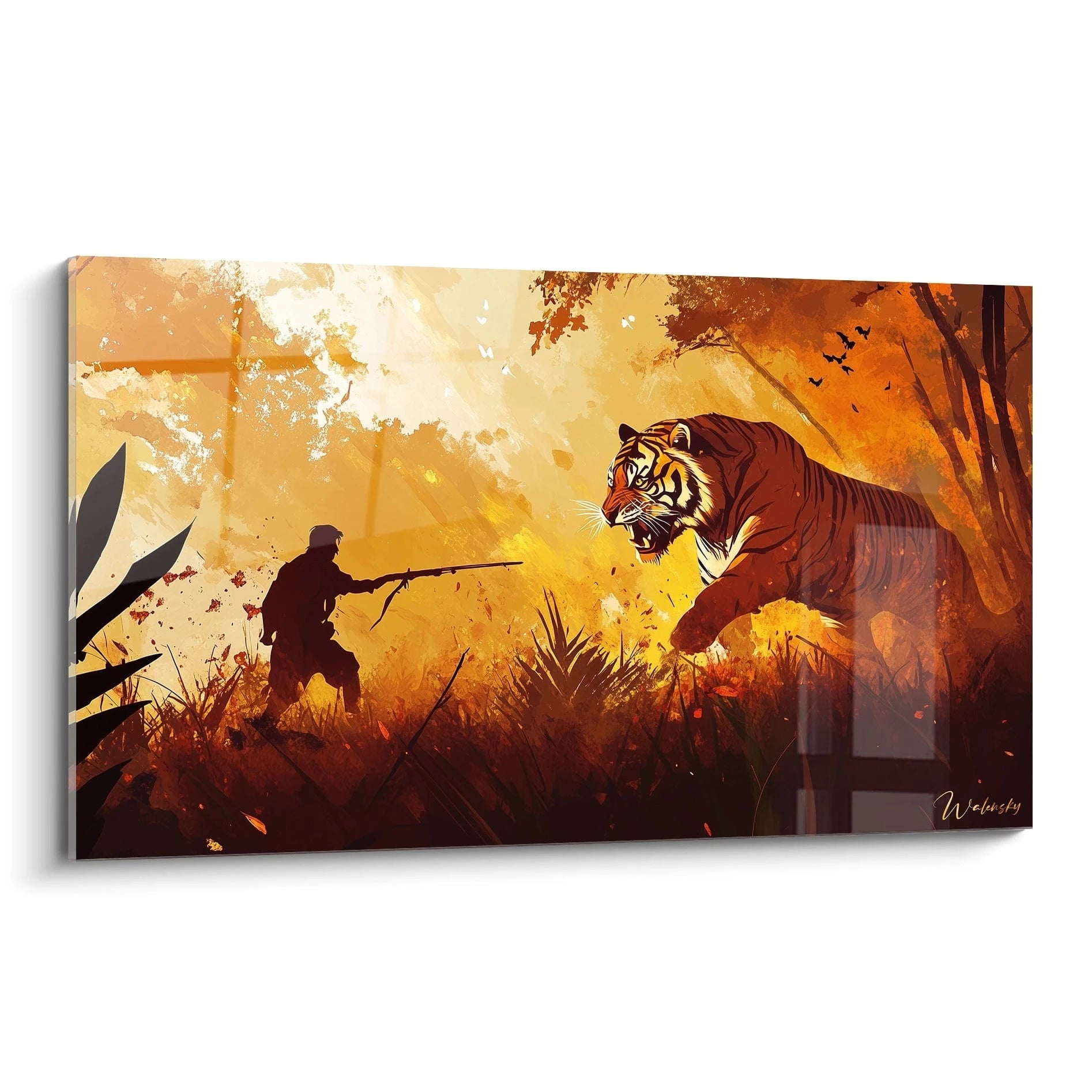
Conversely, a kitchen already bathed in light, with antique terracotta tiles and exposed beams, handles more rustic motifs very well. The Bulls of the Camargue painting - Traditional gardian branding, in its deep ochres and browns, anchors the room in an almost Western-Provençal authenticity, a motif that works just as well in a rustic-style living room.

The golden reeds, for their part, bring a more plant-like, autumnal touch, perfect between a kitchen and an open dining area.
— Our selection


Where and how to place your painting in the kitchen
The right location, in a kitchen, is almost chosen in reverse: you start from the constraints before thinking décor.
- Free wall, away from water and heat sources : this is the safest location, often facing the room's entrance door.
- Above a little-used worktop : possible, provided a reasonable distance is kept from the cooking zone.
- As a decorative splashback : some install a small format between two wall cabinets, where there are no splashes or direct steam.
For an open kitchen onto the dining room, you can also draw inspiration from what works for the Provençal dining room, keeping a slightly more compact format on the kitchen side.
As a general rule, a painting should occupy between 60 and 75% of the width of the wall or furniture beneath which it is placed. In a kitchen whose walls are often broken up by windows and wall cabinets, size L (120x70 cm) remains the most relevant; for a truly cramped space, made-to-measure allows going down to 80x46 cm.
Pairing the Camargue painting with other Provençal elements
A lone painting rarely creates an atmosphere. It's the harmony with the rest of the room that creates Provençal coherence.
Raw linen tea towels, lavender-blue glazed faience dishes, smoked glass jars: all of this naturally dialogues with the ochres and blues of the Camargue scenes. If your kitchen already plays on these tones, a painting with more vivid colors (pink flamingos, orange dawn) creates a lovely contrast without breaking the style.
To go further in this Mediterranean direction, the Provence Painting collection gathers other visual ideas that complement the Camargue universe well.

Also to discover
Wild Horses painting - Camargue Duo - Camargue Edition
From €213.90
Discover this painting →Frequently asked questions
Which painting resists humidity well in a kitchen?
Acrylic glass and Dibond aluminum both resist the ambient humidity of a kitchen, unlike canvas. The choice between the two depends mainly on light: glossy acrylic if the wall is sheltered from direct sun, matte Dibond aluminum facing a window.
Which painting size to choose for a small kitchen?
Size L (120x70 cm) remains the most suitable for most kitchens, which rarely have large clear walls. For a truly small space, made-to-measure from 80x46 cm lets you adjust the dimensions precisely.
How to pair a Camargue painting with existing Provençal decor?
Pick up one or two colors already present in the kitchen (ochre, lavender blue, off-white) and choose a motif that echoes them. A painting of horses at sunset pairs very well, for example, with ochre dishware and raw linen tea towels.
Can you hang a painting near the hob?
Better to avoid it. Direct heat and grease splashes eventually damage any decorative surface, even one resistant to humidity. Prefer a wall located at a good distance from the cooking zone.
The kitchen is the heart of the home, the one that beats from morning to night, between coffee and impromptu dinners. It deserves an artwork as carefully chosen as the rest of your interior, not a mere wall filler. By choosing the right material, the right format and the motif that speaks to your Provençal atmosphere, a Camargue painting quickly becomes the piece you look at while chopping vegetables, without even thinking about it. To find the one that will embody your own version of the Camargue every day, the Camargue Painting collection remains the best starting point, as does our article on integrating a Camargue painting into a seaside decor if your kitchen looks more toward the Mediterranean.
Explore our collections


