

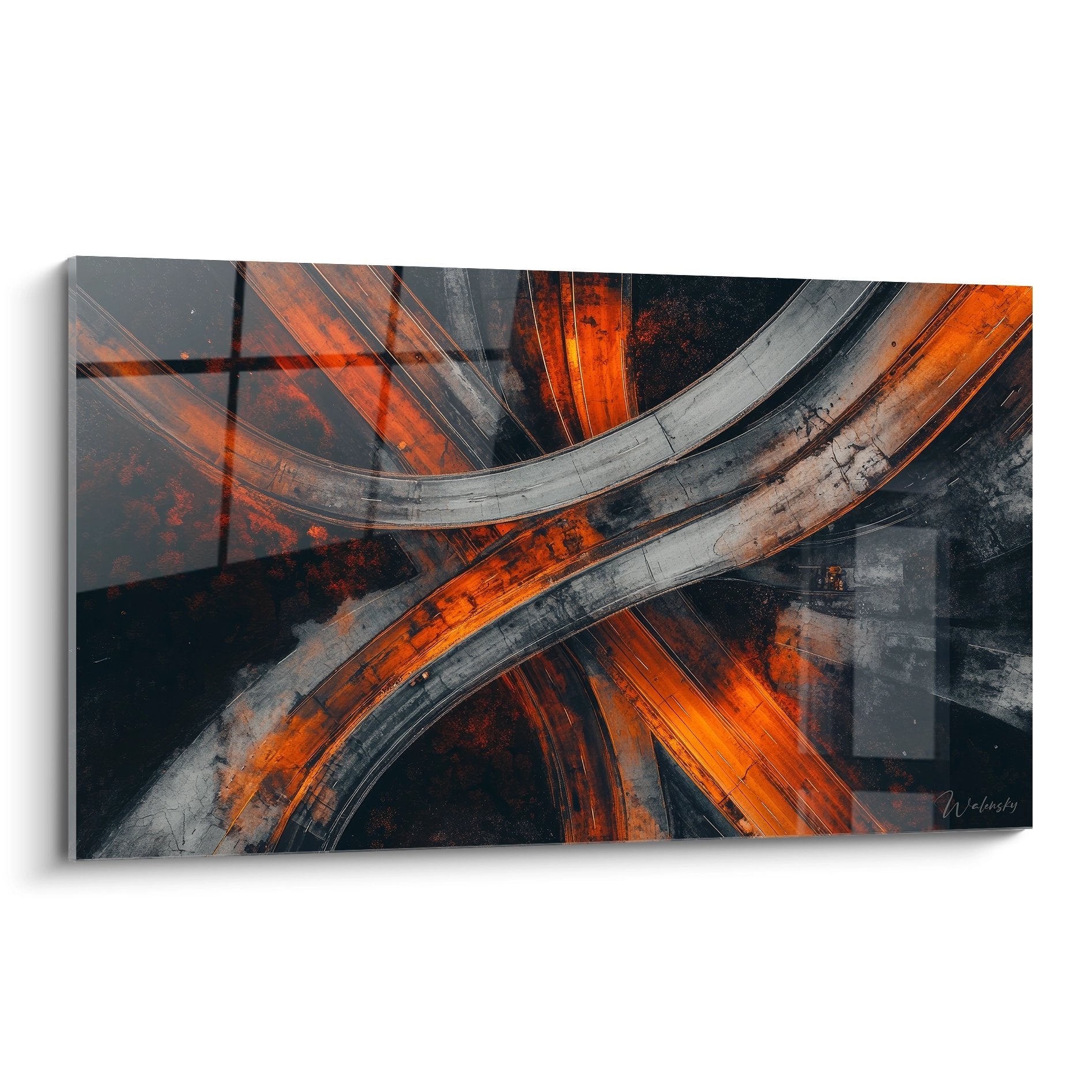






TUBA PAINTING
A bell-shaped instrument that catches the light like freshly polished copper tubing. Full, almost mechanical curves that respond effortlessly to a steel beam or a cast-iron column. The tuba is anything but a trivial decorative subject: it's a metallic, massive, crafted object, and that is exactly what makes it so compatible with a loft, a vintage bar or an office in polished concrete.
- The tuba's golden tones echo copper and brass, two materials typical of industrial decor.
- Dark backgrounds (navy blue, grey, black) strengthen the contrast with raw metal and concrete.
- An L format (120x70 cm) or larger is recommended to hold its own against a brick wall or exposed beams.
Why the tuba blends naturally into industrial decor?
Ask any loft enthusiast: what makes an object "match" a raw interior? The answer often comes down to one word: material. The tuba, with its flared bell and coiled tubing, looks almost like a sophisticated piece of plumbing, a noble cousin of the exposed pipework that sometimes runs along the ceiling of a New York loft.
This visual kinship is no accident of perception. The instrument's copper, polished or patinated, shares the same chromatic family as aged raw steel, rusted bolts and the metal structures deliberately left visible in this style. A painting staging a tuba therefore doesn't just tell a musical story: it extends the vocabulary of materials already present in the room.
The tuba isn't an instrument you hang on the wall to talk about music. It's a form that speaks the language of metal. For a tuba painting in modern living room decor, the stylistic stakes go well beyond a simple musical nod.
In an industrial loft, this dialogue works on several levels: color (gold on dark background), suggested texture (the shine of copper against the matte concrete) and even silhouette, round and massive, which contrasts nicely with the straight lines of metal structures.
Painting styles to favor
Two broad families of visual treatment work particularly well for a tuba painting in an industrial context: black and gold in the style of raw metal, and the more graphic register of the technical sketch.
Black and gold tuba painting: raw metal effect
This is the most direct combination with industrial codes. A dark background, navy blue, anthracite grey or deep black, makes the bell and tubing's golden reflections stand out, as if the instrument were literally emerging from the shadow of a workshop. This tension between darkness and golden brilliance recalls the vintage feel of early twentieth-century metalworking studios, without ever tipping into kitsch.
This is precisely the spirit of the Musician with Gold and Navy Blue Tuba painting, where the suspended gesture of the instrumentalist stands out against an almost mineral nocturnal background.
Tuba painting in a technical sketch or blueprint style
Another, bolder option: the technical drawing register, that deep blue and those precise lines associated with old engineers' schematics. A tuba treated in this "blueprint" spirit evokes the factory, the design office, the fabrication workshop, a perfect nod to a space that embraces raw character rather than pure decoration.
Grey and misty tones also work very well with metal: they evoke workshop smoke or the haze of a mountain landscape, without ever clashing with the rawness of the concrete.
The Musician in Gold and Grey Playing the Tuba painting illustrates this intermediate register well, somewhere between a misty landscape and metallic reflections, a softer option than black and gold, yet equally coherent with an industrial interior.


Favourite
Painting Tuba Musician in Gold and Navy Blue - Suspended Breath - Tuba Edition
From €273.90
Discover this paintingColors and finishes that work with metal and concrete
The choice of finish matters almost as much as the visual itself. On acrylic glass, the tuba's golden tones gain intensity and depth: the glossy surface heightens the "polished metal reflection" effect, very effective in a room with controlled light, such as an office or a bar with few windows. To go further, our guide on jazz tuba paintings printed on acrylic for a vintage atmosphere details how to get the most out of this finish.
Conversely, facing a large loft window, Dibond aluminum is the better choice: its matte surface avoids stray reflections and slightly softens the colors, for a more contemporary, minimal rendering that doesn't fight natural light.
| Room configuration | Recommended finish | Effect achieved |
|---|---|---|
| Bar or office with soft lighting | Acrylic glass | Intensified golden reflections, gallery effect |
| Loft with large windows | Aluminium Dibond | Zero reflection, matte and modern rendering |
| Brick or raw concrete wall | Both work | Material contrast reinforced depending on the finish |
On palette, keep this simple rule in mind: the darker and more metallic the environment (blackened steel, cast iron, exposed piping), the better a golden or midnight blue background will work. The lighter the space (polished concrete, white walls), the more a grey or misty blue background will bring softness without breaking the raw atmosphere.
Pairing examples in an industrial interior
In a loft with exposed beams and a red brick wall, a tuba painting in golden and black tones stands out beautifully against the brick, creating a warm focal point in an otherwise cold, mineral setting. It recalls a little the Berlin artists' studios, where a strong piece is happily hung on a section of wall left bare.
In an office with a more corporate-industrial feel, polished concrete and matte black metal furniture, a painting with a more dramatic register, like that of a musician facing the elements, brings movement and breaks the rigidity of the surrounding straight lines.
In a vintage-style bar, opt for a nocturnal painting, moon and fireflies, to extend the dimmed atmosphere without adding any extra artificial light.
The painting Musician in a red dress facing the waves works particularly well in this type of space: its dramatic black and touch of red contrast with the metal without ever looking too tame.

For a more subdued mood, the painting Musician with a golden tuba under the moon brings a poetic nocturnal touch, ideal in a reading corner or a bar with dark furniture.

If you are looking for other visual ideas for this kind of setting, our article on the tattoo painting in industrial decor explores another way to dress a brick wall with raw graphics. And for a more architectural register, our selection of paintings of famous bridges for industrial decor offers an equally coherent variation with metal and steel.
Where should you place your tuba painting for maximum effect?
Placement is first considered in proportion to the wall or the piece of furniture below. The basic rule: the artwork should occupy about 60 to 75% of the width of the sofa or furniture it hangs above, so it does not look lost in what is often a generous loft volume.
On a large brick wall with no furniture beneath, don't hesitate to go bigger: XXL sizes (160x90 cm) and beyond stand naturally against the high volumes typical of converted lofts.
No frame needed to plan for — the paintings in the shop are delivered ready to hang — you can opt for a simple hanging on a raw or painted wall, without adding any extra element that would weigh down the composition.
— Also worth discovering
Frequently Asked Questions
Which painting color to choose for industrial decor?
Golden tones paired with dark backgrounds (black, navy blue, anthracite grey) work best: they evoke copper and patinated steel, two central materials of the industrial style.
How to match a music painting with industrial decor?
Choose a scene where the instrument visually dominates the composition — the tuba, with its metallic curves, lends itself particularly well to this exercise, better than an instrument with more delicate or more colorful shapes.
What frame for an industrial-style painting?
Paintings from the shop are delivered without a frame, ready to hang directly on a brick or concrete wall — a choice that suits perfectly the clean, raw aesthetic sought in this type of decor.
Can a tuba painting suit a modern living room?
Yes, provided you choose a version with more subdued tones and controlled contrasts: a misty grey or midnight blue background fits as well in a contemporary living room as in a frankly raw loft.
If the vintage and metallic spirit of the tuba appeals to you beyond this single subject, our retro painting collection or our Art Deco painting selection offer other ideas in the same graphic vein. For an office or professional space, our collection of paintings for professionals brings together artworks designed for this type of environment.
In short
The copper of a tuba and the raw steel of a loft speak the same language — that of metal that has lived, that has texture, memory. Choosing the right style of tuba painting for industrial decor is above all about respecting this consistency of material: golden tones on a dark background, a finish suited to the room's light, a size that holds up against raw volumes. The rest follows naturally.
To see the full range of compositions available around this instrument, the Tuba Painting collection gathers the different variants mentioned here.
Explore our collections


