

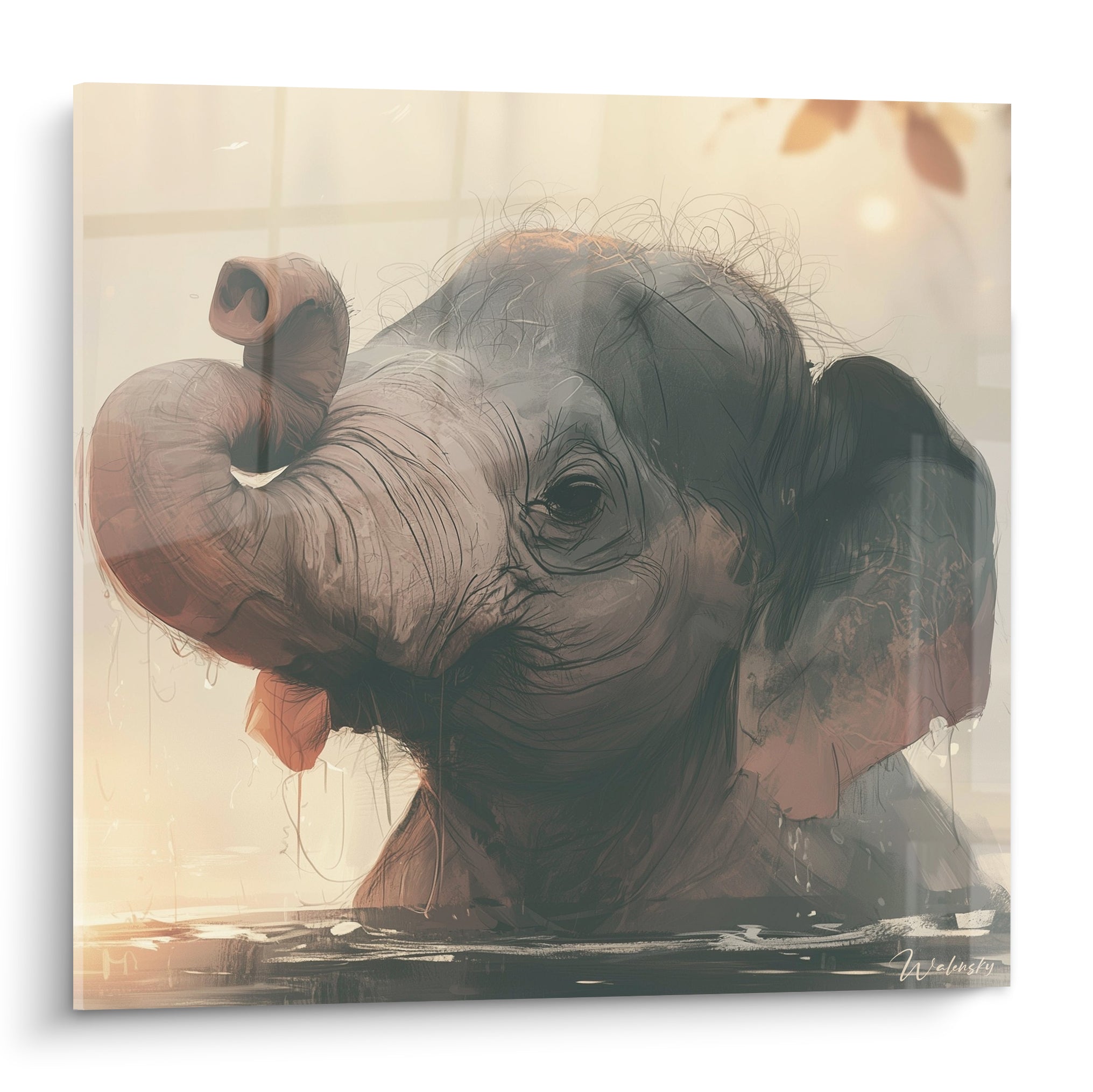






Animal painting for a real estate agency: the psychology behind the choice
7 min read · by Walensky
PAINTING FOR A REAL ESTATE AGENCY ANIMALS
A client who walks through a real estate agency's door judges the room before judging the property. Three seconds, no more, to decide whether the place inspires trust or mistrust. And in that silent verdict, the painting hanging behind the negotiator's desk weighs more than you might think.
The direct answerChoosing an animal painting for a real estate agency should follow the area and the client profile: a wolf or a peacock to project authority in the negotiation office, a butterfly or a sheep to reassure a first-time buyer in the waiting room, a zebra or a kangaroo to convey energy and success in front of an investor. These are not original museum creations but exclusive digital artworks, printed in Italy, designed to decorate professional spaces without freezing them.- Each animal conveys a specific emotion: animal symbolism affects the client before they even mention the property.
- The area matters as much as the subject: reception, negotiation office and signing room don't call for the same painting.
- The client profile (first-time buyer, investor, seller) guides the final choice, just like the dominant color of the artwork.
Why choosing an animal is never neutral in a real estate agency
A painting is never just "pretty" in a negotiation space: it speaks on the agent's behalf, sometimes before they do. Neuroscience of decoration shows that the eye captures the shapes and colors of a wall before settling on a human face, and that first impression unconsciously colors everything that follows.
The psychology of colors comes into play from the entrance: a deep blue soothes, a burnt orange warms, a gold evokes success. Combined with an animal — predator, bird, domestic animal — this palette sets an emotional climate before the first handshake.
The client never remembers the painting they saw. They remember how they felt in the room.
That is the whole stake of agency branding: every visual detail, from the logo to the wall artwork, must tell the same story of reliability and serenity.
The grid: animal x emotion x agency area
Effective commercial zoning treats each room as a step in the client journey, not as a series of walls to decorate. Here is the correspondence that works best in practice.
Reception area: creating a reassuring first impression
Reception must defuse stress, not amplify it. A gentle animal in pastel colors lowers the visitor's guard within seconds.
The Silk Wings painting works particularly well here: its soft pink and blue tones create a serene atmosphere, far from the cold image sometimes associated with agencies.
Negotiation office: establishing calm and gentle authority
This is the most tense room in the agency, where prices and conditions are discussed. An animal with a powerful gaze but without aggressiveness — wolf, peacock — reassures about the negotiator's competence without intimidating.
An animal's gaze directed toward the client, never evasive or aggressive, unconsciously reinforces the feeling of being listened to and of control over the discussion.
Signing room: strengthening final trust
At the moment of signing, the client seeks a last emotional validation. Animals associated with loyalty or stability — llama, sheep — close the loop without diverting attention from the document to be signed.

Which client profile, which animal to favor
A first-time buyer, an investor and a seller do not react to the same images. Adapting the artwork to the profile received in the room changes the tone of the exchange.
Stressed first-time buyer
They are projecting their first purchase, often with palpable anxiety about the loan and the paperwork. A gentle animal and soothing tones — the butterfly already mentioned, or the world of other, more discreet animals — defuse tension without patronizing.
Demanding investor
They want figures, profitability, control. An animal with a proud bearing and bold colors — zebra, kangaroo — speaks their language better than pastel softness.
The Love in the Savannah painting and the Australian Soul painting play this card: visual dynamism, assumed palette, without slipping into aggressiveness.
Seller attached to their property
They often give up more than a property: a story, memories. A familiar, almost endearing animal — alpaca, sheep — creates an emotional closeness that makes concessions easier during negotiation.
— Our selection


Concrete examples of artworks and their expected effect
Certain artworks lend themselves particularly well to this professional use, through their subject and palette.
- The Twilight Alpha Painting — wolf edition: gentle authority, ideal for the negotiation office.
- The Australian Soul Painting — kangaroo edition: dynamism and positive energy, suited to investor spaces.
- The Love in the Savannah Painting — zebra edition: wild elegance, a good balance between strength and warmth.
- The Golden Wings Painting — peacock edition: discreet luxury, perfect in a showcase or high-end reception room.
To calibrate the size to the available wall, the rule is that an artwork should occupy between 60 and 75% of the width of the furniture or wall it hangs above — an agency with a wide desk will do better choosing an XL or XXL format rather than multiplying small pieces.
Mistakes to avoid when choosing an animal painting for an agency
The classic pitfall is choosing an animal "because it's beautiful" without considering what it evokes for a client stressed by a twenty-year loan.
- Mixing different animals in the same space reduces impact: it blurs the message instead of reinforcing it.
- Choosing an overly dark artwork in an already dim room, which weighs down the atmosphere instead of opening it up.
- Overlooking the finish: with Acrylic Glass, the vibrant rendering requires controlled lighting; with Dibond Aluminum, the matte surface suits better in front of a glass bay window.
- Forgetting consistency with agency branding: a very colorful artwork in a space with a minimalist identity creates visual dissonance.
To go further on size and placement according to the room, our article on the right portrait painting size for a real estate agency usefully complements this reflection.

Frequently asked questions
Which animal symbolizes trust in decoration?
The llama or alpaca, through their calm gaze and stable posture, evoke trust without aggressiveness. The peacock, by contrast, symbolizes success and prestige more than intimate trust.
Which painting to hang in a real estate negotiation office?
An animal with an assertive yet relaxed gaze — wolf, peacock — works better than an overly cute or aggressive subject: it establishes gentle authority without intimidating the client in the middle of a price discussion.
Are wild animals suitable for a professional setting?
Yes, provided you avoid attacking postures or overly frontal gazes. A zebra in the savannah or a kangaroo in vivid colors bring dynamism without ever slipping into visual aggressiveness.
How does decoration influence the client's perception in an agency?
It acts upstream of the sales pitch: the color and subject of a painting shape the client's emotional state before they even exchange a word with the agent, which influences their willingness to negotiate or sign.
An animal painting hung in a real estate agency is never a mere aesthetic choice: it is a silent lever acting on every client, at every stage of the journey, from reception to signing. By composing each room with the same care as a commercial strategy, the agency turns a decorative detail into a genuine conversion tool. To build this journey room by room, the collection of paintings for a real estate agency and the selection of animal paintings offer what you need to compose a coherent ensemble, zone by zone.
Explore our collections


